A Fund and Its 600 Interns
People are the most valuable asset.
At ZhenFund's intern reunion, one sentiment was nearly universal: ZhenFund people are everywhere.
The event kicked off with alumni from Moonshot AI, Tencent, and DeepSeek taking turns at the open mic to recruit. It brought to mind Jensen Huang's proud introduction of the Black Forest Labs CEO: "He used to be my intern."
The story of growing from intern to founder keeps playing out at ZhenFund.
ZhenFund has now run 23 cohorts of its intern program, with over 600 alumni. Among them, 70 are active at other VC firms and top AI teams like DeepSeek and Meta. In just the past two years, 34 more alumni have joined ZhenFund portfolio companies as CEO assistants, platform leads, or heads of commercialization and other critical functions.
You seem to hear ZhenFund's name at every important occasion. It's as if adding the character for "true" (zhen) makes all the difference.
This time, at events in Beijing, Shanghai, and Shenzhen, we spoke with several ZhenFund alumni.


Interning at ZhenFund, then funded by ZhenFund
In 2013, during ZhenFund's early days, Bob Xu gave a speech at Harvard University proposing that "the best job isn't joining the Fortune 500 — it's joining a startup."
Two hours before the Shanghai event began, Alex, ZhenFund's very first intern, arrived at the venue.
He walked into the private dining room alone, spread out a cloth, laid out three pairs of pants, and improvised two changing booths.
Just like that, the room became a launch event for the athletic apparel brand Ambo.
When Alex joined ZhenFund, the team had only four or five full-time employees. He found Anna's (ZhenFund founding partner) profile on LinkedIn and sent her a cold message. Soon after, he was on the job in Beijing.
Anna brought him to every event and meeting, giving him tremendous freedom. Later, through Anna's introduction, he joined Perfect Diary — then a fledgling ZhenFund portfolio company — and took his first step.
At this event, he raised his hand and delivered a one-minute elevator pitch to the room. It evoked the early entrepreneurs who would wait by elevators, hoping to convince a potential investor in the brief minute before the doors opened at the top floor.
Standing beside his first line of pants, Alex said: "I want to combine supply-chain innovation with localized storytelling to build a new domestic sportswear brand."

When Houhou Wang arrived at ZhenFund in 2014, the team had just 12 people. She remembers everyone doing everything.
Once, Anna mentioned that ZhenFund still didn't have a website. Fellow intern Wang Xiangxiang built one that same evening, working until 10 p.m. "Back then, when something needed doing, everyone would just come together and get it done."
During her internship, Houhou Wang was already building her own media presence. Bob Xu offered to invest his own money in her and Wang Xiangxiang to support their venture together. The two pivoted to opening a Chinese designer boutique.
That entrepreneurial attempt ultimately failed, but it gave Houhou Wang a genuine taste of the founder's predicament: "It's exhausting. You face so much pressure. And no one can solve that pressure for you — you just have to figure it out yourself."
She still remembers those afternoons.
Ten years later, another cohort of young people set out from ZhenFund.
Not long ago, Hypit open-sourced its product for about a month and gained 23,000 GitHub stars, with ARR surpassing $1 million.
Both founders are Gen Z. Yudong, 22, graduated from Peking University and gave up his spot in a Tsinghua master's program. Qunlin, 23, graduated from Tsinghua University's Department of Computer Science.
They were also interns in ZhenFund's 20th cohort.
Before founding Hypit, Yudong joined a cross-border MCN, bought 40 secondhand iPhones to build an overseas account matrix, and experimented with AI e-commerce livestreaming, pet short dramas, and real-person short dramas. Qunlin had built an AI virtual influencer account with 300,000 followers and worked on video generation model training at Zhipu AI.
Recalling their ZhenFund internship, what struck them most was hearing Sen Dai (ZhenFund managing partner) share the founding story of Jumei International. From his telling, you could truly feel what entrepreneurship does to a person. So they thought: after hearing so many startup stories, why not just go do it themselves?
The night the intern program ended, the two took a cab back to Wudaokou and had settled on founding a company together before they arrived.
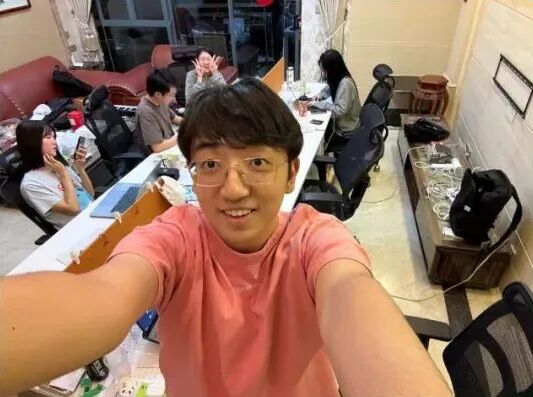
Today, Hypit has just four full-time members and two interns. One is 18, met at a Xiaohongshu hackathon; the other is 16, also met through Xiaohongshu, who independently handled this launch's publicity.
From ZhenFund interns to ZhenFund-backed founders, they've experienced firsthand ZhenFund's "invest in people" philosophy. Yudong said: "ZhenFund is one of a kind. The underlying logic of investing in people is respect for individuals and valuing their continuous growth."
Believe in young people. Support the incredible things youth can do.

Joining a startup, building from zero to one
A couple months ago, Anna was in the office and suddenly realized: at a glance, everyone sitting there was an intern.
Anna couldn't help remarking: "In the past three years, about 70% of ZhenFund's new hires have been converted from interns. Just like when we first started, ZhenFund really was being driven by interns."
These young people who once held their own at ZhenFund are now on the front lines of entrepreneurship.
In 2019, Ande was just 19 on his first day as a ZhenFund intern.
In 2026, Ande planned Natura's first model release.
This past August, Ande was preparing to leave ByteDance to join a friend's startup. That's when Debbie, who had interned in the same cohort and was now a ZhenFund investment VP, messaged him: "Natura is preparing its first model release. Want to chat with them?"
Natura's HR lead, Mia, had also been on the ZhenFund team. She sent Ande a long message — no perfunctory pleasantries, just her genuine feelings and stories from working with the Natura team.
When he went in for interviews, he saw 3D printers, robotic hands, and robotic arms lined up beside the workstations, someone wearing haptic gloves collecting data. The scene made him think, "This is interesting."
They talked for nearly two hours. Afterward, Ande's reply was: "When can you start?"
That directness and sincerity convinced him to join.
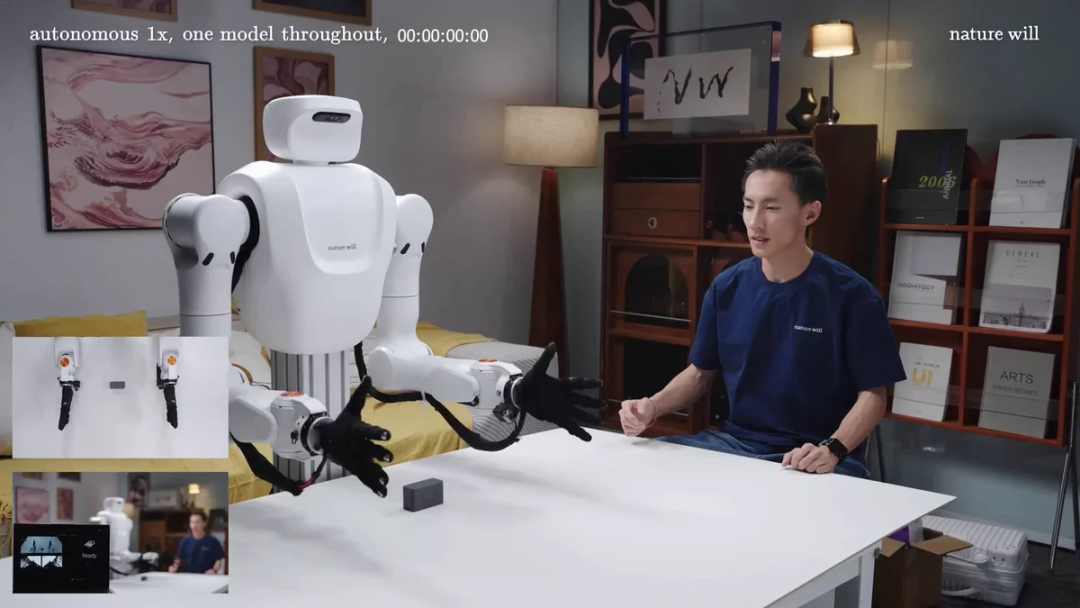
Speaking of the recent Natura-1 launch, Ande described it as "an incredible experience": "The team moved incredibly efficiently, and everyone enjoyed the preparation process."
To demonstrate the robot's ability to think independently and adapt to changes, the team decided to shoot a one-take human-robot interaction video. Recording began in late September and lasted an entire day. "Honestly, every take was usable, but it never felt stunning enough."
So they kept shooting, again and again. Finally, one day before the launch, the camera captured everything they wanted to show.
It was past 10 p.m. When the lens cap went on, they took the memory card from the cameraman and watched the footage together in the conference room. Everyone's eyes were wet.
Yutong also developed a new understanding of work after joining a startup.
Asked about her biggest takeaway from interning at Manus, she said: "Everyone is incredibly passionate and energetic." In this young, flat team, even interns had real opportunities to participate and drive things forward.
During her ZhenFund internship, two phrases stuck with her.
One was "The important thing about 'getting out there' is getting out there." The other was "Get your hands dirty." Now she too understands how important it is to join a great company and work with exceptional people while you're young.
Every employee she met was using AI to get things done. The marketing team built beautiful websites to showcase briefs; the HR team built systems and streamlined processes themselves.
At Wuji Technology, which recently released its second-generation dexterous hand WUJI Hand 2, Jerry felt the company's emphasis on people.
The team values talent, and many interns are personally interviewed by CEO Yunzhe Pan. He often asks candidates whether they've personally built anything, what their interest in robotics is, and how they understand first principles.
To date, six former ZhenFund interns have joined Wuji Technology.
Jiayin also recalled that before her internship ended, she spoke with everyone at ZhenFund and received the same advice: go to a startup, go to where innovation originates.
A remark from her mentor, ZhenFund managing director Fangzhou Yao, stayed with her: "You need to find your rich mine, the place with the steepest slope in your life."

ZhenFund is made of people
The afternoon after the Beijing alumni event, Ye Zi sent us another long message. The topics we'd discussed on her commute to work that morning were still occupying her mind.
After leaving ZhenFund, Ye Zi joined YuanGu in its early days. From hotel operations to growth to marketing, she's tried more roles than she can count on one hand.
To Ye Zi, building a brand is like raising a child — it has its own personality, its own desires. You need to know what clothes you want to dress it in, and what doesn't suit it. "Knowing what not to do is also important."
"There are so many different things in this world, not just AI. AI is also about people — behind it are human needs." For her, whatever she does, what remains constant is curiosity about people: "Because I like people. I want to understand people."
They say relationships hit a seven-year itch, but Ye Zi has stayed in touch with friends from her internship to this day. Just recently, they took a trip to India, ate lots of street food, and drank plenty of wine.
They're each other's "workplace childhood friends" — a very pure bond.
Ruyang also reflected: "Five years ago, I didn't feel this way. Five years later, I realize how many outstanding companies are connected to ZhenFund, and the people in them might be friends I knew five years ago. I was young then; I didn't know where everyone would end up. Looking back now, that cohort has grown up and is shining across different companies and industries."
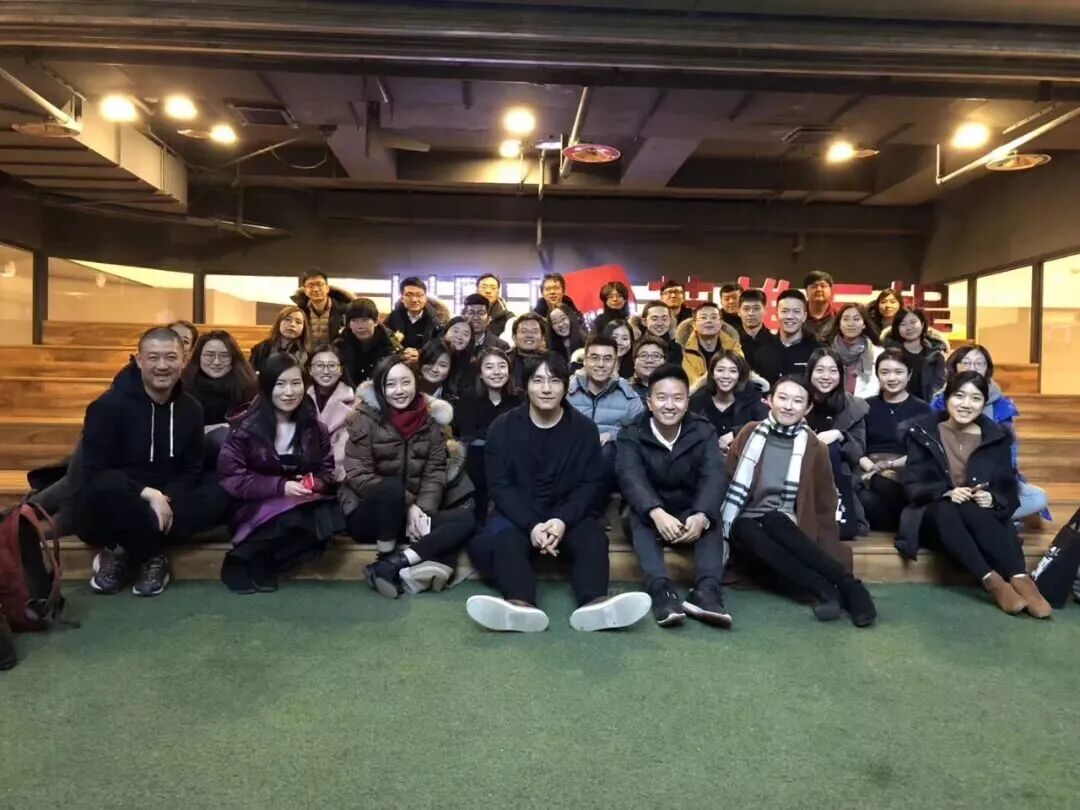
In 2016, ZhenFund interns organized a visit to Hero Games, the gaming company co-founded by Daniel
Many interns' memories stretch back five or ten years. Back then, ZhenFund was still at Shared Office, with offices on the first floor and basement level.
Ande recalls that Victor Wang loved talking philosophy, especially Kant and Elon Musk. Once during a team dinner, every other table had cleared out while their table sat for three or four hours. Everyone just kept listening to him share.
Today, it seems nothing has changed.
Current interns listening to Victor Wang, Sen Dai, and Yuan Liu share do the same — talking for hours, reluctant to leave. Perhaps the passion, sincerity, curiosity, and hunger for new things in all these stories were gradually formed through these countless conversations.
So let's keep doing this!
The 100th cohort, the 200th cohort — there are still many people worth meeting, many conversations waiting to begin.

By Yanyang & Cindy