Qiming View | William Hu: Globalization of China's Healthcare Innovation Just Beginning, Will Be Investment Theme for Next 10-20 Years
China's healthcare innovation globalization has only just begun, and it will remain a sustained investment theme for the next 10-20 years.

Editor's Note: The 2026 PEDaily SuperLink Conference was recently held in Wuzhong District, Suzhou. During the session "Influence Dialogue: A Super Year, Unprecedented Capital," Zero2IPO founder, chairman, and Zero2IPO Holdings chairman and CEO Zhengdong Ni moderated a discussion with Qiming Venture Partners managing partner William Hu, Shenzhen Capital Group general manager Suhua Liu, IDG Capital partner Kuiguang Niu, and Matrix Partners China founding managing partner David Su. The panel explored the current venture capital market frenzy, AI-driven industry transformation, and the rise of AI as the dominant investment theme. Hu noted that by current market valuation metrics, healthcare innovation is at a bottom. From the perspective of healthcare innovation, China's global expansion in this sector has only just begun, and it will remain a sustained investment theme for the next 10-20 years.
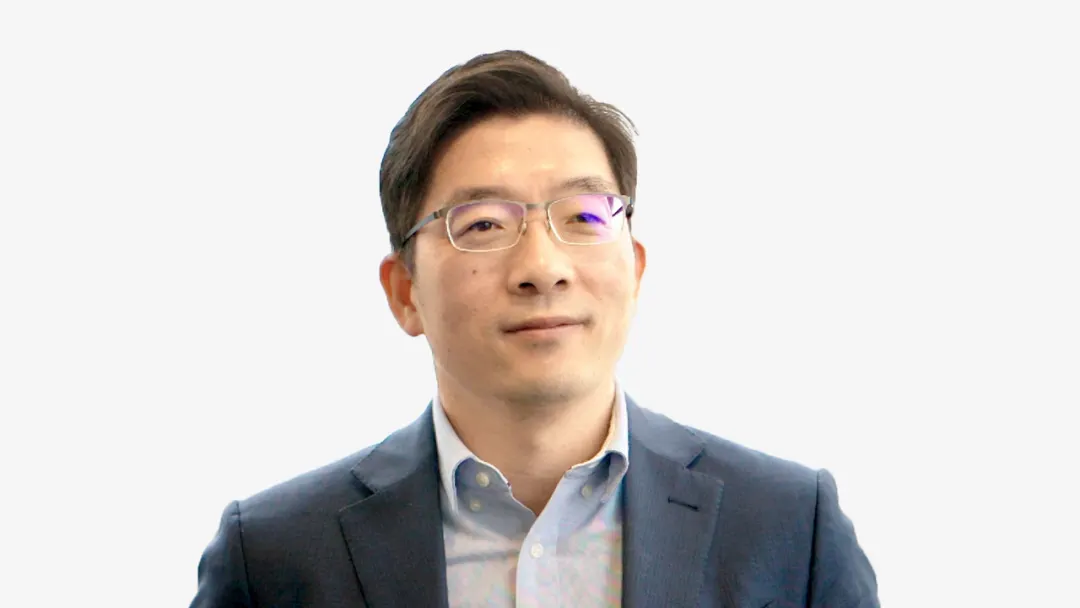
William Hu, Managing Partner, Qiming Venture Partners
The following is an edited transcript of the dialogue, republished with authorization from the Qiming Venture Partners WeChat account.
Zhengdong Ni: Let me start by inviting each of you to briefly introduce your firms and share your first-half performance — how many projects you've invested in, how many exits, and how many IPOs?
William Hu: I'm William Hu from Qiming Venture Partners. On the exit front, we've had quite a few companies go public since the beginning of the year — first AI drug discovery company Insilico Medicine, then Zhipu AI, the first large language model IPO, and GPU company Biren Technology, among others. On the investment side, we've maintained our own pace, and the team has been very busy.
Zhengdong Ni: Qiming Venture Partners has already had seven portfolio companies successfully go public this year. Qiming has been very active in healthcare innovation. Right now everyone is broadly investing in AI and hard tech, and Qiming has performed well in both. As the investment lead for healthcare at a top domestic firm, I'd like to ask you to share your firsthand sense of the current landscape for innovative drugs and the pharmaceutical industry, and also discuss how AI technology integrates with pharmaceutical innovation.
William Hu: Qiming Venture Partners just held its RMB fund annual meeting in May. You could feel that 70-80% of the interactive topics revolved around AI, and about 30% were related to healthcare innovation. Indeed, AI is currently the biggest investment theme right now — whether entrepreneurs or LPs, massive attention is flowing toward AI. This is a good thing, and I personally believe AI will be a very important factor for investing over the next decade.
Qiming Venture Partners' healthcare innovation investments focus on three main directions: First, innovative drugs. As early as five years ago, we proposed that China's innovative drugs possess global value. At that time, global BD for Chinese innovative drugs was just getting started, and we hoped to push innovative drugs toward globalization.
Second, innovative medical devices. We've always believed that China's innovative medical devices have systematic advantages in innovation capability and manufacturing. We've been cultivating and supporting innovative medical device companies to go global, with considerable success. Two years ago we invested in one company that now derives 90% of its revenue from international markets, with the largest market being the United States. This demonstrates the significant potential of China's innovative medical devices. When there's a wave of Chinese companies willing to compete overseas and开拓 markets, we're willing to help them.
Third, AI+healthcare. We believe AI plays a very important role in the healthcare innovation industry. We've invested in Insilico Medicine, which works on new drug R&D, and Tiumat, which uses AI for protein design — a company that has also attracted considerable attention recently.
Our exit expectations for healthcare projects: in an ideal scenario, valuations could reach tens of billions, while we also aim for higher ownership stakes to amplify returns. For example, with one of our innovative medical device companies, we held over 20% pre-IPO. In terms of fund allocation, pairing the innovative healthcare track with the rapidly growing AI track, running both in parallel, jointly generates investment returns for the fund.
By current market valuation metrics, I believe healthcare innovation is at a bottom. For Qiming Venture Partners, from the perspective of healthcare innovation, China's global expansion in healthcare innovation has only just begun, and it will remain a sustained investment theme for the next 10-20 years. For healthcare project investment expectations, valuations could reach tens of billions, at least above 20 billion, and we hope to have relatively high ownership to boost return returns — including the future convergence of AI and healthcare innovation, jointly bringing returns to our investments.
Zhengdong Ni: Healthcare was already hot during the Mobile Internet cycle, and in the AI era, healthcare innovation continues to gain momentum — this is a long-term track. Right now, AI drug discovery and brain-computer interfaces are two core directions in healthcare. How does Qiming Venture Partners view brain-computer interface companies, and how are you positioned there?
William Hu: In the brain-computer interface space, we've invested in Jieti Medical. We're quite bullish on this field — it will be the next sizable domain, and valuations of brain-computer interface companies have risen rapidly recently. Current human understanding of the brain, including Alzheimer's, remains beyond our ability to conquer. The entire industry is still in early stages. The combination of AI and healthcare may open new development space, though this convergence is also just beginning. From an investment perspective, the theme is clear, but valuations are difficult to gauge. We've made some early-stage bets — beyond Jieti Medical, we have several other portfolio companies that have also achieved major scientific and product breakthroughs.
This sector has indeed been very hot lately. Investment is always like this: people rush in when they see a big vision, and after a round of survival of the fittest, metabolism occurs, with quality companies remaining — this is itself a process of industry iteration and growth.
Zhengdong Ni: VC investment logic has long since diverged from the Mobile Internet era. Back then, evaluating mobile internet meant focusing on business models and meeting founders. Now, controllable nuclear fusion, quantum computing, world models, innovative drugs, semiconductors — each has different approaches, with industry jargon and technologies emerging constantly, dramatically raising the barrier to entry. Faced with this reality, how do investors continuously learn the latest knowledge, understand cutting-edge technology, and keep their knowledge updated?
William Hu: The question Ni raised is something I, as an industry practitioner, often think about. For investment institutions, several things matter: First, circle of competence. Every firm has domains it excels in, but if you stay within one circle too long, it's hard to break out of established thinking patterns, making it difficult to deeply understand emerging areas — you risk becoming an "old guard." Qiming Venture Partners has been in the VC industry for 20 years; our tech team started with internet and mobile internet, then moved into tech — this itself requires making forward-looking judgments, then having teams continuously learn and evaluate. Healthcare innovation is the same: we started with China's R&D services, then domestic substitution, and now global innovation. This is a core issue for investment firm development. If an investment institution cannot find balance between defending its circle of competence and continuously reinventing itself, if it fails to achieve that balance, it may stagnate and fall behind. Being able to do this is actually very difficult, and we're still learning and experiencing.
Zhengdong Ni: The AI market is extremely hot right now. From your perspective, how long can this current VC boom last? And second, how long can this wave of AI last?
William Hu: I don't think there's any bubble in AI for healthcare innovation. The industry has only just begun, with at least 10 more years to go. There are two main premises: First, healthcare is a highly regulated industry, so application rollout is inherently much slower than in other sectors. Second, healthcare still has several core problems that remain unsolved, including precision diagnosis and treatment, longevity — these areas are actually extremely difficult. Historically, both internet and mobile internet tried to integrate with healthcare, but their value to the healthcare industry was relatively limited. This time, AI may genuinely deliver tremendous value to healthcare. So from this perspective, over the next decade everyone will continue following AI technology advances to开拓 applications in healthcare.
Source | PEDaily
Previous Articles
Qiming Weekly | Qiming Venture Partners Portfolio News: Top 10 Stories, Vol. 17, 2026.5.26
Qiming Honors | 5 Qiming Venture Partners Investors Named to 2025 Forbes China Midas List

Founded in 2006, Qiming Venture Partners currently manages 11 USD funds and 7 RMB funds, with total committed capital reaching $9.5 billion. Since its inception, the firm has focused on investing in early and growth-stage outstanding companies in Technology and Healthcare.
To date, Qiming Venture Partners has invested in over 580 high-growth innovative companies, of which more than 210 have listed on the New York Stock Exchange, NASDAQ, Hong Kong Exchanges and Clearing Limited, Shanghai Stock Exchange, and Shenzhen Stock Exchange, or exited through M&A and other means. Over 80 companies have become recognized unicorns or super-unicorns.
Many Qiming Venture Partners portfolio companies have grown into the most influential companies in their respective fields, including Xiaomi (01810.HK), Meituan (03690.HK), Bilibili (NASDAQ:BILI, 09626.HK), Zhihu (NYSE:ZH, 02390.HK), Roborock (688169.SH), Hesai Technology (NASDAQ:HSAI, 02525.HK), UBTECH (09880.HK), WeRide (NASDAQ:WRD, 0800.HK), HyperStrong (688411.SH), Insta360 (688775.SH), Unisound (09678.HK), Biren Technology (06082.HK), Zhipu AI (02513.HK), Gan & Lee Pharmaceuticals (603087.SH), Tigermed (300347.SZ, 03347.HK), Zai Lab (NASDAQ:ZLAB, 09688.HK), CanSino Biologics (688185.SH, 06185.HK), Schrödinger (NASDAQ:SDGR), MicroPort EP MedTech (688617.SH), Sanyou Medical (688085.SH), Amoy Diagnostics (300685.SZ), SinoCellTech (688520.SH), Insilico Medicine (03696.HK), Hope Medicine, Yuanxin Technology, MediLink Therapeutics, LaNova Medicines, StepFun, and others.