Qiming Venture Partners' Duane Kuang: Investing in AI Is China's Biggest Certainty for the Next 20 Years
Over the past two decades, the venture capital industry has seen its share of ups and downs. We've consistently responded to change by staying true to our core principles: first, an unwavering conviction in China's long-term growth potential and a deep commitment to the Chinese market; second, a steadfast focus on innovation-driven strategies.

Editor's Note: Over two decades of rapid growth, China's venture capital industry has built a mature ecosystem managing over 14 trillion RMB in assets, ranking second globally. Between 2020 and 2025, more than 65% of newly listed domestic companies received VC/PE backing, with influence penetrating every technological corner from artificial intelligence to commercial aerospace, semiconductors, and innovative pharmaceuticals. Against this backdrop, Securities Times launches the "Quest for the Peak" interview series, engaging leaders of top-tier investment institutions to decode the formula behind China's modern industrial system. Recently, Securities Times visited Qiming Venture Partners, which has remained on the frontlines for 20 years, for an in-depth conversation with founding managing partner Duane Kuang.
Republished with authorization from Qiming Venture Partners' WeChat official account.
Duane Kuang's investment track record is well known in the industry. In 2006, he left Intel to found Qiming Venture Partners, leading the team to invest in over 100 benchmark companies including Xiaomi, Meituan, Bilibili, Insta360, Tigermed, and Gan & Lee Pharmaceuticals. Today, the firm manages $9.5 billion in assets. In an era when early-stage technology and healthcare innovation were not purely technology-driven, Qiming developed a mature investment logic — focusing on internet models, tech products, or healthcare sectors already validated in global markets. Kuang believed China would inevitably produce localized innovation and upgrade opportunities, and his team dedicated itself to finding the best entrepreneurial teams in each sector. Lei Jun, Zhou Jian, and JK were among the founders they backed.
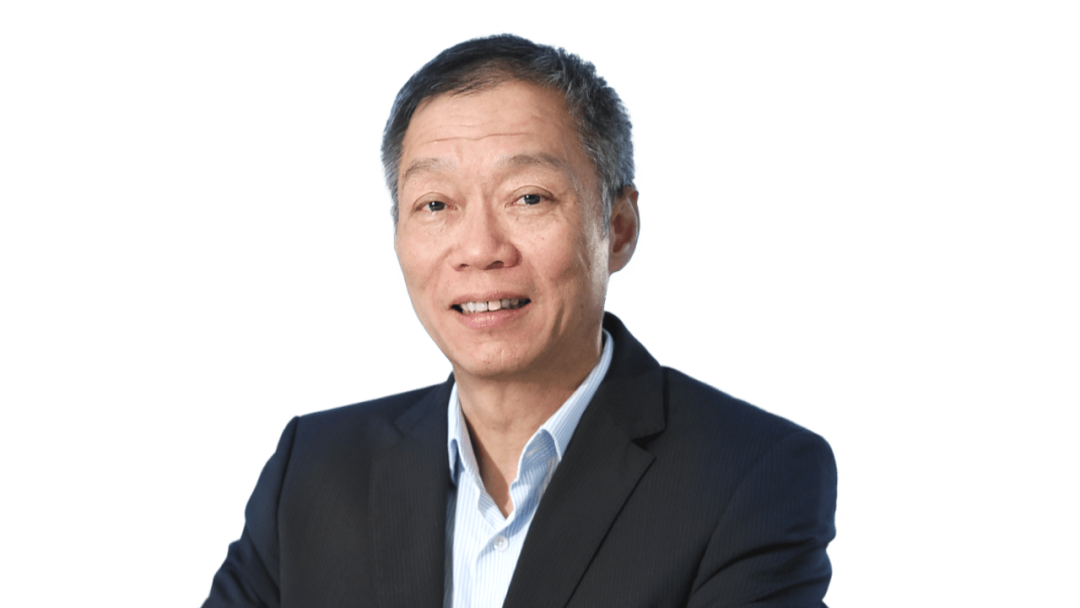
Duane Kuang, Founding Managing Partner of Qiming Venture Partners
But starting in 2018, Kuang witnessed a new generation of Chinese entrepreneurs launching more frontier assaults in chips, innovative pharmaceuticals, and artificial intelligence. He realized that clinging to follow-the-leader innovation would mean missing out on "home run" opportunities — investments yielding tenfold or hundredfold returns. This triggered deep organizational reforms around talent systems and structure.
These reforms kept Qiming Venture Partners in step with the new era. Take the firm's recent AI IPOs: its investments were made well ahead of mainstream consensus. In 2019, when China's GPU sector was still a blank slate, Qiming injected $15 million in seed funding into Biren Technology, then just a handful of people. That same year, its $7 million bet on Insilico Medicine came when AI-driven drug discovery remained exploratory, its prospects uncertain. And when it invested in Zhipu AI in early 2022, commercializing AI still felt like climbing an unknown mountain, the path ahead unclear.
In Qiming's AI pipeline, star companies like StepFun, Sharpa, Galaxy Universal, and Infinigence AI are still incubating — and Qiming completed its first investment in each before they turned one year old.
"For the next 20 years, investing in AI is the greatest certainty in Chinese investing," Kuang stated.
This Securities Times conversation with Kuang serves both to understand Qiming's core investment philosophy during Chinese companies' early development stages, and to interpret the evolution of China's innovation ecosystem and industrial upgrade logic through the lens of a top-tier investor — an essential exploration of China's industrial transformation trajectory.
01/ Deconstructing Qiming: Strategic Focus, Dynamic Evolution, Investing "Half a Step Ahead"
Securities Times: What has been the source of Qiming Venture Partners' long-term competitiveness over 20 years?
Duane Kuang: The venture capital industry has seen many ups and downs over the past 20 years. We've always adhered to the principle of responding to change with constancy. The core boils down to two points: First, a firm conviction in China's long-term market potential and deep commitment to the Chinese market; second, persistence in innovation-driven investing.
Of course, we've had moments of internal reflection and doubt along the way. For example, we tried following the trend with two or three dozen investments that seemed directionally clear and path-stable, but the results were poor. Perhaps this approach simply isn't in our DNA. We had to return to what we do best: capturing new innovation trends and directions, and deploying capital earlier.
Over 20 years, we've managed 11 USD funds and 7 RMB funds. Nearly every fund has contained at least one or two or three "home run" projects. Choosing innovation-oriented sectors means a higher failure rate by definition, but successful returns more than cover all trial costs. This has shaped Qiming's core investment style over the past two decades.
Actually, in earlier years when geopolitical shifts were more frequent, the industry debated whether to pursue global expansion. We ultimately chose to concentrate all our energy on what we could do best — focusing on the Chinese market, staying committed to innovation-driven investing, and continuously refining our organizational structure and team building around these two pillars.
Securities Times: Technology and healthcare industries have undergone massive changes over the past 20 years. What corresponding adjustments has Qiming made to its investment strategy?
Duane Kuang: Qiming's investment strategy remains anchored in two core sectors: technology and healthcare innovation.
In technology, we initially focused on TMT (technology, media, and communications), capturing opportunities where "internet applications were primary, technology secondary." Ten years ago, this evolved to T&C (technology and consumer), with "technology as primary, applications secondary." Today, the overwhelming focus is on "technology" as the core. Of course, the technology portfolio may shift again. For instance, there's growing consensus that in the next three years, as AI infrastructure matures, application models and platforms will see new transformation. I believe that rather than emphasizing technological leadership per se, it's more important to recognize that innovation enabled by technology is an enduring theme.
Our healthcare innovation deployment has also evolved step by step. Early positioning leaned toward quality healthcare services, then gradually shifted to domestically developed drugs and devices — initially mining "me-too" opportunities that matched global frontier standards but at China-appropriate prices. Starting in 2021, we began targeting Chinese innovative drugs for global markets.
Securities Times: "Half a step ahead" investing has become one of Qiming's calling cards. What practices can you share?
Duane Kuang: The core of "half a step ahead" is letting professionals do professional work.
To invest "half a step ahead," team members must have deep understanding of underlying technologies. You can't rely solely on market information to source opportunities. Especially in today's technology-driven environment, our team building heavily emphasizes formal disciplinary training. Generalist investors simply can't grasp the "half a step ahead" rhythm. They might judge broad directions, but the specific "half-step" differential must be handled by domain experts.
We require that when our team engages with industry peers, the conversation can't be at a popular science level. Nowadays, many VCs and PE firms communicating with early-stage tech companies either adopt an overly humble learning posture or arrogantly ask irrelevant questions — neither is good. Investors who can dialogue with founders on the same wavelength typically earn recognition from early-stage entrepreneurs. After all, early projects are full of uncertainty. The key is whether the investor understands the founder's technical foundation and development direction, and at minimum doesn't ask amateurish questions. This is what we emphasize in team building.
Of course, every time an industry's underlying logic undergoes major transformation, it brings enormous personnel management challenges. Because for an organization to stay vibrant, talent must have reasonable mobility mechanisms. For example, in technology, investors who've long studied internet applications struggle to quickly digest underlying technologies. The same applies in biopharma. The logic used to be simple: see what drugs sold well in America, conclude China likely had similar demand given comparable population incidence rates. That logic was easy to grasp. But now it's completely different. You need to focus on major diseases still unsolved globally, what new technologies and solutions exist, then find Chinese scientists and technical teams capable of executing. In this process, founders explain specific technical pathways to us, so we must rely on team experts. These experts may not invent technologies themselves, but they can at least comprehend and judge: whether this direction represents global research frontiers, whether other research institutions are advancing it with breakthroughs, and whether the founder's technical foundation and accumulation are solid. Only then do we dare invest in early-stage hard tech projects. This confidence comes entirely from these domain experts on our team.
However, people with formal disciplinary training often lack investment capabilities, even deal-sourcing capabilities, when they first enter venture capital. At that point, Qiming must create good growth opportunities for them. Everyone recognizes this trend, but executing it isn't easy.
Returning to your original question, our "half a step ahead" investing has clear principles: rely on professional, formally trained teams to closely track technology trends, and move when technology has been sufficiently validated in the lab and is about to reach market. Move too early, and the technology isn't sufficiently proven — you're essentially investing at the lab stage. Move too late, and market consensus has already formed, losing the "half a step ahead" advantage.
Zhipu AI is a classic case. Before large language models emerged, the AI field had been quiet for quite some time, but we maintained deep attention. So when the Transformer architecture (a deep learning model) appeared in 2018, the team began pushing to reallocate toward AI. When Zhipu was founded, it was doing business intelligence, but its founding team had deep technical foundations in large models, and by 2021 wanted to pivot into this track. We provided the capital needed for that transformation, becoming one of its early investors.
02/ Organizational Evolution: Achieving Longevity Through Equal Partnership
Securities Times: What mechanisms does Qiming have for generational transition? How did your experience at Cisco and Intel influence Qiming's culture and organizational transformation?
Duane Kuang: The influence was substantial. Having worked at large multinationals for over a decade, I deeply subscribe to the philosophy that "venture capital firms are also enterprises." VC/PE institutions always scrutinize portfolio companies' teams, culture, combat effectiveness, and cohesion during investment committees. Yet many firms themselves are loosely run, dominated by "the boss's will." When the boss loses enthusiasm, the firm stagnates; when the boss is fired up, the firm goes all-in.
So from Qiming's founding, we established an equal partnership mechanism. All managing partners have identical compensation and decision-making authority. We don't excessively emphasize individual will or influence. Internal decisions involve multiple managing partners jointly. Both technology and healthcare innovation operate under "dual leader" systems. This way, regardless of who is present or who leaves, Qiming won't suffer major disruption.
My supposed "retirement" has been rumored for 10 years. Even if I actually retired tomorrow, it wouldn't affect Qiming's operations — colleagues can step up when I leave. That's the key to sustainable enterprise development.
03/ The State Capital Era: Preserving Space for "Non-Mainstream" Innovation
Securities Times: As the venture capital market enters a state capital-dominated phase, how has this ecological shift affected Qiming?
Duane Kuang: Let me first address the fundraising market. Today's state-owned LPs (limited partners) are already highly professional. Whether government guidance funds from Shanghai, Suzhou, or Beijing, their understanding of venture capital markets and industries is absolutely comparable to market-based institutions. You can't view state capital through an outdated lens. They know the business; they simply have different starting points from purely market-based institutions. Each side takes what it needs.
As for direct state investment, I believe it has dual effects. On one hand, when market-based capital is insufficient, state capital fills the gap. This is critically important. For instance, during the trough of Chinese AI investment in the past two years, U.S. investment in AI infrastructure was 50 times China's. At that point, state capital stepped forward, essentially carrying the load.
But on the other hand, if direct state investment's share grows too high, there's concern that large numbers of early-stage projects may passively cater to state preferences, crowding out "non-mainstream" innovation and causing China's innovation ecosystem to lose diversity. Looking back, Alibaba wasn't a policy-encouraged direction when it started, yet it grew into a great enterprise contributing to China's economy and people's livelihood. When OpenAI was piling up compute, the outcome was unpredictable too, but market-based capital was willing to bet on them.
China must preserve ample space for "non-mainstream" innovation. This isn't a short-term issue — it concerns whether those "small seedlings" being overlooked today can grow into towering trees in 10 years.
Securities Times: How does Qiming play its role as a market-based institution?
Duane Kuang: We're ultimately an investment institution. The premise of investing is judging whether a project can eventually establish a viable business model. That said, we're more willing to deploy one step ahead.
Our early-stage investment decisions can be deconstructed into four dimensions: whether the direction is attractive long-term, whether the ceiling is high enough, whether the team is strong enough, and whether required capital can be fully raised. Early-stage investing can't focus only on the current round; you must prospectively assess the company's overall capital needs across multiple future rounds and pre-IPO — this is often what we focus on most.
Take Biren Technology as an example. It was a relatively controversial project internally in recent years. When we first engaged in 2019, the company wasn't even formally registered (it was founded in September that year). At the time, NVIDIA's market cap was only $100 billion, with no restrictions on its chips. So our judgment wasn't based on "AI hype" or "domestic substitution," but rather three points: First, founder Wen Zhang and the early team's capabilities, experience, and background were sufficiently strong. Especially before company formation, "the people" were the core. Second, the GPU sector had breakthrough potential — even without an AI demand explosion, the gaming industry could absorb some compute, and compared to CPUs, GPUs had differentiation room. Third, could the team raise more money? Making chips differs from making applications. Applications can "cook with what you have" — more money means more promotion, less means slower growth. But chips require massive capital. We calculated at least $100–200 million would be needed. So if Biren could only raise $50 million, the company would be worthless. But Zhang's organizational and fundraising capabilities answered that question.
Securities Times: Regarding innovation in healthcare, we've noted two voices in the market about innovative drugs' overseas BD (business development): one views it as resource waste, the other as risk transfer and a shortcut to leapfrog. What's your view?
Duane Kuang: I align with the latter. Looking back at China's IT industry development, in the 1980s and 1990s, multinationals like IBM and Cisco entered China, attracting substantial local talent. Some called it "brain drain" at the time, but later these talents joined Chinese companies, enabling the success of enterprises like Huawei.
Innovative drugs are fundamentally the same. For example, when Pfizer and other pharma companies established R&D centers in Zhangjiang, it appeared to be leveraging China's more cost-effective human resources. In reality, it cultivated a talent pool. They learned, grew, left, and founded companies — forming a virtuous cycle.
If a large cohort of Chinese innovative drug companies sell portions of their pipelines for 50 million or 5 billion RMB, these entrepreneurs and scientists will most likely choose to start again. They'll reflect that "we sold too early, too cheap last time," and hope to go further in their next venture. Gradually, the innovation ecosystem builds up.
Securities Times: Do you believe there's a bubble in AI?
Duane Kuang: I firmly believe there is no AI bubble in China, and 2026 will see an explosion of AI applications. Core reasons include:
First, AI is the core trend shaping the world for the next 20 years. For the next 20 years, investing in AI is the greatest certainty in Chinese investing. China's AI rise coincides with a trough in private equity markets. AI investment may seem hot now, but it's still far from "boiling at 100 degrees." In prior years, Biren Technology and Zhipu AI were both worried about "where's the next meal," so there was simply no bubble to speak of.
Second, Chinese AI applications haven't yet exploded. The U.S. is investing heavily in data centers because enterprise applications are already consuming tokens at massive scale. In China, the biggest applications remain in the consumer space; enterprise applications are virtually blank. We've been laying AI infrastructure for years. In 2026, token costs will drop substantially, so a flood of AI applications will emerge.
Overall, I'm very confident about tech fundraising in 2026 and the medium-to-long term.
04/ 20-Year Retrospective: "80 Points for the Firm, 90 for Myself"
Securities Times: Looking back over 20 years, what scores would you give yourself and Qiming?
Duane Kuang: For Qiming's 20 years, I give the firm 80 points, myself 90.
Qiming's shortcomings are mainly in two areas: First, missing the e-commerce and new energy waves. In the transition from internet to mobile internet, our social media positioning was decent — we invested in Bilibili, Musical.ly (acquired by Toutiao in 2017 and merged with TikTok), and others. But in e-commerce, we missed Pinduoduo and a batch of similar projects. In the first-generation new energy vehicle wave, we were also absent, missing great companies like CATL. We've internally discussed these misses. The former was "we paid attention but didn't execute well," requiring deep reflection. The latter was "a strategic choice not to cover," so whether to extend our investment reach into new energy going forward warrants continued consideration.
Second, insufficient conviction to double down on good projects. Our healthcare innovation team has done better than our technology team at adding to strong positions. Some peers have also outperformed us here.
As for myself, over the past 20 years, my own capability ceiling has to some extent determined Qiming's current state. But the future belongs to the team. If more outstanding colleagues emerge, Qiming can do even better. Of course, this also requires our organizational culture to be bolder about "making big bets" on good projects — more decisive, more resolute.
Source | Securities Times
Author | Zhang Tianlun
Previous Features
Qiming Honors | 5 Qiming Venture Partners Investors Named to 2025 Forbes China Midas List
Qiming Venture Partners was founded in 2006. The firm currently manages 11 USD funds and 7 RMB funds, with total committed capital reaching $9.5 billion. Since inception, Qiming has focused on investing in outstanding early and growth-stage companies in Technology and Healthcare.
To date, Qiming Venture Partners has invested in over 580 high-growth innovative enterprises, of which more than 210 have listed on the New York Stock Exchange, NASDAQ, Hong Kong Exchanges and Clearing, Shanghai Stock Exchange, and Shenzhen Stock Exchange, or exited through M&A and other means. Over 80 portfolio companies have become recognized unicorns or super-unicorns.
Many Qiming Venture Partners portfolio companies have grown into the most influential companies in their respective fields, including Xiaomi (01810.HK), Meituan (03690.HK), Bilibili (NASDAQ:BILI, 09626.HK), Zhihu (NYSE:ZH, 02390.HK), Roborock (688169.SH), Hesai Technology (NASDAQ:HSAI, 02525.HK), UBTECH (09880.HK), WeRide (NASDAQ:WRD, 0800.HK), HyperStrong (688411.SH), Insta360 (688775.SH), Unisound (09678.HK), Biren Technology (06082.HK), Zhipu AI (02513.HK), Gan & Lee Pharmaceuticals (603087.SH), Tigermed (300347.SZ, 03347.HK), Zai Lab (NASDAQ:ZLAB, 09688.HK), CanSino Biologics (688185.SH, 06185.HK), Schrödinger (NASDAQ:SDGR), MicroPort EP MedTech (688617.SH), Sanyou Medical (688085.SH), Amoy Diagnostics (300685.SZ), SinoCellTech (688520.SH), Insilico Medicine (03696.HK), Arbutus Biopharma, Yuanxin Technology, MediLink Therapeutics, LaNova Medicines, StepFun, among others.