Qiming Venture Partners Leads B Round as MuFan Power Raises Over 500 Million Yuan in Back-to-Back Rounds to Build Power Security Foundation for AI-Era Computing
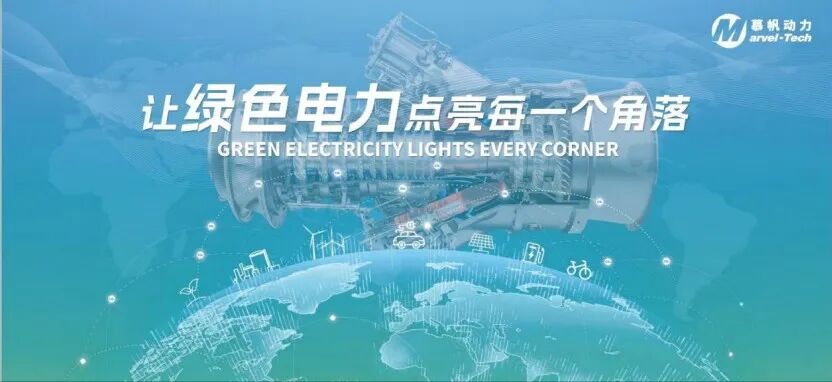
Stable green power, available anywhere on Earth, at any time.

Recently, Shanghai MuFan Power Technology Co., Ltd. (hereinafter referred to as "MuFan Power") announced the completion of two consecutive funding rounds totaling over 500 million RMB. Qiming Venture Partners co-led the Series B round and participated in the Series C round. The proceeds will primarily fund the batch assembly and manufacturing center for MuFan Power's core products — gas turbines and turboexpander product lines — as well as a high-power factory acceptance test center, while accelerating the scale-up of fully self-developed gas turbines. MuFan Power plans to build a manufacturing and delivery base with 1 GW mass production capacity by 2026, creating an autonomous, controllable, and rapidly scalable power security foundation for the AI-era computing industry.
Lin Gang, General Manager of MuFan Power, stated: "The global AI data center industry is currently undergoing a 'captive power plant' revolution. In North America alone, the supply-demand gap for gas turbines will reach tens of gigawatts over the next three years, with overseas tech giants already making bulk gas turbine procurement standard practice. Domestically, 'compute-power synergy' has just been written into the energy construction '15th Five-Year Plan,' with 'strengthening compute through power, promoting power through compute' becoming a national strategic direction — providing us with an unprecedented policy window. This funding round will accelerate our batch manufacturing capabilities for gas turbines and turboexpander equipment, enabling us to simultaneously meet explosive demand for captive power stations from AIDCs (AI data centers) both at home and abroad. MuFan Power aims not only to serve domestic computing infrastructure, but to bring China's fully self-developed gas turbine solutions to the global market and compete internationally. We are confident that in this global compute-power race, Chinese gas turbines and high-end turboexpander equipment will claim their rightful position."
MuFan Power was founded by Lin Gang's Germany-returned team, with core technologies spanning hydrogen-fired gas turbines and industrial waste heat and pressure recovery turboexpander power generation equipment, focused on developing next-generation zero-carbon clean power generation technologies and products. The company has independently developed the world's first hydrogen-ammonia gas turbine and the world's first tri-fuel zero-carbon low-NOx combustor, capable of dry low-NOx combustion of hydrogen, ammonia, and natural gas without hardware modifications, with products covering power generation needs from kilowatt to tens-of-megawatt scale. Based on a "modular scaling, serialized design" family product philosophy, the company is currently focusing on two flagship models — 8 MW and 30 MW: the 8 MW model targets green fuel scenarios, while the 30 MW model targets AIDC power base scenarios. This "one machine, multiple fuels" technical foundation serves as both MuFan Power's entry ticket into AIDC power supply and its long-term moat for future green transformation.
01/
The competition in AI is, at its core, a competition for power
With the rapid development of the AI industry today, the underlying foundation of compute competition is power supply capacity — large-scale compute clusters consume electricity comparable to an entire city. Large model training and inference clusters run 24/7 at full load, with ten-thousand-card intelligent computing parks already approaching county-level electricity consumption. Compute expansion directly translates to surging power demand. Relevant estimates show that during the "15th Five-Year Plan" period, China's compute power electricity consumption will increase by over 100 billion kWh annually, reaching 800 billion kWh by 2030 — approximately 6% of total societal electricity consumption.
Power supply stability directly affects normal AIDC operations. GPU clusters have near-zero tolerance for voltage fluctuations or instantaneous power outages; millisecond-level voltage sags or brief blackouts can cause training losses in the tens of millions. Whoever can provide stable, uninterrupted high-capacity power can safeguard model iteration speed and seize the window for AI deployment.
But public grid expansion cannot keep pace with AI's growth. Grid transformation cycles in China stretch several years, while some AI data centers in the US face grid interconnection wait times of up to 7 years. Data shows that 62% of data centers are already considering self-built power facilities, with captive power stations becoming the mainstream path to bypass grid bottlenecks. Power self-sufficiency capability is thus widening the gap between AIDC operators.
Meanwhile, electricity costs determine the profit margin for AI commercialization. Power bills account for over 60% of AI operating costs; stable, low-cost power supply is a critical prerequisite for achieving scalable profitability in AI businesses. Through gas turbine combined cooling and power generation, both power generation and liquid cooling needs can be met simultaneously — recovering high-temperature exhaust heat to produce chilled water, replacing chiller power consumption, thereby reducing PUE and significantly cutting comprehensive energy costs.
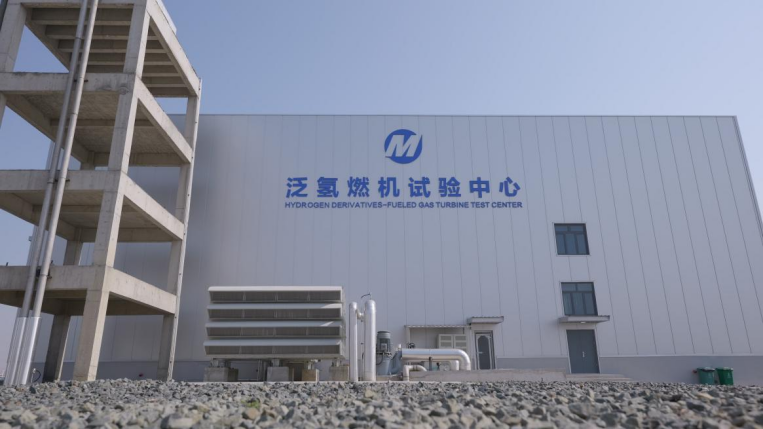
MuFan Power Gas Turbine Full-Load Test Center
02/
Gas Turbines: The Optimal Solution for AIDC Power Supply
The explosive growth of AI compute has fundamentally restructured the industrial positioning of gas turbines — they are upgrading from traditional grid peaking equipment to an indispensable underlying power foundation for AIDCs, directly determining power quality and construction pace for compute infrastructure.
MuFan Power adopts a "modular scaling, serialized design" family product philosophy, deriving 8 MW and 30 MW models from the same technology platform, sharing core technologies including the tri-fuel zero-carbon low-NOx combustor. The 8 MW model currently targets green fuel scenarios,率先落地 in byproduct hydrogen utilization, hydrogen-ammonia fuel power generation, and other applications, serving as the primary vehicle for validating hydrogen blending and pure hydrogen/ammonia technical pathways. The 30 MW model targets AIDC power base scenarios, with single-unit capacity closely matching typical electricity consumption levels of single AIDC buildings or individual modular machine rooms. Customers can flexibly match power needs from single buildings to park-level scale through multi-unit parallel connection, achieving elastic expansion of "build as much, connect as much" — the two models advance in tandem, supporting current AIDC batch delivery while reserving a same-platform migration path for future green upgrades.
AI cluster power supply demands 99.999% availability. Wind and solar new energy have inherent variability and intermittency; electrochemical storage represented by lithium batteries can only support 0.5–4 hours of short-term buffering — neither can carry ten-thousand-card-level compute base loads 24/7. Gas turbines can run continuously at full load for months, making them the undisputed choice for large-capacity long-duration captive power. They also solve the pain point of "outage equals massive losses" at the lowest cost and highest efficiency, becoming the preferred base-load power source for data centers.
AI liquid cooling accounts for 20%–30% of total data center energy consumption. Gas turbines integrate power generation and waste heat cooling, with comprehensive energy utilization exceeding 80%, capable of pushing AIDC PUE below 1.1, significantly reducing electricity expenses over the long term.
From a delivery cycle perspective, municipal grid transformation for ten-thousand-card intelligent computing parks takes 5–10 years with extremely high approval difficulty; modular 30 MW-class gas turbine units require only 12–16 months for delivery and commissioning, supporting compute customers to parallel-connect in 30 MW units progressively, expanding in phases. Self-built gas turbine power stations have become standard for North American tech giants — Microsoft, Google, Amazon, OpenAI, and xAI have all made bulk gas turbine procurement for AIDC captive power.
On the demand side, global supply-demand gaps are enormous, and the domestic substitution window has opened. According to CSC Financial research, surging North American AI compute demand is driving data centers into the "captive power plant" era, with AI power demand growing at a 73% CAGR from 2026–2028, and global gas turbine supply-demand gaps expected to reach 16 GW, 16 GW, and 19 GW respectively. Overseas gas turbine order backlogs already extend to 2030, with delivery cycles of 3–5 years — this massive gap is creating a historic opportunity for Chinese gas turbine OEM exports. MuFan Power's plan to build a 1 GW mass production base by 2026 will become important capacity reserves to capture this global gap.
| 8MW / 30MW Family Dual Models (Green Fuels / AIDC Power Base) | 1GW Mass Production Delivery Capacity by 2026 | 99.999% AI Cluster Power Availability Requirement |
|---|---|---|
| 80%+ Combined Cooling and Power Comprehensive Energy Utilization | <1.1 AIDC PUE with Gas Turbine Solution | 12–16 Month Modular Unit Delivery Cycle |
03/
The "15th Five-Year Plan" Energy Blueprint Unfolds, Gas Turbines Stand at Multi-Scenario Inflection Point
In June 2026, the New Energy System Construction "15th Five-Year Plan" was formally released, with compute-power synergy elevated to national strategy, opening multiple policy spaces for the gas turbine industry.
The plan proposes "promoting compute strengthening through power, power promotion through compute," strengthening bidirectional empowerment between compute and power. As the most critical conversion equipment between compute and power, gas turbines play a hub role in AIDC captive power stations. The policy also explicitly plans "rationally planning and constructing natural gas power plants, increasing domestic gas turbine demonstration and promotion application," requires accelerating hydrogen and green fuel industry development, promoting hydrogen-ammonia-methanol applications in power generation and other fields, with renewable energy hydrogen production scale reaching 2 million tons by 2030. The plan also encourages thermal power to adopt zero-carbon low-carbon fuel co-firing — meaning gas turbines are evolving from simply burning natural gas toward hydrogen blending, ammonia blending, and even pure hydrogen and pure ammonia in the pan-hydrogen fuel direction, with application scenarios extending from peaking and heating to full-spectrum zero-carbon power generation.
The plan emphasizes energy equipment autonomy and controllability, providing institutional guarantees for domestic gas turbine engineering application through first-set (unit) major technical equipment demonstration systems; the development of smart microgrids and wind-solar-gas-storage integrated microgrids also opens new application spaces for gas turbines in park combined cooling, heating and power, and green power consumption.
04/
Facing the Future: From Stable Power Supply to Zero-Carbon Power Supply Green Path
AIDC power demands are upgrading from "whether it exists, whether it's stable" to "whether it's green, whether it's low-carbon." An increasing number of international cloud providers and compute customers have incorporated renewable power share and carbon emission intensity into site selection and procurement standards, which means gas turbine solutions must have a clear decarbonization evolution path rather than being one-time transitional technology.
Thanks to the family product "same platform, shared technology" design philosophy, MuFan Power's dual models coordinate: 8 MW leads validation, 30 MW follows in parallel. Hydrogen blending, pure hydrogen, and pure ammonia combustion technologies first validated by the 8 MW model in green fuel scenarios such as byproduct hydrogen utilization and hydrogen-ammonia fuel power generation can be smoothly transferred to the 30 MW model. This means the 30 MW-class gas turbine units delivered to AIDCs today are not isolated transitional solutions, but share the same technology evolution curve with the 8 MW green fuel model, reserving a deterministic path for customers' future green upgrades.
Near-term: secure supply with gas power, rapidly bridging the AIDC power gap. Leveraging the mature stability and short delivery cycle of 30 MW-class units, first meet AIDC's urgent demand for large-capacity, high-reliability base-load power, helping compute customers bypass the time bottleneck of grid expansion.
Mid-term: hydrogen and ammonia blending, smooth decarbonization with the same equipment. Relying on the tri-fuel zero-carbon low-NOx combustor technical foundation, gradually increase hydrogen, ammonia, and other zero-carbon fuel blending ratios without hardware modification, allowing commissioned units to decarbonize in sync with green fuel supply capacity growth, avoiding asset stranding risk of "built to be obsolete."
Long-term: pure hydrogen and pure ammonia, advancing toward true zero-carbon power generation. As domestic green hydrogen capacity advances toward the 2030 target of 2 million tons and green fuel supply chains gradually mature, MuFan Power's fully self-developed hydrogen-ammonia gas turbines will support pure hydrogen and pure ammonia power generation, helping AIDCs ultimately complete the full leap from "stable power supply" to "zero-carbon power supply."
This "gas power start, hydrogen blending transition, pure hydrogen and pure ammonia finish" technology roadmap allows MuFan Power's gas turbines to both solve AIDC's most pressing power delivery problems today and reserve a deterministic upgrade path for customers' future green and zero-carbon commitments.
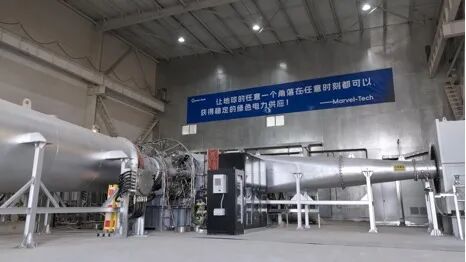
MuFan Power Production Base: "Enabling stable green power supply at any corner of the Earth, at any moment"
The Series B round was co-led by Jianfa Xinxing Venture Capital and Qiming Venture Partners, with Shanshui Capital participating. The Series C round was led by HSG, with Qiming Venture Partners, Envision HSG Carbon Neutral Fund, Jianfa Xinxing Venture Capital, Fortune Venture Capital, Hillhouse, and Shanshui Capital participating.
PAST REVIEWS
Forum Registration | 2026 WAIC Qiming Venture Partners · Entrepreneurship and Investment Forum — From Compute Origin to Application Landing Evolution Journey is Here! Qiming Weekly | Qiming Venture Partners Portfolio News Top 10 Vol.21, 2026.6.23 Qiming Honors | 5 Qiming Venture Partners Investors Named to 2025 Forbes China Top 100 Venture Capitalists List

Qiming Venture Partners was founded in 2006. Currently, Qiming Venture Partners manages 11 USD funds and 7 RMB funds, with total committed capital reaching $9.5 billion. Since its establishment, it has focused on investing in early and growth-stage outstanding enterprises in Technology and Healthcare.
To date, Qiming Venture Partners has invested in over 580 high-growth innovative companies, of which more than 210 have listed on the New York Stock Exchange, NASDAQ, Hong Kong Exchanges and Clearing Limited, Shanghai Stock Exchange, and Shenzhen Stock Exchange, or exited through mergers and acquisitions, with over 80 companies recognized as unicorns or super-unicorns in their respective industries.
Among Qiming Venture Partners' portfolio companies, many have grown into the most influential companies in their fields, including Xiaomi (01810.HK), Meituan (03690.HK), Bilibili (NASDAQ:BILI, 09626.HK), Zhihu (NYSE:ZH, 02390.HK), Roborock (688169.SH), Hesai Technology (NASDAQ:HSAI, 02525.HK), UBTECH (09880.HK), WeRide (NASDAQ:WRD, 00800.HK), HyperStrong (688411.SH), Insta360 (688775.SH), Unisound (09678.HK), Biren Technology (06082.HK), Zhipu AI (02513.HK), Gan & Lee Pharmaceuticals (603087.SH), Tigermed (300347.SZ, 03347.HK), Zai Lab (NASDAQ:ZLAB, 09688.HK), CanSino Biologics (688185.SH, 06185.HK), Schrödinger (NASDAQ:SDGR), APT Medical (688617.SH), Sanyou Medical (688085.SH), AmoyDx (300685.SZ), Sinocelltech (688520.SH), Insilico Medicine (03696.HK), AusperBio, Yuanxin Technology, MediLink Therapeutics, Leads Biolabs, StepFun, and others.