Dialogue | Has the AI Cognitive Revolution Already Arrived?

Alex Zhou, Managing Partner at Qiming Venture Partners, and Dr. Wei Liu, Founder and CEO of Qiming portfolio company Video Rebirth, engaged in an in-depth dialogue on core topics including the evolution path of AI technology, industry transformation trends, startup competition, and global expansion strategy — shedding light on the technological trends of the AI 2.0 era and the breakthrough strategies for China's science and technology enterprises.

Recently, the "China Sci-Tech Innovation, Global Opportunities" — WeStart 2025 Venture Capital Conference Shanghai Science and Technology Innovation Bank special session, hosted by Shanghai Technology Entrepreneurship Center and Shanghai Science and Technology Innovation Bank, was successfully held. During the fireside chat, Alex Zhou, Managing Partner of Qiming Venture Partners, and Dr. Wei Liu, Founder and CEO of Qiming portfolio company Video Rebirth, engaged in an in-depth discussion on core topics including AI technology evolution paths, industry transformation trends, entrepreneurial competition, and global expansion — revealing the technological trends of the AI 2.0 era and the breakout strategies for China's sci-tech enterprises.
This fireside chat also highlighted the core strengths of China's sci-tech enterprises. Under the theme of "China Sci-Tech Innovation, Global Opportunities," as technological breakthroughs deepen and global expansion accelerates, Chinese companies will occupy an increasingly important position in global competition, injecting "China strength" into worldwide technological development.
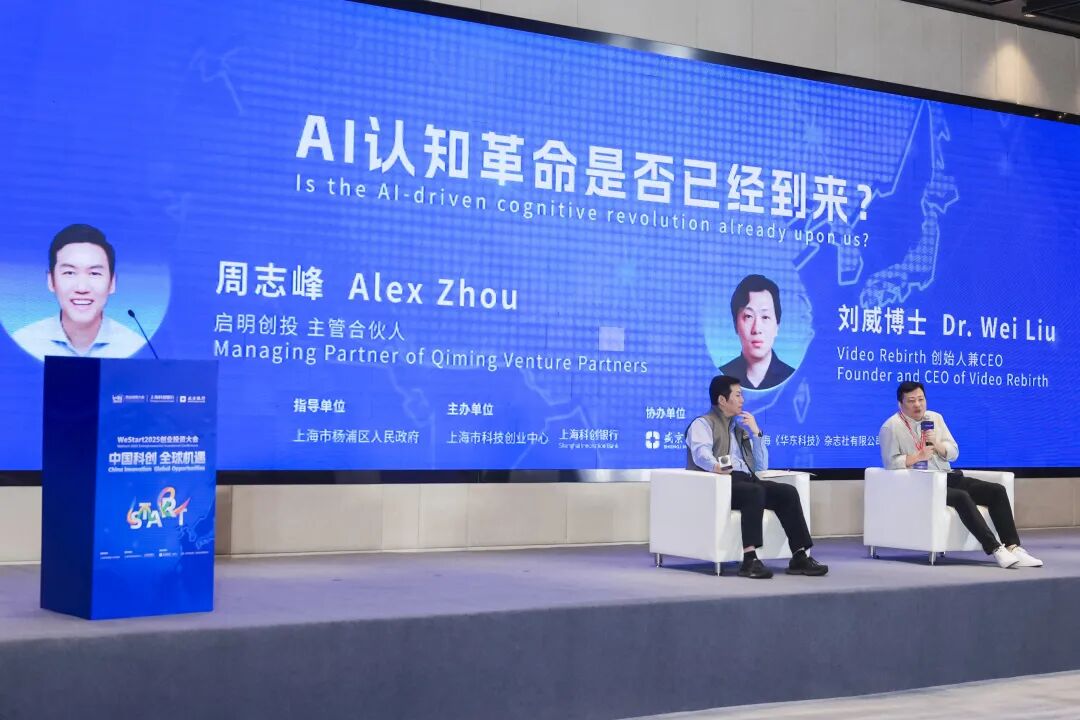
Alex Zhou, Managing Partner of Qiming Venture Partners (left), and Dr. Wei Liu, Founder and CEO of Video Rebirth (right)
Below is a curated recap of the dialogue's core content. Republished with authorization from the Qiming Venture Partners WeChat official account.
01/
From AI 1.0 to AI 2.0
From "Homogenized Involution" to "Model-Level Innovation"
Reflecting on AI's development history, Dr. Wei Liu has personally witnessed AI's entire journey from the laboratory to the industrial center. He clearly divides AI's history into two distinct eras, illustrating their fundamental differences through firsthand experience. He notes that if we mark Alan Turing's invention of the Turing machine or his proposal of the Turing machine concept as Year Zero of artificial intelligence, AI's development spans only about 80 years — with more than 50 of those years spent in a "dark age," and truly sustained breakthrough progress concentrated in just the past few years.
He dubs the deep learning wave launched by AlexNet in 2012 as the AI 1.0 era, when the industry was crowded with homogenized companies using nearly identical functional modules, mostly focused on low-barrier tasks with market share as the core competitive battleground. Meanwhile, giant monopolies were severe, and most startups essentially played the role of "making wedding dresses for the giants." After ChatGPT's launch in 2022, AI officially entered the 2.0 era — "model as product" became the defining characteristic. Products like ChatGPT and DeepSeek achieved explosive growth without paid user acquisition, proving that "original technology + clear demand" could enable startups to break through giant barriers. "The industry has now reached a better stage. If you have good ideas, technology, and a team, and can build a product with market competitiveness, even a completely unknown company can compete head-to-head with the giants," Liu stated.
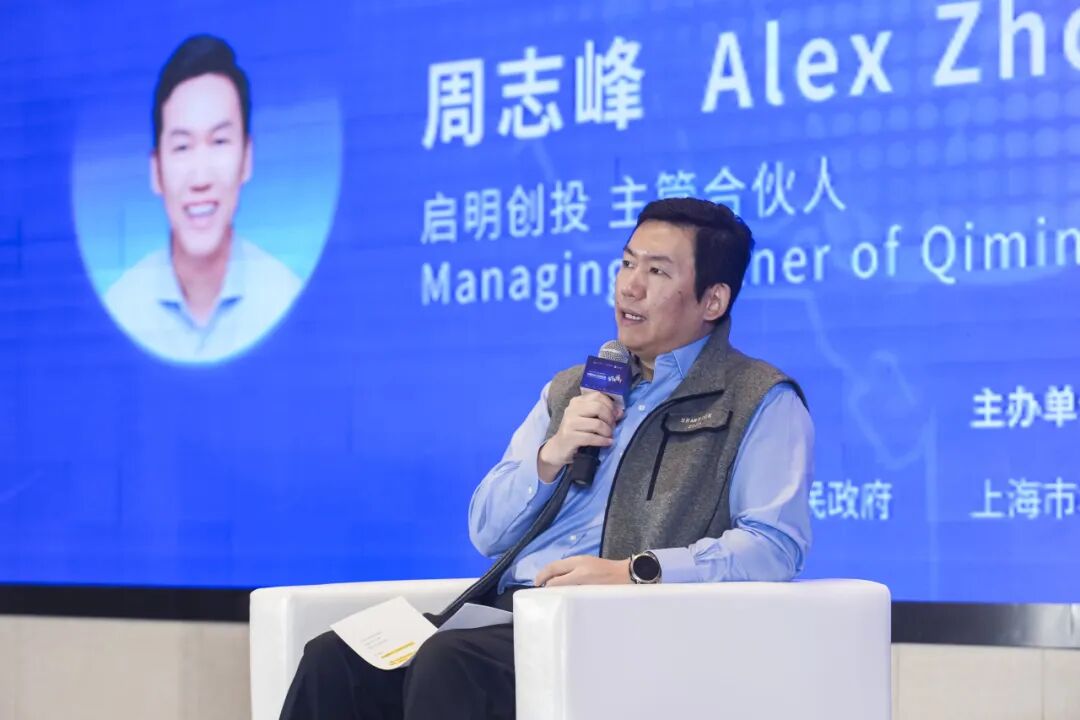
Based on years of industry observation and experience, Zhou added that AI 2.0's entrepreneurial logic differs from the internet era: Internet startups often had to focus on edge areas that giants hadn't touched, growing from the "margins," but in the AI 2.0 era, giants are going all-in, with senior leadership conducting regular progress reviews on AI and considering whether to pour in more heavy investment to push AI transformation across their businesses. AI isn't an edge battlefield — it's the giants' main battlefield. Against this backdrop, AI startups face far greater competitive difficulty than in the mobile internet era.
02/
World Models
The "New Hub" Connecting Digital and Physical Worlds
Precisely because he saw the opportunities in AI 2.0, Liu founded Video Rebirth, aiming to build the world's first true world model. He emphasized that "startups must charge like an army — first seize a small hill to establish their stronghold. A company without a stronghold cannot survive, and this stronghold must be high enough to support our continued climb toward higher peaks." In terms of breakout strategy, Video Rebirth chose to focus on the multimodal domain, where world models represent an excellent target.
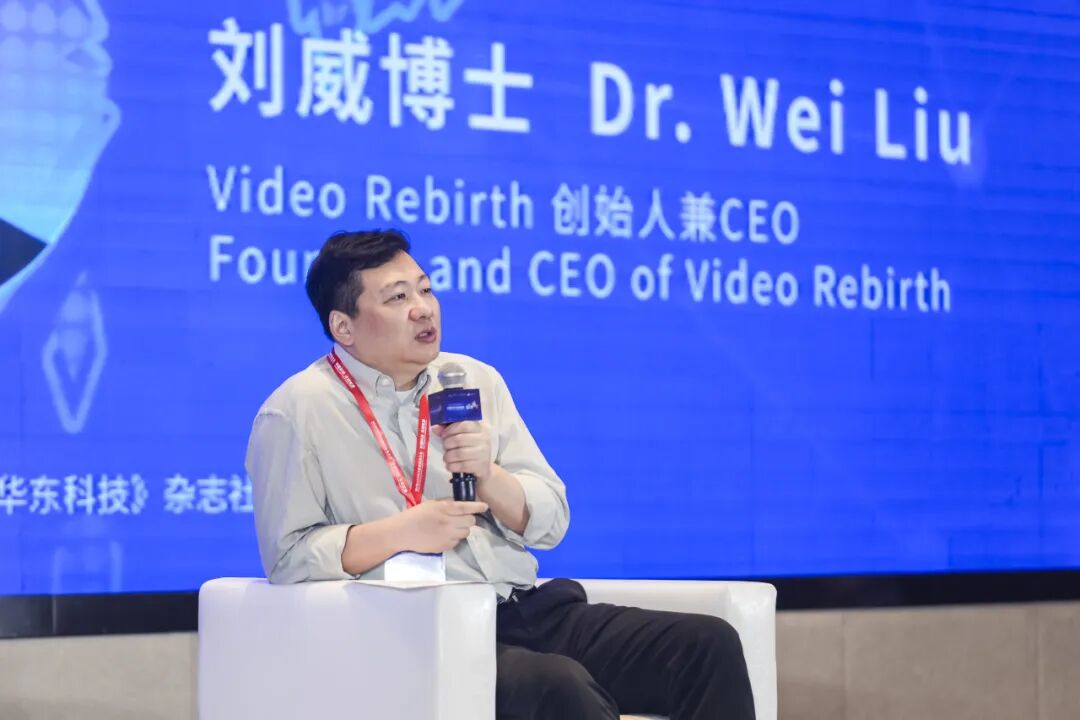
"World model" was the core new concept in this dialogue. Dr. Liu defines world models as "a crucial hub connecting the digital and physical worlds" — using AI to create an infinite game world. Users can autonomously build their own "small worlds" (defining characters, scenes, rules) or enter worlds built by others. They are both observers and creators.
One concrete application scenario is film and television creation, with a product form resembling "a combination of Roblox and Netflix." Functionally, users need not manually produce visuals — AI automatically generates content, supporting both gaming interaction and customizable film/TV, ultimately achieving an immersive experience where "game is movie, movie is game."
Currently, Video Rebirth plans to launch a world model prototype in the near future. This direction happens to be one where most AI giants "know they should do it, but haven't clarified the target," becoming a "breakthrough point" for startups.
03/
Embodied Artificial Intelligence
Humanity's "Deepest Fantasy" and China's Supply Chain Advantages
Discussing embodied AI, Zhou shared the industry landscape: over the past two and a half years, more than 130 embodied intelligent robotics companies have been established in China, with Qiming Venture Partners invested in several. Why are so many entrepreneurs entering now? Two core reasons:
1) Massive market potential: Robots represent humanity's "deepest fantasy" encoded in our genes — 300,000 years of evolutionary history have made us favor things resembling ourselves, desiring to create "another self." Robots are not merely tools, but entities that can "replace blind-box figurines and surpass chat tools." The industry broadly expects them to become the next major product category after PCs, phones, and automobiles, with leading companies potentially shipping tens of millions of units annually;
2) China's supply chain advantages: Taking Tesla's Optimus as an example, of its 1,200+ components, only three (two AI chips and one computing chip) are unrelated to China's supply chain. The Pearl River Delta and Yangtze River Delta can provide full-chain support from dexterous hands to lead screw drives. China also leads in hardware iteration speed — for instance, the hardware solution in Meta's recently released latest AI glasses represents R&D achievements that were already relatively mature four years ago, while Chinese manufacturers' comparable solutions hit the market in 2021 with better specs and lower costs.
This advantage has attracted global attention. Zhou noted that over the past six months, top investment institutions from the United States, Europe, and the Middle East have frequently visited China to research AI and robotics companies. They generally believe that among the global top ten embodied AI companies in the future, Chinese enterprises will likely account for more than half.
04/
Globalization and Future Giants
The "Virtual-Physical Fusion" New Form
Regarding Video Rebirth's globalization strategy and positioning, Liu outlined three core logics:
- Content delivery efficiency: Video carries vastly more information than language models, and doesn't depend on specific languages, enabling efficient global user reach;
- Compliance first: The core of AI companies' globalization is "dancing safely" — ensuring full compliance throughout talent recruitment, financing, and market expansion;
- Chinese enterprise advantages: Chinese teams' core competitiveness lies in "efficiency" and "sense of honor" — once a target is set, they will spare no cost to achieve it, with "accomplishing the goal" as the highest priority. This obsession with success is key to competing globally.
At the dialogue's conclusion, the two guests explored "in the next five years, in which sector will the next ByteDance, Tencent, or Xiaohongshu emerge":
Dr. Liu believes the internet has already fulfilled its historical mission of "enabling ordinary people to conveniently access information," making it difficult for another $500 billion+ giant to emerge there. The next giant will be a "virtual-physical fusion" new form, most likely from domains combining with the physical world, such as embodied AI or world models.
Zhou focused on three core human domains — "people, vehicles, home": For the domain centered on "people," the core need lies in building entirely new human-machine interaction forms. Current internet technology companies have already launched new entertainment formats, new content platforms, and new shopping models serving "people's" needs. Can a new generation of AI companies focused on "people" disrupt existing internet tech giants? The answer is that substantial possibility exists, and content interaction platforms may be the only direction with latent potential. For example, world models could construct an entirely new content form for human-machine and human-human interaction, spanning text, images, long video, short video, and other formats. If this form successfully materializes, it may give birth to the next "ByteDance." The "vehicle" domain offers limited opportunity to disrupt existing giants; while "home" represents the biggest blue ocean — if every household in the future is equipped with multiple robot assistants, combining Physical AI, Digital AI, and embodied AI, the "home"-related industry could potentially produce the world's largest company.
Source | Shanghai Science and Technology Innovation Bank
Past Reviews

Founded in 2006, Qiming Venture Partners currently manages 11 USD funds and 7 RMB funds, with total assets under management reaching $9.5 billion. Since its inception, the firm has focused on investing in outstanding early and growth-stage companies in Technology and Healthcare sectors.
To date, Qiming Venture Partners has invested in over 580 high-growth innovative enterprises, among which more than 210 have gone public on the New York Stock Exchange, NASDAQ, Hong Kong Exchanges and Clearing Limited, Shanghai Stock Exchange, and Shenzhen Stock Exchange, or exited through M&A and other means. Over 80 portfolio companies have become recognized unicorns or super-unicorns.
Many Qiming Venture Partners portfolio companies have grown into the most influential companies in their respective fields, including Xiaomi (01810.HK), Meituan (03690.HK), Bilibili (NASDAQ:BILI, 09626.HK), Zhihu (NYSE:ZH, 02390.HK), Roborock (688169.SH), UBTECH (09880.HK), WeRide (NASDAQ:WRD), HyperStrong (688411.SH), Insta360 (688775.SH), Unisound (09678.HK), Gan & Lee Pharmaceuticals (603087.SH), Tigermed (300347.SZ, 03347.HK), Zai Lab (NASDAQ:ZLAB, 09688.HK), CanSino Biologics (688185.SH, 06185.HK), Schrödinger (NASDAQ:SDGR), MicroPort EP MedTech (688617.SH), Sanyou Medical (688085.SH), Amoy Diagnostics (300685.SZ), Berry Genomics (000710.SZ), SinoCellTech (688520.SH), Yuanxin Technology, Insilico Medicine, MediLink Therapeutics, LaNova Medicines, Zhipu, StepFun, Biren Technology, and others.