Qiming View | Qiming Venture Partners' Kan Chen: Innovative Drug Primary Market Recovers, Bullish on Domestic FIC Innovative Drugs
Qiming Venture Partners will continue to stand by exceptional companies with a long-term mindset, helping them navigate cycles and expand globally.

In 2025, China's innovative drug industry achieved a critical leap from "quantitative accumulation" to "qualitative breakthrough," propelled by policy support, technological advances, and capital backing. BD deals surged, the funding market warmed, and global momentum accelerated.
Entering 2026, the growth trajectory of Chinese innovative drugs shows no signs of slowing. In just over two months since the start of the year, domestic biotechs including MediLink Therapeutics, Innovent Biologics, RemeGen, CSPC Pharmaceutical Group, and Ribo Life Science have all announced partnerships with overseas pharma companies. The transactions span ADCs, PD-1/VEGF bispecific antibodies, siRNA therapeutics, peptide drugs, and AI drug development platforms — a truly "multi-pronged" expansion.
How should investors view opportunities in China's innovative drug sector in 2026? What timing and deal size considerations should guide BD strategy? How can domestic biotechs "engineer" a successful BD? Pharma Innovation sat down with Kan Chen, Partner at Qiming Venture Partners and Co-Head of Healthcare Innovation, for an in-depth conversation.
Chen brings deep expertise and forward-looking industry vision. At Qiming Venture Partners, he has led investments in more than 30 companies, including Insilico Medicine, Structure Therapeutics, LaNova Medicines, MediLink Therapeutics, Vor Biopharma, and Zenitar, steering multiple companies to IPO and repeatedly facilitating partnerships with multinational pharma giants.
He believes China's innovative drug primary market will continue its recovery in 2026 — possibly even heating up significantly. With increasingly innovative early-stage pipelines and improved clinical translation capabilities at home, domestic first-in-class (FIC) drug development holds considerable promise.
However, as the queue of companies preparing for 18A listings continues to grow, expectations around BD deals are becoming more rational. Whether the secondary market can sustain its bullish momentum remains to be seen.
On the perennial topic of BD transactions, Chen particularly emphasizes that development speed, overseas clinical data, and close attention to MNC needs all determine the bargaining power of domestic innovative drug companies and the ultimate success or failure of BD deals.
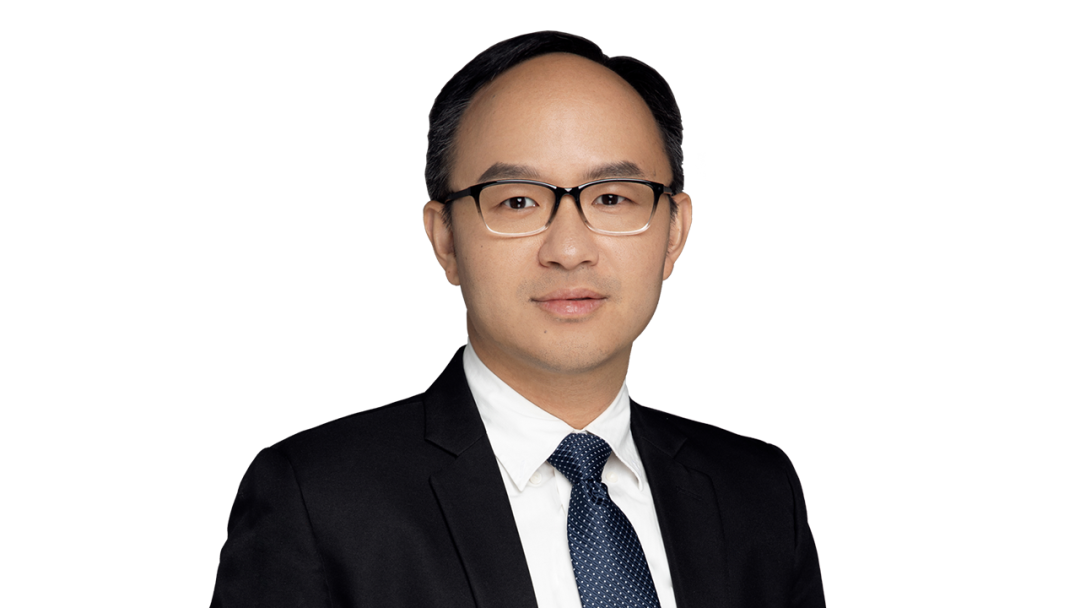
Kan Chen, Partner at Qiming Venture Partners and Co-Head of Healthcare Innovation
01/ How do you view future investment opportunities in China's innovative drug sector?
In 2025, China's innovative drug primary market underwent a pivotal shift from "deep freeze" to "recovery" — with over 440 financing events totaling approximately $5.2 billion, ending the downward cycle of 2022–2024 and returning to 2019 levels.
Entering 2026, the primary market remains active. Public data shows that in January 2026 alone, domestic biopharma financing reached $1.2 billion, up 106% year-over-year, extending the warming trend.
Notably, the past year-plus has seen a high volume of smaller-scale financing events in the innovative drug sector, reflecting venture capital's heightened focus on early-stage R&D projects and enthusiasm for investing in innovative drugs — a positive development for the sustainable, healthy growth of China's innovative drug industry.
Qiming Venture Partners is putting its money where its mouth is regarding the sector's prospects. In 2025, Qiming Venture Partners invested in over 40 healthcare innovation projects, committing more than RMB 3 billion. Its portfolio additions included MicroTao Biotech (in vivo cell therapy), Aureka Biotechnologies (generative AI antibody drug development), OcuKine (ophthalmology innovative drugs), and Sanegene Bio (RNAi therapeutics) — with Qiming leading or co-leading many of these rounds.
"The innovative drug primary market is indeed recovering in 2026, and in some cases heating up significantly. Early-stage projects in hot therapeutic areas are seeing fierce competition for allocation. Even founders with strong track records who are starting from scratch are receiving multiple term sheets from VC funds," Chen shared from his observations.
The reasons are manifold. In 2025, China's innovative drug industry set new records for both BD deal volume and total value — over 150 BD transactions with aggregate value exceeding $135.6 billion, including roughly $7 billion in upfront payments. This massive BD activity signals growing global recognition of Chinese innovation, triggered pipeline value re-ratings, and refined the biotech profit model — all of which are drawing primary market investors back to innovative drugs.
For the 2026 secondary market, Chen takes a cautiously optimistic stance.
According to latest market statistics, more than 90 biopharma and healthcare companies are currently queued for Hong Kong IPOs. The peak was 34 listings in 2021, followed by a decline to roughly 26 new listings in 2025. Whether secondary market capital can support so many future 18A companies? Chen believes that remains uncertain.
Meanwhile, license-out became the core driver of China's innovative drug secondary market in 2025, yet several instances emerged in the second half where stock prices failed to rise — or even fell — after BD announcements, indicating increasingly rational markets. Whether the domestic innovative drug secondary market can continue to be driven by license-out in 2026, Chen believes, remains to be seen.
02/ Bullish on domestic FIC drug prospects
As an investor with over a decade of pharmaceutical investment experience, Chen has a keen sense of how the overall caliber of China's innovative drug industry has evolved. He has observed that among the wave of newly emerging domestic innovative biotechs, many boast highly innovative pipelines — with some seed-stage companies actually demonstrating greater innovation than those in late-stage development. Moreover, these early-stage founders harbor genuine ambition to pursue "global innovation."
Based on this, Chen is very optimistic about the development prospects for domestic first-in-class (FIC) drugs: "As China increasingly emphasizes technology transfer from universities and research institutions, alongside advances in translational medicine, I believe we will see more and more FIC drugs emerge. This effectively means that Chinese innovative drug companies' global competitiveness will strengthen going forward — the sector merits continued conviction."
Innovative drug primary investment displays the distinctive characteristics of "long cycles, deep expertise" — from early target discovery to ultimate commercialization often spans more than a decade. Investors must adopt a patient, long-term posture, accompanying companies through the arduous journey from lab to clinic. This demands not just sustained capital injection, but strategic resolve when facing clinical setbacks and industry skepticism.
Qiming Venture Partners has walked this walk. Tigermed, Gan & Lee Pharmaceuticals, Zai Lab, Insilico Medicine, and MediLink Therapeutics all represent Qiming's long-term investment companions. Today, multiple companies have become leaders in their respective sub-fields, consistently delivering strong performance and opening broad international markets through overseas commercialization, BD transactions, and overseas clinical approvals. Insilico Medicine's IPO at year-end set the record for largest biotech IPO fundraising on Hong Kong exchanges that year.
As China's innovative drug industry rapidly ascends, early-stage novel drug R&D has also gained sustained momentum. Yet early-stage projects feature long timelines and high risks — how to identify truly promising projects amid vast pipelines has become a core challenge for investment institutions. How does Qiming Venture Partners evaluate early-stage novel drug R&D projects? Chen explained that their top priority is whether the pipeline addresses unmet clinical needs. Second is whether the team can develop drugs with novel mechanisms of action (MOA) around that need, generating differentiated clinical data.
He particularly emphasized the importance of clinical execution capability: "Having an outstanding team with strong execution is what allows a project to achieve leadership through speed advantages in intense competition — this is one of the most valuable lessons we've drawn from our investment experience."
Take MediLink Therapeutics, a Qiming portfolio company: within two years, it licensed its c-Met ADC and B7H3 ADC to Roche, after previously licensing a DLL3 ADC to Zai Lab. The c-Met ADC deal marked the first overseas transaction for that target ADC from China. The ability to achieve such rapid licensing owed much to its efficient R&D capabilities and clinical advancement speed.
03/ How to "engineer" a successful BD transaction?
Earlier this year, Chen attended the J.P. Morgan Healthcare Conference in person and found the two most discussed topics were the pharmaceutical industry's transformation under the AI wave, and Chinese innovative drugs. At the conference, multinational pharma companies were all actively seeking comprehensive engagement with Chinese innovative biotechs.
Yet it cannot be denied that domestic innovative biotechs generally need to improve their BD negotiation capabilities with MNCs. How to gain more initiative in BD transactions, obtain appropriately matched deal values, and secure more downstream rights has been a long-standing concern for domestic innovative drug companies.
Multiple innovative biotechs in Qiming Venture Partners' portfolio have reached BD deals with multinational pharma companies, including AstraZeneca, Roche, Sanofi, Eli Lilly and Company, Pfizer, and Novo Nordisk.
On BD timing, Chen believes that core pipelines should be advanced as far as possible through Phase II/III clinical trials domestically, while also accumulating patient data in Europe and the United States to validate that the investigational drug shows no significant differences across ethnicities — enabling MNCs to directly initiate Phase III studies in Europe and America upon taking over. This maximizes both the probability of MNC partnership and the interests of domestic innovative biotechs. For non-core pipelines, BD timing and deal values can be more flexible.
Additionally, Qiming Venture Partners typically requires portfolio companies to complete global IP layout — not simply filing core patents, but constructing a more three-dimensional protection network.
Chen also particularly emphasized the importance of "beginning with the end in mind": "If BD is part of your plan, you need to regularly engage with multiple MNCs from the outset, continuously understanding their evolving BD needs and data quality requirements."
Through its deepening empowerment efforts, Qiming Venture Partners provides portfolio companies not only capital support but also resource networks to help open international collaboration channels. Since 2022, Qiming has hosted an annual "Healthcare Innovation Partner Open Day," using closed-door offline meetings with customized "1-on-1" deep-dive sessions. This creates a direct dialogue platform between Qiming portfolio companies and global top-tier pharma companies, exploring potential strategic collaboration opportunities around core technologies, product pipelines, business models, and industry frontier trends. Through precise resource matching and technology insights, it helps portfolio companies build sustainable competitive advantages — to date facilitating hundreds of "1-on-1" meetings between over 100 (instances of) global leading pharma companies and investment enterprises.
From local breakthrough to global competition, China's innovative drug industry is undergoing a profound paradigm shift. Chen believes that as more FIC drugs emerge, BD capabilities mature, and internationalization pathways become clearer, Chinese innovative drug companies' global competitiveness will further strengthen. And Qiming Venture Partners will continue its long-term approach, accompanying outstanding enterprises through cycles and onto the world stage.
Source | Pharma Innovation
Authors | Huang Siyu, Chai Yan
Previous Highlights
Qiming Honors | 5 Qiming Venture Partners Investors Named to 2025 Forbes China Midas List

Founded in 2006, Qiming Venture Partners currently manages 11 USD funds and 7 RMB funds, with total assets under management reaching $9.5 billion. Since inception, it has focused on investing in early and growth-stage outstanding enterprises in Technology and Healthcare Innovation.
To date, Qiming Venture Partners has invested in over 580 high-growth innovative companies, of which more than 210 have listed on the New York Stock Exchange, NASDAQ, Hong Kong Exchanges and Clearing Limited, Shanghai Stock Exchange, and Shenzhen Stock Exchange, or exited through M&A and other means. Over 80 portfolio companies have become recognized unicorns or super-unicorns.
Many Qiming Venture Partners portfolio companies have grown into the most influential companies in their respective fields, including Xiaomi (01810.HK), Meituan (03690.HK), Bilibili (NASDAQ:BILI, 09626.HK), Zhihu (NYSE:ZH, 02390.HK), Roborock (688169.SH), Hesai Technology (NASDAQ:HSAI, 02525.HK), UBTECH (09880.HK), WeRide (NASDAQ:WRD, 0800.HK), HyperStrong (688411.SH), Insta360 (688775.SH), Unisound (09678.HK), Biren Technology (06082.HK), Zhipu (02513.HK), Gan & Lee Pharmaceuticals (603087.SH), Tigermed (300347.SZ, 03347.HK), Zai Lab (NASDAQ:ZLAB, 09688.HK), CanSino Biologics (688185.SH, 06185.HK), Schrödinger (NASDAQ:SDGR), MicroPort EP MedTech (688617.SH), Sanyou Medical (688085.SH), Amoy Diagnostics (300685.SZ), SinoCellTech (688520.SH), Insilico Medicine (03696.HK), AusperBio, Yuanxin Technology, MediLink Therapeutics, LaNova Medicines, StepFun, and others.