Qiming Venture Partners' William Hu: Healthcare Investment Isn't About Hot or Cold Sectors—It's About Whether There's Enough Disruptive Potential
Someday, as China's economic and innovative strength grows, the value of Chinese entrepreneurs will naturally be reassessed.

Editor's Note: Recently, William Hu, Managing Partner at Qiming Venture Partners, sat down with China Entrepreneur for an in-depth interview in which he took stock of China's innovative drug industry, unpacking the surge in BD deals and the new industrial landscape of corporate globalization. He also offered a measured analysis of the real value and current state of hot sectors like AI healthcare and brain-computer interfaces, alongside the core logic and future trends of healthcare innovation investment. He views global BD transactions as industrial division of labor and ecosystem upgrading—validation of Chinese biotech companies' R&D capabilities and a crucial signal that China's pharmaceutical innovation is gaining global recognition. One day, as China's economic and innovative strength grows, the value of Chinese entrepreneurs will naturally be reassessed.
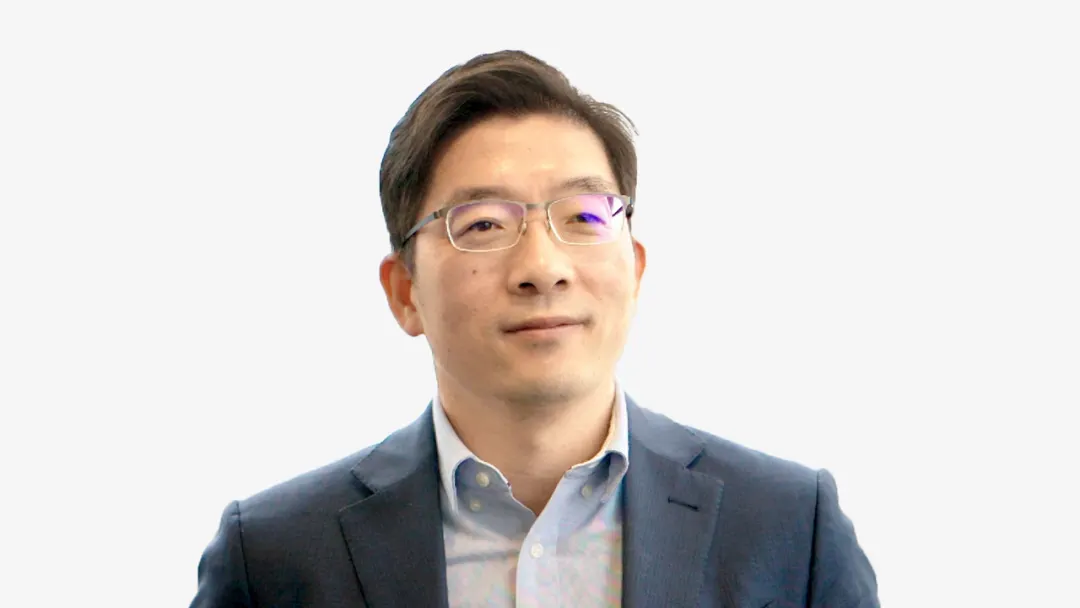
William Hu, Managing Partner at Qiming Venture Partners
The following is the original interview from China Entrepreneur, republished with authorization on the Qiming Venture Partners WeChat official account.
"We used to have a figure in mind—that one day Chinese companies might account for 30% of global big pharma licensing deals. We never expected it to reach 40% to 50%. That exceeded our expectations."
When William Hu said this, his tone carried none of the excitement of having "called it right." It was more cool surprise. As Managing Partner at Qiming Venture Partners, he has spent two decades investing in healthcare innovation, having seen bubbles and cycles too many times to count.
But the 2025 numbers did warrant extra commentary: in global BD (business development) transactions, Chinese biotechs accounted for nearly half. Five years ago, this would have been unthinkable—back then, for Chinese companies' self-developed projects, "they had no interest in partnering whatsoever."
In his reckoning, this is about ecosystem, division of labor, and China's innovative drug industry leveling up. Though Qiming Venture Partners is among the biggest beneficiaries, having invested in over a hundred companies in healthcare innovation with many major transactions coming from its portfolio, Hu didn't grandstand about how BD is changing the world. He's not the type of investor who likes talking about models. In the interview, he rarely used lofty vocabulary, focusing instead on very concrete concepts.
The same holds for AI. He calls it the most uncertain factor going forward, and his approach is to believe in AI while maintaining restraint.
Everyone thinks AI is a sure thing—money is pouring in, valuations have multiplied several times over, and "nothing but AI" has become many firms' creed. One of Hu's portfolio companies saw its valuation quadruple in just over a year and is about to triple again. For him, this is a good investment, but the question now is: as a classic early-stage investor, at what valuation range can he continue to follow on?
This "hesitation" is actually quite rare in today's investment world. Few investors are willing to say "uncertain" in a public setting. Hu doesn't seem to mind. He even openly admits that his understanding of brain-computer interfaces has changed substantially. As AI technology converges with neuroscience, the imaginative space for this field has expanded, and conditions that existing medical approaches cannot address may finally see solutions. "If it were just treating tens of thousands of patients, it wouldn't command this valuation system." He leaves the sentence half-finished, leaving the rest to time.
This restraint may well be the underlying reason Qiming Venture Partners has been able to maintain high-frequency investment in healthcare innovation. They rarely charge in when bubbles are at their hottest, and rarely pull out when troughs are at their coldest. Hu mentioned one detail: when the industry was at its most pessimistic, they were encouraging portfolio companies to continue R&D. The subsequent "BD wave" proved this judgment right.
Now facing AI, he seems to be applying the same rhythm—not refusing, not blindly following, actively embracing, investing early, but not rushing to conclusions either. "How big will AI's impact on the industry actually be? If there's a large gap between expectations and reality, then market expectations across the board will be affected."
In the interview, he discussed the current state and future of several hot sectors. Having seen bubbles and cycles come and go, he hasn't been swept up by heated market sentiment: acknowledging the leapfrog development of China's innovative drug industry while rationally assessing the real value of new technologies like AI; embracing industry trends顺势而为 but refusing to blindly charge at the top of every hype cycle—maintaining restraint and prudence, insisting on leaving adequate validation periods for technology and markets.
The following is an edited transcript of William Hu's interview with China Entrepreneur:
01/ Embracing BD
The biggest change in the industry these past few years has been the sudden explosion of BD. Over the past two years, Chinese biotechs' product pipelines have reached multiple overseas rights partnerships with global pharma companies, accounting for 40-50% of global transactions. We originally thought it would be impressive if Chinese companies could one day reach 30%. Now that we've hit this proportion so quickly, it has indeed exceeded expectations.
For the industry, this is a good thing. BD is a mature market overseas. Big pharma spends tens of billions of dollars annually acquiring R&D assets—it's part of the entire ecosystem. But why weren't Chinese pipelines included before? Because for our self-developed projects, overseas pharma companies had no interest in partnering. Now Chinese companies have essentially entered the global BD market. From an industrial perspective, we've leveled up—from making generics to making innovations, and being globally recognized.
This is a very positive signal. We certainly encourage companies to embrace BD. Biotechs need continuous spending on R&D. Where does the money come from? Shareholder investment and bank loans aren't easy. If BD can bring in decent cash and help get your products into overseas clinical trials—something most Chinese companies can't do on their own—then this isn't "selling out," it's division of labor, it's ecosystem. As long as terms are reasonable, it's worth doing.
For investors, it's actually rare to make money directly from BD. It's more of a milestone—like running 10,000 meters, you've at least reached the 8,000-meter mark. BD validates the portfolio company's R&D capabilities and proves your assets have value. But it doesn't represent a disruptive change to investment logic itself. Our premise for investing in Chinese innovative drugs is that you can actually make the product. BD just gives companies one more path.
02/ Globalization
Biotech growth paths are more varied now than in the past. First, you can go public, telling investors you have assets and R&D capabilities. Second, you can sell overseas rights to big pharma, letting them bear the heavier burden of overseas clinical trials and commercialization. Third, you can bring in funding by offering partial rights, and continue advancing clinical data yourself.
I don't think all biotechs should become pharma companies. Many can't, and many don't need to. So there's no fixed template for development paths—it depends on the company's resource endowment, founder preferences, product stage, and risk tolerance.
Most companies will start by putting one or two products into BD. This reduces dependence on going public and on investors, while also learning about overseas clinical and registration pathways through partnerships. After doing one or two BD deals, confidence grows. One of our portfolio companies did exactly this—the founder calculated that running clinical trials in the US would cost roughly $50 million, and decided to do it themselves.
Nowadays, more and more companies are willing to take the internationalization path. This is quite a significant change. Our judgment is: the next generation of Chinese entrepreneurs needs to go global.
This has actually become a screening criterion. Today, if you're doing biotech with no intention whatsoever of international product partnerships, you basically can't raise money. BD is the result, not the cause. Being able to do BD at least shows your product has global market recognition. If you're desperately trying but can't get deals done, that indicates problems in certain aspects of the company. Of course, if the company is excellent and in high demand, and the founder simply doesn't like the terms, that's another matter.
Compared to five years ago, biotech is now designated as an emerging pillar industry, and policy support is completely different. Our strategy is clear: we only invest in three categories of companies—first, innovative drug R&D companies, hoping their products have global IP value and can do global partnerships; second, innovative medical devices, hoping their products are globally competitive and can be sold worldwide; third, AI applications in healthcare.
Five years ago our investment scope was broader. This adjustment relates partly to our accumulated experience, and partly to recognizing global trends—massive resources are tilting toward AI applications.
03/ Technological Revolution
In AI drug discovery, the industry hasn't reached full consensus yet. I understand it as layers similar to autonomous driving, from 1.0 to 5.0: starting as software tools, then moving to target discovery, disease understanding and other areas where AI gathers data, and finally possibly the entire new drug R&D process being AI-driven, with experiments even conducted by robots. But this may take five years, ten years, or longer. Most companies are still at the 2.0 or 3.0 stage.
Its business models are also still diverging. Either focus on just one segment, providing CRO (contract research organization)-type services to big pharma; or develop your own products, ultimately monetizing through commercialization. Currently, many companies are laying out both types of businesses simultaneously, and once confident enough, will pursue their own R&D products.
Insilico Medicine's path is relatively clear. It positioned itself to develop its own products from the start, and now has products in clinical stages with good clinical data. It may become the first company to design products with AI, complete clinical trials, and obtain approval.
But big pharma is also using AI, whether building in-house or acquiring, so the endgame isn't AI drug discovery companies overthrowing traditional pharma. Rather, in new drug R&D, AI will play an increasingly important role. Ultimately, what matters isn't who slaps an AI label on themselves, but who can truly improve R&D efficiency, reduce costs, and make products. Of course, if big pharma falls behind, they'll be overtaken, so it's now a state of mutual chase—everyone has a chance.
In brain-computer interfaces, our understanding has also evolved in recent years. Most people's understanding of brain-computer interfaces starts with Elon Musk's Neuralink, viewing it as a medical device for treating brain or nervous system-related diseases. We also invested based on medical device logic initially.
But now its imaginative potential has expanded: if AI capabilities can be combined with neural signal collection, reading, and intervention, it may solve some currently unsolvable problems. This is why brain-computer interface companies command such high valuations—if it were just treating tens of thousands of patients, it wouldn't reach this valuation system.
04/ AI's "Uncertainty"
Looking from this year toward the next two to three years, our advice to portfolio companies is actually the same as in the past. During the pandemic when the industry was relatively pessimistic, we believed in the improving R&D capabilities of Chinese innovative drugs and encouraged companies to continue R&D. That view still holds.
But AI is indeed the biggest uncertainty factor. By "uncertain," I mean everyone thinks AI is certain, everyone is going all-in on AI, pouring lots of money in, but how big will AI's impact on the industry actually be? If there's a large gap between expectations and reality, then market expectations across the board will be affected.
For investment strategy, we need to both believe in AI and maintain restraint. We invested in a company over a year ago, before AI got so hot, at a low valuation. Now it's raised another round at four times that valuation, and is about to raise again at triple that. Truly good investing is "investing early," but the question is: as a classic early-stage investor, can Qiming still afford to follow on?
Now besides AI and robotics, many sectors seem cold. But VC isn't the secondary market—you can't just think about buying low and selling high. We invest in very small companies. Only if they can become big enough in the future is there an exit opportunity. So what I care more about isn't whether something is hot or cold, but whether it has enough explosive potential.
Finally, I don't believe Chinese entrepreneurs are less capable than American entrepreneurs. The differences come more from market size, language environment, and globalization infrastructure. One day, as China's economic and innovative strength grows, the value of Chinese entrepreneurs will naturally be reassessed.
Source | China Entrepreneur
By | Staff Reporter Li Xiaotian
Reporter | Ma Jiying
Associate Editor | Zhang Hao
Editor | Ma Jiying
Past Highlights
Qiming Weekly | Top 10 News from Qiming Venture Partners Portfolio Companies Vol.17, 2026.5.26
Qiming Honors | 5 Qiming Venture Partners Investors Named to 2025 Forbes China Midas List

Founded in 2006, Qiming Venture Partners currently manages 11 USD funds and 7 RMB funds, with total committed capital reaching $9.5 billion. Since inception, it has focused on investing in early and growth-stage outstanding enterprises in Technology and Healthcare.
To date, Qiming Venture Partners has invested in over 580 high-growth innovative companies, of which more than 210 have listed on the New York Stock Exchange, NASDAQ, Hong Kong Exchanges and Clearing Limited, Shanghai Stock Exchange, and Shenzhen Stock Exchange, or exited through M&A and other means. Over 80 portfolio companies have become recognized unicorns or super-unicorns.
Many Qiming Venture Partners portfolio companies have grown into the most influential companies in their respective fields, including Xiaomi (01810.HK), Meituan (03690.HK), Bilibili (NASDAQ:BILI, 09626.HK), Zhihu (NYSE:ZH, 02390.HK), Roborock (688169.SH), Hesai Technology (NASDAQ:HSAI, 02525.HK), UBTECH (09880.HK), WeRide (NASDAQ:WRD, 0800.HK), HyperStrong (688411.SH), Insta360 (688775.SH), Unisound (09678.HK), Biren Technology (06082.HK), Zhipu (02513.HK), Gan & Lee Pharmaceuticals (603087.SH), Tigermed (300347.SZ, 03347.HK), Zai Lab (NASDAQ:ZLAB, 09688.HK), CanSino Biologics (688185.SH, 06185.HK), Schrödinger (NASDAQ:SDGR), MicroPort EP MedTech (688617.SH), Sanyou Medical (688085.SH), Amoy Diagnostics (300685.SZ), SinoCellTech (688520.SH), Insilico Medicine (03696.HK), AusperBio, Yuanxin Technology, MediLink Therapeutics, LaNova Medicines, StepFun, and others.