Qiming View | William Hu: China's Innovation Is Moving From Scattered Breakthroughs to Large-Scale, Comprehensive Advances
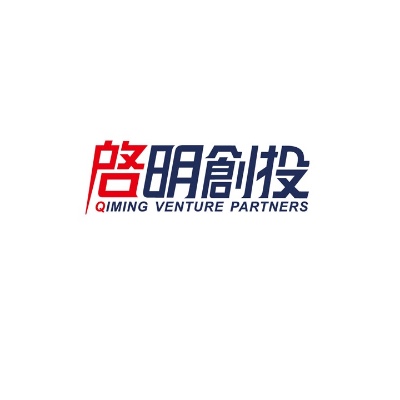
Over the next 5–10 years, more highly original R&D breakthroughs are expected to emerge from Chinese labs and contribute to global pharmaceutical innovation.

Editor's Note: At the close of 2025, William Hu, Managing Partner at Qiming Venture Partners, sat down with PEDaily to review the rise of the innovative drug sector in 2025 and unpack the firm's decision-making logic behind contrarian bets on healthcare innovation. On the most critical leap forward for China's healthcare innovation, he emphasized that the industry is moving from isolated breakthroughs to large-scale, comprehensive advances: accelerating innovation through engineering capabilities on one hand, and competing for global markets through original innovation on the other. Looking ahead, Hu noted that the explosion of license-out deals is only the beginning — globally competitive original achievements will continue to emerge, and building a healthy industrial ecosystem will require deep coordination between capital, enterprises, and international markets.
This article is republished with permission from the Qiming Venture Partners WeChat official account.
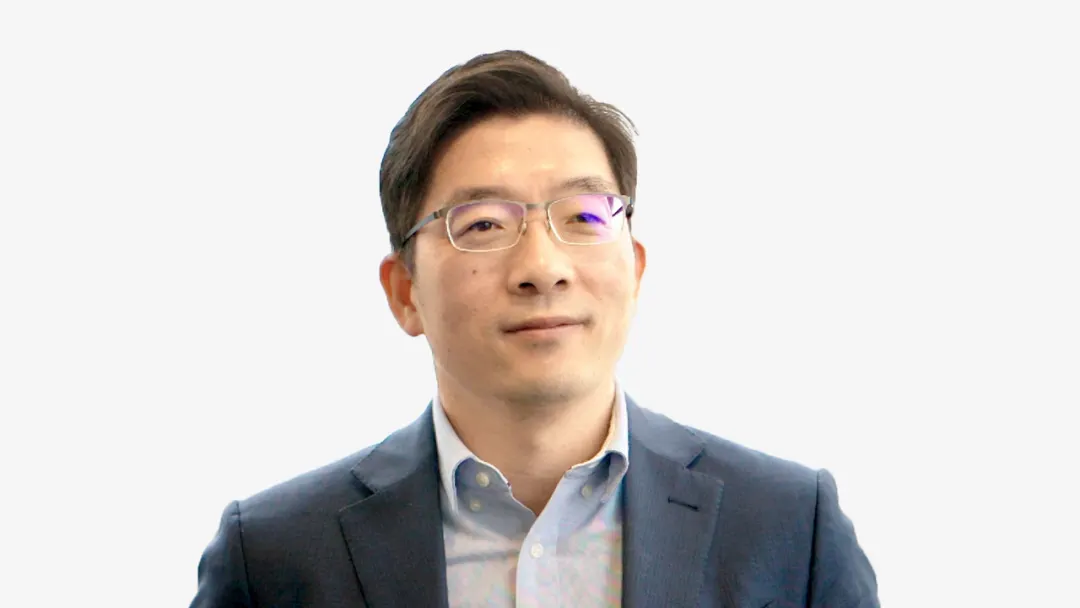
William Hu, Managing Partner at Qiming Venture Partners
As 2025 draws to a close, any retrospective on the venture capital world this year cannot skip the surge in innovative drugs.
Recall the previous two years: the healthcare industry underwent a valuation correction, and healthcare investment fell into a lull. Amid the pessimistic market sentiment, William Hu and his team at Qiming Venture Partners made a pivotal decision — to continue investing heavily in innovative drugs and medical devices, especially in areas with significant potential for clinical breakthroughs.
In hindsight, that decision appears to have been the right one. This year, the innovative drug sector became a star performer, with the Hong Kong stock market witnessing a spectacular show — IPO bells ringing constantly, ten-baggers emerging frequently, and the index surging over 100% at one point. Some investors have even dubbed 2025 the "year of pharmaceutical revival."
"This is just the beginning." As the year-end approaches, Hu reflected on the ups and downs of China's healthcare innovation with PEDaily. He believes China's innovation has reached a critical inflection point, transitioning from isolated breakthroughs to large-scale, comprehensive advances. The breakout of DeepSeek earlier this year exemplifies how Chinese innovation has evolved from following to self-driven revolution, with engineering capabilities set to improve further; the innovative drug sector is advancing from breakthroughs in select technology platforms and product lines to systemic breakthroughs across the entire framework, while innovative medical device companies are steadily beginning global expansion backed by breakthrough clinical designs and significant supply chain advantages. In the next 5-10 years, more highly original R&D achievements are expected to emerge from Chinese laboratories and contribute to global pharmaceutical innovation.
01/
The VC Most Aggressive on Healthcare Innovation
Looking back at 2025, Qiming Venture Partners invested in over 30 projects in healthcare innovation, committing more than 3 billion yuan, with some investments decided in the second half of 2024 — Qiming's healthcare investments have long served as a barometer for the sector.
Among the most memorable is Cornerstone Robotics. This innovative surgical robotics unicorn was born in Hong Kong. Founder Guowei Ou previously taught at The Chinese University of Hong Kong before founding Cornerstone Robotics in 2019, dedicated to developing next-generation domestic laparoscopic surgical robots that can match imported brands.
With the ambition of building China's surgical robotics industry, Ou's Cornerstone Robotics began commercialization in 2024, having fully mastered core technologies spanning mechanical architecture, electrical architecture, software architecture, complex algorithms, and visual imaging, and independently built a foundational surgical robotics technology platform. Along the way, it has assembled a roster of VC/PE backers, raising over 3 billion yuan. Qiming Venture Partners was among the earliest investors in Cornerstone Robotics.
It was 2020 when a remote call from a hotel lobby solidified Hu's conviction to invest. Ou's deep understanding of the surgical robotics field and his vision to "change the global surgical robotics landscape" aligned with Qiming's market outlook — both the unsaturated domestic demand and the potential of international emerging markets pointed to vast opportunities. Thus, Qiming Venture Partners made a decisive move in 2020 and has remained a partner ever since.
This November, Cornerstone Robotics completed an oversubscribed financing round of approximately $200 million, attracting participation from Hong Kong Investment Management Corporation Limited, global strategic investors, and sovereign funds, with existing shareholders including Qiming Venture Partners continuing to add to their stakes. This marks Qiming's fifth consecutive round of investment in Cornerstone Robotics.
Recently, Qiming Venture Partners also celebrated a major IPO — Insilico Medicine, an AI-driven drug discovery company headquartered in Hong Kong with R&D centers in Shanghai. Qiming was an early investor in Insilico Medicine and continued to increase its stake in subsequent financing rounds. In Insilico's early days, Qiming's investment team began assisting the company in building its drug discovery leadership team, enabling the organic integration of AIDD's AI capabilities with pharmaceutical R&D expertise.
Holding Rentosertib (ISM001-055), the world's most advanced AI-discovered drug, Insilico Medicine listed on the Hong Kong Stock Exchange on December 30, becoming the largest Biotech IPO in Hong Kong this year. At the IPO price of HK$24.05 per share, Insilico Medicine raised up to approximately HK$2.3 billion, achieving a market capitalization exceeding HK$13 billion.
This also means another billion-yuan IPO added to Qiming Venture Partners' healthcare portfolio.
02/
The More Pessimistic the Market, the More Resolute the Conviction
For the first time in a while, the healthcare industry is buzzing with activity.
Recall 2021, when China's pharmaceutical industry reversed sharply after a period of exuberance, followed by a prolonged winter. During this time, most primary market investors shifted their focus to other sectors, becoming extremely cautious about healthcare investments, or avoiding them altogether. Within some investment institutions, healthcare investors also found themselves in relatively marginal positions.
"At that time, we kept telling ourselves to go deep to the front lines, actively communicate with entrepreneurs and startups, and validate the actual value of the innovations we were following." During the industry's lowest ebb, Qiming Venture Partners' healthcare innovation team did not slow down; instead, they maintained intensive industry engagement, covering nearly 95% of innovative companies in China.
By the first half of 2024, Hu's judgment had gradually clarified: Qiming's commitment to driving Chinese innovation to serve global markets was viable and worth pursuing. Although healthcare investment remained subdued at the time, Qiming saw a historic opportunity in the undervaluation of Chinese innovation. Hu repeatedly emphasized internally that the firm must seize the time window and decisively invest in companies with compelling products and teams.
Under this "non-consensus" decision, Qiming Venture Partners became one of the most active VCs in healthcare during that period, deploying substantial capital in innovative drugs and medical devices — investing nearly 4 billion yuan in the 12 months from May 2024 to May 2025, likely making it the China-focused VC fund with the largest investment amount among global healthcare funds at the time.
This year, as global capital reassessed Chinese innovative assets, and as companies themselves signaled positive momentum through product achievements, licensing partnerships, and global expansion, the sector has shown signs of recovery overall. "We've been somewhat fortunate — our persistent investment philosophy and direction received preliminary validation at an opportune time," Hu reflected.
Looking back at this year, the number of innovative drug companies with market capitalizations reaching 100 billion yuan in A-share and Hong Kong markets has grown to nearly 10. The Hong Kong innovative drug sector has performed particularly strongly, becoming a concentrated area of gains, with related indices rising over 100% cumulatively at one point and ten-baggers emerging in clusters. The wealth effect has transmitted to the pipeline of innovative drug companies waiting to list on the Hong Kong Stock Exchange, with nearly 10 companies filing listing applications in November alone. As of now, the number of biotech companies successfully listing in Hong Kong in 2025 has doubled compared to last year.
Among these developments, the shift in attitude among international investors has been particularly crucial. Institutions whose main battlefield was previously Nasdaq began reallocating to Chinese innovative drug assets in 2025. The underlying reason is that products from Chinese innovative drug companies are beginning to be genuinely recognized by the industry, particularly the global pharmaceutical innovation system.
"Especially starting from the second half of last year, a number of Chinese innovative drug companies produced stunning clinical data. The industry discovered that Chinese companies could actually perform at this level, and major overseas pharmaceutical companies began partnering with Chinese innovative drug firms one after another," Hu noted in his analysis of this recovery cycle.
He believes that if more large international investment institutions and professional investors allocate capital to Chinese innovative drug companies, initially entering Hong Kong stocks and potentially extending to A-shares in the future, this would help build a healthier, more sustainable biopharmaceutical industrial ecosystem.
03/
Through the Cycle, China's Healthcare Innovation Never Ends
What is the next chapter in the healthcare investment narrative?
According to the latest data, among new drug projects licensed in by global major pharmaceutical companies in 2025, approximately 40% likely originate from outstanding Chinese biopharmaceutical startups. In 2019, this figure was zero.
Some context is needed here: the world's largest multinational pharmaceutical companies obtain some new drugs through internal R&D, but a substantial portion comes through external collaboration, including purchasing patents from smaller biotech R&D institutions and enterprises. China used to be a license-in country, primarily receiving advanced pharmaceuticals from overseas. But the situation has changed — China has become a major source of license-out deals.
At this juncture, the global influence of China's healthcare innovation is rising, with densely occurring mega-BD transactions serving as the best testament. In Hu's view, BD deals not only bring cash flow but also demonstrate that Chinese innovative companies have the capability to collaborate with global top-tier pharmaceutical companies, further proving the value of Chinese innovative drugs to the market. BD transactions are building a globalized innovation ecosystem — China provides quality assets, international pharmaceutical companies provide commercialization channels, forming a win-win framework.
In this process, China is forming a unique innovation dual circulation: on one hand, using engineering innovation to rapidly lower the accessibility threshold for new drugs; on the other, using original innovation to build long-term technological moats.
Therefore, continued positioning for the globalization of Chinese pharmaceutical companies has long been one of Qiming Venture Partners' core investment themes. The team began consciously helping portfolio companies build global capabilities several years ago, including maintaining regular communication with major overseas companies and organizing the Qiming Venture Partners Healthcare Innovation Partnering Day for four consecutive years, creating a platform for Qiming's portfolio companies and global top pharmaceutical companies to exchange and collaborate, facilitating hundreds of one-on-one meetings between over a hundred (instances of) global top pharmaceutical companies and portfolio companies.
Beyond this, Qiming Venture Partners has also established dedicated internal teams to assist portfolio companies in understanding global medical registration systems and overseas expansion rules, helping companies go global. PEDaily obtained a set of data — as of October 2025, Qiming Venture Partners' portfolio companies have signed 30 BD deals with multinational pharmaceutical companies and overseas biotech companies, with disclosed transaction totals reaching $19.7 billion.
"Many companies have developed to a level where they can compete on the global stage with the best companies in the world." Speaking of the future of Chinese pharmaceutical companies, Hu said, "Ten years ago, I wouldn't have dared to say that many Chinese companies could go global, but now I can — though the bar is higher."
He also noted that many Chinese companies are still relatively small in scale, and participating in overseas markets will present numerous challenges — including cultural adaptation, understanding of comprehensive regulations, organizational structure support, and financial strength. "Not all companies will make it to that stage; the path ahead will inevitably be filled with challenges."
Through ups and downs, China's healthcare investment market has emerged from a cycle of winter, and this year has finally shown warmth, as the industry broadly senses the arrival of an inflection point. Having emerged from the trough, how long will this wave last?
Hu's stance is cautiously optimistic: "The road ahead is still long, and we currently maintain a diligent, meticulous approach, conducting in-depth due diligence on every company. For every healthcare company Qiming invests in, we hope it will have global influence — whether in new drugs or devices, it should not be limited to the Chinese market but should be able to create value overseas. Of course, this is by no means easy."
Healthcare innovation has long been likened to a capital-intensive, long-haul marathon. For healthcare investors, this is undoubtedly an extended journey of cultivation. Perhaps, as Hu said, everything has only just begun.
Source | PEDaily
Author | Jiali Zhou
Past Reviews
Dialogue | Building Surgical Robots "At the Pyramid's Peak"
Qiming Honors | 5 Qiming Venture Partners Investors Named to Forbes China Midas List 2025

Founded in 2006, Qiming Venture Partners currently manages 11 USD funds and 7 RMB funds, with total assets under management reaching $9.5 billion. Since its inception, the firm has focused on investing in outstanding early and growth-stage companies in Technology and Healthcare.
To date, Qiming Venture Partners has invested in over 580 high-growth innovative companies, of which more than 210 have listed on the New York Stock Exchange, NASDAQ, Hong Kong Exchanges and Clearing Limited, Shanghai Stock Exchange, and Shenzhen Stock Exchange, or exited through mergers and acquisitions. Over 80 companies have become recognized unicorns or super-unicorns.
Many of Qiming Venture Partners' portfolio companies have grown into the most influential companies in their respective fields, including Xiaomi (01810.HK), Meituan (03690.HK), Bilibili (NASDAQ:BILI, 09626.HK), Zhihu (NYSE:ZH, 02390.HK), Roborock (688169.SH), Hesai Technology (NASDAQ:HSAI, 02525.HK), UBTECH (09880.HK), WeRide (NASDAQ:WRD, 00800.HK), HyperStrong (688411.SH), Insta360 (688775.SH), Unisound (09678.HK), Biren Technology (06082.HK), Gan & Lee Pharmaceuticals (603087.SH), Tigermed (300347.SZ, 03347.HK), Zai Lab (NASDAQ:ZLAB, 09688.HK), CanSino Biologics (688185.SH, 06185.HK), Schrödinger (NASDAQ:SDGR), MicroPort EP MedTech (688617.SH), Sanyou Medical (688085.SH), Amoy Diagnostics (300685.SZ), SinoCellTech (688520.SH), Insilico Medicine (03696.HK), Hepion Pharmaceuticals, Yuanxin Technology, MediLink Therapeutics, LaNova Medicines, Zhipu AI, StepFun, among others.