Rongzi China's Zhu Shan and Qiming Venture Partners' Duane Kuang on AI as the Biggest Paradigm Shift and the Next Generation of Classic Investment Cases
Despite the fierce competition in tech today, many niche segments remain underexplored. The AI space will give rise to ecosystem players on the scale of Xiaomi, creating new opportunities for both industry giants and startups.
The equity investment industry, after years of deep adjustment, is entering a new window of paradigm restructuring. Amid global geopolitical volatility, domestic economic transformation and upgrading, and successive waves of technological innovation, how can GPs balance short-term survival with long-term value under the interplay of multiple variables? How can market-oriented institutions adhere to investment fundamentals within a fundraising ecosystem dominated by state capital? And how should the moat of early-stage investment be built?
At the 2025 China Sci-Tech Investment Summer Summit · Industrial Investment Summit, Rongzi China Chairman Shan Zhu and Qiming Venture Partners Founding Managing Partner Duane Kuang engaged in a spirited discussion of these questions during the "Rongzi Dialogue" segment.
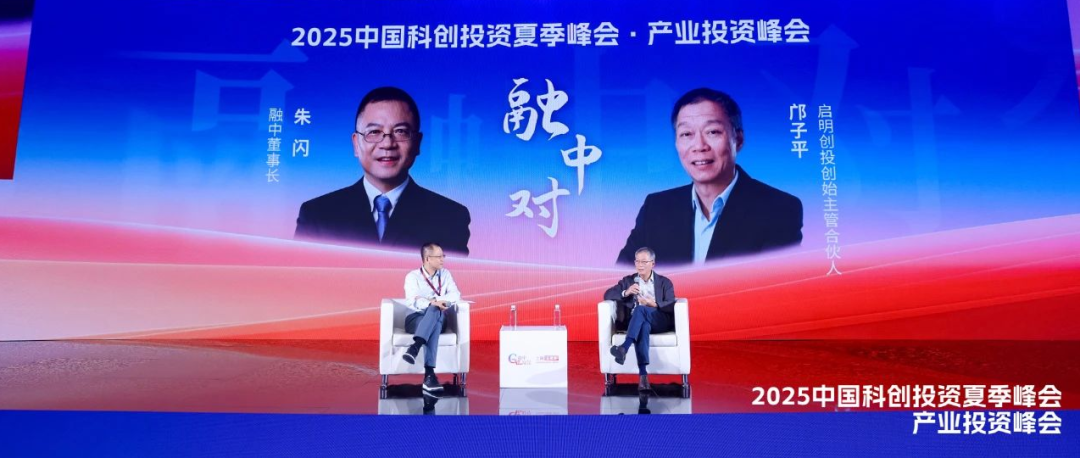
Rongzi China Chairman Shan Zhu (left) and Qiming Venture Partners Founding Managing Partner Duane Kuang (right)
As a benchmark figure in China's venture capital world, Kuang has led Qiming Venture Partners through multiple cycles, delivering classic cases including Xiaomi (first $5 million investment returned 866x, 01810.HK), WeRide (NASDAQ:WRD), UBTECH (09880.HK), Roborock (688169.SH), and Unisound (09678.HK). His "half-step ahead" investment philosophy and institutional governance principles have become important methodological reference points for the industry.
When state-backed LPs' contribution ratios in newly established funds have surged above 75%, and some institutions have weakened their return pursuits to satisfy government招商 demands, Kuang has taken a clear stance in endorsing "making money for LPs as the eternal necessary condition." In his view, policy-driven objectives and commercial returns are not binary opposites, but can be dynamically balanced through regional selection, fund size adjustment, and the efforts of fund managers.
Facing the investment frenzy triggered by AI, Kuang proposed a breakthrough path of "mining下沉细分领域中掘金" in hot sectors. Kuang noted that despite intense competition in current technology tracks, many细分领域 remain underexplored. Citing Embodied Artificial Intelligence and multimodal models as examples, he pointed to their enormous future growth potential. Kuang firmly believes that the AI field will produce ecosystem-level technology companies on the scale of Xiaomi, creating new opportunities for both major tech firms and startups.
This dialogue was not merely experience-sharing from a top-tier institution, but a profound interrogation of the fundamental value of China's venture capital industry — when capital must both undertake national strategic missions and deliver on market-oriented return promises, how can a sustainable survival logic be constructed between the "must-haves" and the "necessary"?
Shan Zhu and Kuang together presented a brilliant exchange for the audience, offering new directions for industry development.
Below is the full transcript of the dialogue between Rongzi China Chairman Shan Zhu and Qiming Venture Partners Founding Managing Partner Duane Kuang, compiled by Rongzi Finance and Economics, and republished with authorization from Qiming Venture Partners.
01/
Balancing Between "Must-Haves" and "Necessary"
Shan Zhu: Welcome, Duane! First question — how has the first half of this year felt? We observe that some institutions feel optimistic, others more pessimistic. I was chatting with you in the lounge just now — Qiming Venture Partners already has four IPOs in the first half. Do you see more IPO opportunities this year compared to last? Any changes in investment pace? Plans to raise new funds?
Duane Kuang: First, thank you very much for the invitation, Zhu. As just mentioned, the market atmosphere began warming from September last year — whether in investment or exits, overall expectations for the future have risen somewhat. From the start of this year to now, we feel the market environment is better than the same period in the first half of last year.
As Zhu just mentioned, our exit performance in the first half of this year has been quite good, with four listed companies: Yuanbao Inc. listed in the United States (NASDAQ:YB), Unisound in Hong Kong (09678.HK), and HyperStrong (688411.SH) and Insta360 (688775.SH) on the STAR Market in A-shares. The warming of A-shares this year has given everyone more confidence. Before this A-share recovery, the Hong Kong stock market's momentum starting from the second half of last year also injected new vitality into industry exits.
On the investment side, we were quite active last year. Combining new projects and follow-on rounds, we invested over $600 million in total (editor's note: all figures in USD or USD equivalent), with new projects in the majority. In 2023 we invested roughly $400 million, and so far this year we've already deployed about $300 million. So in terms of overall investment pace, we've been relatively aggressive in both last year and this year. On fundraising, because the previous vintage of Qiming's USD and RMB funds were both relatively large in scale, their investment periods are correspondingly longer. Both funds are raising capital this year, which is quite a workload.
Shan Zhu: Over the past few years, the venture capital industry has been affected by the macro environment, with state capital rising and sci-tech investment becoming closely tied to national industrial development strategy. Please share your views on the rise of state capital, Qiming's investment logic in China, and how USD and RMB funds can develop in coordination?
Duane Kuang: When we founded the firm in 2006, our first fund was a pure USD fund. Starting from our second USD fund raise in 2008, we began running parallel RMB funds, establishing our first RMB fund in 2009.
The rise of state capital, or its increasing proportion, has been especially evident in the past three years. Currently, there should be no more than 10 pure USD funds still active in the China market. I view this topic from two angles. On one hand, it demonstrates that our RMB fund ecosystem is becoming increasingly mature and performing better, now supporting the majority of investment activity in China. Under normal circumstances, USD funds have played a very important role in China's technology development over the past two to three decades — a role that RMB funds still cannot fully replace at certain levels, especially in areas with very high ceilings and vast future imagination space. At today's stage, in fields requiring massive investment to build success, such as AI and large chips, state capital plays an indispensable role. On the other hand, state-backed LPs are also extremely significant within the contributor base. So I would actively advocate for giving more space to market-oriented forces, allowing more purely market-driven players to enter this field. At the same time, whether institutions come from purely market-oriented RMB fund backgrounds or USD fund backgrounds, they should actively embrace the new normal, cooperate more smoothly with state capital, and achieve mutual benefit where each gets what they need.
Shan Zhu: I very much agree with Duane's perspective. State capital has advantages, and market-oriented funds have strengths — only their combination can drive the venture capital industry's development. As you described, the importance of state-backed LPs is self-evident. We observe that after many market-oriented institutions take state money, they tend to structure their operations around state demands, even to some extent abandoning their pursuit of investment returns. Duane, how do you view this phenomenon? When raising RMB funds in the future, what kind of state-backed LPs will you select? State-backed LPs often have special demands, such as strong招商 requirements — how will you respond? The core issue is how to balance the interests of state-backed and market-oriented LPs. More critically, will you continue to prioritize making money for LPs?
Duane Kuang: Let me answer your last question first — the answer is yes. Here's how I view this matter. The current RMB ecosystem is "having it both ways." Both making money and fulfilling LP strategic objectives. For Qiming Venture Partners, within this "having it both ways," there is an eternal "must-have": making money. The "and" part changes over time with national strategy and other factors. But in every fund raise, that "must-have" is "necessary" — it must be answered every time: does your fund actually make money? On this point, I remain quite firm. Over the years, dealing with various local governments and state platforms, Qiming Venture Partners has been fortunate that the "and" part has generally been quite hands-off. Moreover, these regions genuinely do produce good investment targets, or allow us to do work attracting enterprises to establish local presence. Though ultimately it's always a balance, that "necessary" is mandatory, non-negotiable.
This vintage of LPs might tell me, don't lose money, whether you make money is secondary, the "and" part is actually more important. But when raising the next fund, I can't say how well I did on the previous "and" despite not making money. So if I want to keep Qiming Venture Partners going long-term, that "must-have" is "necessary."
To add one point here, I believe based on the GP's original intention, you can still influence your decisions. If the cooperating region isn't an economically or innovation-thriving area, there are still options — make the fund smaller, work harder yourself, run more and raise more from non-local state capital sources. Therefore, the "and" part, the返投 requirement relative to overall fund size, remains controllable, and there is still room for GP initiative.
02/
Team, Vision, Network
Shan Zhu: Duane has not only spoken from the perspective of a top-tier institution but also offered good advice for smaller institutions on coordinating state-backed and market-oriented LP demands. Returning to investment itself, Qiming Venture Partners has long focused on technology and healthcare innovation, with numerous classic cases in technology, such as the "half-step ahead" investments in WeRide, UBTECH, Roborock, and Unisound. How did you successfully invest in these quality technology enterprises?
Duane Kuang: I believe most peers' approaches shouldn't differ too greatly. First is team building. Especially for forward-looking technology and fields where broad consensus hasn't yet formed, it's crucial whether the team itself has learning ability, judgment ability — at minimum the capacity to absorb new technological knowledge and grasp new technological trends. For example, one major reason we invested quite aggressively last year was a significant allocation to innovative drugs — this was "non-consensus." The entire healthcare and pharmaceutical sector was rather depressed last year, but we believed China's innovative drugs serving global pipelines was viable, so we invested $500-600 million (note: from May last year to May this year).
Shan Zhu: The classic "half-step ahead" strategy.
Duane Kuang: Beyond team building, second is international vision. China has a massive domestic market with many investment opportunities. But for Qiming Venture Partners, we still hope to internationalize, to observe major global technology trends. We laid out in large models before ChatGPT emerged, around OpenAI's GPT-3; we also positioned early in Embodied Artificial Intelligence and humanoid robots — this relates to our entire team closely following or intently observing international technology trends and frequently communicating with international technology talent and major tech firm talent. Every year our healthcare innovation and technology teams hold strategy sessions at the beginning of the year to share and analyze global trends, setting our investment strategy for the coming year; simultaneously refreshing our longer-term investment strategy — both exercises are conducted.
Third is our network. We engage extensively with fellow investors, regularly communicating; our many highly successful portfolio companies provide excellent information through frequent dialogue with these entrepreneurs; and chatting with Zhu also yields considerable inspiration.
Shan Zhu: Thank you, Duane — very open. First, build internal teams and improve research capabilities; second, maintain international vision; third, broadly cultivate relationships. Let me press further — Qiming Venture Partners historically invested at Series A and B. Will this strategy change going forward? Or will you persist?
Duane Kuang: We'll basically persist. I believe not all money can be made — every team has its own DNA. Over these twenty years, Qiming Venture Partners has made some attempts. For instance, when the ChiNext and STAR Market were booming, we wondered whether we should follow the historical trend and do some slightly Pre-IPO investments. I ultimately reached this conclusion.
Qiming Venture Partners' DNA is more about longing for and loving technology and the future, learning and then investing in these fields. Among the fields we invest in, some succeed and some don't. But once strategy becomes模糊, the successful ones return 2-3x while the failed ones lose everything — that math doesn't work. After several cycles, we're now more firm: we invest relatively early, aiming for the stars, and when exit windows are unfavorable, we hold patiently. For example, Unisound is an AI company we've held for over a decade, yet it still had its IPO opportunity. A good enterprise, diligently operated, can ultimately achieve listing.
Shan Zhu: Duane坚守投资理念,不为外界诱惑所动摇. Qiming Venture Partners has deployed across technology and healthcare innovation, but these tracks currently face challenges. Technology is intensely competitive, especially since last year with AI, Embodied Artificial Intelligence and other fields receiving attention; in healthcare innovation, some early-stage investments struggle to exit. From Qiming's perspective, how will you invest in these two tracks going forward? How to avoid crowded competition and find new opportunities?
Duane Kuang: These two tracks are very broad. First, within broad domains, there will still be more细分 sub-sectors that haven't yet become so hot. Second, what I mentioned about broadly cultivating relationships remains quite important.
We invested in an Embodied Artificial Intelligence company at year-end last year — a small amount when no one was paying attention. The round that just closed this year has seen significant appreciation, though we also continued investing ourselves. Industry excitement certainly has some valuation impact.
We hope our teams can achieve two things: one, within relatively hot industries, still find angles slightly偏 from the hottest focal points, such as whether certain AI applications are now truly ready for落地? Additionally, excitement has its benefits — if you were the earliest investor in AI last year, reaching the second or third round was actually quite exhausting, whereas now the second and third rounds are less so. So we can't say market heat definitely affects valuations negatively — we judge it as negative. There are both negative and positive aspects.
Shan Zhu: The core is to go deeper and find investment opportunities in细分 tracks.
Duane Kuang: You just mentioned that Embodied Artificial Intelligence is incredibly hot now, but a few years back when large models were booming, Embodied Artificial Intelligence wasn't so heated. Previously multimodal models were also relatively less explosive within the AI field. I believe there remain opportunities within the broad AI domain, within the broad Embodied Artificial Intelligence domain.
Shan Zhu: Among Qiming Venture Partners' many investments, Xiaomi is a classic case — the first $5 million investment returned 866x. I'd like to ask: can China produce another ecosystem-level technology company like Xiaomi in the future? If so, in which track do you think it will emerge?
Duane Kuang: I believe in the AI field. My belief that more will emerge is premised on there being another massive technological paradigm shift — only then do enormous platform opportunities arise. I believe AI represents such a massive paradigm shift, and therefore can give rise to the next generation of platform enterprises.
"Igniting Many Through Wisdom, Achieving Clarity Through Diligence"
Shan Zhu: Duane's answers are very direct, worth deep consideration by entrepreneurs. The AI field indeed holds promise for birthing new large platform enterprises. Next, I'd like to discuss the relationship between investment institutions and companies. Since its founding, Qiming Venture Partners has engaged with numerous enterprises, invested in nearly 600, many of which have successfully listed. In the course of enterprise development, there are ups and downs. As a venture capital institution, how do you accompany enterprise growth? Especially presently, how do you leverage portfolio company resources to cooperate with local governments? Enterprise resources are precious and require maintenance. Some institutions provide services by empowering enterprises — does Qiming Venture Partners conduct such activities?
Duane Kuang: Our fundraising team often tells me we haven't挖掘 enough in this area. For instance, seeing our portfolio companies establish presence in certain locations without counting it in our work — we do need to learn from peers in this regard. Our consistent view on the relationship between portfolio companies and Qiming Venture Partners is "help without causing trouble." I believe there is much we can help with during enterprise development. However, I don't particularly advocate "brainless" help. When the industry is亢奋 and raised capital is abundant, one considers whether to build a larger middle-back-office empowerment platform — helping with recruitment, marketing, entrepreneur growth and learning, etc. — which can be broadly helpful to a wide range of entrepreneurs. But this help always feels more "icing on the cake" — do more when money is plentiful. I believe what's more substantive is looking at entrepreneurs' actual needs. Entrepreneurs' true needs are certainly not having a hundred enterprises say that after Qiming Venture Partners invested in us, they came to help us properly design our employee option plans, which is crucial to enterprise success, so Qiming Venture Partners runs a training course, and subsequently enterprises all want Qiming to invest. Rather, we should return to that original intention: "help without causing trouble" — when enterprises genuinely need our help, help well when we can. This "original intention" matters more. After all, we've accumulated considerable resources over more than a decade.
Shan Zhu: Do it, but do it according to actual circumstances, not in a templated manner.
Duane Kuang: Substance over form.
Shan Zhu: Qiming Venture Partners was founded in 2006 and will soon celebrate its 20th anniversary next year. In less than 20 years, Qiming has developed rapidly with $9.5 billion in AUM across 18 funds, becoming a benchmark investment institution in the industry. Looking ahead, you certainly hope to build Qiming into a enduring top-tier investment institution. Regarding internal construction, systematic development, team iteration and renewal, and organizational framework — are there specific initiatives?
Duane Kuang: Yes, next year marks Qiming Venture Partners' twentieth anniversary. Over these twenty years, I've developed a firm belief: Qiming Venture Partners' partners serve Qiming Venture Partners. We hope to build Qiming into an enduring enterprise. This is also a topic the industry has long debated: are partnership enterprises ultimately for serving partners, or do partners serve the partnership enterprise? The two are in tension, and ultimately I believe choices must be made. Qiming's choice over these twenty years has been that partners serve the partnership enterprise. With this overarching principle, every partner has their expiration date, while enterprises need continuous new vitality to achieve enduring success. Otherwise, we'd have to constantly adjust the partnership enterprise according to each partner's individual development at given time periods. So for Qiming's next twenty years, I hope for healthy development — a phase that will likely have passed my expiration date, to be led by new colleagues with greater future capabilities. If there is consensus throughout the organization, this wisdom, I believe the goal of enduring success can be achieved.
Shan Zhu: Partners serving the partnership enterprise is key, helping achieve enduring development for investment institutions. Pressing further: some top-tier institutions are considering full-asset investment development to expand scale and balance investment risk. Have you considered this direction? Any related plans?
Duane Kuang: We've discussed full-asset development — currently no such plans. At least present-day Qiming Venture Partners doesn't have this DNA; we're not suited, not advisable to do this. But for a partnership where partners serve the enterprise, might this be the only path to survival in the coming twenty years? If it comes to that, we'd need new, different people to do it. For now, we remain focused on two, at most three,细分领域 where we believe China has development potential and we have capability to operate, deploying at early-to-mid stages of enterprise development — this remains our main thread.
Shan Zhu: Still focused on equity investment for now. Thank you for taking the time to speak with us. Qiming Venture Partners' slogan "以智启众,以勤得明" is truly classic. May today's dialogue bring inspiration and together write a new chapter for China sci-tech investment. Thank you!
Source | Rongzi Finance and Economics
Previous Reviews

Qiming Venture Partners was founded in 2006. Currently, Qiming Venture Partners manages 11 USD funds and 7 RMB funds, with total committed capital reaching $9.5 billion. Since its founding, the firm has focused on investing in early and growth-stage outstanding enterprises in Technology and Healthcare.
To date, Qiming Venture Partners has invested in over 580 high-growth innovative companies, of which more than 210 have listed on the New York Stock Exchange, NASDAQ, Hong Kong Exchanges and Clearing, Shanghai Stock Exchange, and Shenzhen Stock Exchange, or exited through M&A and other means. Over 80 companies have become recognized unicorns or super-unicorns in their industries.
Many Qiming Venture Partners portfolio companies have grown into the most influential companies in their respective fields, including Xiaomi (01810.HK), Meituan (03690.HK), Bilibili (NASDAQ:BILI, 09626.HK), Zhihu (NYSE:ZH, 02390.HK), Roborock (688169.SH), UBTECH (09880.HK), WeRide (NASDAQ:WRD), Insta360 (688775.SH), Gan & Lee Pharmaceuticals (603087.SH), Tigermed (300347.SZ, 03347.HK), Zai Lab (NASDAQ:ZLAB, 09688.HK), CanSino Biologics (688185.SH, 06185.HK), Schrödinger (NASDAQ:SDGR), MicroPort EP MedTech (688617.SH), Sanyou Medical (688085.SH), Amoy Diagnostics (300685.SZ), Berry Genomics (000710.SZ), SinoCellTech (688520.SH), Yuanxin Technology, Insilico Medicine, MediLink Therapeutics, LaNova Medicines, Zhipu AI, StepFun, Biren Technology, among others.