I Tried AI Fortune-Telling and It Had Zero Filter — Here's What It Actually Said...

Love is two people who like sticking together. Love is caring about each other. Love is even better than "ten thousand"!
💡
"Inspiration Weekly" is a column I'll update every week.
Here, I'll record five people or things that inspired me this week — to help me reflect, grow, expand my boundaries, and become freer and happier.
This week's five:
❶ 🧄 I used AI to tell my fortune, and it just came right out and said...
❷ 🏄🏻 The Arc browser — saluting the courage to change
❸ 🎻 Apple Music Classical
❹ 📚 The Feynman Technique
❺ ❤️ What is love?

DALL·E image generation: A young woman reading a BaZi fortune
❶
I used AI to tell my fortune, and it just came right out and said...
Can I live to 120?
While browsing the OpenAI GPTs Store, I stumbled across a fortune-telling GPT and my curiosity exploded.
Chinese BaZi Fortune Teller 参天八字算命, precise chart reading and interpretation
https://chat.openai.com/g/g-ZcHiHNtc5-bazi-fortune-teller-ba-zi-suan-ming
I entered my birth chart (BaZi), and the AI replied at lightning speed, instantly generating my chart. Watching the AI spit out my "destiny" character by character, my feelings were complicated. Was I getting ahead of the game, seizing the initiative over fate? Or was I trapping myself in a cage of my own making, falling into the trap of superstition?
The AI couldn't care less about my sentimental musings — large language models are only responsible for outputting at least ten Chinese characters per second, resolutely responding to every absurd question I threw at it.
When facing a human fortune teller, many people (myself included) hold back from asking certain embarrassing questions out of politeness.
But in front of this AI fortune-telling bot, I felt like every fig leaf had been torn away.
At first I just tentatively asked, "How's my luck in the Year of the Dragon?" Seeing the AI's polite and proper response, my questions kept escalating:
- "How many children will I have?"
- "Will I always live in Shanghai?"
- "Can I learn French?"
- "Can I live to 80?"
- "Can I live to 100?"
- "Can I live to 120?"
- ...
Freed from any constraints of social etiquette, I asked more and more brazenly, more and more absurdly.
([Redacted — can't let my persona collapse])
You'll just have to try it yourself!

DALL·E image generation: A young man reading a BaZi fortune
· Q: How long can I keep updating my WeChat public account every week?
*· AI: *According to your birth chart, (redacted) passion and brightness symbolize the ability to continuously spark new ideas and content, (redacted) indicates you can organize content in a structured and logical manner. However, sustained creation also requires time management and self-motivation. If you can schedule your time reasonably, maintain your passion for creation, and effectively manage challenges encountered in the creative process, you have the potential to consistently update your public account on a weekly basis in the long term.
· Me: ...You're so annoying.
❷
Arc Browser
— Saluting the courage to change!
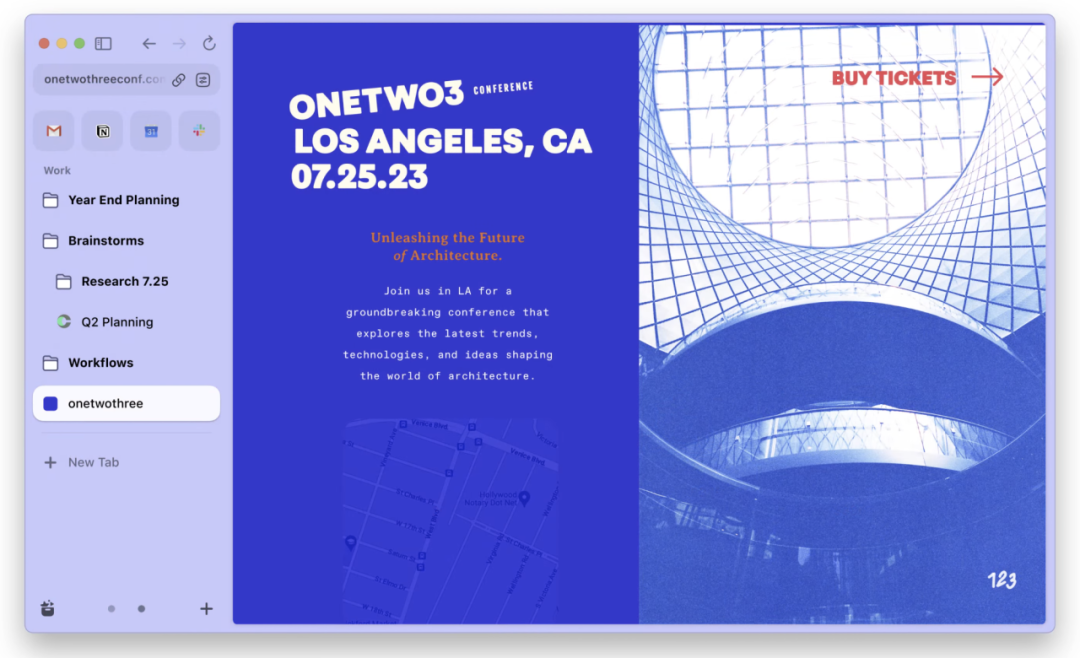
Arc is a browser that's been getting lots of praise lately. I switched to it about ten days ago, and I really. truly. have. not. once. actively opened Chrome again.
It was as decisive as switching from Windows to MacOS, or moving from Beijing to Shanghai — hahaha.
There are already too many articles describing why Arc is so good, and its own website is beautifully made. So I don't plan to explain in words why it's good; I just want to recommend that everyone give it a try.
With the wave of AIGC changes, browsers will likely return to center stage and become hotly contested territory once again. We might even see the outbreak of a "Third Browser World War":
On one hand, within the contextual environment that browsers provide, co-pilots have unlimited room to operate, creating entry-point value.
On the other hand, AIGC brings the potential to transform search. Even if there's only a 1% chance of taking down Google, geniuses, eccentrics, and mavericks from all over the world will flock to it — and the browser will be a crucial stronghold in this battle.

DALL·E image generation: A man feeling extremely happy after moving from Beijing to Shanghai
Today, Arc released a new version. There's a brilliant 14-minute video on YouTube that's as fun, innovative, and rule-breaking as the product itself. Highly recommended:
There's been so much praise for Arc lately. Here are two comments from Jike users:
-
@Szhans: If you're an Apple fan, a Whole Earth Catalog fan, you'll probably scream — this (today's 14-minute release video) is a wild homage to Apple's 1984 ad! Only this time, IBM — the imaginary enemy in Apple's heart back then — has become Google. AI has given browsers new life.
-
@SUKIII: Applause for innovation. 👏🏻 Being Different requires risk-taking. Having the guts to break deeply ingrained habits, to do something truly disruptive, and to actually make it work.
❸
🎻 Apple Music Classical
Can't believe it took until 2024 for this to exist
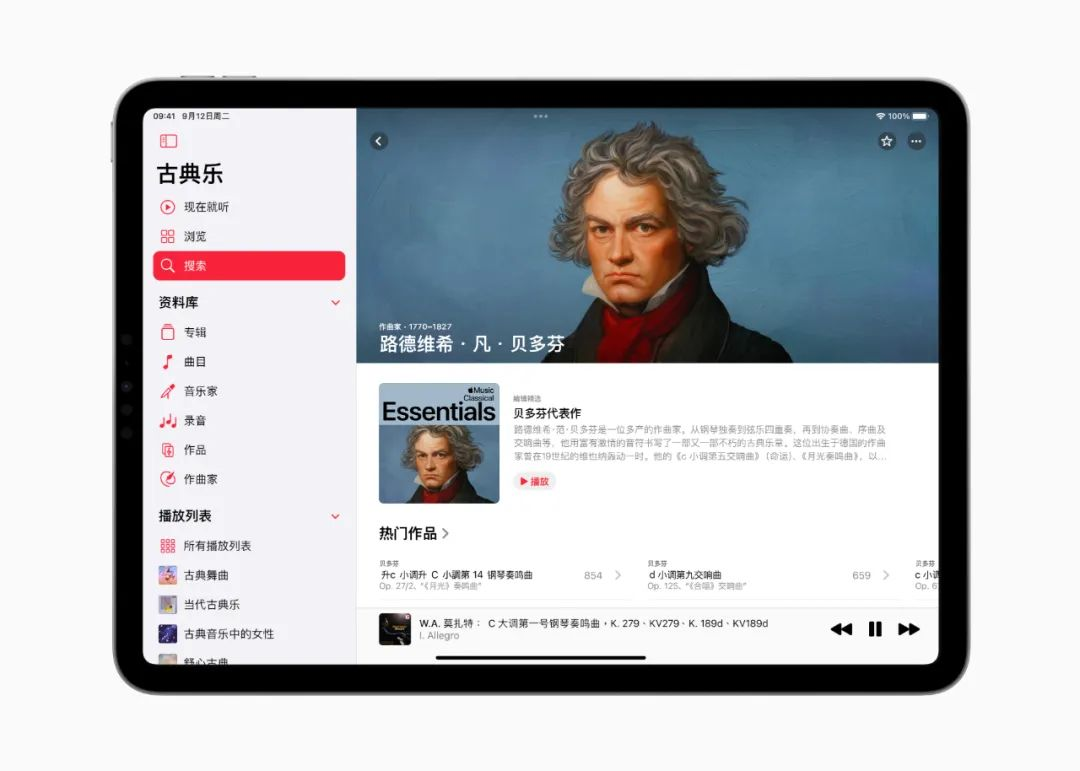
This week Apple Music launched a standalone app with a simple mission: "We want to present classical music the right way."
Beyond adding background stories, performer interviews, and specially crafted illustrated musical narratives for well-known works to help casual listeners get started, I think the most meritorious thing Apple has done is a comprehensive experience optimization for the unique metadata of classical music — clear, thorough, accurate: extreme comfort for J-types!
So I can easily look up all of Beethoven's works, with clean and clear layout, and default sorting by "number of historically released performance versions" — which is precisely an important indicator of a work's popularity.
I can also easily look up all performance versions of each work — different eras, different artists, different styles. I can even easily compare and listen to the same artist performing the same work at age 20, 30, 40 ... all the way to 70, at different life stages.
It's impossible to explain in just a few words exactly what's so great about this app. WSJ Chinese and sspai each wrote a long piece about it — worth a read if you're interested.
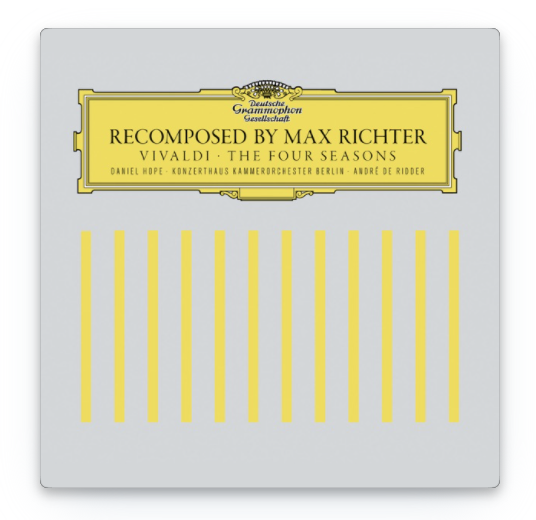
P.S. A while back, Sam Altman mentioned on Bill Gates's podcast that his work BGM is "Recomposed By Max Richter: Vivaldi, The Four Seasons." So I've pretty much had this album on repeat in Apple Music Classical all week.
❹
The Feynman Technique
The best output is input
The Feynman Technique is a highly efficient learning method named after American physicist Richard Feynman. Its core lies in simplifying and explaining complex concepts to make them easy to understand. The basic steps are as follows:
- Choose a concept: Select the topic or concept you want to learn or understand.
- Study and understand: Learn this concept through reading, watching tutorials, or taking courses. Make sure you fully understand all the details.
- Teach it to someone else: Explain the knowledge in the simplest possible language. Feynman specifically mentioned explaining to a sixth-grader — this is a general reference, mainly meaning someone whose vocabulary and cognition are sufficient to understand basic concepts and their relationships. This step is crucial because it forces you to simplify complex theories and make them easy to understand.
- Review and simplify: If you encounter difficulties in the explanation, it means you may not yet fully understand the concept. At this point, return to the learning materials, restudy the unclear parts, then try explaining again.
- Practice and repeat: Teaching a concept isn't something you can do perfectly in one try. Repeating this process is key to improving understanding and memory.
The advantage of the Feynman Technique is that it emphasizes understanding over rote memorization, deepening your own understanding and memory by teaching others. This method applies to all types of learning.
❤️ What is love?
Kris V.S. ChatGPT
A while back, I spontaneously asked my daughter:
Me: Do you know what love is?
Kris: Love is when two people like sticking together. Love is caring about each other. Love is even better than "ten thousand"!
Then I asked ChatGPT 4.0 the same thing:
Me: How do I explain what love is to my four-and-a-half-year-old daughter? Please keep it under 100 words.
ChatGPT: Love is like the warm, happy feeling in your heart when you hug your favorite toy. Like when Dad gives you a hug and you feel safe and cared for. Love is wanting to share your joy with others — even when you give some away, you still feel completely full of happiness.
I think Kris answered better than ChatGPT! (Proud 💃🏻)

Photo: Kris whispering secrets to me
💡
Recent "Inspiration Weekly" updates:
Inspiration Weekly Vol 01: Other people's 30s; how to improve your luck; good things will happen
"TheCatalyst" is Koji's personal WeChat public account. A catalyst is a fascinating thing — though tiny, it holds enormous energy, capable of accelerating chemical reactions. I hope that through sharing and writing, I can provide catalysts that inspire myself and others; I also hope catalysts can help me build more meaningful relationships and grow together.
Feel free to add me on WeChat: YuanchengYang
Or let's meet in Jike town: @koooji