On Xiaohongshu, I Saw the Wild Growth of a New Generation of AI Developers
Maybe the next Manus is already quietly germinating in Xiaohongshu communities and hackathon venues today.
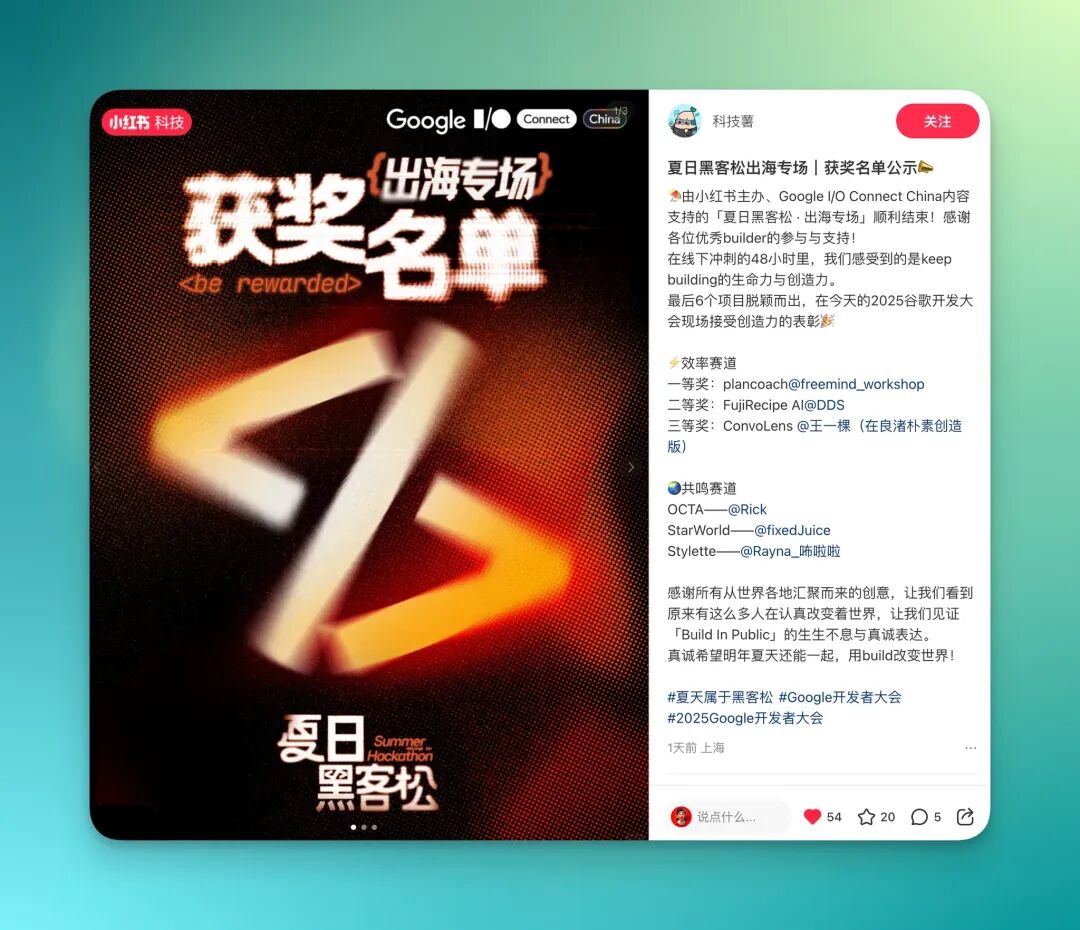
The "Xiaohongshu × Google Summer Hackathon: Going Global Edition" drew 463 developer sign-ups and over 100 project submissions, culminating in a 48-hour final at AI Hacker House last weekend.
I served as a judge throughout the hackathon, and two products in particular stood out. Let me share their stories.
"How's the Feng Shui at AI Hacker House?"
 AI Hacker House final pitch scene
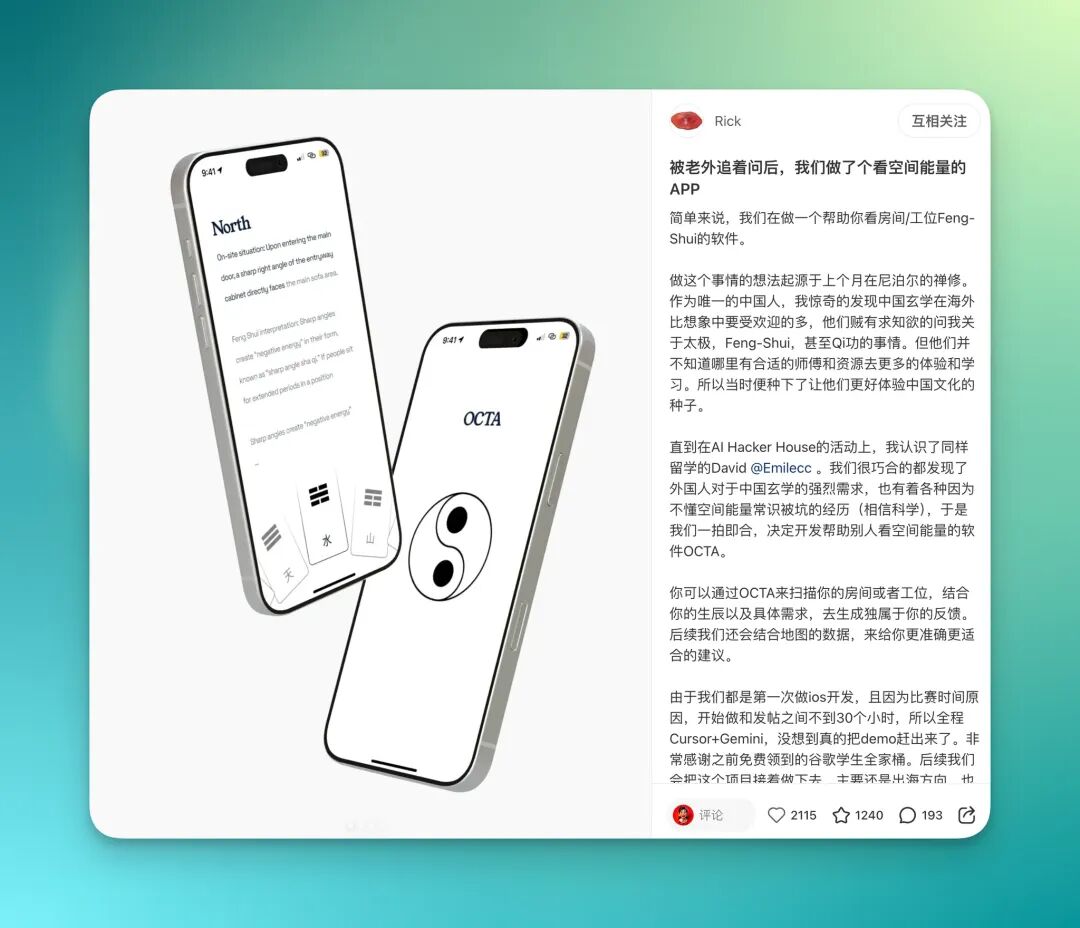
On site, a team that had just formed for this hackathon presented OCTA, an AI-powered feng shui reading tool. Everyone egged them on to "do a reading" for AI Hacker House itself. The verdict:
The mountain-water configuration here is excellent, conducive to China's AI grand enterprise.
The whole room erupted in laughter.
"A Small Hit with 200,000 Likes"
What does 200,000 likes on a product post mean? At a 1% like rate, that's 20 million views.
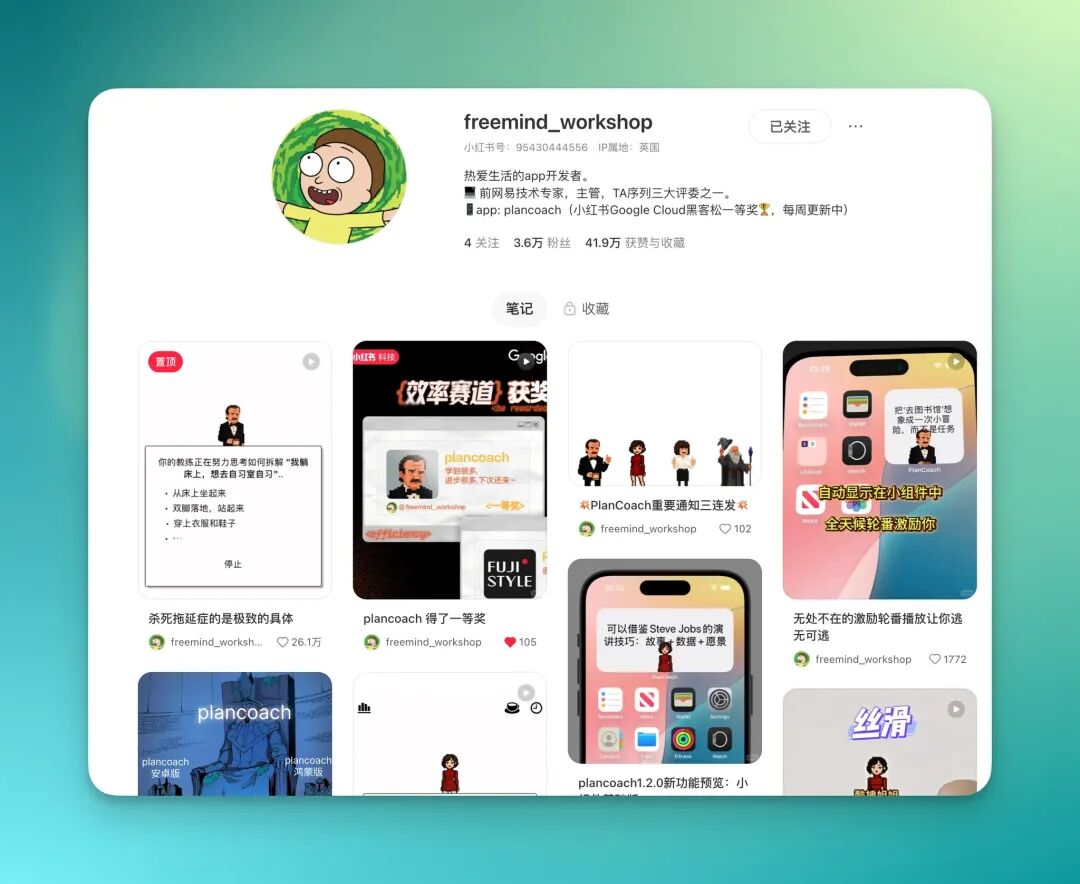
This is what plancoach, the efficiency track champion, achieved:
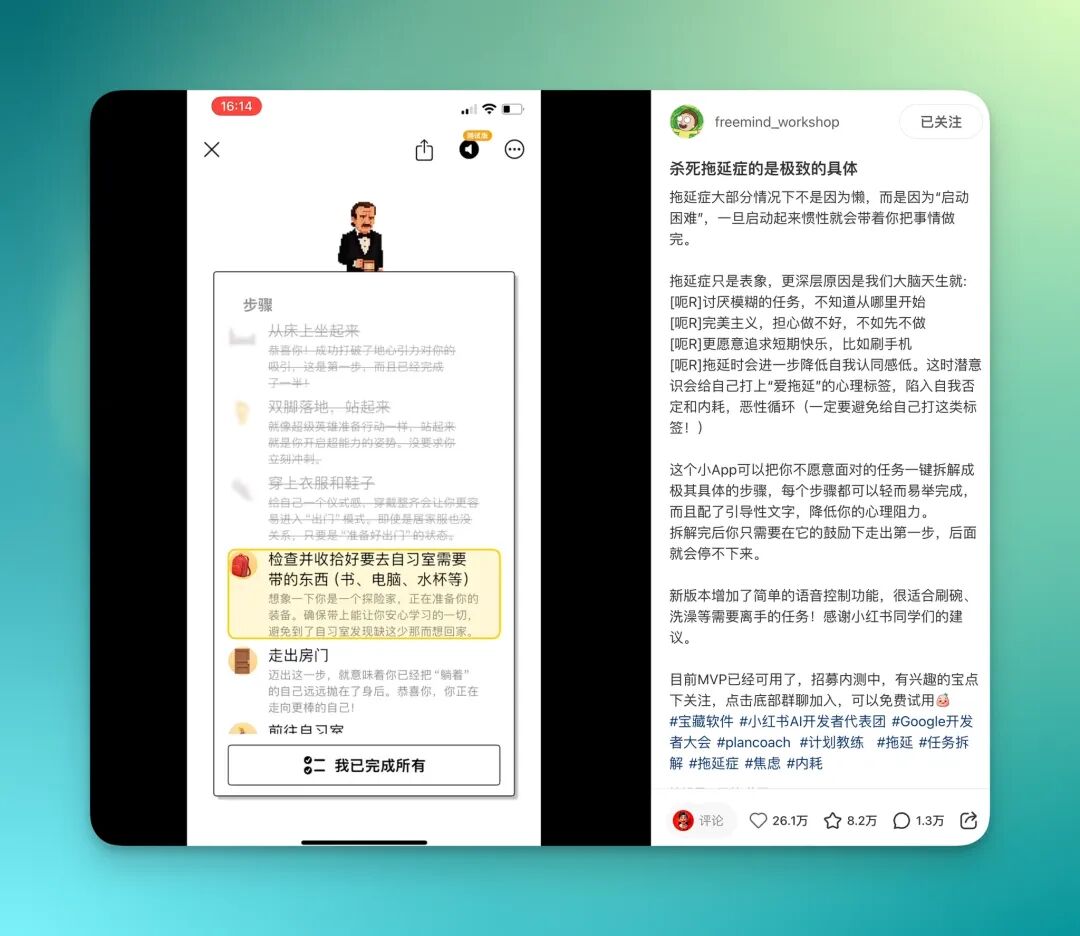
As the screenshot shows, plancoach breaks down tasks that procrastinators dread into extremely concrete steps. Each step is easy to complete, paired with guiding text that effectively lowers psychological resistance. Once the breakdown is done, users simply take the first step with its encouragement — then naturally keep going.
During the hackathon's two weeks, plancoach used Xiaohongshu to validate its idea, build a beta testing group, and treat the comments section as a user research lab for "advice-driven development," rapidly completing its 0-to-1 experiment.
I think this was also one of the hackathon's goals — to make more people realize that Xiaohongshu is prime feng shui territory for AI product cold starts.
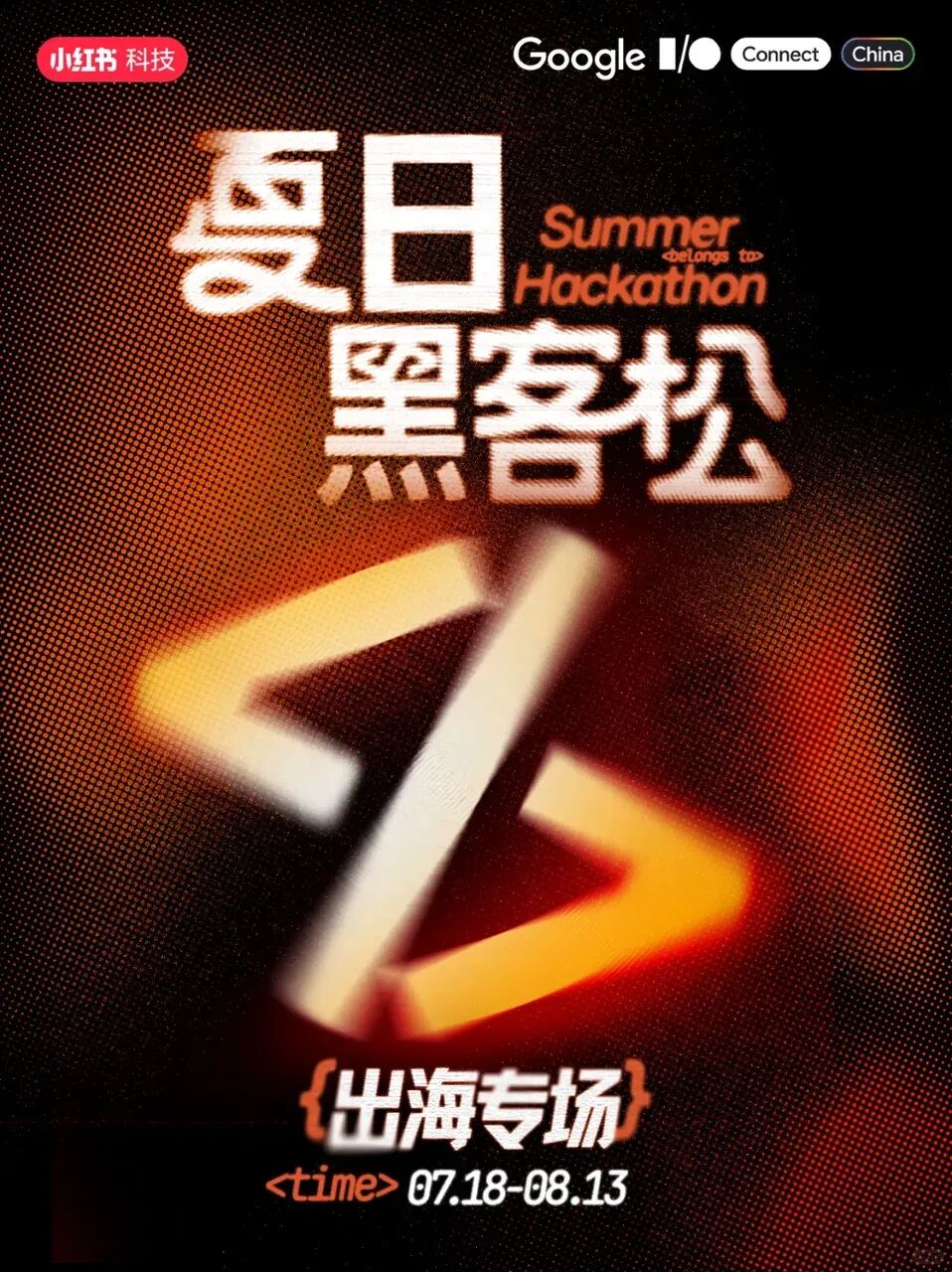 Poster: Summer Hackathon · Going Global Edition
From Google Developer Conference to Xiaohongshu
This hackathon was a warm-up for the Google Developer Conference (Google I/O Connect China 2025).
As the highest-profile tech conference in China for the year, Google for the first time listed Xiaohongshu as its chief content partner and hackathon collaboration platform.
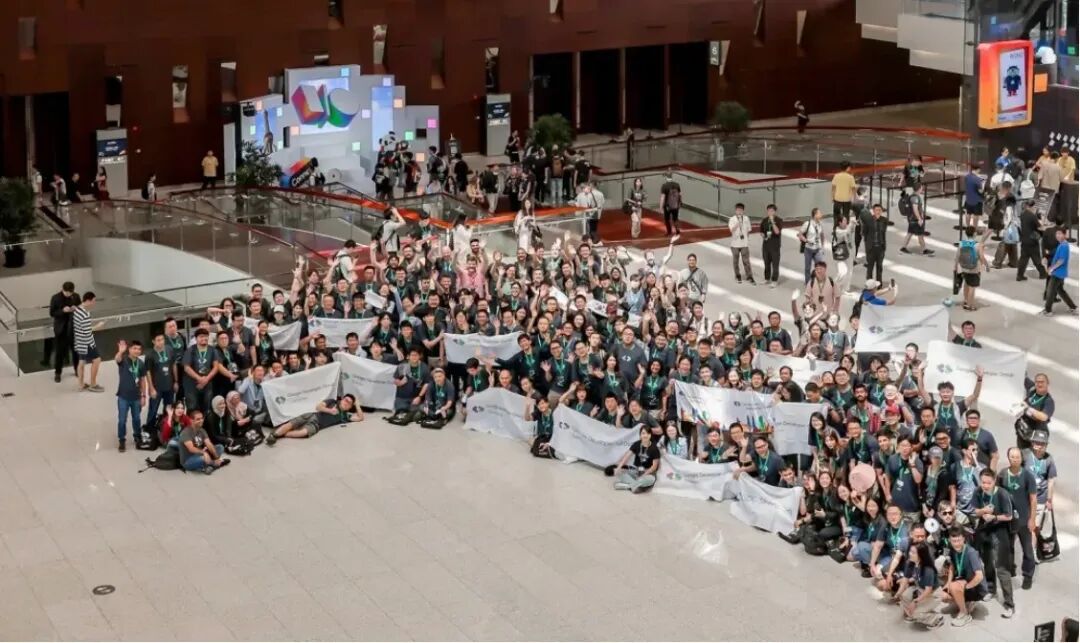 Developers at the Google Developer Conference
Xiaohongshu's participation was distinctive — its logo appeared prominently at multiple installations on site.
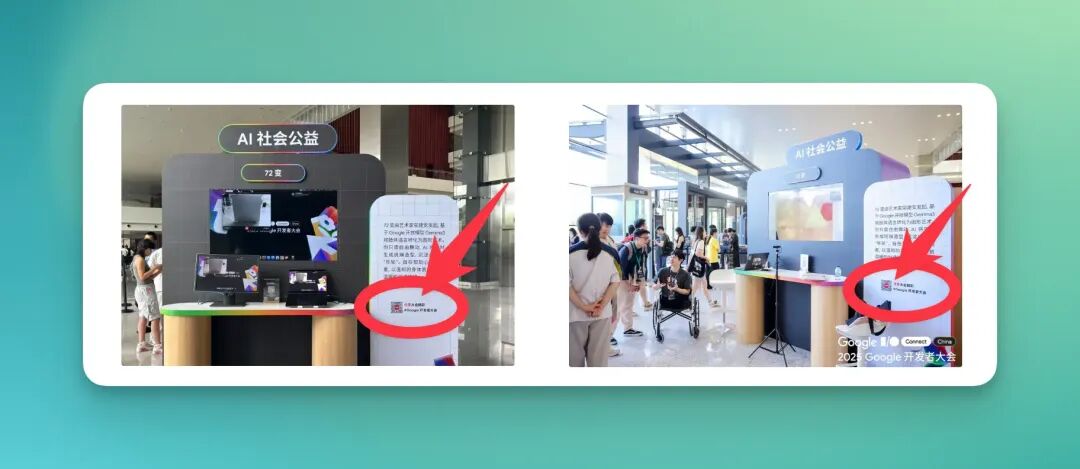
This wasn't a sudden partnership. Xiaohongshu had previously collaborated with Google on multiple technical events, steadily deepening its connection with the developer community. But this time, the partnership was at the highest level and broadest scope yet.
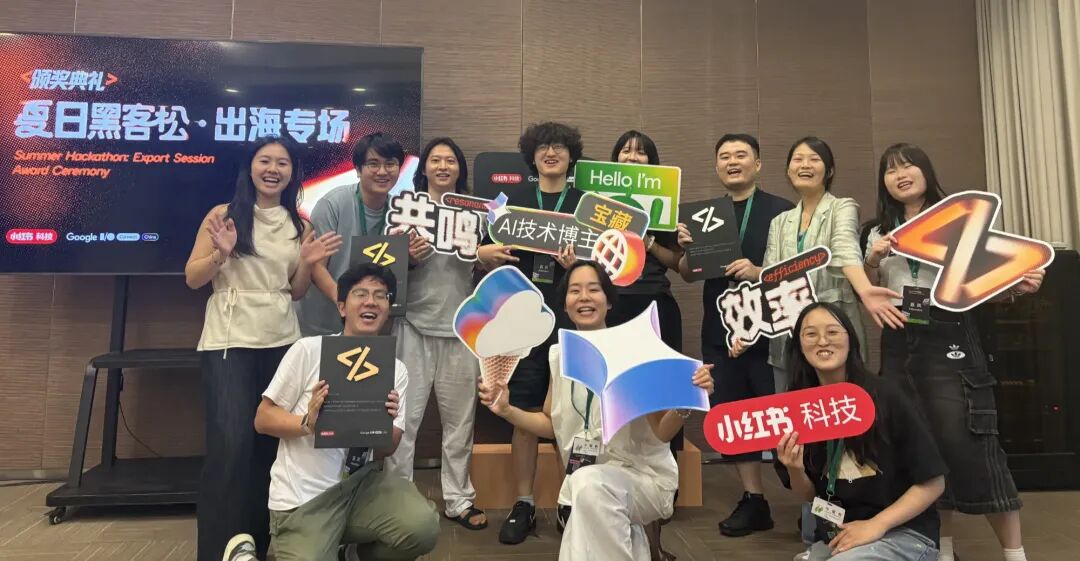 At the Google Developer Conference, hackathon winners
And it wasn't just the Google Developer Conference. This year's WAIC, Adventure X, and other events have also partnered with Xiaohongshu, treating it as the "developer community of choice."
The Hackathon's New Play: Build in Public
Back to the hackathon itself. Xiaohongshu enlisted the AI Hacker House team to organize and host, adopting a fresh mechanism: online Build in Public on Xiaohongshu + offline finals at AI Hacker House.
Build in Public means developers had to make the entire process from idea to launch public on Xiaohongshu — posting development notes, responding in real time to suggestions and challenges in the comments, letting users participate in iteration.
This mechanism made the hackathon's story unfold simultaneously at the finals and in the Xiaohongshu community. For example:
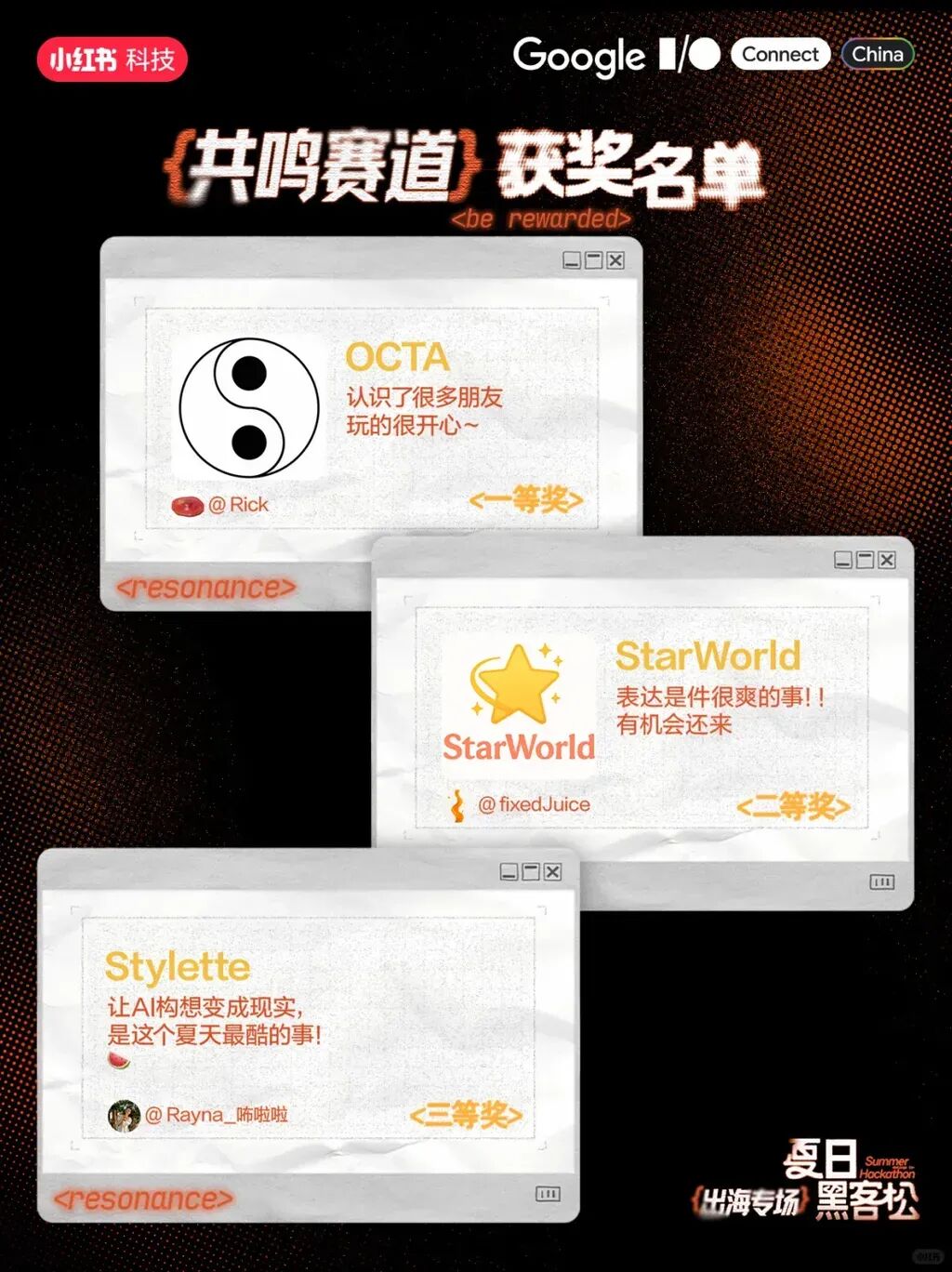
The resonance track champion OCTA team's product introduction post on Xiaohongshu drew massive engagement. A good idea, once seen by the community, gets encouraged and pushed forward until it takes shape.
The efficiency track champion PlanCoach, designed for procrastinators and ADHD users, frequently posted notes and interacted with users during the hackathon, with the comments section becoming a direct user research field.
Nearly all other contestants consistently shared development progress on Xiaohongshu — some posting beta links to collect data, others sharing late-night debugging screenshots.
At the finals, the two OCTA team members showed me photos. They'd just met through the hackathon, but hit it off and spent two weeks creating nonstop. They showed me photos from hot springs, fast food restaurants, even outside a nightclub — full of energy.
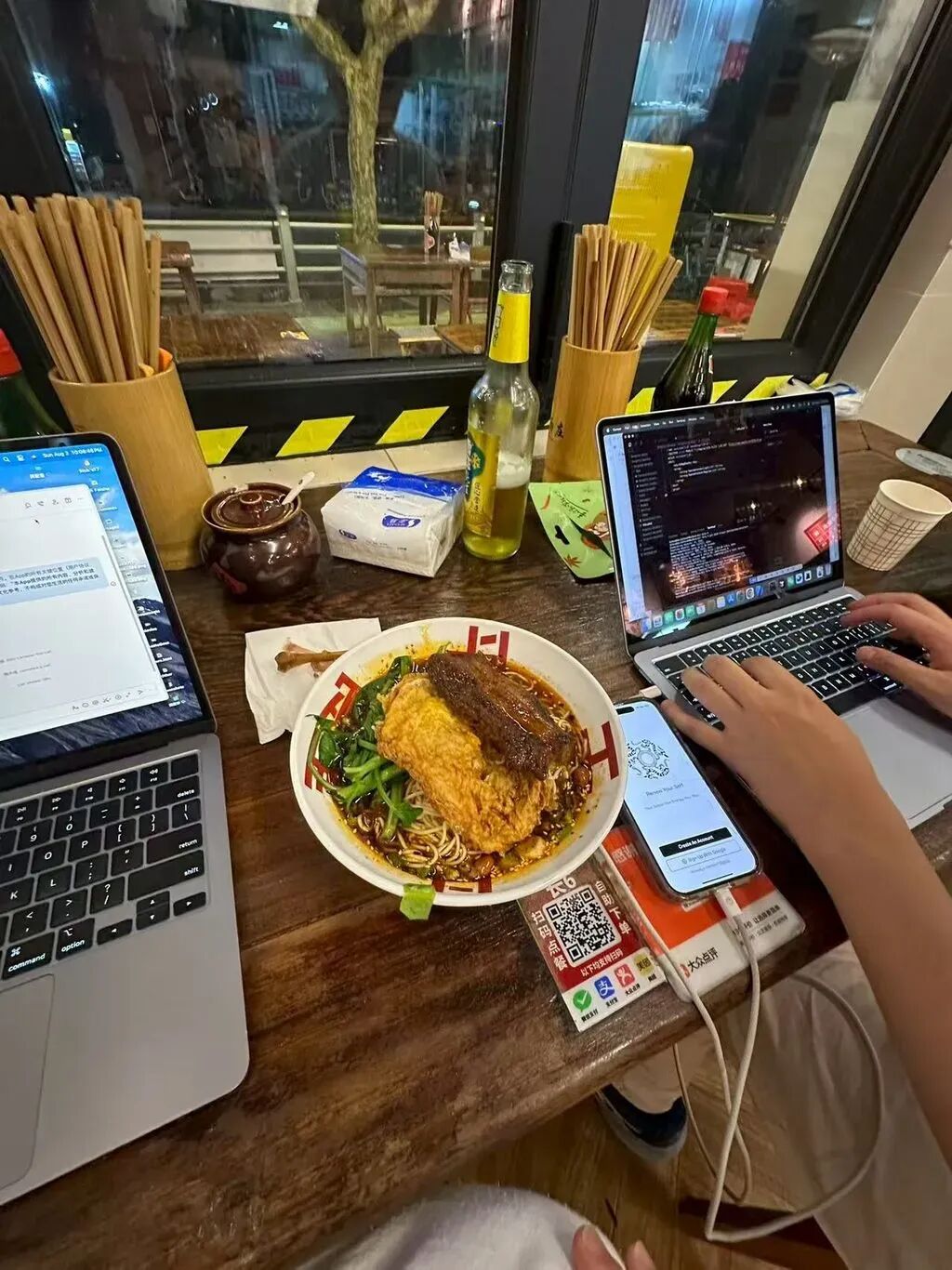
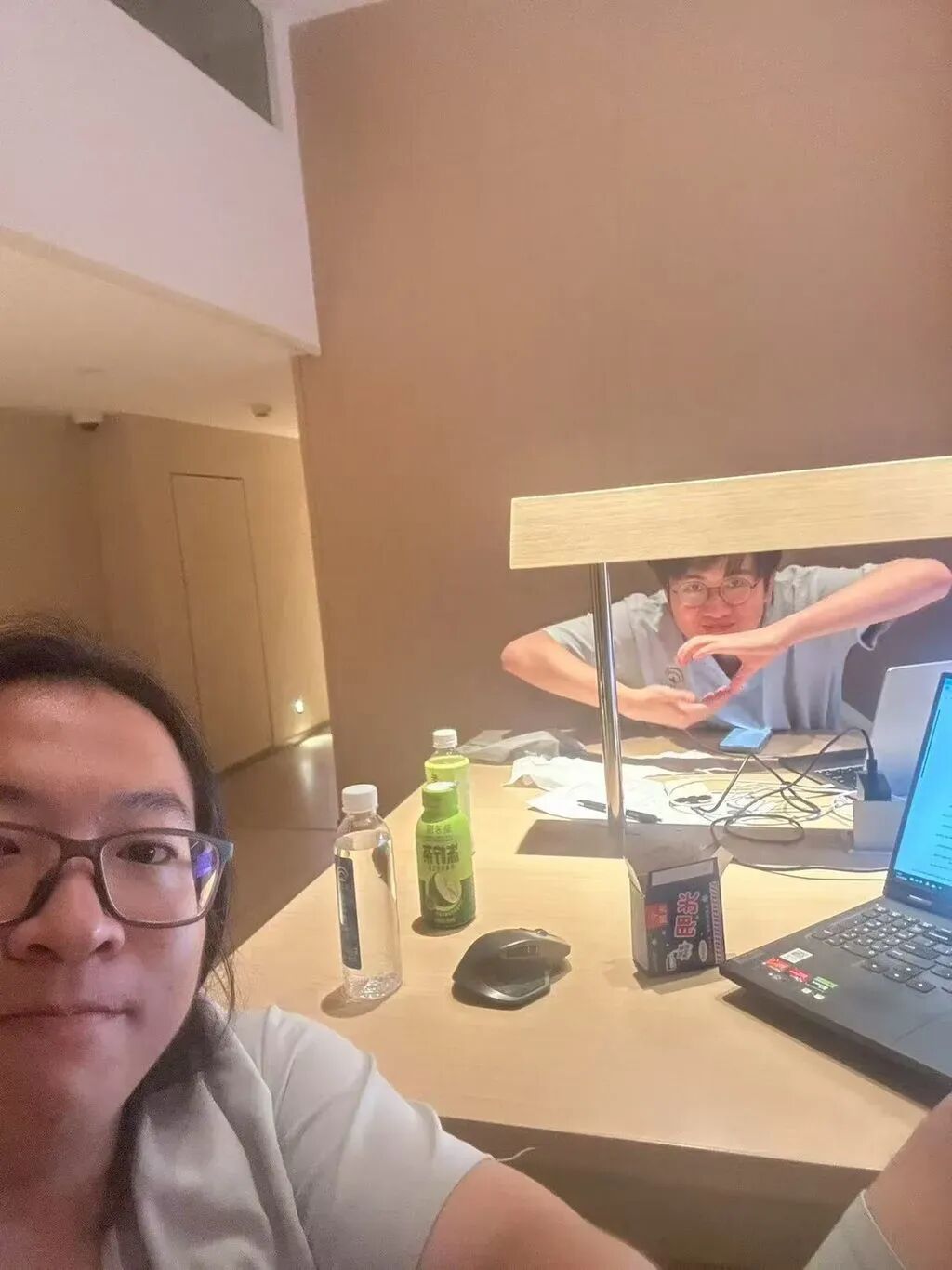
Photo: The OCTA team working wherever, whenever during the competition
At this hackathon, Build in Public wasn't just a slogan — it extended the hackathon into a two-week "public stage," letting products face testing in Xiaohongshu community's real user scenarios before launch.
The hackathon had two tracks: "Efficiency" and "Resonance."
The former focused on solving concrete needs, responding to real and urgent "actually useful" scenarios in the community. The latter centered on emotional connection, drawing from Xiaohongshu's long-cultivated interactive atmosphere and UGC culture.
These two tracks distilled two core traits of the Xiaohongshu community: direct fulfillment of real needs, and emotional resonance driven by content.
AI Entrepreneurship's "Minimum Viable Testing Ground"
This March, we published an article at Crossing titled Why Are the New Generation of AI Entrepreneurs Growing Wild on Xiaohongshu?
We'd noticed a phenomenon: when Manus went viral overnight across platforms with Xiaohongshu as the main channel, when Flowith was spontaneously recommended by thousands of users, when StressWatch became white-collar workers' "digital stress relief corner" through mood tracking...
More and more AI products and entrepreneurs chose to complete their 0-to-1 cold start on Xiaohongshu.
Unsurprisingly, this hackathon's contestants were even more "Xiaohongshu Native."
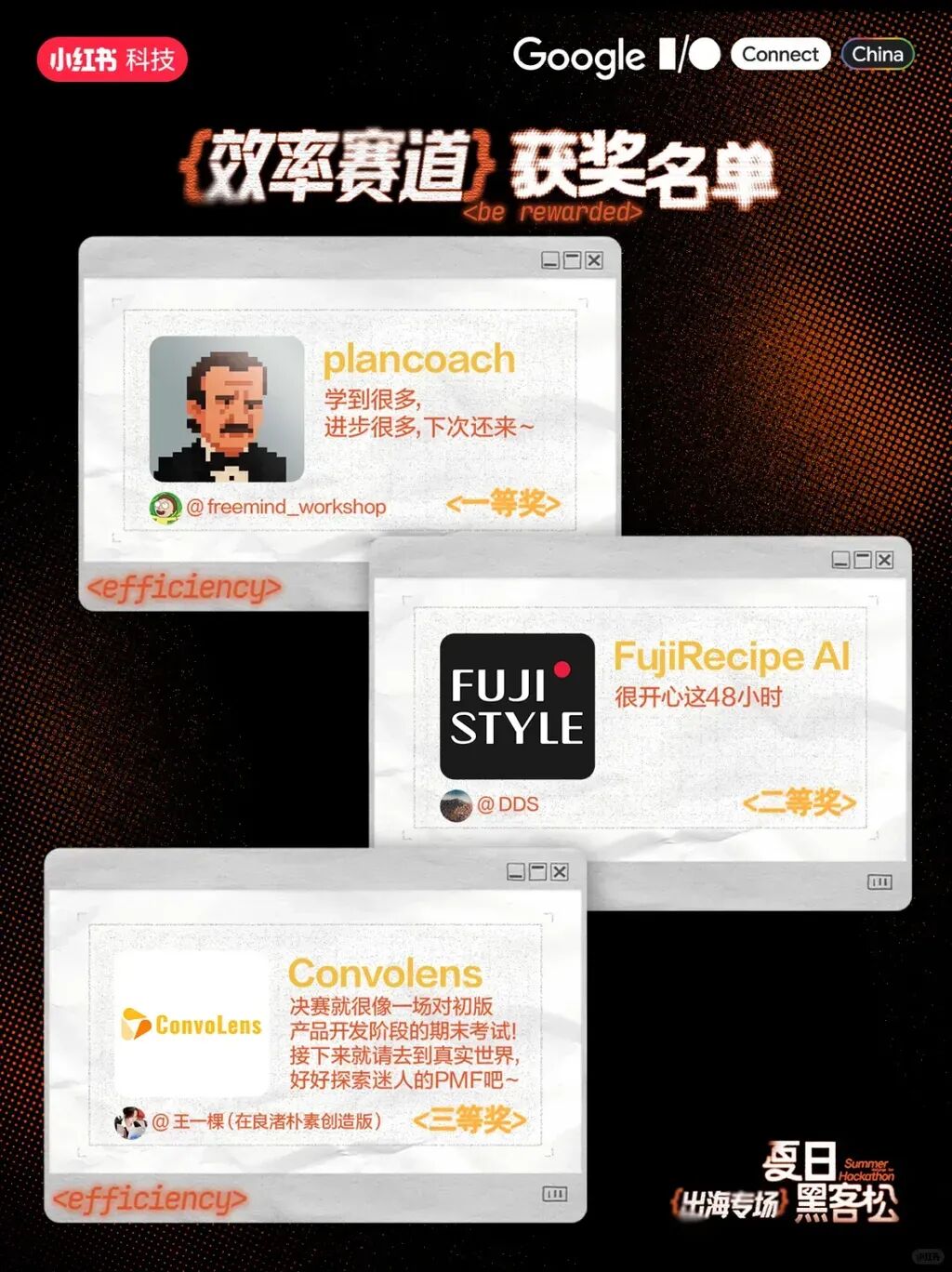
Beyond the OCTA and plancoach teams' fluent use of Xiaohongshu mentioned earlier, DDS, developer of efficiency track runner-up FujiRecipe AI, also long operated his product on the platform.
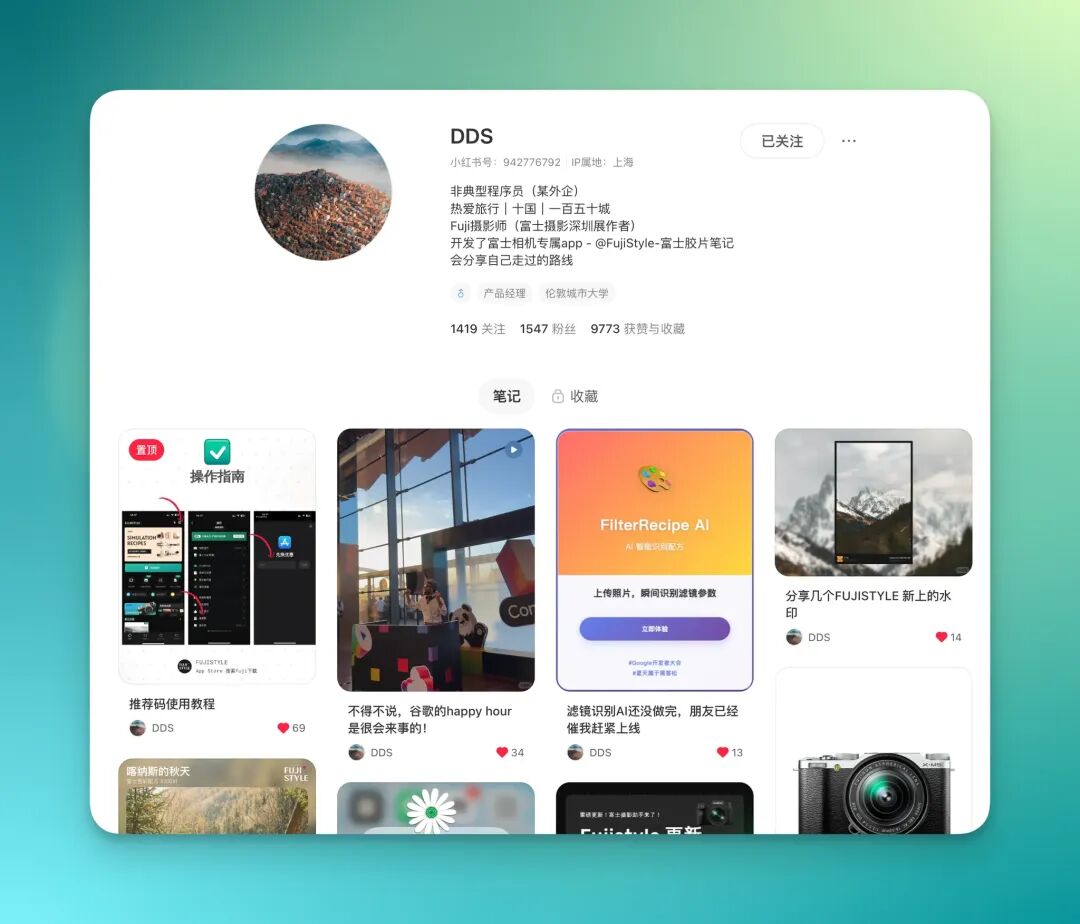 Hackathon contestant DDS's Xiaohongshu profile
From polling users on logo choices to writing letters to users at key milestones, he handled it all through Xiaohongshu posts.
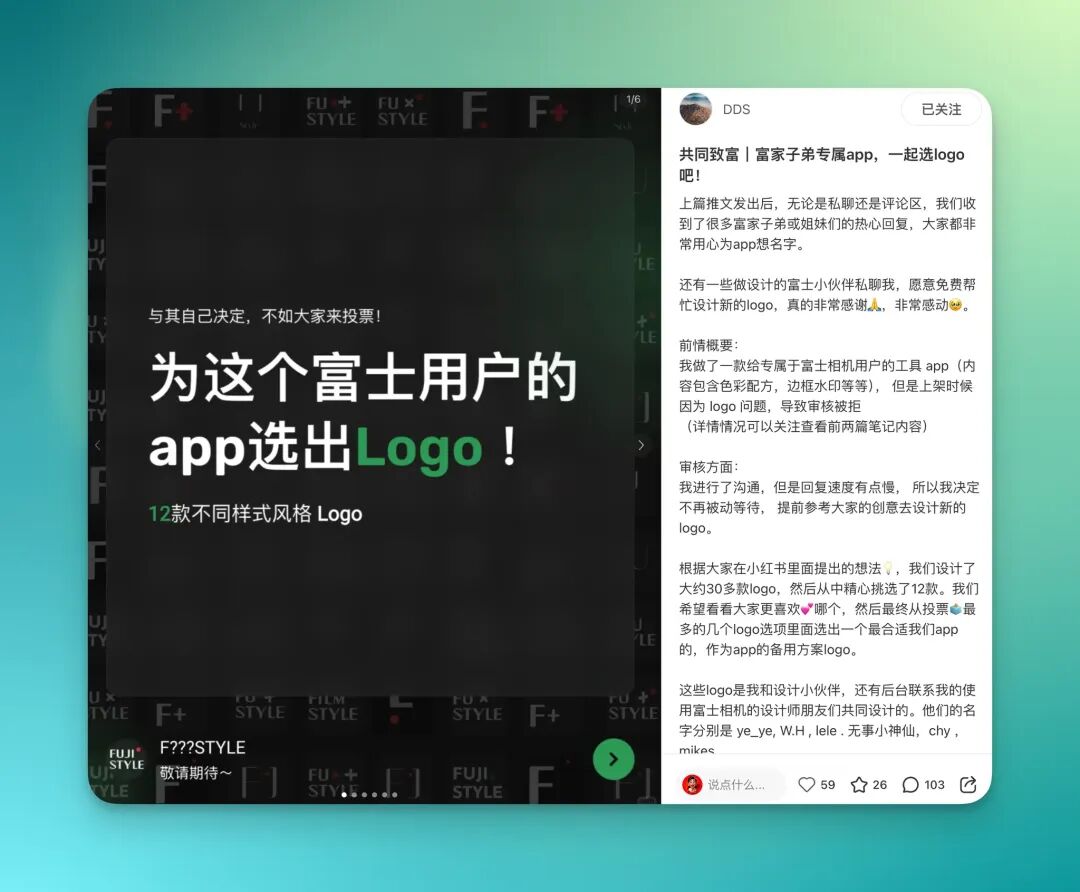
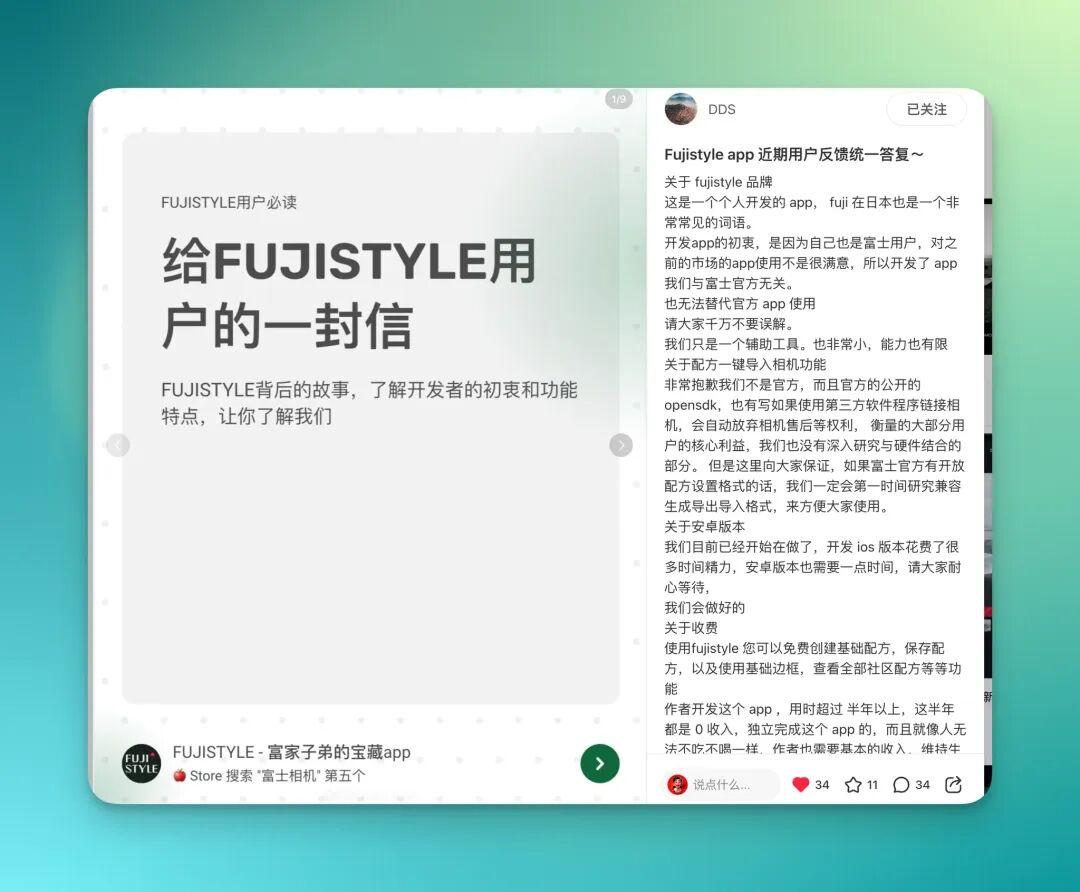
Have you noticed how these things originally done through WeChat groups, official accounts, and email marketing — when moved to Xiaohongshu, the vibe and nature seem to instantly change: more approachable, more design-conscious, more community-oriented.
And more cleverly, while operating Xiaohongshu and engaging existing users, the platform also helps developers precisely find new users.
At the finals, I heard the FUJISTYLE team introduce their users as "fuji kids" (fujia zidi). My first thought was "target demographic: rich second generation." After more explanation, I realized: "fuji kids" is actually a nickname for Fuji camera users.
Xiaohongshu's algorithm precisely helped FUJISTYLE find many "fuji kids," with multiple posts breaking a thousand likes.
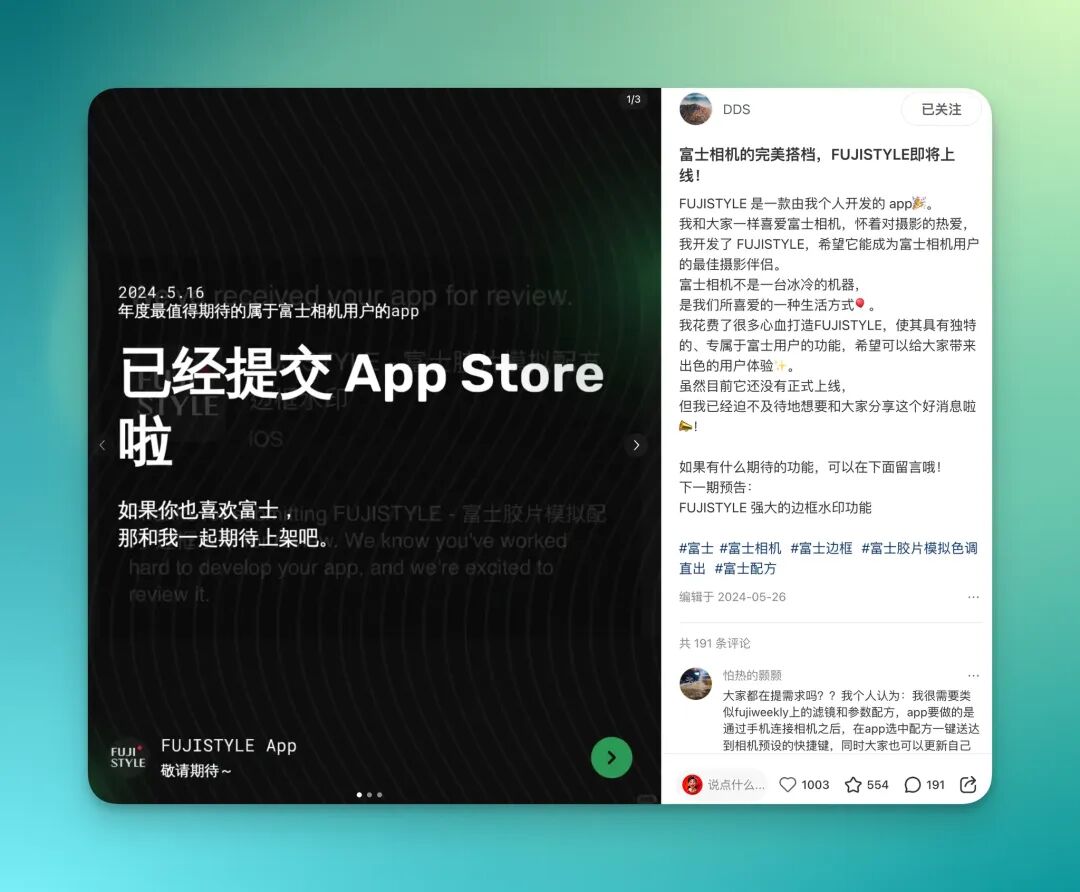
I think beyond Xiaohongshu, this developer would truly struggle to easily and precisely find so many of his own users for this niche product, achieving cold start so quickly.
Why Does It Grow on Xiaohongshu?
That projects can take off on Xiaohongshu isn't accidental. Three long-established ecosystem mechanisms drive it.
First, creator concentration. Independent developers and AI startup teams consistently output products and experiences here. Take DDS of FujiRecipe AI — coding while operating his Xiaohongshu account, putting development logs, recipe library updates, and user exchanges all in posts, already building stable developer-user relationships.
Second, real user demand. Millions of users daily share specific life and work scenarios in the community; these posts themselves form a demand pool. plancoach's hit post is the most direct proof: resonating with hundreds of thousands of procrastinators, rapidly converting to downloads and usage.
Third, instant feedback mechanisms. On Xiaohongshu, comments and DMs often become the first "user research lab." After OCTA's team posted their idea, they immediately received massive encouragement and suggestions, building from idea to prototype in two weeks. PlanCoach's developer practiced "advice-driven development" in comments, adjusting features within hours based on user feedback.
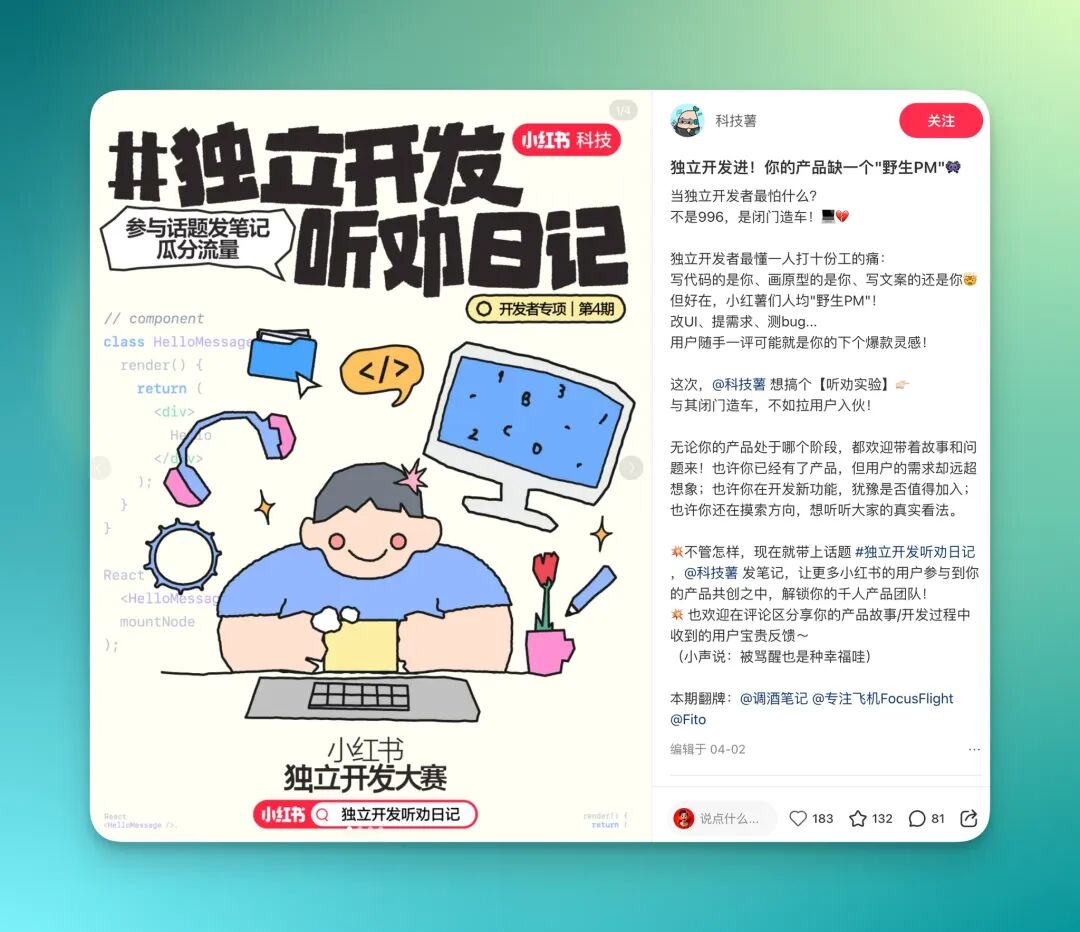
So on Xiaohongshu, developers can complete the full loop from demand discovery, MVP validation, to seed user acquisition in the shortest time.
This makes Xiaohongshu not just a showcase stage for developers, but increasingly the minimum viable testing ground for AI entrepreneurs.
Beyond Indie Development
Xiaohongshu's developer ecosystem is also leveling up. From initial indie developers to now more funding-driven, going-global-oriented teams, the hackathon epitomizes this shift.
This April, Xiaohongshu's indie development competition made waves in AI venture capital circles.
We also wrote at Crossing: Criticism Always Sounds Clever, Just as Creation Always Sounds Clumsy | After Attending Xiaohongshu's Indie Development Competition, I Have So Much to Say
But Xiaohongshu isn't only indie developers. At this hackathon, team-based, funding-driven startups made up half the field.
The Yale and CMU-backed startup Sustentra reached the hackathon finals, using AI to help companies with overseas audit compliance.
When I heard this idea at the finals, my first reaction was how very Silicon Valley it was — the kind Y Combinator would love. Sure enough, they'd also reached Y Combinator's final accelerator round.
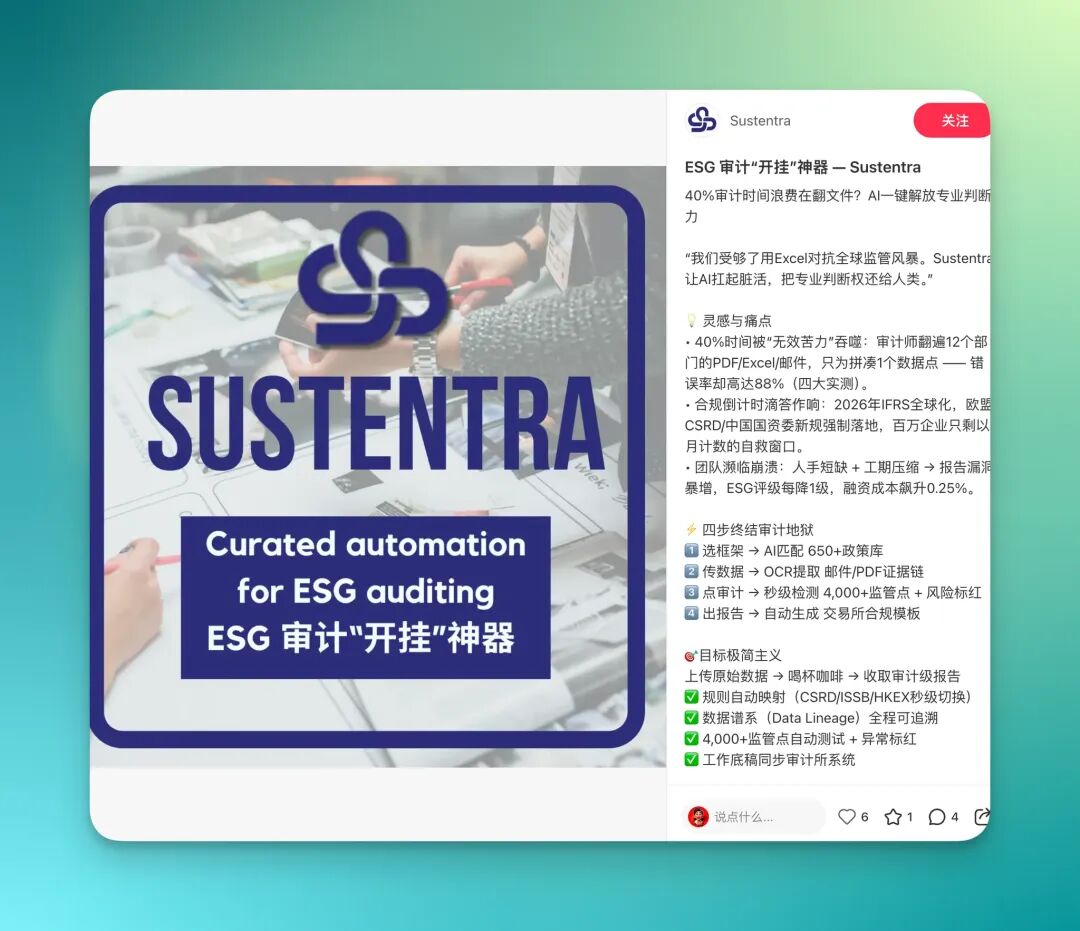
This hackathon became a starting point for many teams' entrepreneurial journeys.
Efficiency track third place ConvoLens contestant Yike Wang told me at the finals that after this hackathon, they'd go full throttle and let the market decide.
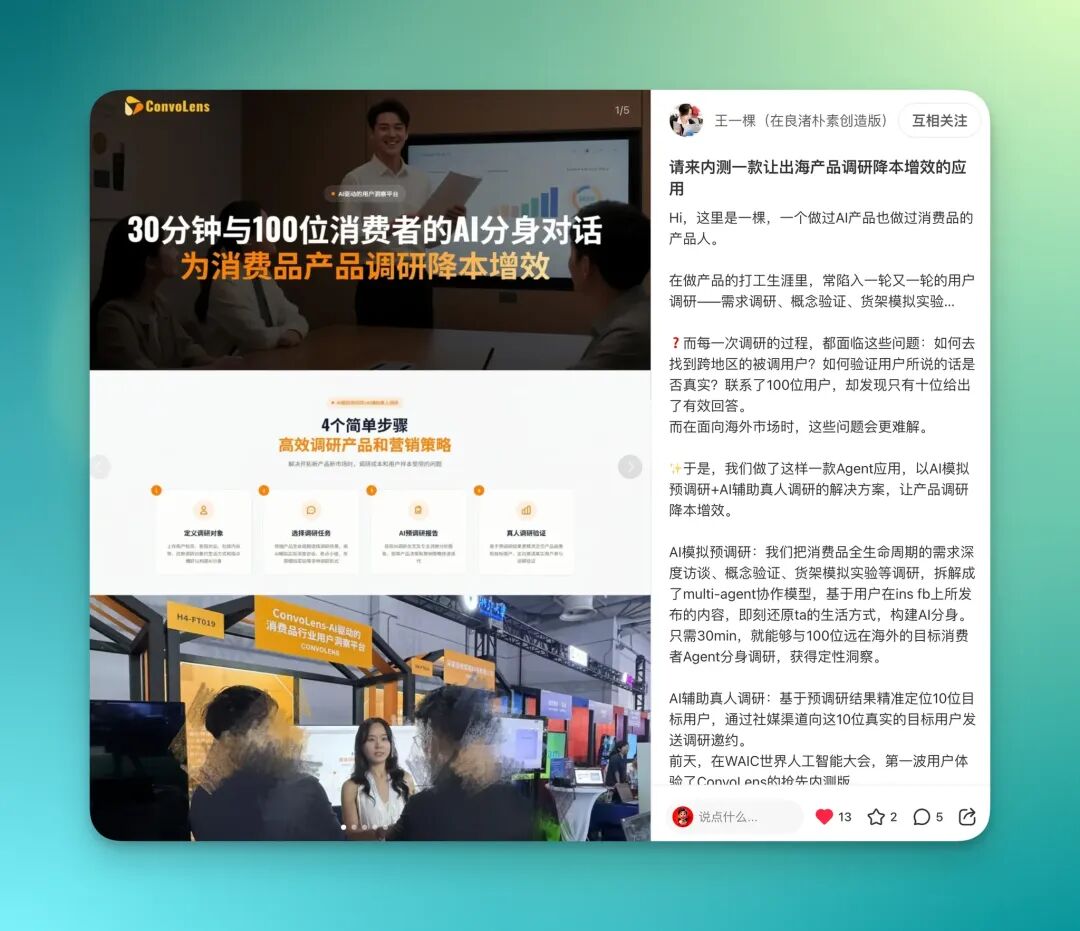
Beyond the hackathon, in the Xiaohongshu community itself, numerous startups at different stages are seriously operating, acquiring customers, and growing.
flowith is the most typical success story: this AI product active on Xiaohongshu drew wide attention at WAIC 2025's opening, even making the national evening news. Founder Derek mentioned in his own Xiaohongshu post that "the organizing committee first reached us through Xiaohongshu."
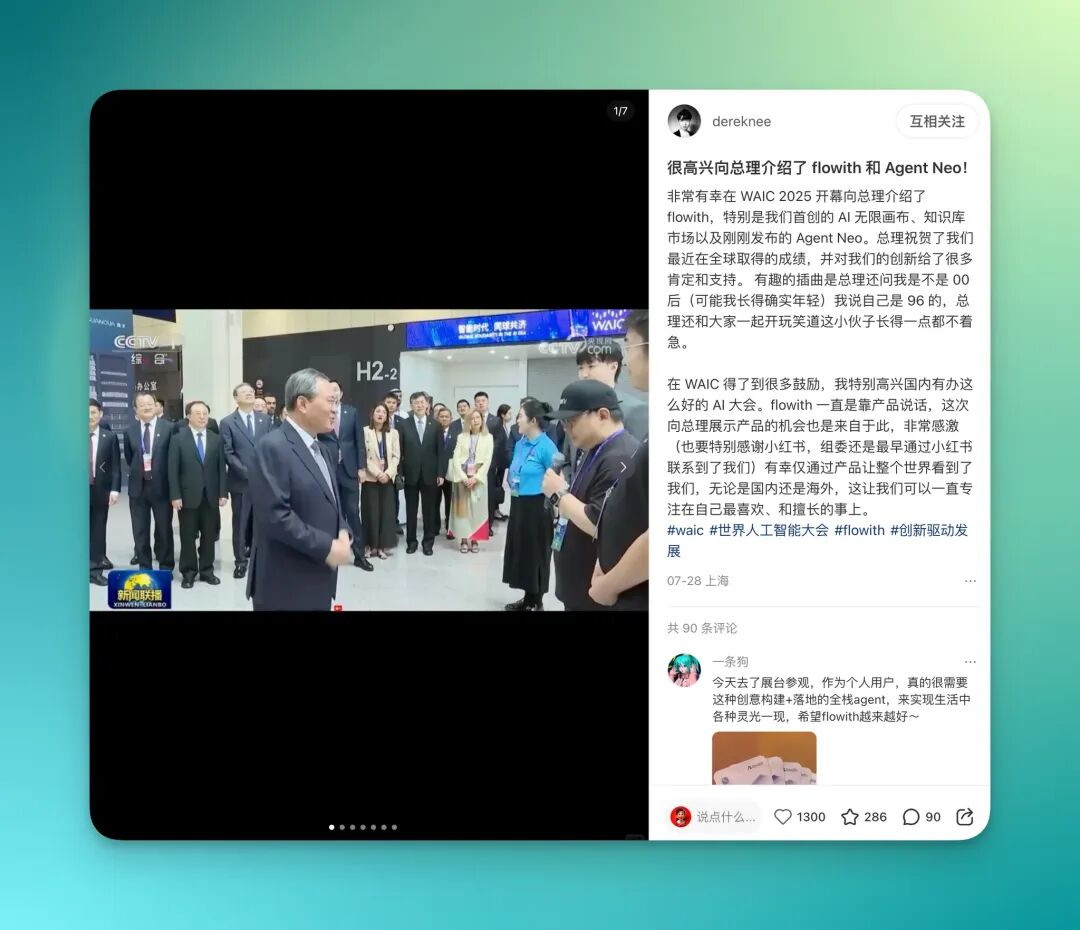
Xiaohongshu Increasingly Resembles a True "Innovation Incubator"
At this year's WAIC, one of the hottest booths — also considered the most design-conscious and tasteful — was Halliday, a proactive AI smart glasses. The founder is a Stanford PhD who raised tens of millions of RMB in short order.
Its main online presence is also on Xiaohongshu.
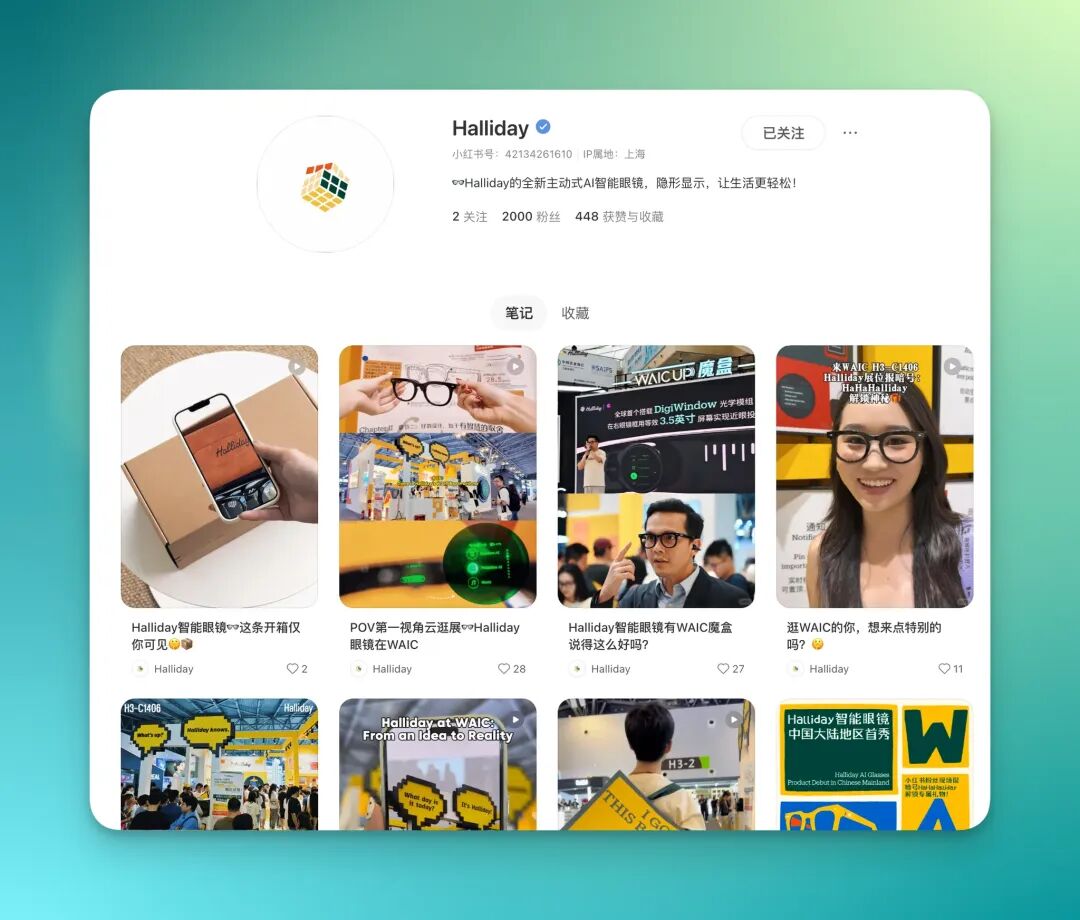
As an aside, at this year's WAIC, I noticed many booths displaying their Xiaohongshu profile QR codes, building their user connection channel on the Xiaohongshu community.
This makes sense. WeChat official accounts function like "broadcast channels" — official one-way output. Xiaohongshu more easily cultivates "community atmosphere," which is especially crucial for toC products.
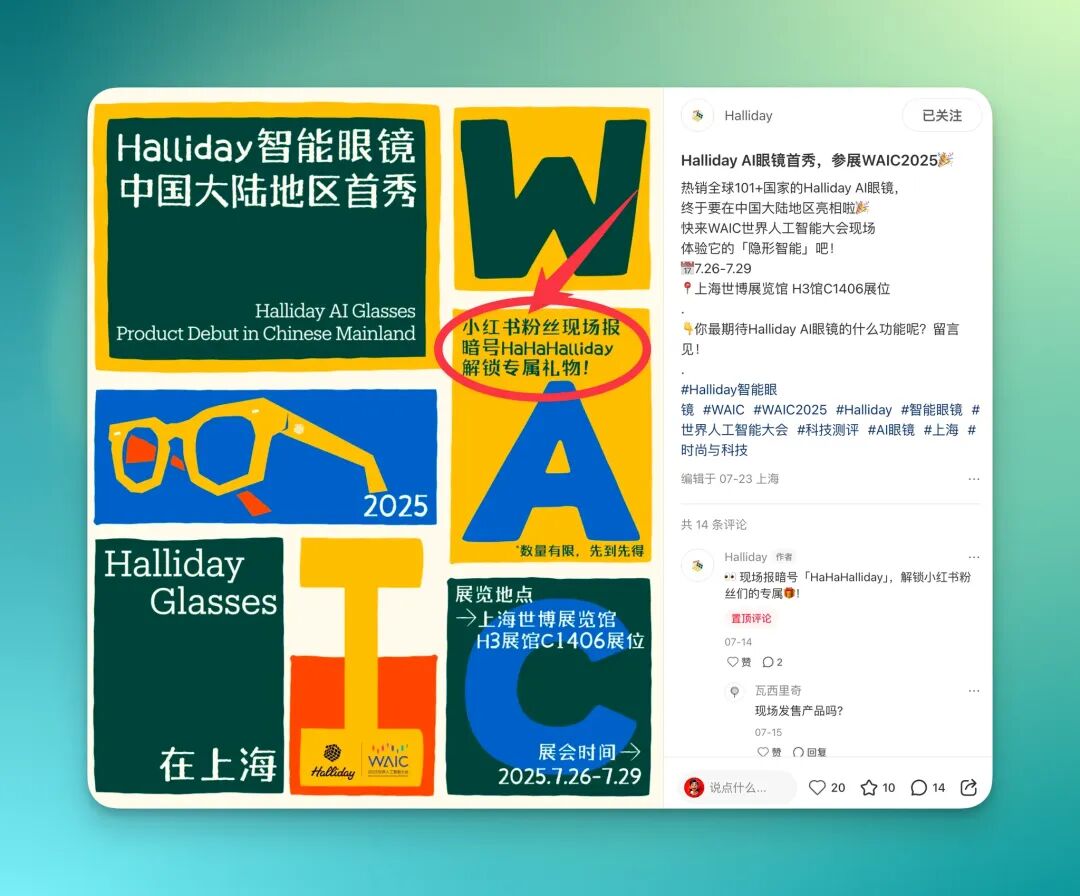
Lately, every few days I discover new AI startups on Xiaohongshu.
While writing this very article, I found an interesting new product: visual AI workspace "Kuse."
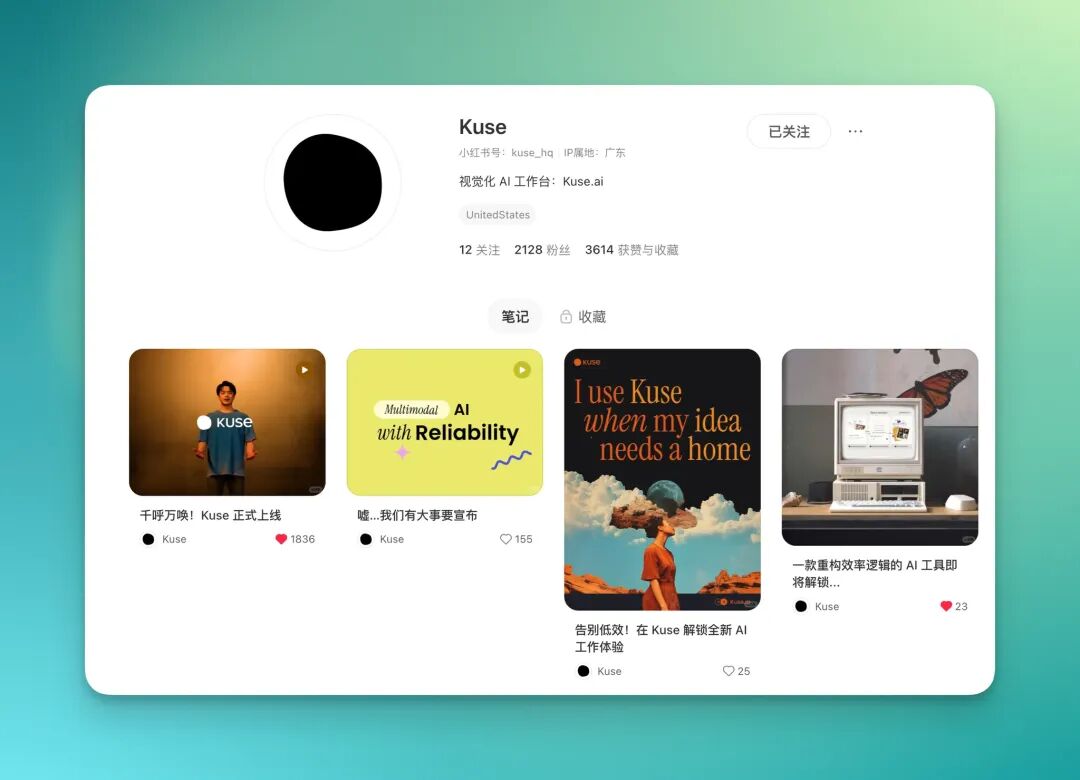
Like many products, Kuse has both an official account and founder Ronin's personal account. This dual-track approach creates Xiaohongshu's distinctive community atmosphere: full of "living person" energy, naturally making users early product co-creators.
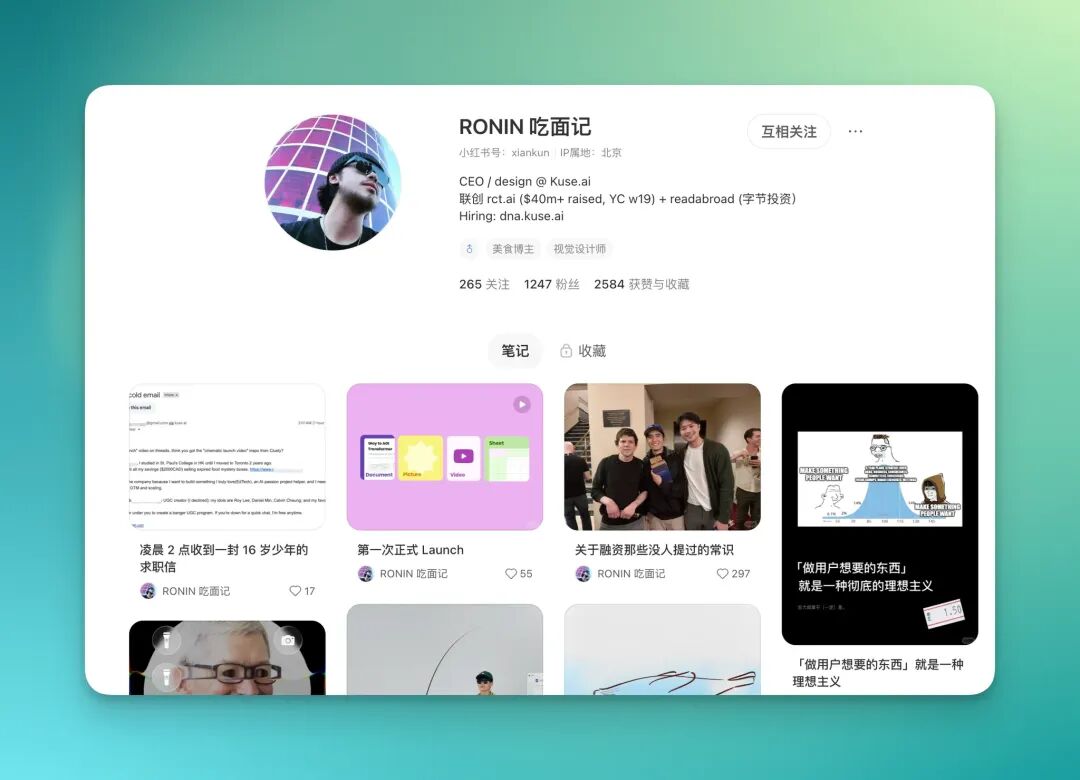
As someone immersed in the Xiaohongshu community daily, I have a very strong feeling: Xiaohongshu not only has "very intense" bloggers sharing AI and tech news, but increasingly more AI developers and startup teams treating Xiaohongshu as their primary marketing ground.
Xiaohongshu increasingly resembles a true "innovation incubator."
Recently, on the "Tech Potato" (Keji Shu) profile, I noticed Xiaohongshu is also testing widgets letting users directly experience developers' products within posts, further shortening the path from cold start to conversion.
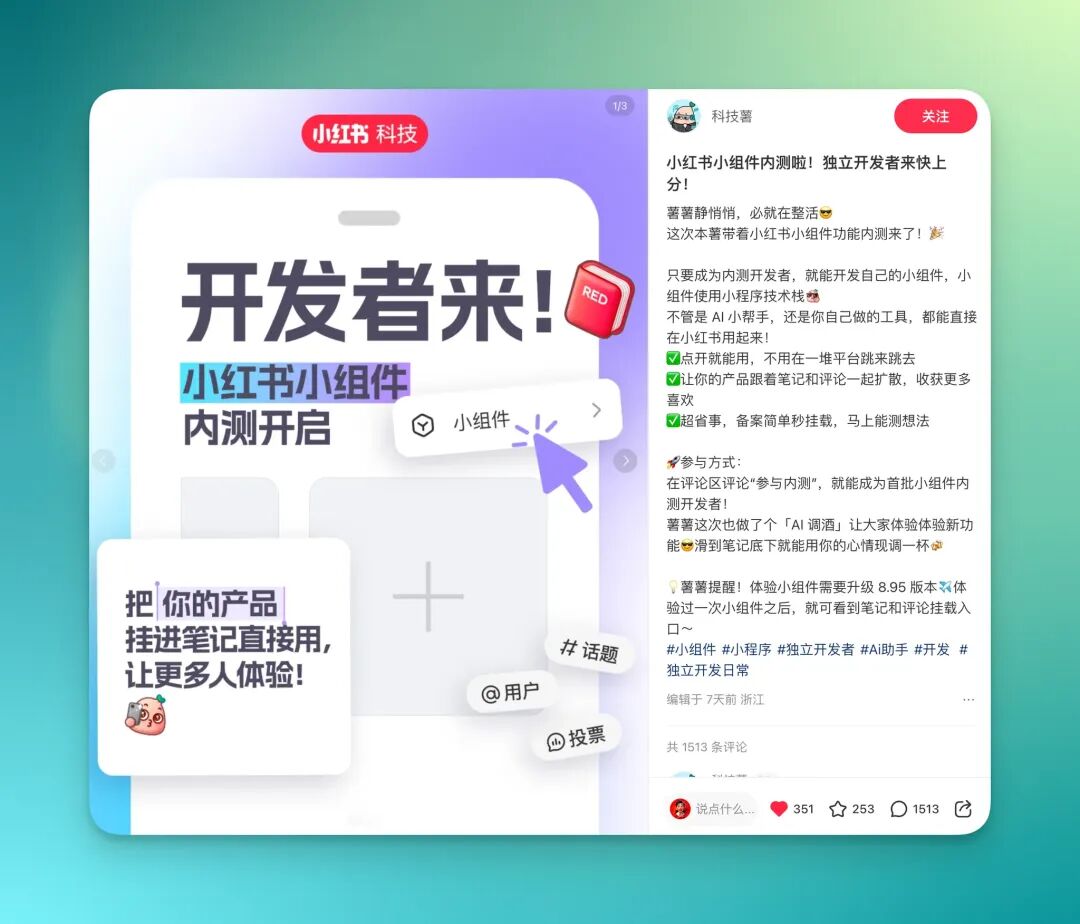
"It's Like Jazz 🎵"
At the hackathon awards ceremony, Xiaohongshu tech operations expert Dongbao shared his feelings about the event:
It's like jazz — improvisational, precious, irreplicable, every iteration carrying a spark of inspiration.
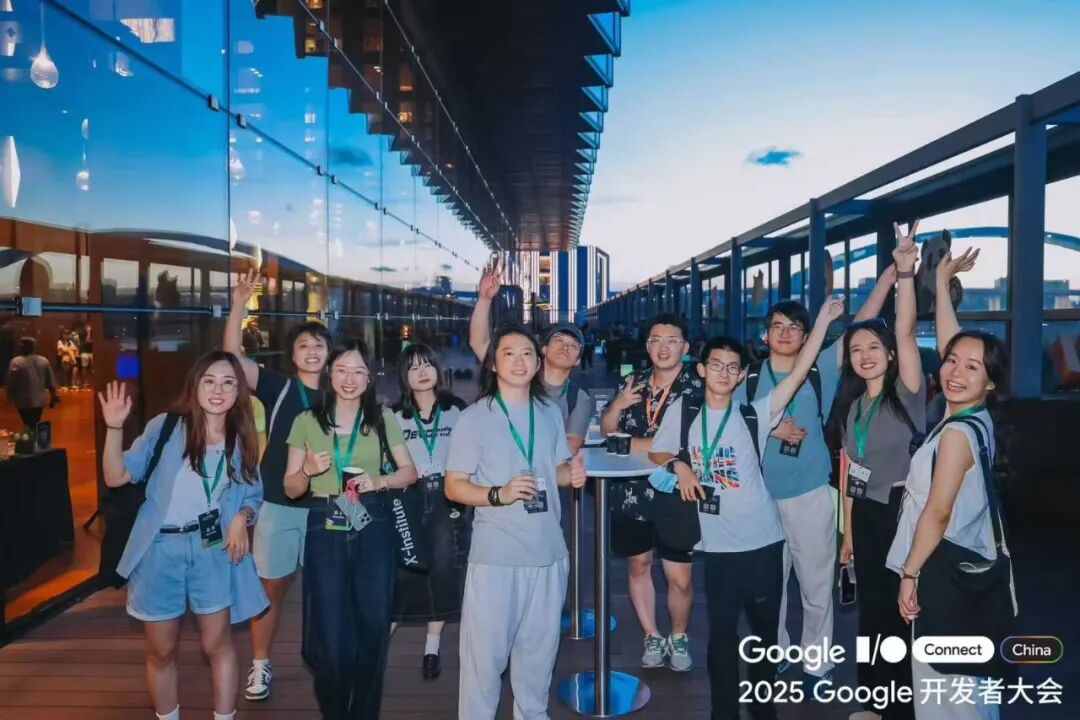
Hackathon contestants group photo at sunset's Golden Hour 🌅
The Next Stage
This hackathon was just the beginning.
In October, Xiaohongshu will host a larger-scale hackathon, encouraging more people to turn needs into shippable products, letting more developers' creativity be seen, validated, and brought to market in the Xiaohongshu community.
May the hackathon become a starting point for more people, finding users, partners, and confidence on an open stage.
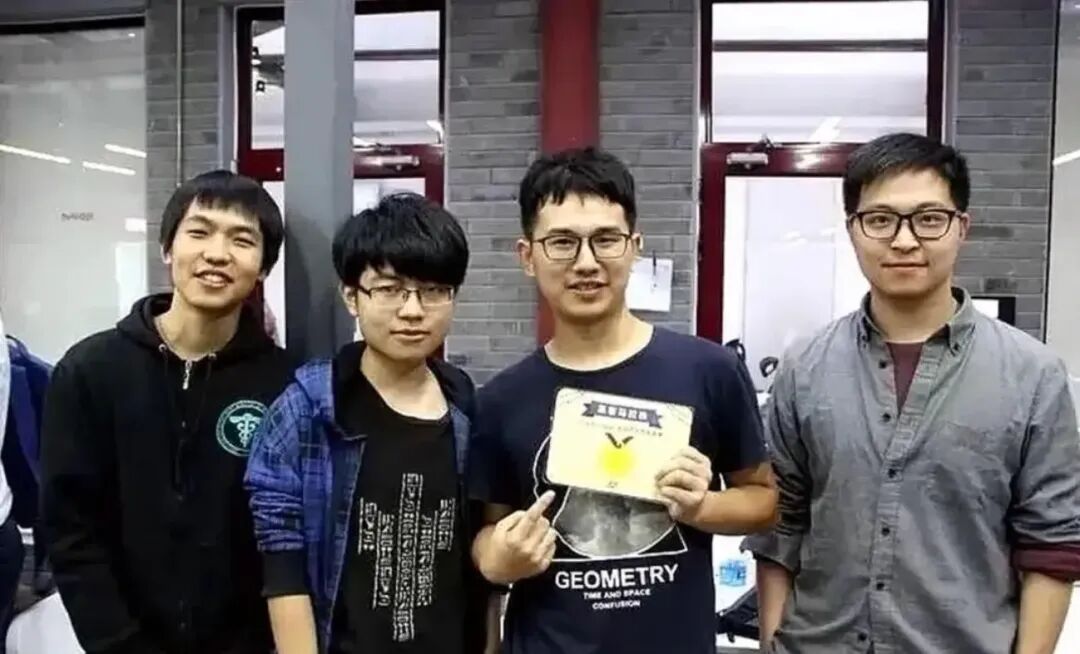
Finally, here's a photo of Xiaohong (second from right) with co-founder Huijie (first from right) and Lao Da (first from left) winning the Beijing Pingwest hackathon in 2016.
Perhaps the next Manus is quietly sprouting in today's Xiaohongshu community and hackathon scene.
🚥