How Should Companies Going Global Make Strategic Choices and Decisions | Codeup 2019

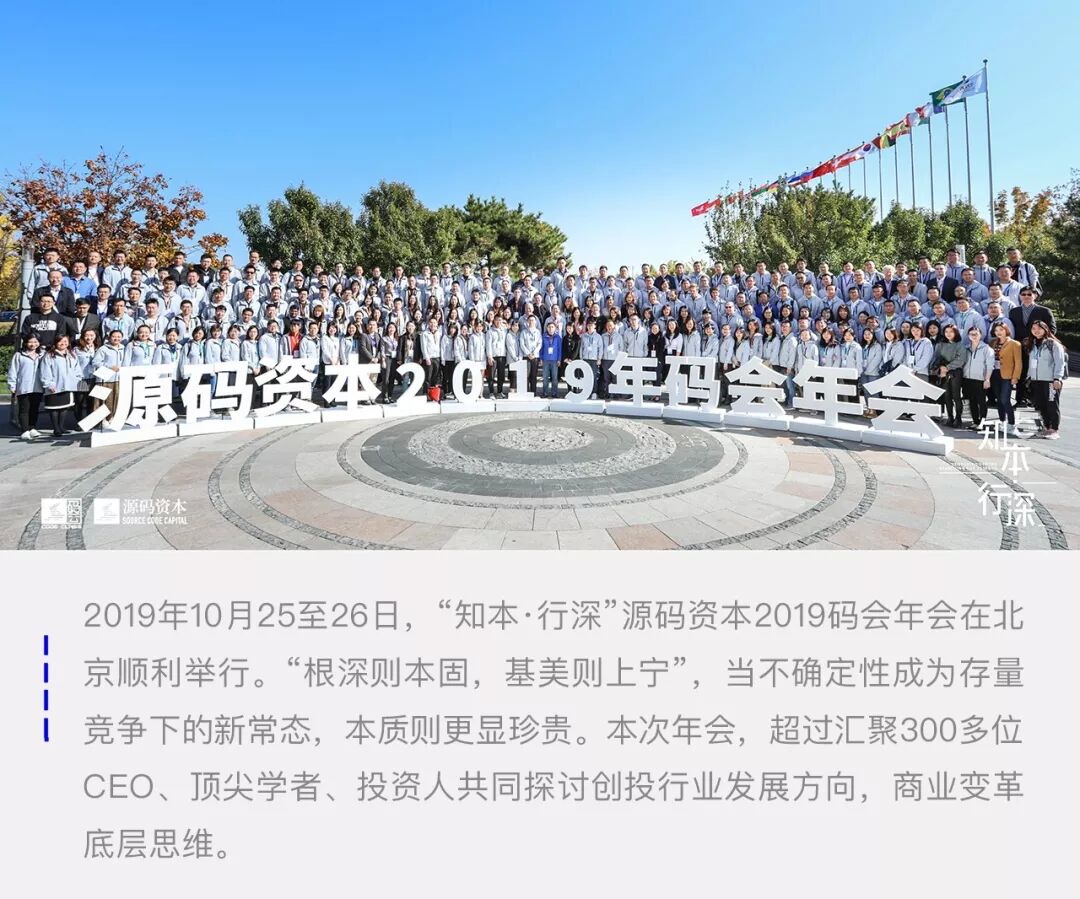
"Knowledge Capital, Deep Action" — Source Code Capital's 2019 Ma Hui annual conference invited the core founding teams from PowerUp, Blue, OPay, and PanPay to discuss their experiences with strategic choices and decision-making for companies going global.
—Introduction—
As the wave of mass entrepreneurship and innovation recedes and asset management regulations take effect, China's venture capital industry has gone from boom to sudden chill. Looking beyond to broader overseas markets has become an appealing alternative to crowded domestic sectors. Source Code Capital began exploring this space back in 2017, following its "Three Horizontals, Nine Verticals" investment map under the "Global+" theme. It has covered fintech, e-commerce, lifestyle services, and other segments across key regions, backing companies including OPay, Zenjoy, Blue, PanPay, PowerUp, RiverPay, and KrazyBee — building up expertise in team building, industry research, and on-the-ground due diligence along the way.
Against the backdrop of cross-cultural interaction,出海 companies face greater challenges in strategic planning, monetization, and organizational management. For this roundtable, we've invited founders from four Source Code Capital portfolio companies to share their experiences in strategic choices and decision-making, hoping to inspire more entrepreneurs eyeing overseas markets.

Founder Quotes
- Don't think you can spend a year perfecting your product before launch. Know from day one that it won't be perfect.
- To build a product that fits the local market, keep comparing with other countries at the macro level. At the micro level, you absolutely must visit the local slums.
- Only extreme execution efficiency can make you fearless against any competitor.
- In local competition, you must find your own edge. Finance isn't something that pays off overnight. There's a phrase: "long-term patience."
- When building a business overseas, your original intention matters — it affects local employees' drive and morale.
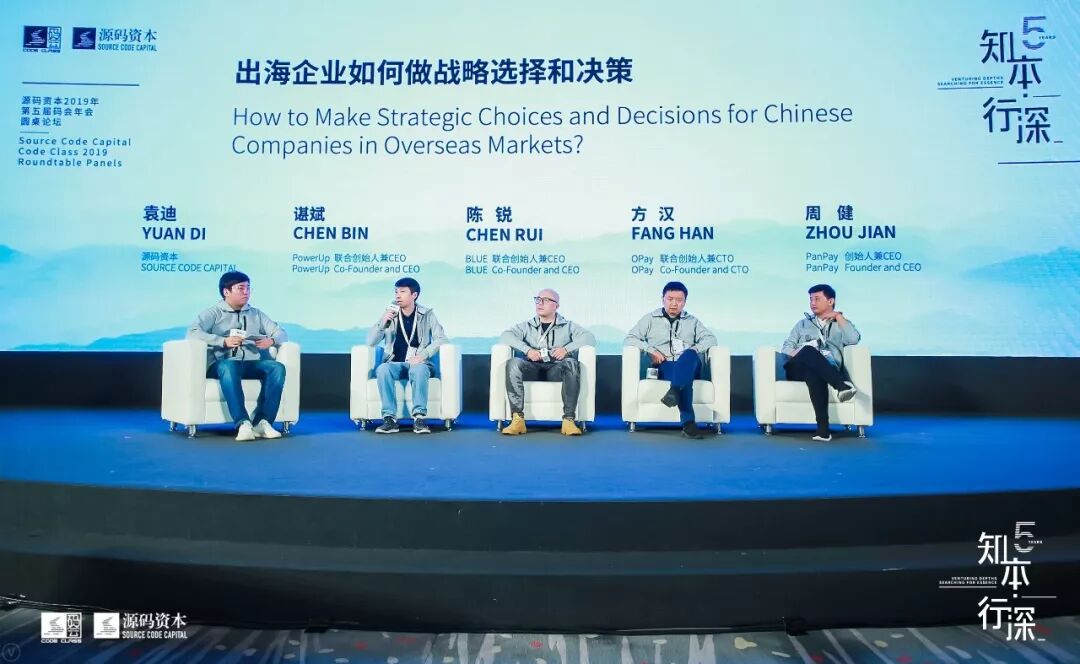
From left: Yuan Di of Source Code Capital, Chen Bin of PowerUp, Rui Chen of Blue, Fang Han of OPay, Zhou Jian of PanPay
Session Highlights
Q1 Yuan Di, Source Code Capital: Over the past year and a half, more and more outstanding出海 entrepreneurs have joined the Source Code community. Markets have expanded from Europe, America, and Southeast Asia to Latin America, Africa, and the Middle East. Businesses have evolved from gaming and tools into fintech, e-commerce, and beyond. Let's start with introductions — particularly the stories behind how you chose your target markets and business directions.
Chen Bin, PowerUp: Before founding PowerUp, I spent eighteen years in finance across China and the United States. My partner and I wanted to build a digital bank in a promising developing country. We chose Mexico largely because of its large population, solid development trajectory, and relatively complete infrastructure. Yet banking there remains monopolistic and conservative, leaving a significant customer segment underserved.
Rui Chen, Blue: I started my entrepreneurial journey in 2015. From day one, this was a Southeast Asian company, and I've worked here throughout, so I know the market intimately. Southeast Asia needed an electronic payment tool like Alipay. We started with vending machines because they solved offline infrastructure and customer acquisition challenges. Our core users are blue-collar workers tightly integrated with Southeast Asian manufacturing — we want to help them eat cleaner, live more conveniently, and lead more dignified lives. This is a market that keeps growing, a massive blue ocean worth cultivating deeply.
Fang Han, OPay: OPay's founding team came from Kunlun Tech. From Kunlun's early days, one of our strengths was overseas user acquisition. We leveraged this to grow acquired assets like Opera. Opera's traditional strongholds included Africa and India. Through research, we discovered that mobile payments in Africa represented a blue ocean. We acquired a mobile payments license in Nigeria and, from August last year to March this year, became the market leader in mobile payment share. In April, we launched ride-hailing, where we now lead Uber and Taxify by a wide margin. Based in Nigeria, we use mobile payments and smart mobility to bring financial and transportation services to developing nations.
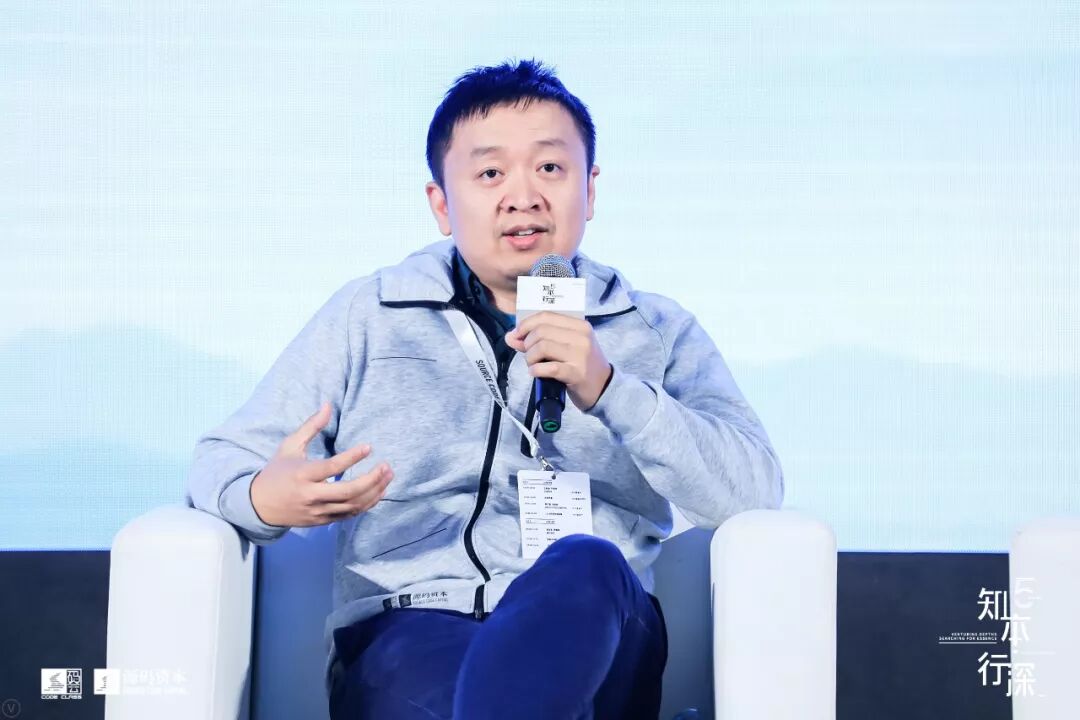
Fang Han, Co-founder & CTO, OPay
Zhou Jian, PanPay: Before founding PanPay, I spent a decade in international banking settlement and global business, having lived in Europe for many years. The EU has the world's strictest financial and legal regulatory environment. Starting in 2015, I wondered whether I could leverage the EU's robust regulatory and legal framework to serve China's foreign trade community compliantly — and founded PanPay on that premise. We're a relatively young company but have grown rapidly. After obtaining our EU digital banking license, we launched euro clearing in June 2018 and USD clearing by March 2019, investing heavily in financial infrastructure and compliance. The next challenge is figuring out how to manage offshore capital liquidity.
Q2 Yuan Di, Source Code Capital: Chinese companies going overseas are playing away games. Under cross-cultural conditions, how do you better understand user and customer needs, then meet them with appropriate products and operations to achieve product-market fit and business traction?
Chen Bin, PowerUp: At project launch, you need clear understanding of which customer segments exist in this market, whose pain points are most acute, and whether your company has strongest advantage in product design, delivery, and execution. Once the broad direction is right, execution becomes a localization process. After product launch, you must be able to iterate quickly with an MVP mindset. Don't think you can spend a year perfecting your product before launch. Know from day one that it won't be perfect. Complete research quickly, launch relatively fast, then fine-tune post-launch, optimizing speed and efficiency across the entire chain.
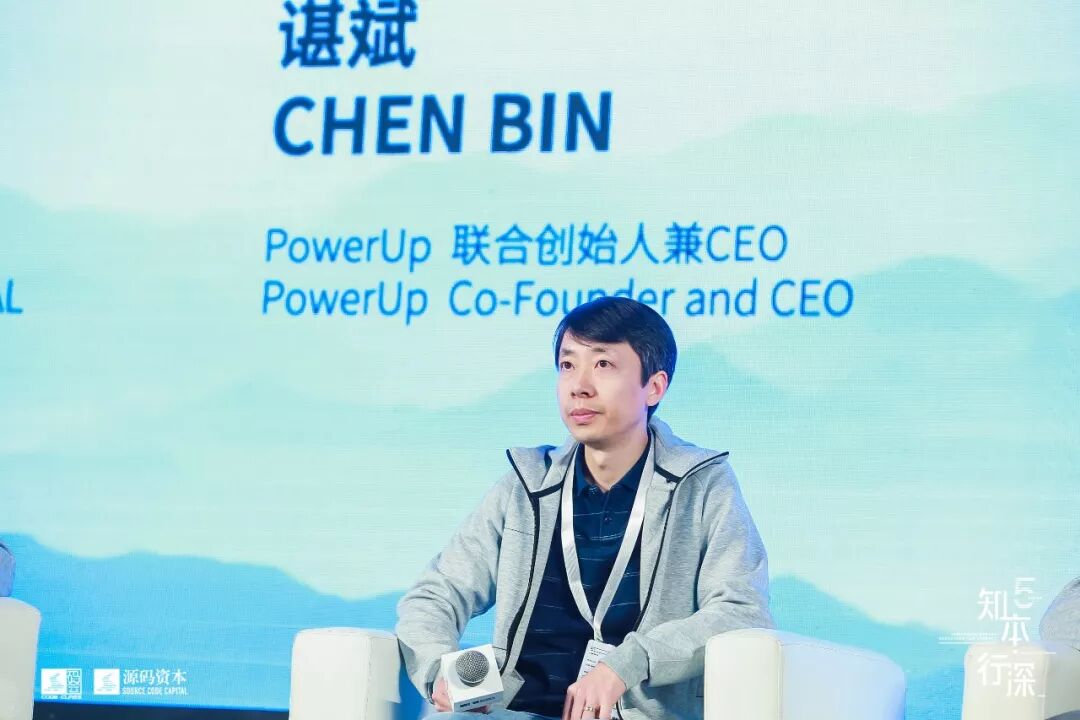
Chen Bin, Co-founder & CEO, PowerUp
The US situation thirty years ago somewhat parallels Mexico today. We summarized the product design essentials from that era, then adapted them for Mexico. We also understood how Chinese banks developed new credit cards and banking customers a decade ago. Combining these two experience sets covers roughly 80% of our practice in Mexico. Risk control experience is largely transferable. Execution requires fine-tuning based on cultural and other factors.
Rui Chen, Blue: Our company's first core value is customer-centricity — all innovation revolves around local needs in Southeast Asia. We also understand the differences between Southeast Asian and Chinese markets more deeply than competitors. For example, in mobile payments, Southeast Asia has low bank card penetration, backward IT infrastructure and interfaces for card binding, and relatively high fees. Our offline vending machine payment model didn't exist in China, and this approach has received high marks from both users and regulators. In e-commerce, Southeast Asia has very low penetration, with underdeveloped payments and last-mile logistics — infrastructure gaps that will affect e-commerce penetration efficiency for a considerable time, requiring these local factors in business model design. We aim to combine China's strengths in e-commerce, retail, and mobile payments to fill gaps that other local companies and competitors cannot solve.
Fang Han, OPay: Building a locally suitable product involves macro and micro considerations. At the macro level, keep comparing with other countries. Beyond the US and Europe, the most successful mobile internet markets are China and India. Their inflection points came in windows — we studied when these windows began, what household incomes looked like, smartphone penetration rates, then compared with our target market. We concluded Nigeria, like India, stands on the eve of a mobile internet explosion. That's our macro judgment.
At the micro level, it's simpler: when you arrive locally, you absolutely must visit the slums. What do you ask in slums? How much do people spend on food, clothing, housing, transport — the answers may reveal good opportunities. First, bank branches are underdeveloped. The largest denomination bill equals only about 20 RMB, yet prices are only roughly 20% cheaper than China. Going out means carrying thick stacks of cash, inconvenient and unsafe — so financial services matter enormously. From these observations, we could keenly sense which applications were highest-frequency, and what products naturally followed. On talent: even the poorest countries have excellent internationally-connected people. Eighty percent of our fintech product managers are locals. Find these people, and you can build businesses that truly connect with the ground. Combining both dimensions, macro to micro, yields products that fit local needs.
Zhou Jian, PanPay: In choosing our scenario, we considered where our advantages lay in European本土 business. Of timing, location, and harmony — "harmony" was missing since our team isn't all Chinese. But I spotted an opportunity: even in the EU's highly mature system, there's little To B fintech innovation. Most innovation comes from retail, To C players like Revolut. For me, PanPay's core entry point is To B. On location: China has massive export markets and offshore financial service demands, so we positioned there.
Q3 Yuan Di, Source Code Capital: Let's discuss competition. When playing away games, what are our advantages and disadvantages versus local companies and Western firms? How do you leverage strengths, avoid weaknesses, and establish dominant positions?
Chen Bin, PowerUp: Digital banking has high barriers to entry and is relatively new. Local Mexican companies clearly lag our team in capabilities, so local competition doesn't concern us much. Western enterprises are relatively scarce in Mexico, with localization as their main weakness. In just over a year in Mexico, the data we've accumulated, products built, and risk control results outperform Western companies that have been there for years.
Another factor is time commitment. Although our founding families are in the US, we spend over 60% of our time in Mexico — a major difference from teams dispatched by developed countries. Our founding team built the cross-regional team together, personally handling the most critical product components — one of our greatest strengths.
Rui Chen, Blue: Competition excites me. I'll answer from three dimensions.
First, strategic judgment. Market competition can be analyzed through core regions, core demographics, core categories, core demands, core strengths, core positioning, and customer need fit. At critical strategic points, dare to compete.
Second, analyze not just identical competitors but similar业态 competition. For Blue, we must consider competition from local retail and local e-commerce. Team competitive culture. Competition serves as excellent external pressure for organizations, elevating team combativeness, passion, and end-to-end efficiency by an order of magnitude. When competition arrives, when the wolves come, internal cohesion peaks — the team's energy ignites. Be first to compete; build this culture and orientation organizationally.
Build competitive moats. What's the deepest moat long-term? I believe in the Dujiangyan philosophy: "deepen the riverbed, keep the embankments low." Serving customers better and operating at lower costs — that's deepening the riverbed. Achieving higher operational and expansion efficiency that competitors cannot match — that's the deepest long-term moat. These require deep, sustained internal cultivation.
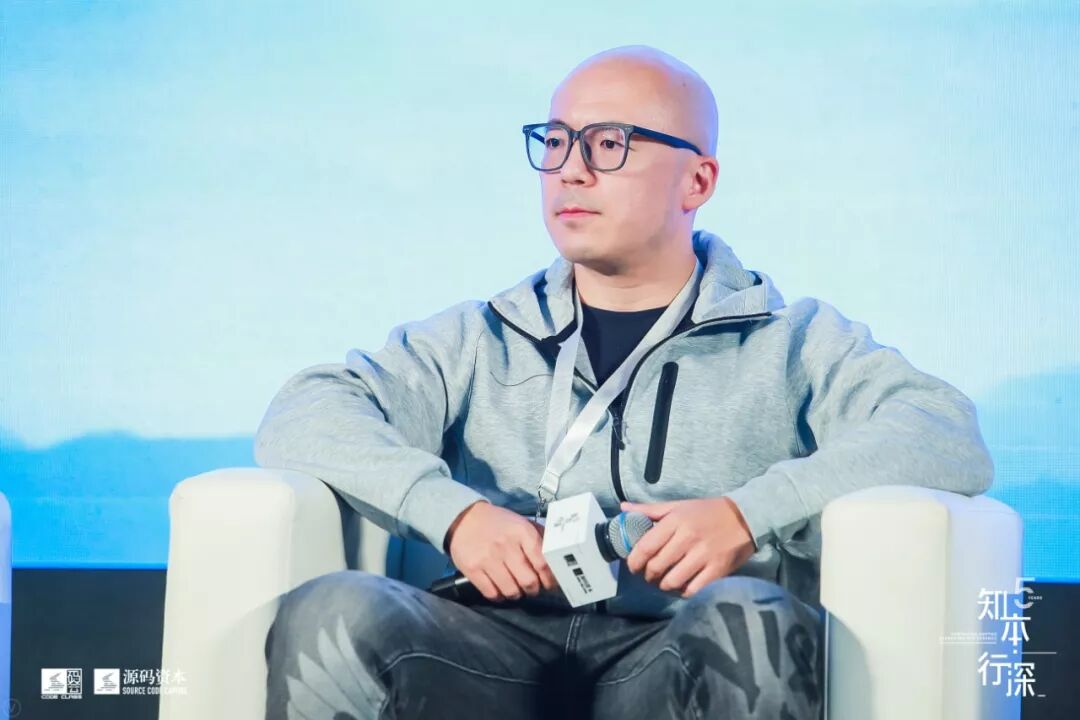
Rui Chen, Co-founder & CEO, Blue
Fang Han, OPay: Local competitors certainly understand their market and culture better than us, but they have a weakness: African local internet companies have very weak technical R&D capabilities. Mobile internet evolves fastest in China, the US, and India. Bringing many mature methodologies to Africa truly is dimensional warfare. When we developed mobile payment agents, we directly transplanted China's mature, multi-industry-validated tele-sales model — dimensional warfare. Versus local companies, replace their less advanced methods with more advanced production methods. Against Western competition, they generally can't endure hardship like Chinese companies, and their response speed lags Chinese teams.
In Africa, the fiercest competition definitely comes from Chinese peers. OPay wasn't Nigeria's first Chinese ride-hailing company. Starting five months behind competitors, our R&D speed was six to seven times faster, enabling us to rapidly overtake them post-launch. Only extreme execution efficiency can make you fearless against any competitor.
Zhou Jian, PanPay: PanPay operates in highly specialized cross-border finance. For us, the initial hardest part was resisting temptation — especially when massive client funds flow in, requiring clear discernment and professionalism. Banking isn't a short-term business; banks face audits and correspondent bank reviews. Building for the long term requires core barriers. Once you have this compliance moat, you find you needn't worry about how others subsidize. For clients choosing offshore financial products, product functionality ultimately persuades.
In local competition, you must find your own edge. Finance isn't something that pays off overnight. There's a phrase: "long-term patience" — extremely applicable. After building compliance barriers, we discovered an extension in Europe: many Chinese companies open accounts at European banks, but those banks don't know how to conduct KYC or review Chinese corporate documentation. We built a product around this need, satisfying EU tax and central bank regulations. Consequently, many banking clients approached us hoping to spin this out as a SaaS module, charging €100 per API call.
Find your core strengths, then empower different markets with them. Forty percent of EU commercial banks cannot handle USD business, especially in Eastern and Northern Europe. Proximity to Russia — a sanctioned country — means many small European banks come to us for clearing services. In some sense, we compete with local European banks; but from a broader clearing perspective, we're also partners.
Q4 Yuan Di, Source Code Capital: A common characteristic of overseas companies is multi-region, multi-office operations with frequent cross-border management and communication needs. From CEO to management to every department, daily decisions abound. How do you think about organizational building and evolution in decision-making and execution?
Rui Chen, Blue: Our company doesn't formally distinguish between Chinese, Thai, Indonesian, or Malaysian employees. We use core values and vision to unify staff across nationalities, languages, and religions.
Our vision is to serve 200 million users in Southeast Asia, helping them eat healthier, live more conveniently, and lead more dignified lives. Our core values are customer-centricity, teamwork, embracing change, integrity, and continuous striving. Such vision and values transcend nationality, religion, and language. Of course, we have excellent English and localized language versions — this is foundational.
Vision and values sound abstract but matter tremendously. In the first two years of entrepreneurship, I didn't grasp this so deeply — the company was small. As we've grown, with more complex business, teams, and personnel, I've come to recognize this as the best path and method. Only core values and vision can build a team with long-term cohesion, efficiency, shared understanding, behavioral norms, and value orientation — our deepest conviction.
Zhou Jian, PanPay: Our team remains early-stage and lean. Our European team is about fifteen people, plus central bank contacts and partners from my EU years who helped PanPay establish financial industry operations. One thing I've learned: respect matters most in communicating with European employees. For example, current EU rates are negative — 0.5% annually, meaning you pay to keep money in banks. After Federal Reserve cuts, rates are roughly 1.35%, with banks offering around 2%. So we needed to shift USD operations to US banks. If you simply tell them we're moving business because European rates are low, resistance is high. But if you explain at the company level, framing it around long-term survival and development, their attitude softens.

Zhou Jian, Founder & CEO, PanPay
Another crucial point is flexibility. You're doing Chinese business — never measure diverse trade scenarios against your professional expertise alone. I regularly send European and American colleagues, especially those with core employee potential, to China to understand what's actually happening in Chinese trade. This better informs strategy and advances business development.
Chen Bin, PowerUp: Organizational building is something I've invested heavily in. First, when recruiting senior people, be personally involved. Don't fully trust what you hear in interviews — some people are naturally eloquent. Friend-referred candidates are preferable, easier to know thoroughly.
Going abroad, you realize that beyond the US and China, many countries have different work attitudes. This creates a need: how to instill dedication and passion for the work in local employees. Screen carefully from day one of hiring. Look for past performance indicating the right work attitude.
Then support with cultural building. Founders must set the example in company culture. Our executives are generally among the last to leave, around 9-10 PM. After several months, subtle shifts emerge — core employees realize that at critical junctures, they need to stay and work through things with founders. As more such people emerge, you must solve transportation, meals, and other needs so they not only love the mission but have conditions to excel.
Fang Han, OPay: When building a business overseas, your original intention matters — it affects local employees' drive and morale. My biggest takeaway from Africa: being born in China is incredibly fortunate. Africa's fundamental problem isn't just poverty or conflict; it's that public services and infrastructure lag far behind China.
Our mobile payment mission is using advanced productivity to compensate for insufficient local public services, bringing people greater convenience. This is also why local politicians don't resist us — they see these efforts benefit ordinary people. As long as your enterprise maintains this初心 and communicates it to local employees, they take pride in working there, not just seeking high salaries or punching a clock. This is fundamental. With genuine commitment to creating welfare for locals and doing real work, your enterprise can develop sustainably.
The most successful Chinese company overseas is unquestionably Huawei. Our organizational system should follow Huawei's approach. Simply put: let those who hear the gunfire call in artillery support. As CTO, I require that rear product and R&D fulfill all frontline demands unconditionally, with no excuses. This makes frontline operations extremely comfortable — all their needs met unconditionally by the rear, making the entire organization highly efficient. The front-rear disconnect must be bridged through especially frequent meetings, video conferences, and travel. I personally travel to Africa extensively, running both sides to close information gaps.


More from Code Meet 2019
- Where Are the Boundaries of Industrial Internet?
- Tech-Enabled New Consumption: Everything Has Just Begun