CodeMeet Entrepreneurs | Pagoda Yu Huiyong: Single-Mindedly Delivering "Delicious" Fruit to Consumers

#Ma Hui Entrepreneurs — Resilient, Bold, and Relentlessly Exploring
Source: Xinhua News Agency
In a loose tang suit, his signature braid on display, the man speaking passionately to the camera is Yu Huiyong, founder and chairman of Shenzhen Pagoda Industrial (Group) Co., Ltd.
The eastern wind brings spring to every eye. In 1992, like countless young dreamers heading south, Yu Huiyong gave up his stable "iron rice bowl" and, filled with hope for the future, set off to build a business in the south.
Across the country, with no fruit retail chain brands yet in existence, a "fruit dream" quietly took root in Yu's heart.
From opening his first fruit specialty store to surpassing 5,000 locations and breaking 10 billion yuan in annual sales, Yu Huiyong drew on his years of accumulated insight into the fruit market, a deeply philosophical corporate culture, and profound affection for rural land to pioneer China's fruit retail chain industry.
Trust and Altruism — The Path to Long-Term Growth
Looking back, Pagoda's more than two decades of development have not been smooth sailing.
In 2002, Yu Huiyong invested his entire savings to open Pagoda's first fruit store in Shenzhen. Business boomed. Pagoda quickly expanded.
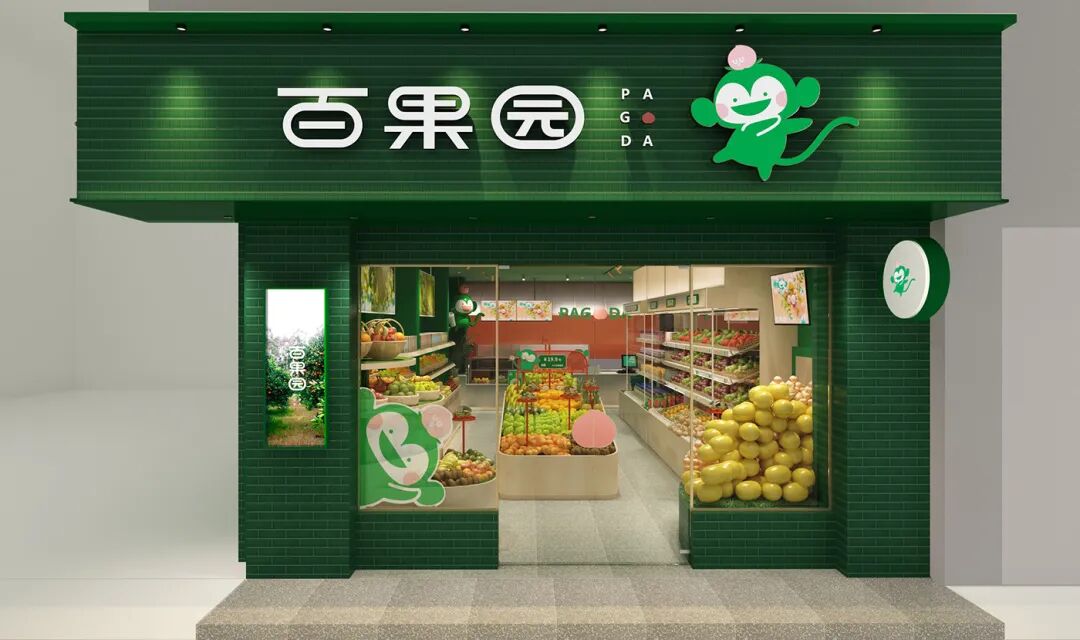
But fortune did not favor him. "I never expected that what awaited me wasn't sustained profitability, but seven consecutive years of losses," Yu recalled with emotion.
In 2009, Pagoda introduced its "no-questions-asked returns" service pledge: if customers were unsatisfied with a fruit's taste or quality, they could return it with no receipt, no physical product, and no reason required.
The proposal met immediate and unanimous opposition within the company. But Yu Huiyong overruled the dissent and pushed forward with implementation. The data proved the doubters wrong — fears of a flood of returns never materialized.
"In Pagoda's big data, we see 'Chinese-style trust,'" Yu said excitedly. "Trust between businesses and consumers is mutual. If you dare to trust your customers, they will cherish that trust in return."
In this "trust game" between consumers and the company, Pagoda won consumers' confidence. This "trust culture" has run through the company's entire development journey.
In 2009, amid the global economic downturn, Pagoda's foot traffic declined, yet gross margins steadily rose. Seeing these numbers, Yu was alarmed — this was undoubtedly pushing Pagoda down a "death path."
Yu quickly convened a major meeting. On one hand, the sales side tightened oversight of franchisees and set price ceilings. On the other, the group "opened the floodgates," lowering distribution prices. Within months, store traffic gradually recovered.
"This episode made me see that the essence of business is 'altruism,'" Yu said. From farmers and suppliers to employees and consumers, Pagoda is willing to share and yield benefits with all of them. This culture and DNA give Pagoda a core competitive edge that distinguishes it from other companies.
Quantifying "Deliciousness," Building Full-Chain Standards
Fruit is a non-standardized product. How to establish unified standards has been a persistent challenge for the industry.
In 2007, Yu Huiyong proposed that "deliciousness" is the primary criterion for evaluating fruit. In his view, "delicious" fruit is nutritious, healthy, and ecological.
So how to quantify this subjective concept into concrete standards?
Yu explained that Pagoda pioneered the industry's "four degrees, one flavor, one safety" fruit quality system — measuring sugar-acid ratio, freshness, crispness, tenderness, flavor, and safety to define what makes fruit "delicious." Based on these characteristics, fruits are graded as Signature, A, B, or C, providing an important reference for unified industry standards.
"Establishing standards only at the retail end is far from enough — we need full-chain standards," Yu said.
Zhouzhi County is China's kiwifruit capital, but previously suffered from inconsistent varieties and unstable quality. Ten years ago, Pagoda began intervening in local kiwifruit cultivation techniques, stationing technicians long-term at production sites to teach farmers hands-on, incubating the "Mizong" kiwifruit brand, which has won consumer favor.
Such cases abound. Pagoda has established numerous specialty fruit supply bases globally, controlling quality from the cultivation stage. It has incubated multiple fruit category brands including "Red Ballet" strawberries and "Liangzhi" apples. In warehousing and distribution, it operates 28 initial processing and distribution centers, with strict quality control systems for warehouse acceptance and shipping.
To protect food safety promptly, efficiently, and precisely, Pagoda has built three food safety testing centers and established an internal fruit quality management system. Leveraging big data, it has created different temperature-controlled fresh-keeping zones to meet various fruit storage requirements, achieving integrated full-supply-chain management from procurement through warehousing to distribution.
"Success in fruit retail hinges on details. From fruit selection and warehousing systems to safety testing standards and post-harvest R&D, Pagoda pursues meticulous management to strictly guarantee fruit safety and taste," Yu said.
An "Agricultural Passion" Powering Rural Revitalization
"I have deep feelings for agriculture. I hope to use practical action to help revitalize rural areas and transform Chinese agriculture," Yu said.
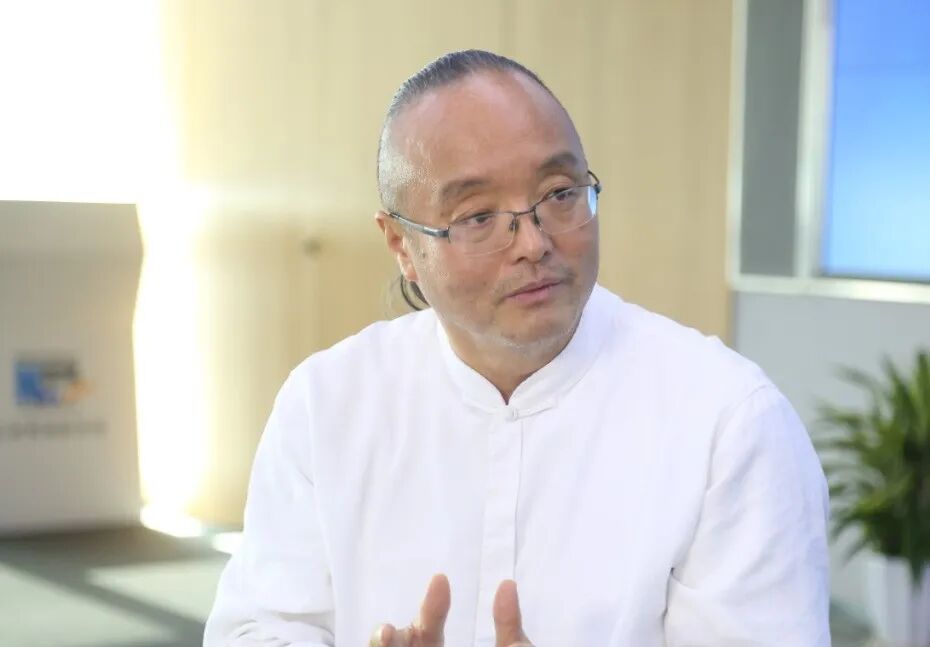
Yu Huiyong, founder and chairman of Shenzhen Pagoda Industrial (Group) Co., Ltd.
Mayang County in Hunan is famous for its冰糖橙 (rock sugar oranges), but its remote location has limited agricultural products from reaching broader markets. Escaping poverty and achieving prosperity is the local people's aspiration.
On September 28, 2018, Pagoda signed a poverty alleviation strategic cooperation agreement with the Mayang County government, driving industrial upgrading in this nationally designated poor county from the source. Pagoda participated throughout the entire process — from sprouting and flowering to fruiting and harvesting — providing technical management, helping farmers grow good fruit and sell it at good prices.
This is a vivid缩影 (microcosm) of Pagoda's "Hundred Fruits, Hundred Counties" poverty alleviation strategy. There are many such cases: Pagoda grew "selenium sand melons that burst from rock crevices" in Zhongwei, boosting income for impoverished households; it developed honeydew melon growing areas in Hainan, allowing base farmers to build "honeydew towers."
Give a man a fish and you feed him for a day; teach him to fish and you feed him for a lifetime. "Pagoda's agricultural assistance isn't simple 'blood transfusion' — it's 'blood-making' support," Yu said. Pagoda has a natural affinity with agriculture. By exporting fruit standards and cultivation technical systems upstream, it leads farmers to grow higher-quality fruit.
To alleviate the sales困境 (predicament) caused by the pandemic, Pagoda was among the first to launch its "Warm Spring Agricultural Assistance" program, adopting priority purchasing and定向采 (targeted procurement) strategies on the procurement side to open sales channels for滞销 (unsellable) fruit. To date, this initiative has helped sell over 5,000 tons of fruit.
For more than two decades, Pagoda has weathered storms. Facing a rapidly changing market, Yu Huiyong said: "Pagoda will continue moving forward, making good things easy to buy and good things easy to sell, providing consumers with 'delicious' fruit, and striving to become a platform enterprise that empowers the entire fruit industry chain."


- Ma Hui Entrepreneurs | Mech-Mind's Tianlan Shao: Some of My "Grassroots" Experience
- Ma Hui Entrepreneurs | Hongyu Tech's Shunhao Fan: What Kind of Operating System Does the XR Era Need?
- Ma Hui Entrepreneurs | When the Founder of a "Software-Defined Storage" Company Is Also a Race Car Driver
- Ma Hui Entrepreneurs | Academician Weinan E Proposes a "New Dawn" for Applied Mathematics: AI for Science Deeply Integrates Artificial Intelligence with Fundamental Science
- Ma Hui Entrepreneurs | From 0 to 1 to 23.4 Reading Week: "Happy Reading Day"
- Ma Hui Entrepreneurs | From 0 to 1 to 23.4 Reading Week: "The Beauty of Reading"
- Ma Hui Entrepreneurs | From 0 to 1 to 23.4 Reading Week: "General Knowledge and Big-Picture Thinking"
- Ma Hui Entrepreneurs | From 0 to 1 to 23.4 Reading Week: "Organization and Talent"
- Ma Hui Entrepreneurs | From 0 to 1 to 23.4 Reading Week: "Strategy and Operations"
- Ma Hui Entrepreneurs | From 0 to 1 to 23.4 Reading Week: "Entrepreneurial Mindset"
- Ma Hui Entrepreneurs | Exploration Never "Extinguished," Saluting the Spirit of Aerospace
- Ma Hui Entrepreneurs | Your Moment of "Joy, Anger, Sorrow, Delight" Could Awaken 2 Million Children with Autism
For more Ma Hui members, click "Read Original" to view