Decoding Huawei's Three Billboards | Source Code Capital Private School

Strategic focus, strategic investment, strategic breakthrough.

To Our Readers
"Source Code Capital Private School" is an exclusive course series offered by Source Code Capital for entrepreneurs in the Ma Hui network. Each session invites professionals and industry leaders in corporate management, product and technology, legal and finance, government relations/investor relations, human resources, brand and marketing, and more — helping founders and business-line leaders solve practical problems in running their companies. Since its launch, the program has received widespread attention from entrepreneurs. We remain committed to providing the highest-quality knowledge and services, growing together with founders.
Huawei, a private enterprise founded in 1987, took just 30 years to break into the top 100 of the Fortune Global 500 and the top 50 of the world's most valuable brands. What explains its success? This famously low-profile company has, in recent years, released a series of corporate image advertisements that left many viewers puzzled. In February 2018, Hu Yanping, Chairman of Huawei Business Excellence (Huaying) and former Senior Vice President of Huawei, visited Source Code Capital Private School. Starting from Huawei's "three billboards," he offered an insider's interpretation of the strategic thinking behind them, sharing what he sees as the three internal drivers of Huawei's success. For companies still trekking the entrepreneurial path, there is much to learn here.
As told by | Hu Yanping, Former Senior Vice President of Huawei
Compiled by | Source Code Capital
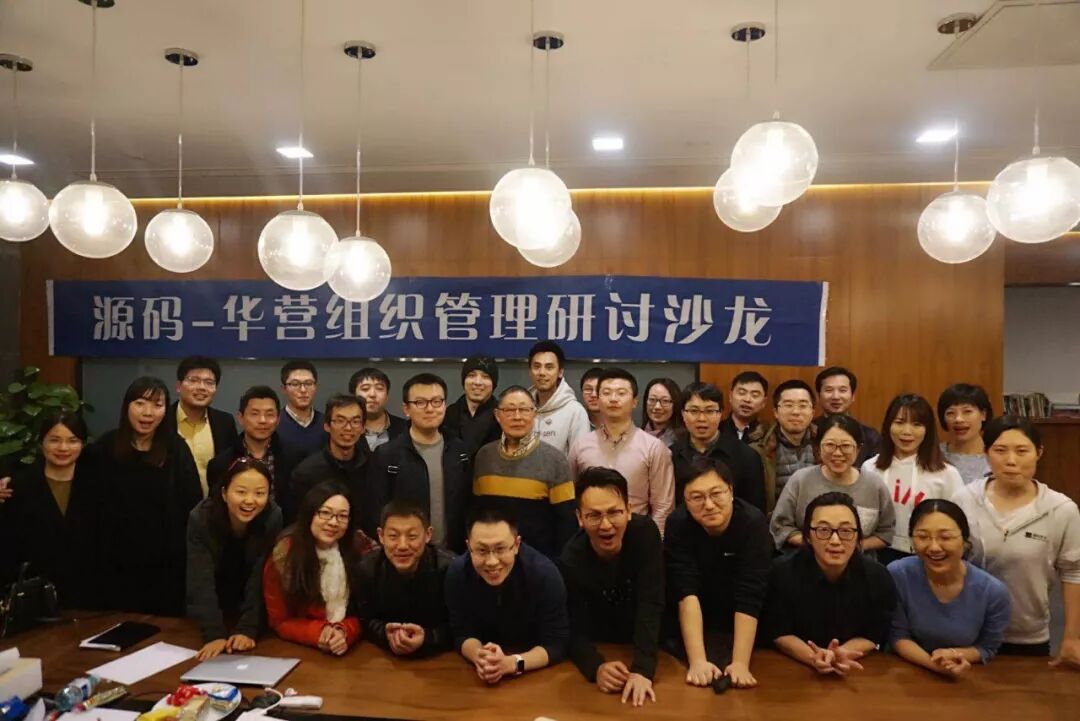
Image: Source Code Capital Private School — Huaying Organizational Management Seminar
1
What exactly is Huawei's strategic philosophy?
There's a story about a renowned Chinese economist who once asked Zhengfei Ren what Huawei's strategy was. Ren replied: "Survive." The economist said, "How can 'survive' be a strategy?" Ren said, "It is. Surviving is Huawei's strategy."
A company must first ensure it can survive. If it can't survive, there's no future development. But to survive better and longer, you can't just look at the present.
Huawei rarely advertised in the past, but in 2015 it rolled out several corporate image ads. These ads conveyed the strategic philosophy the company had adhered to for decades.
First ad: The Wagenya people fishing with their lives

In 2010, an Irish photographer captured the Wagenya people fishing near Boyoma Falls in the Congo. The Wagenya weave enormous wooden baskets and place them in the Congo River, where the current — 28,000 cubic meters per second — sweeps fish into them. The fishermen must maintain absolute focus, or the river will carry them away. This ancient fishing method has persisted for centuries.
The meaning of this ad: Huawei today stands in the torrent of business development, much like the Wagenya at Boyoma Falls. Though opportunities abound, Huawei adheres to a highly focused strategic philosophy, concentrating on strategic opportunities within the flood of big data and not expending competitive resources on non-strategic opportunities. As Ren once put it at a science conference: for twenty-eight years, charging at a single breach in the wall.
Second ad: The footsteps of God
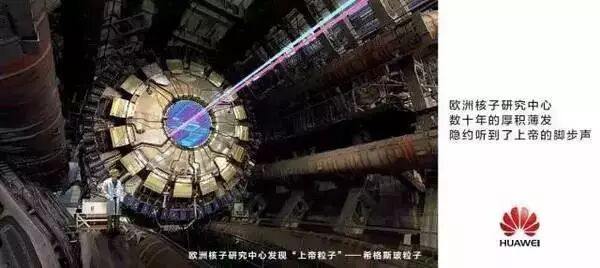
Since the birth of the universe, nature's "God particle" has always existed. But to find it, humanity had to artificially recreate the conditions of the Big Bang. For this purpose, CERN invested tens of billions of dollars to build the world's largest experimental project — the Large Hadron Collider. After decades of effort by nearly ten thousand scientists, the "God particle" was successfully discovered in 2012. The ad's tagline reads: "CERN, decades of accumulated depth, faintly heard the footsteps of God." This nearly spells out Huawei's strategic thinking: Only through sustained, intensive investment in the main航道, exploring future directions through multiple paths and multiple echelons, can breakthrough ultimately be achieved.
Third ad: The smiling sprint

"Flo-Jo" Florence Griffith-Joyner — the most beautiful runner in the world, the finest American female sprinter of her era. At the 1988 Seoul Olympics, she ran the 100 meters in just 10.49 seconds. That record remains unbroken. Her unique charisma brought unprecedented glamour to women's track and field. Huawei spared no expense to purchase the portrait rights from Joyner's family, using her image — smiling in her final sprint — as the centerpiece of this ad, with the tagline: "One hundredth of a second is the accumulated depth of a lifetime's work." Note that this is the second time Huawei uses the phrase "accumulated depth" in its image ads. The message could not be clearer: Everything Huawei has achieved today stems from decades of accumulated depth.
Take Huawei's R&D alone. Huawei currently employs more than 180,000 people, nearly 46% of whom are in R&D. It has established 16 research institutes globally. Domestic institutes in Beijing, Shanghai, and Nanjing each number close to ten thousand people. Some overseas institutes are also substantial in scale — the European institute alone has over 3,000 people, attracting scientists and engineers from dozens of countries. Huawei's annual R&D investment exceeds 10% of total revenue; in recent years it has reached 12%, 13%, or even higher.
In 2016, Huawei invested $11 billion in R&D; the following year, an estimated $13 billion. To put this in perspective: As a private technology enterprise, Huawei's annual R&D spending roughly equals the national fiscal allocation to the entire Chinese Academy of Sciences system.
Huawei has always emphasized product R&D, and in recent years has steadily increased investment in basic research, directing over 20% of total R&D funding toward it. For this purpose, it established the Central Research Institute, also known as the 2012 Lab, dedicated to basic research — including the graphene research that has already attracted public attention. This means Huawei will continue rolling out new technologies and products to the market.
Through its "three billboards," Huawei has clearly communicated to the outside world the strategic philosophy it has adhered to for decades: strategic focus (concentrating on the main航道, never being opportunistic in the face of major opportunities), strategic investment (persistently staying the course in the main航道 for decades), and strategic breakthrough (progressing from follower to surpasser in core business areas such as carrier and consumer businesses).
Put simply, four words: accumulated depth.
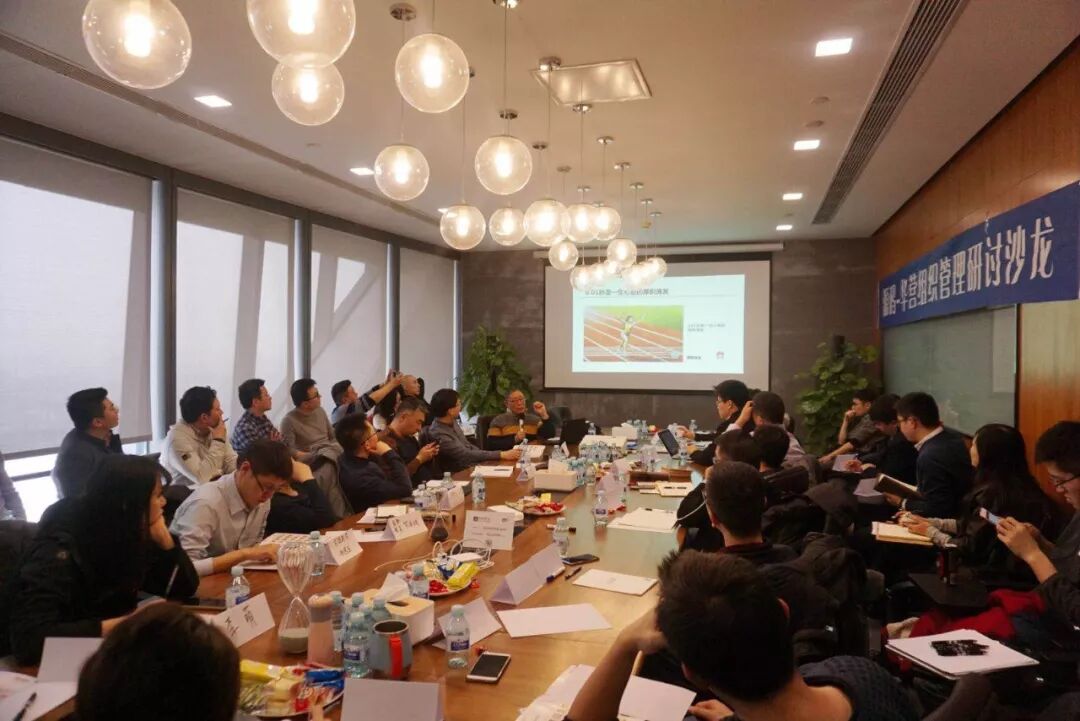
Image: Source Code Capital Private School — Huaying Organizational Management Seminar
2
Why Huawei?
What are the main factors that have made Huawei so successful? A company's success depends on many things, and opinions vary. The main points can be summarized as follows:
One: The dream of becoming a world-class enterprise
From the 1920s to the 1970s, almost all the world's most successful and greatest companies came from the United States. After the 1990s, many American companies began to decline. Management scholars have pointed out that this was because many fine traditions brought by the Puritans from Europe centuries earlier were gradually forgotten. The Puritans came to North America not merely for wealth, but with a dream: to build a kingdom of God on this new continent. To build a great company, you must first have an entrepreneur with a great dream.
Huawei's achievements today begin with the fact that Zhengfei Ren is an entrepreneur with grand ambitions. Many longtime Huawei employees have experienced this scene: at nine or ten in the evening, while everyone is still working overtime to meet deadlines, Ren would come by with his big enamel mug to chat. "You guys are going to be incredible — you'll win Nobel Prizes." "The global communications industry will have three dominant players, and Huawei will be one of them." At first, everyone thought the boss was just encouraging them to work harder, and laughed it off. But step by step, reality proved the boss's predictions right. Morale soared. People increasingly felt: the boss is something else. Follow him, and maybe these dreams really will come true.
In 1994, Ren stated in a speech that Huawei would be one of the three dominant players in global communications. This is documented in writing. From March 1996 to March 1998, Huawei spent two years drafting the Huawei Basic Law, formally encoding Ren's dreams, management thinking and philosophy, management culture and values, and a series of management concepts. It explicitly stated Huawei's dream: to become a world-class leading enterprise.
The Huawei Basic Law was promulgated in March 1998. That year, Huawei's contracted sales reached 8.9 billion RMB, with 8,000 employees — impressive results that already placed it among China's top companies. But compared to international competitors at the time, the gap was still substantial. Yet because of Ren's great dream and the relentless efforts of all Huawei employees, the company advanced step by step to where it is today. Huawei's success today originated from a dream in Ren's heart years ago — I believe this is an objective assessment.
Two: A corporate culture that resonates deeply
Any company's culture is its founder's culture — the soul the founder injects into the enterprise, its DNA. What is Huawei's corporate culture? You can start by reading the Huawei Basic Law. It is exceptionally well written, a classic document for understanding Ren's early management thinking and philosophy. But Huawei's corporate culture is renowned in the industry not because Ren thought to create a Basic Law, nor because it was well drafted — neither of these. Huawei's culture works because it becomes the soul of the enterprise and a shared value consensus among all employees, something that Huawei's managers and staff actually practice (落地).
Getting cultural values to 落地 is a challenge for all companies. Why has Huawei done relatively well? I believe there are several important reasons.
1. Value evaluation and incentive systems
As we know, a company is an interest-based organization. If the evaluation and incentive systems aren't properly established, no one will believe the boss's talk of culture — so incentives and evaluation are always the first issues to consider in management.
Ren has said many times: in my more than twenty years at Huawei, the most important thing has been distributing money. Get the money distribution right, and the organization comes alive. We see that every year before Spring Festival, the boss's biggest headache is how to distribute money well. After Spring Festival, his biggest headache is key employees resigning: suddenly several key people show up in his office saying, "Sorry boss, here's my resignation letter, I'm leaving." If the evaluation and incentive systems aren't good, a company can't retain people, and cultural values cannot possibly 落地.
Regarding evaluation and incentives, Ren articulated in the Basic Law a human resources value chain: value creation, value evaluation, and value distribution. A company's development depends on its ability to continuously create economic value. This value chain, composed of these three links, theoretically solves this problem.
Evaluation is the premise of distribution; distribution is the foundation of creation. Only when distribution is properly resolved can re-creation be addressed. Huawei's culture is centered on strivers, letting those who create value share in value. "Conscientious and effectively managed employees are Huawei's greatest wealth." Some bosses say, "We are people-oriented." What the boss says doesn't matter — what matters is who you actually give the money to. So from early on, Huawei established an effective evaluation system and continuously optimized it in practice, playing an important role in establishing and elevating its corporate culture.
2. An excellent management team
Complying with and practicing the company's cultural values in work is a requirement for Huawei managers, and also their bottom line. If you don't identify with the company's values, you cannot be a manager.
3. The founder's consistency between words and deeds
Whatever you advocate, you yourself must do. Ren is exemplary in this regard. The company stipulates that no manager may fly first class on international flights. If Ren flies first class, he pays the difference out of his own pocket. When Ren travels, even if accompanying staff exceed standards for work reasons, the excess is paid by Ren personally.
Some photos circulated online recently that many people saw: Ren, in his seventies, queuing for taxis at the airport, riding airport shuttle buses. These reflect Ren's genuine style. Because Ren leads by example and practices what he preaches, after all these years, everyone at Huawei can still recite those four sentences: customer-centricity, dedication of strivers, long-term commitment to hard work, and self-criticism. Corporate culture has taken root in employees' hearts.
Three: A management system of continuous improvement and optimization
For years, Huawei has been constantly optimizing its management system. Several characteristics stand out in this process. The first is balance. Many bosses tend to oppose operations and management system building. When business is good, there's no time for management; when business is bad, even less time and energy. Huawei never abandoned management capability improvement even when business was thriving.
Second, Huawei's management system was built through continuous transformation. Transformation and system building have always gone hand in hand. Human resources transformation began in 1996–1997; strategic planning in 1998; product development and supply chain transformation from 1999 to 2003; organizational transformation in 2003–2004; financial management transformation from 2007 to 2014/2015; and transformation continues to be pushed forward in various domains to this day. Each year, the company allocates a fixed percentage of revenue — say, 1% — to transformation. So Ren has said: for over twenty years, we've spent several billion dollars on transformation. This includes both direct consulting fees and Huawei's own investment.
Transformation requires investment, and has brought enormous returns. The eight-year financial system transformation, for example, elevated Huawei's global financial management to an unprecedented level, connecting all links in business operations and achieving账实相符 across 170 countries. For a small company,账实相符 isn't the most difficult thing. But with nearly 150,000 assets placed in thousands of different scenarios globally, how to achieve账实相符? Through transformation, Huawei did it. Now a global asset inventory takes just minutes. With 170+ currencies, global collection cycle is five days. Some clients' financial systems are already automatically interfaced with Huawei's in banks.
Through sustained transformation over a long period, Huawei gradually shifted from reliance on individual capability to reliance on organizational capability, realizing the management pursuit that an organization's greatest role is enabling ordinary people to accomplish extraordinary things.
Huawei's talent philosophy: We want fighters
The above are several elements of Huawei's success. I'd add one more: Huawei's distinctive approach to people. The choice of Florence Griffith-Joyner for its corporate image ad also reflects Huawei's unconventional eye. There was controversy about Joyner — some considered her flawed — but Huawei ultimately insisted on using her image. Tian Tao, a senior advisor to Huawei, wrote an article about this: An imperfect hero is still a hero — this is precisely Huawei's talent philosophy.
Huawei people often say that their colleagues are "crooked melons and cracked dates" (歪瓜裂枣) — unimpressive-looking on the outside, but surprisingly sweet inside. Huawei has a large number of such managers, and Ren is able to tolerate these "crooked melons and cracked dates" — not pretty to look at, but highly useful. At a recent briefing on employee relations transformation progress, Ren stated: "The next step in HR reform: welcome people who understand the business, because if HR doesn't understand the business, it can't identify excellent managers or judge who's good and who's not. It will only add process nodes in pursuit of perfection. Now when we hire someone, it's like selecting an underwear model — so picky — but the result is someone who can't fight. We want fighters, not perfect flies."

Source Code Capital
Creating Lasting, Real Value

WeChat: sourcecodecapital
More professional content
Follow our official WeChat account
View more Source Code Capital Private School content