Unity Ventures Named Among ChinaVenture's Top 15 Early-Stage VC Firms; Xiao Wang on Embodied Artificial Intelligence Timeline: Optimistic 3 Years, Neutral 5 Years | ChinaVenture Investment Annual Conference

VC is, at its core, about investing in bubbles that have real structural value.
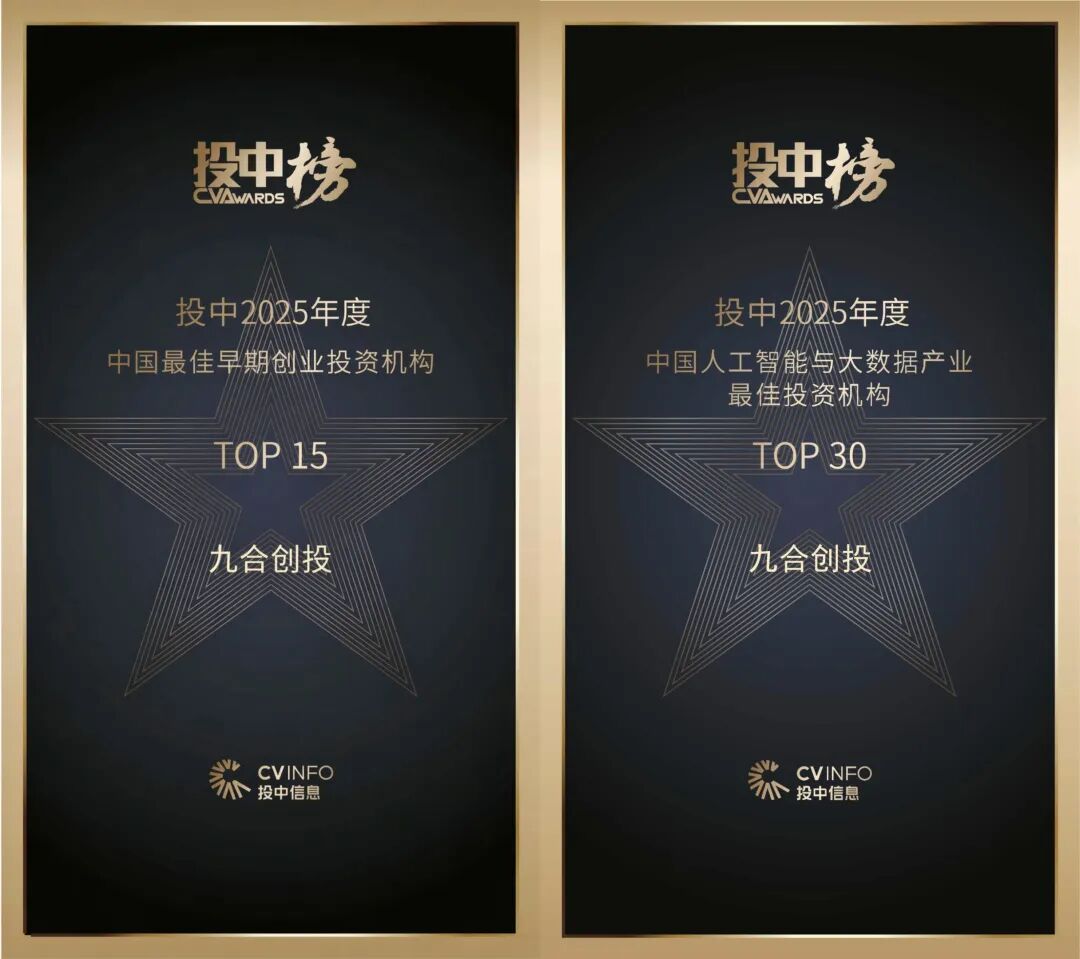
ChinaVenture announced its annual China Venture Capital and Private Equity Investment rankings at its investment summit today. Unity Ventures won two awards: "Top 15 Best Early-Stage VC Firms in China" and "Top 30 Best Investment Firms in China's AI and Big Data Sector." Meanwhile, portfolio company Independent Variable Robotics was named to the "Best Investment Cases in China's AI and Big Data Sector."
Becoming the investor who spots new seeds first during the great explosion of species
AI is evolving at breakneck speed, and Unity Ventures positioned itself in a batch of high-potential early-stage projects before the market frenzy arrived. Over the past year, these projects have begun making their mark in their respective fields. Independent Variable Robotics and D-Robotics and other unicorns have raised successive large funding rounds, while companies like TTC that are deeply embedded in vertical sectors have seen annual revenue growth exceed 50%, with strong momentum continuing.
Beyond AI applications and hardware, Unity Ventures' portfolio companies in controlled nuclear fusion, commercial spaceflight, and biomedicine have also achieved critical milestones.
Star Ring Fusion Energy made breakthroughs in multiple core technologies related to spherical tokamak fusion reactors, with its 1 billion yuan Series A setting a domestic record for single-round funding among private fusion companies. Infinite Aerospace successfully completed full-system ground testing of its space bus IH-1 in the first half of last year, taking a significant step in spacecraft engineering validation. Promei Biotech announced that PMG1015 received FDA approval to initiate Phase IIb clinical trials, establishing a leading position in the industry...
This year, Unity Ventures will continue betting on AI as well as frontier technologies including quantum computing, brain-computer interfaces, and space-based computing. We believe that during this period of species explosion, whether young AI natives or entrepreneurs with deep academic and big-tech backgrounds, everyone has the opportunity to build the next generation of great companies.
VC is fundamentally about investing in valuable structural bubbles, but don't get swept up by market sentiment
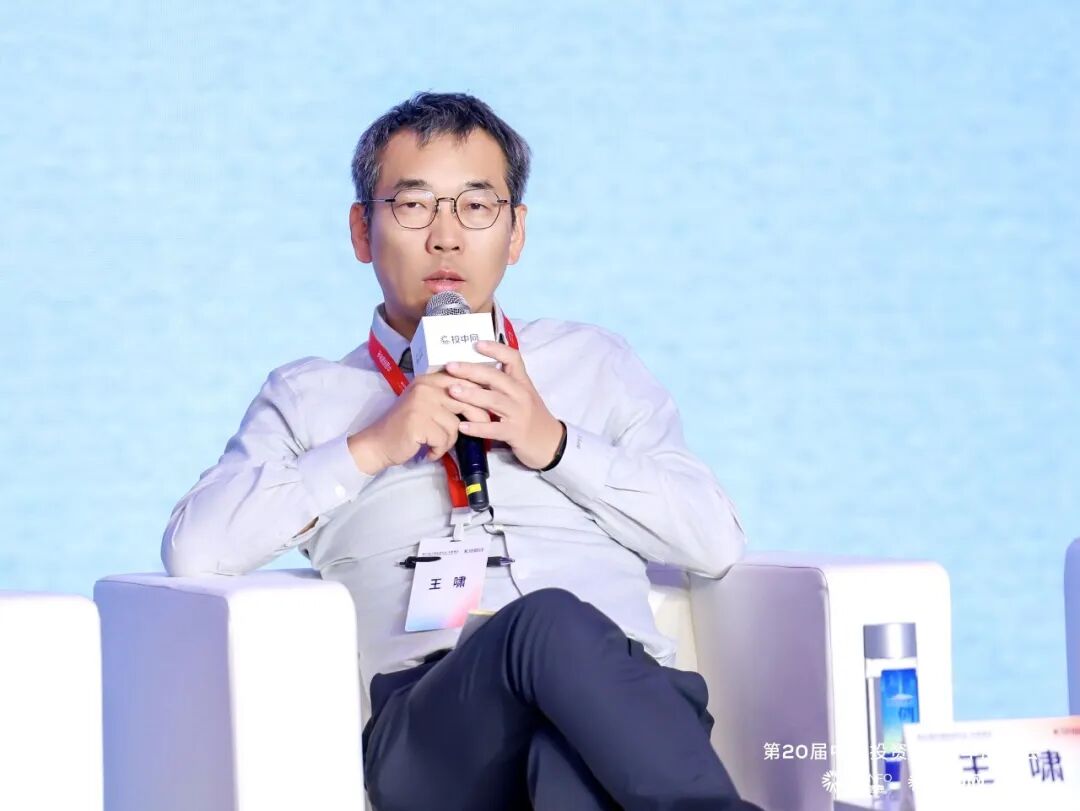
At the ChinaVenture Investment Summit roundtable on "Investing in AI's Journey into the Physical World," Xiao Wang, founder of Unity Ventures, offered his assessment of embodied intelligence's path to market: true entry into home scenarios will take three years by optimistic estimates, with a more neutral expectation of five. Blocking this path are four thresholds to commercialization — and four genuine opportunities.
First is data. The massive data accumulated on the internet is virtually useless for robot training. Robots need high-quality, long-horizon data from complex scenarios, and data is barely transferable between different robots, making collection costs extremely high. "Long-horizon data collection in complex scenarios is currently the most difficult aspect."
Second is world models. Existing large models fundamentally lack spatiotemporal concepts. The upgrade from LLMs to true world models requires massive iteration in algorithms and architecture. Current technical approaches haven't converged, and it will take about two more years to see alignment.
Third is edge computing. Robots need to complete perception and decision-making within one second. Existing edge inference chips are clearly insufficient and may not match the specific needs of embodied models.
Fourth is the physical body. Many companies are building bodies, but products that can truly adapt to home environments at low cost with high reliability and scalable production don't yet exist. Critical components like dexterous hands remain immature as well. Without the brain being finished, the body cannot truly adapt to its environment.
Immaturity means no monopoly, which means opportunity remains. Unity Ventures has positioned along these four dimensions: Independent Variable Robotics for large models, Noetix Robotics and a company founded by a Huawei "Genius Youth" for bodies, and D-Robotics plus an NPU company for edge chips.
From a long-term perspective, AI's entry into the physical world actually began long ago. Facial recognition, robot vacuums, wearable devices — these products already permeating daily life are all powered by AI algorithms. What's truly difficult is having large models autonomously complete complex tasks in unstructured environments. Home scenarios are unstructured, with variable tasks and dual demands for safety and cost.
Wang believes this path must start from industrial scenarios. Industrial environments are relatively simple with highly repetitive tasks — the first direction to achieve commercial viability. One industrial robotics company in Unity Ventures' portfolio is projected to reach nearly 500 million yuan in revenue this year, having already achieved scaled deployment.
On the current AI valuation frenzy, Wang was direct: bubbles themselves aren't the problem — VC's essence is investing in valuable bubbles. A few people say they want to start a company with no product whatsoever, and the valuation might already be 100 million yuan. That's simply the nature of this industry.
It's better if bubbles last longer. Structural bubbles give high-R&D tech companies sufficient breathing room and time to grow. The A-share market allowing unprofitable companies to list helps give rise to true tech giants. But he also noted the need to distinguish companies fishing in troubled waters — investors must guard against being swept up by market sentiment.
"Judging a bubble depends on the multiple between ultimate market size and current price, not absolute price."