Qiming Star | MedLinkTherapeutics' Xue Tongtong: In ADC's Blue Ocean Era, the Pragmatic Will Prevail
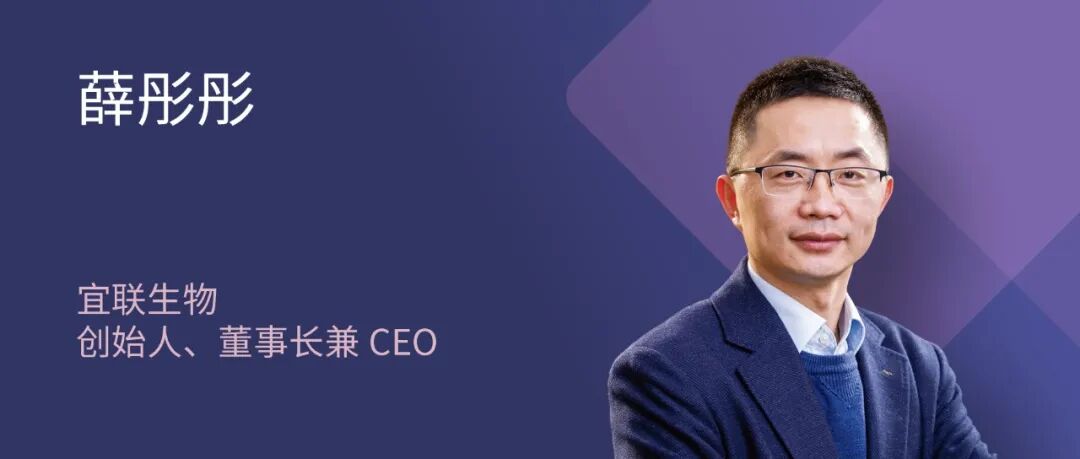
Yili Biotech Could Become the Next Big Pharma

Editor's Note: Over the past decade, China's pharmaceutical innovation has undergone a profound industrial transformation. The ADC (antibody-drug conjugate) space now ranks firmly in the global top tier, with domestic conjugate drugs sparking a wave of global BD partnerships. Among the benchmark companies in this field is Medilink Therapeutics, a Qiming Venture Partners portfolio company. Born amid intensifying industry competition, Medilink rejected follow-on innovation from the start, instead building distinctive technical advantages through its self-developed TMALIN platform. Its core product has secured a major licensing deal with a multinational pharma giant and received FDA Breakthrough Therapy designation. Recently, Dr. Tongtong Xue, founder, chairman and CEO of Medilink Therapeutics, and Dr. Kan Chen, partner at Qiming Venture Partners and co-head of healthcare innovation, sat down for an interview to share the company's strategic path from technology-driven foundation to pipeline buildout, its transition from Biotech to Biopharma, and their deep insights into trends shaping China's innovative drug industry.
In the face of homogenized competition, Xue emphasizes that building technological moats requires originality from day one, followed by persistent IP development and iterative refinement around the platform and products to ensure deep, continuous cultivation in areas of technical advantage. Medilink's goal is to develop internationally competitive conjugate drugs. Chen, meanwhile, believes that future value creation in China's innovative drug sector will permeate the entire industry chain — much like the trajectory of China's mobile phone industry, from assembling for others to building own brands to going global. Current BD partnerships represent one developmental stage; China's innovative drugs will inevitably go global.
Over the past decade, China's pharmaceutical innovation has completed a profound transformation: from just two domestically developed Class 1 new drugs approved in 2015 to a record 76 approvals in 2025; its share of global pipelines has surpassed the United States to become first worldwide. A report from global strategy consultancy Boston Consulting Group (BCG) notes that China's innovation advantages in biopharma lie in being "more, faster, cheaper" — drug discovery costs are just 20%-30% of those in the United States, and patient enrollment is 30%-40% faster. Medilink Therapeutics, founded in 2020, stands as a representative example of this wave.
In the ADC track, China continues to maintain global leadership — according to 2025 data, China holds 57% of the world's active ADC R&D pipelines, totaling 181 products, ranking first globally. Domestic ADCs have thus become one of the core drivers of the sweeping global BD boom: in 2025 alone, domestic ADC products reached 25 licensing deals, with upfront payments totaling $1.772 billion and total transaction value reaching $37.7 billion. Among numerous benchmark cases, Medilink Therapeutics' YL201 partnership with Roche ($570 million upfront payment) stands out as particularly representative.
However, when Dr. Tongtong Xue and his team decided to found Medilink Therapeutics in late 2020, the ADC space was no longer a blank slate. International giants had already established technical moats, and domestic fast-followers were hardly scarce. But in Xue's view, the real room to survive lies precisely in the gap between "unmet clinical needs" and "breakable technical boundaries." He was acutely aware that without core technology and international IP capabilities, a startup couldn't even clear the threshold for fundraising. Thus, from its very birth, Medilink existed not to "tell stories" but to operate on the logic of "survival."
"Pragmatic, low-key, strong execution" — these are the labels Xue hopes peers will associate with Medilink five years from now. He doesn't shy away from the urgency of IPO, BLA, and industrialization system building, nor does he回避 the practical difficulties in globalization. In his view, true globalization isn't declared — it's built step by step through consistently leading R&D capabilities, solid CMC competence, clear capital pathways, and deep binding with international partners.
As an early investor, Qiming Venture Partners co-led Medilink's Series A2 funding in 2021 and continued to co-lead its Series B round in 2022, making it the company's second-largest institutional investor. Dr. Kan Chen, partner at Qiming Venture Partners and co-head of healthcare innovation, believes ADC represents a massive market. The decision to invest in Medilink was driven by confidence in the team and technical platform: on one hand, the team possesses extensive experience in R&D and business development; on the other, the company's technical platform is globally unique. "The ADC field is fundamentally a platform-product concept, much like how Apple can cover multiple different products — an ADC platform similarly can cover lung cancer, breast cancer, pancreatic cancer, and multiple other cancer types. From this perspective, as industry competition grows increasingly fierce, real competitive moats manifest more at the product development level — including product design philosophy, advancement speed, and ability to capture market first-mover advantage — rather than purely technical platform layout. Medilink has the potential to become the next Big Pharma, not just a small Biotech," Chen stated.
01/ Breaking Through on Technology: No Stories, Just Data
"Medilink's positioning was never to do fast-follow from the start," Xue recalls. In 2020, the survival space for new companies was extremely limited; original innovation was essential, with global IP and the ability to engage simultaneously with the FDA and CDE.
By then, after a decade of me-too innovation, China's biopharma sector had cultivated a talent pool for drug discovery, process development, manufacturing, and registration — the industrial foundation was largely in place. But this also meant that only truly differentiated technology could survive in the fierce fundraising competition.
"We know the ADC space extremely well," Xue says. The team had spent years in the ADC field and possessed intimate knowledge of the technical platforms, molecular structures, and physicochemical and biological properties of toxins and linkers from Daiichi Sankyo, Immunomedics, and subsequent followers. "We even understand the functional correlations of each unit. So we knew there was still substantial room for innovation — in many drug-resistant patients, relapsed patients, and patients with high tumor heterogeneity, existing technologies don't work well."
This expertise was Medilink's greatest底气 for daring to continue entrepreneurship in the fiercely competitive ADC space.
Among these, the dual-cleavage mechanism of Medilink's TMALIN platform was a deliberately designed new pathway born from understanding the limitations of existing technologies.
In the early conceptual stage of TMALIN, both academia and industry were broadly skeptical about the effectiveness of "microenvironment release" mechanisms. "Some felt it was too weak in function, not a mainstream mechanism," Xue recalls. But he didn't waver, instead leading the team through five years of continuous optimization, ultimately proving its value with clinical data.
Asked whether he ever doubted himself, Xue's answer was decisive: "I personally never doubted the direction would fail. Low moods, yes — when experimental data fell short, outsourcing efficiency was poor, or clinical enrollment hit obstacles. But that didn't affect confidence."
Xue's confidence stems from three levels: persistence and passion for the pharmaceutical industry, accumulated drug development experience, and deep trust in his team. "We were fortunate — Plan A succeeded, so Plans B and C were shelved. But the screening process consumed enormous human and material resources. Without our own lab, entirely dependent on outsourcing, communication costs were very high." This "backup thinking" and rigorous screening mechanism reflect the professional素养 of seasoned drug developers.
Medilink had no自有实验室 in its early days and was highly dependent on CDMOs. "They weren't familiar with our products; process development was an entirely new challenge." Xue points out that many startups assume outsourcing solves everything, but the prerequisite is that you yourself must understand.
"I often tell colleagues one thing: your level determines your partner's level. If you don't articulate your requirements, the other side will just follow procedures — they won't deliver high-quality service with soul." Therefore, Medilink always keeps core processes and key know-how within the internal team.
In the ADC CDMO space, the competitive landscape is accelerating toward consolidation in 2026: WuXi XDC holds 22.2% global market share and approximately 70% domestic share, with its acquisition of TOT BIOPHARM progressing; Asymchem and Porton are also accelerating self-built capacity. However, in Xue's view, while enterprises choose to outsource production, they must also possess core construction capabilities.
Upon entering clinical stages, because the technology was novel and the team lacked referenceable boundaries for safety and efficacy data, skepticism peaked. "At that time, even partners faced internal pressure," Xue recalls. But through calm communication, data梳理, and gradual validation, trust was rebuilt.
On technical advantages, Xue provided specific data: Medilink's topoisomerase I inhibitor is 5-10 times more potent than Daiichi Sankyo's DXd; at the same target, the dose is only 1/4 to 1/5 of comparable products. "Others use 10 mg/kg; we only need 2 mg/kg," Xue explained.
This difference brings multiple benefits: a wider therapeutic window, higher production capacity (same batch can support more patients), better stability, and even potential for subcutaneous formulation development. Subcutaneous formulations enable outpatient administration — patients observe for an hour post-injection and go home — which is valuable for alleviating hospital bed shortages and is already common overseas. Additionally, Medilink's products demonstrate favorable safety profiles, with significantly lower risk of interstitial lung disease.
Despite clear technical advantages, Xue is清醒 about generational positioning. "Daiichi Sankyo and we both use topoisomerase I inhibitors, belonging to the same broad technical category as a next-generation iteration. We haven't yet achieved cross-generational (next-generation) innovation." He believes true generational leap requires developing novel payloads that still demonstrate efficacy in camptothecin-resistant patients. "That requires next-step work."
"In the past we could feel our way across the river by following Daiichi Sankyo and Immunomedics' stones, but going further, Chinese innovative drugs in the ADC space have already reached the world's most advanced level — no one is leading the way for you anymore." Xue believes that starting from 2026, the real challenge is mechanistic innovation. Chinese innovative drugs have formed global advantages in engineering-heavy areas like ADCs and bispecific antibodies, but in critical links like innovative toxins and more specialized antibody designs, the field overall still largely follows and iterates upon American frontiers.
Facing blue oceans, Medilink's strategy is multi-point layout, rapid testing, leveraging China's efficient R&D system to increase trial density. "Perhaps in the US, doing 5 things costs $50 million; in China, doing 10 things costs 50 million RMB. If we do 10 things with a 20% success rate, that's the best." This is the ultimate manifestation of China's engineer dividend — exchanging higher trial density for faster breakthrough probability.
02/ Pipeline Strategy: The "Must-Win Battleground" of Combination Therapy
YL201's FDA Breakthrough Therapy designation represents one of the key milestones in Medilink's history. This designation was primarily based on outstanding data in small cell lung cancer and nasopharyngeal carcinoma later-line treatment. Xue explained: "These two indications are extremely lacking in effective drugs in later-line stages; patients can only receive chemotherapy, with high side effects and limited benefit. Clinical data shows our ORR, PFS, and OS demonstrate advantages over existing standard treatment regimens, showing superior clinical benefit and safety."
Xue noted that what the FDA values most is whether genuine survival benefit can be brought to patients, "plus the outstanding tolerability at our chosen safe dose; regulators want products to reach market quickly to fill the gap." Small cell lung cancer is a globally recognized refractory tumor with scarce later-line treatment options; YL201's breakthrough significance lies in providing a new choice for these "forgotten patients."
This designation is more than just a "certificate." Xue listed practical values: first, FDA endorsement enhances negotiating position in commercial partnerships; second, rolling submission of application materials becomes possible, with greatly improved communication efficiency upon entering Phase III; "helping products reach market sooner so patients can access them earlier." Additionally, the designation itself signals to potential partners that your data is solid.
However, Xue清醒地 points out that single-agent approval is only the first step. "Combination therapy is the must-win battleground." He explains that once combination therapies enter first-line or second-line treatment and establish first-mover advantage, patients are unlikely to switch to comparable ADCs upon resistance, forming long-term clinical dominance.
This strategy aligns closely with global ADC competition trends: combination therapy is becoming the core battlefield of ADC's second half.
Currently, Medilink and Roche are closely advancing YL201's global development, holding weekly meetings with heavy focus on combination therapy strategy. The two parties reached an exclusive licensing agreement for YL201 in January 2026, their second collaboration. Xue believes deep binding with MNCs is an inevitable path for Chinese Biotech internationalization. "MNCs are the industry's top pharmaceutical enterprises; the product development opportunities, funding, and experience they provide are invaluable, and they offer you strong endorsement."
Xue revealed that high-incidence tumor types including non-small cell lung cancer, esophageal cancer, prostate cancer, and pancreatic cancer are all exploration directions. The inclusion of nasopharyngeal carcinoma as an indication reflects flexible, data-driven decision-making incorporating PI suggestions.
Xue explained that YL201 initially focused on small cell lung cancer, but the PI (principal investigator) suggested nasopharyngeal carcinoma might also be an opportunity. "Nasopharyngeal carcinoma is highly prevalent in southern China, virus-associated, and theoretically B7H3 should also be highly expressed — there's substantial patient need." Xue recalled that after the team adopted the suggestion and quickly explored, data feedback was strong, "so we also made it a priority indication."
This case fully demonstrates Medilink's flexible approach in clinical trials — respecting frontline physician experience and daring to adjust strategy. In China's innovative drug R&D system, the role of PIs is becoming increasingly important — they not only provide clinical scenario insights but are key partners in innovation validation.
Currently, Medilink is simultaneously advancing two Phase III registration trials in China for small cell lung cancer and nasopharyngeal carcinoma. Xue emphasizes that today's regulatory environment differs from the PD-1 era — conditional approval via single-arm trials followed by failed Phase III is no longer accepted. "You must do head-to-head trials, demonstrating therapeutic advantage over the control group in the same trial environment." Therefore, Medilink conducted thorough Phase I/II data analysis and control selection before initiating Phase III to ensure higher probability of success. This shift in regulatory logic forces companies to deliver genuine differentiation rather than "me-too plus" tweaks.
To this end, for YL201's global registration, the strategy is clear: rapid single-agent approval to address later-line needs; while heavily investing in combination therapy to capture first-line and second-line positions.
From the global ADC competitive landscape, Daiichi Sankyo's DS-8201 dominates the HER2 target, but on emerging targets like B7H3, Chinese players are facing a "lane-changing overtaking" opportunity window.
B7H3 is a pan-tumor expression target; beyond small cell lung cancer and nasopharyngeal carcinoma, it shows high expression in multiple high-incidence tumor types including esophageal cancer, prostate cancer, pancreatic cancer, and ovarian cancer. Xue stated: "Better to break one finger than hurt ten. Since our product already has data advantages and development speed advantages, we must follow up on all promising indications. Only then can this product become a future blockbuster."
Xue revealed that exploration of these indications is advancing jointly with partners, targeting rapid entry into Phase III. Against the backdrop of Chinese innovative drugs moving from "single-product breakthrough" toward "platformized continuous output," YL201 has potential to become Medilink's "cornerstone product," supporting the entire pipeline matrix.
When asked how he views strong competitors like Daiichi Sankyo and Merck & Co., Xue responded: "Competition has always existed, but the ADC market is large enough — different technologies, different targets, different indications all offer differentiated opportunities. The global ADC market can accommodate multiple blockbusters. Our advantages lie in wider therapeutic window, better safety, and greater combination potential. The key is to execute our own Phase III well and make our data solid." This mindset of "focus on self, don't anxiety over competitors" is a shared trait of mature entrepreneurs.
Organization and Capital: The Inevitable Path from Biotech to Biopharma
At a quarterly team meeting in the United States, a colleague asked Xue what his priorities as CEO were. His answer: BLA, IPO, supporting the management team.
Xue explained that BLA is a milestone event, representing the company becoming a pharmaceutical company with marketed products; IPO establishes a new financing platform to support long-term, high-intensity R&D investment; and supporting the management team stems from his deep awareness that he is not a universal talent — he must leverage everyone's strengths. These three keywords also outline Medilink's core path in crossing from Biotech to Biopharma.
Medilink's core management team is nothing short of豪华: core members are all seasoned industry experts, combining international big-pharma履历,上市运作 experience, and top-tier academician backgrounds. In Xue's view, the role of management's "number one" is to support everyone well and fill gaps in a timely manner. "Leverage everyone's strengths to form a united team." This "gathering the Dragon Balls" team configuration was extremely rare among Biotechs founded in 2020, and is a key support for Medilink's rapid pipeline advancement.
In talent selection, Xue has his own standards. The primary criterion is "integrity of character" — he believes "it's not that there's no good deeds, but that there are no good people." Second is strong self-drive and team spirit.
In process development, Xue adheres to one principle: "Simple, efficient, scalable, reproducible. You can't design a set of cutting-edge equipment specifically for this process, or when technology iterates, that batch of equipment becomes scrap metal." He emphasizes that processes must leave room for future optimization; antibody processes and conjugation processes must consider scalability feasibility. "Small-molecule toxin-linker processes are very challenging, but our know-how comes from long-term accumulation. Conjugation requires controlling DAR value, impurities, stability — much of it is experience-based."
Currently, Medilink still primarily relies on CDMO partnerships, but Xue has clearly stated that self-built production capacity planning has been initiated. "After product launch, the concept of supply chain is completely different. It must ensure continuous drug supply to patients — patients already on treatment cannot stop, and newly developed indications also need clinical supply. Even one supply interruption is a disaster." He believes industrialization robustness is a required course in transitioning to Biopharma.
From an industry trend perspective, the ADC CDMO space in 2026 is undergoing profound consolidation: WuXi XDC is rapidly expanding commercial production capacity through acquiring TOT BIOPHARM, Asymchem and Porton are accelerating self-built facilities, while international giants like Lonza and Samsung are concentrating capacity releases in 2027. Medilink's "partner first, build later" strategy balances short-term efficiency with long-term security.
Xue used a vivid metaphor: a company is like an airplane. "Early discovery is the radar in the nose, rapidly identifying targets; the production CMC system is the tail, ensuring continuous supply; in the middle sits clinical — the largest investment, and also where the most value is created; on both wings hang two engines — BD plus commercialization is the left engine, investment and financing operations is the right engine. The management team is the cockpit." What Medilink is building is precisely such a five-in-one positive cycle. This framework precisely captures the essence of innovative drug companies' evolution from R&D-driven to systematic competition — any短板 could constrain overall takeoff.
Regarding global early development and industrialization system building, Medilink currently has a 20-plus person team in the United States, half of whom are foreign nationals. Xue believes that for innovative drugs, overseas Phase I/II clinical development can be self-supported, but Phase III is best done as co-development or with partners, while commercialization should follow the local-for-local principle.
Therefore, Medilink will prioritize partnerships with MNCs or CSOs, accumulating experience before pursuing independence. This strategy forms a pragmatic middle path between the two mainstream models for Chinese innovative drug companies going global — "building ships to sail" (companies self-building overseas commercial teams) and "borrowing ships to sail" (most Biotechs going through BD licensing).
Asked for the three keywords he hopes to be remembered by in five years, Xue didn't hesitate: "Pragmatic, low-key, strong execution." He hopes Medilink grows into a pharmaceutical company with both local roots and global capabilities, with the ability to independently conduct global Phase III trials while maintaining leadership in the ADC space. "Every company must first have a big single product, a distinctive feature — like a restaurant, you need a memorable dish. Then use that point to drive broader development; don't lightly abandon advantages you've already built."
Chen stated that the biopharma industry is increasingly moving upstream, very similar to China's mobile phone industry development path: from initially assembling for others to owning own brands to going global. Current BD partnerships represent one developmental stage; future Chinese innovative drugs will inevitably go global, and Medilink is among the most hopeful to lead as a Chinese本土全球化药企.
Looking ahead, Chinese innovative drugs stand at a watershed moment from "efficiency highland" to "value peak." Whether Medilink can become a benchmark for this leap depends on whether it can transform current technical advantages into sustained output capability.
Xue told a story: salmon swimming upstream to spawn — those that successfully arrive aren't necessarily the strongest or smartest. "Some of the strongest jump straight into a bear's mouth; some swim the wrong direction and can only wait to die in unfamiliar places." He said, making drugs is the same — it requires both effort and the right environment and luck.
"What we can do is do well what we can control, 'first make ourselves invincible, then wait for the enemy's vulnerability' — first ensure we don't lose, then wait for opportunity."
Xue believes that Chinese Biotech going global is an inevitable direction. Though methods may adjust according to circumstances, the core is participating in international division of labor with professional capabilities.
In his view, there are no shortcuts in innovation. Chinese Biotech should first defend its home base, then act when opportunity arises. Avoid blind expansion; focus on vertical depth in your赛道. "The ADC space is wide enough; the conjugate drug field is much larger than the PD-1 antibody market. First do one thing to极致, and opportunities will naturally follow."
From a broader perspective, Chinese pharmaceutical innovation is undergoing a qualitative transformation from "scattered breakthroughs" to "systematized output." Medilink's story is a vivid footnote in this grand narrative. As Xue put it: "Salmon swimming upstream — the strongest may not necessarily reach the finish line, but those who do reach it are certainly the ones who persisted."
Past Reviews
Qiming Weekly | Qiming Venture Partners Portfolio Company News, Vol.21, 2026.6.23
Qiming Honors | 5 Qiming Venture Partners Investors Named to 2025 Forbes China Midas List

Founded in 2006, Qiming Venture Partners currently manages 11 USD funds and 7 RMB funds, with total committed capital reaching $9.5 billion. Since inception, it has focused on investing in early and growth-stage outstanding enterprises in Technology and Healthcare.
To date, Qiming Venture Partners has invested in over 580 high-growth innovative companies, of which more than 210 have listed on the New York Stock Exchange, NASDAQ, Hong Kong Exchanges and Clearing Limited, Shanghai Stock Exchange, and Shenzhen Stock Exchange, or exited through M&A and other means. Over 80 portfolio companies have become recognized unicorns or super-unicorns.
Among Qiming Venture Partners' portfolio companies, many have grown into the most influential companies in their respective fields, including Xiaomi (01810.HK), Meituan (03690.HK), Bilibili (NASDAQ:BILI, 09626.HK), Zhihu (NYSE:ZH, 02390.HK), Roborock (688169.SH), Hesai Technology (NASDAQ:HSAI, 02525.HK), UBTECH (09880.HK), WeRide (NASDAQ:WRD, 0800.HK), HyperStrong (688411.SH), Insta360 (688775.SH), Unisound (09678.HK), Biren Technology (06082.HK), Zhipu (02513.HK), Gan & Lee Pharmaceuticals (603087.SH), Tigermed (300347.SZ, 03347.HK), Zai Lab (NASDAQ:ZLAB, 09688.HK), CanSino Biologics (688185.SH, 06185.HK), Schrödinger (NASDAQ:SDGR), MicroPort EP MedTech (688617.SH), Sanyou Medical (688085.SH), Amoy Diagnostics (300685.SZ), SinoCellTech (688520.SH), Insilico Medicine (03696.HK), Hope Medicine, Yuanxin Technology, Medilink Therapeutics, LaNova Medicines, StepFun, and others.