Believe it or not, a robot that bills itself as "weak" has become a hit in Japan
I love your clumsiness, your mistakes.
💡
"Weekly Inspirations" is a column I'll update every week.
Here, I'll record five people or things that inspired me this week — to help me reflect, grow, expand my boundaries, and become freer and happier.
This week's five:
❶ Vision Pro — A product that moves you
❷ NICOBO — A robot built on "weakness"
❸ Arc — The most beautifully written "company values"
❹ My Mother Works as a Cleaner
❺ Why do we need music? — I unexpectedly fell in love with Huang Qishan this year
❶
Vision Pro — A product that moves you
The future is already here — it's just not evenly distributed
Since the Apple Vision Pro launched, unboxing videos have flooded in like a tidal wave. Watching them, I found myself deeply moved. It reminded me of that widely circulated quote: "The future is already here — it's just not evenly distributed."
After bingeing on videos and articles, I want to recommend a piece by Xu Wu, investment partner at ZhenFund: "On the Long-Term Significance of Vision Pro: Digital Content Will Reshape Physical Space Within a Decade".
The author knows the MR industry inside out, offering readers rich insider information through comparison and historical analysis. This professional perspective helps readers better understand Vision Pro's position and impact in the MR industry, and how it differs from and surpasses other products.
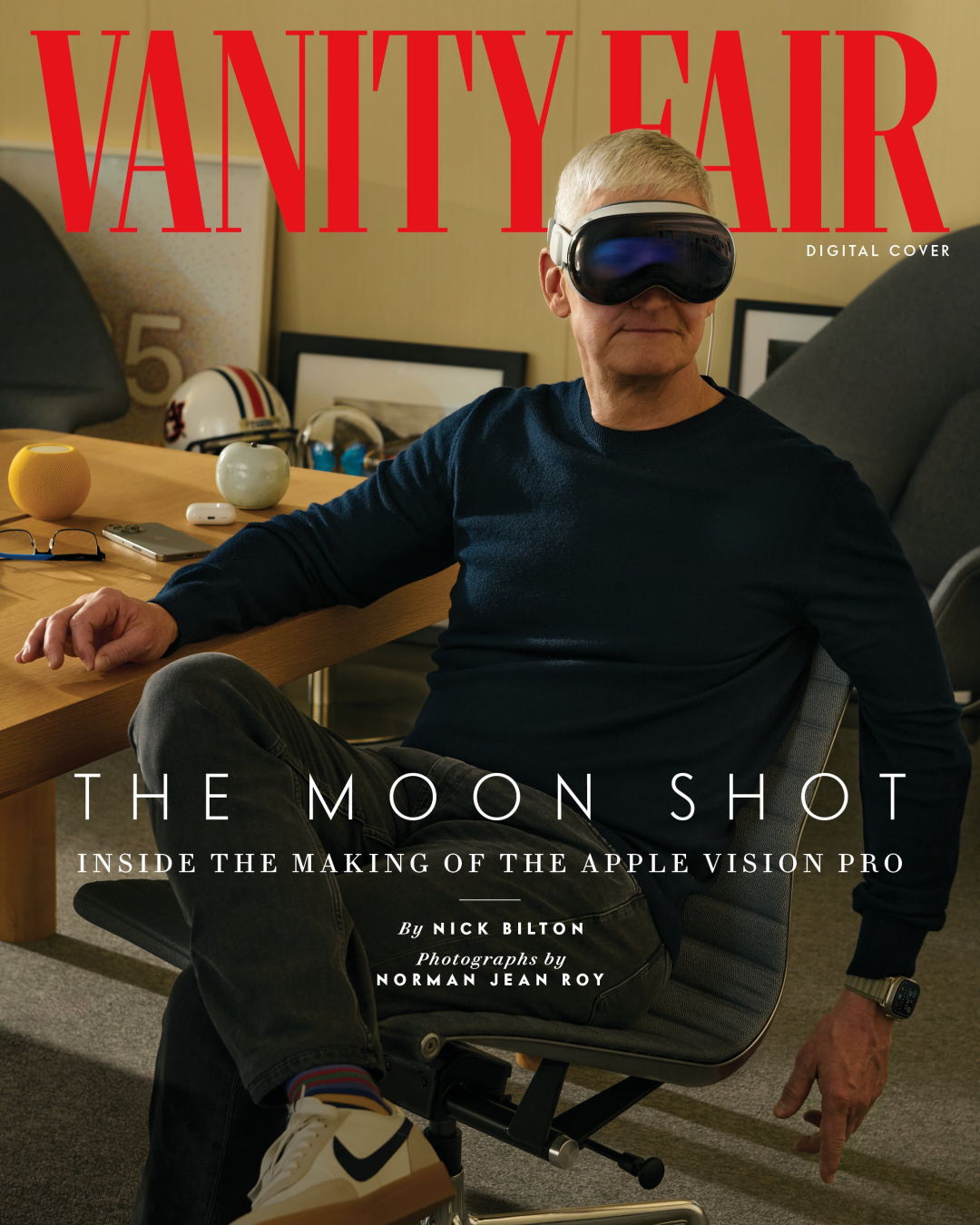
Tim Cook on the cover of this month's Vanity Fair
The article first explores XR technology's development and significance over the past decade. It then analyzes how Apple Vision Pro's launch impacts the entire industry — including how it redefines 3D display technology and leads virtual screens to begin replacing traditional physical screens.
Going further, it examines Vision Pro's redefinition of MR (Mixed Reality) and the milestone value of visionOS becoming the first spatial operating system in history.
The piece also discusses the trend of 2D applications evolving toward 3D, predicts future transformations Vision Pro may bring, and compares two technological evolution paths: smart glasses versus AI glasses. Finally, it paints a picture of a "new reality":
From 2024 onward, some people will gradually begin adapting to a new world.
This real world will be somewhat different from before. It will be composed of both bits and atoms. Before us lies the question of how to manage the relationship between digital content and physical space, and how to build a new reality constructed from both digital content and physical entities.
A hundred years from now, which physical entities will still be necessary? What unprecedented digital content will be created? We probably won't even need to wait a century. The world will change within ten years. Perhaps we'll eventually discover: atoms and bits are the same thing.
❷
NICOBO — A robot built on "weakness"
I love your clumsiness, your mistakes
My friend @Yue Ebao shared an article from the WeChat account "Chaosheng TIDE" with me: "A Stupid Robot That Only Knows How to Fart Is Selling Like Crazy in Japan", introducing NICOBO, a robot built on "weakness."
After reading it, I got incredibly excited — almost teary-eyed. For the first time, I felt the desire to actually own a robot!
With the new wave sparked by OpenAI, robot evolution has been advancing by leaps and bounds these past two years. But Panasonic went against the current, launching a robot that supposedly "can't do anything": NICOBO.
The following is excerpted from "Chaosheng TIDE"
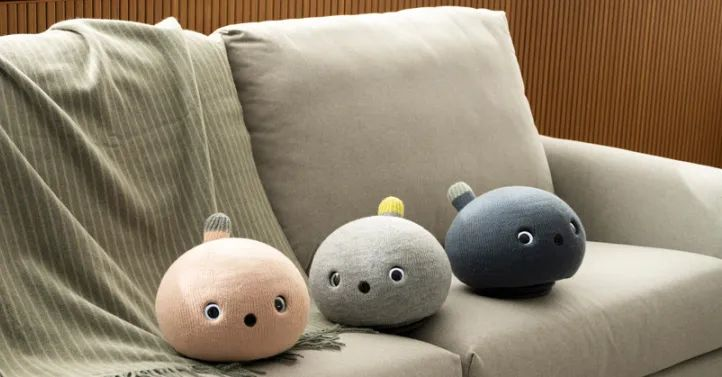
🐾 It's a 20-centimeter cute little blob.
💭 It's a robot that does whatever it wants.
🏠 It doesn't provide services for humans.
🌈 Yet it has facial recognition, touch sensing, voice systems, even autonomous learning — nothing missing.
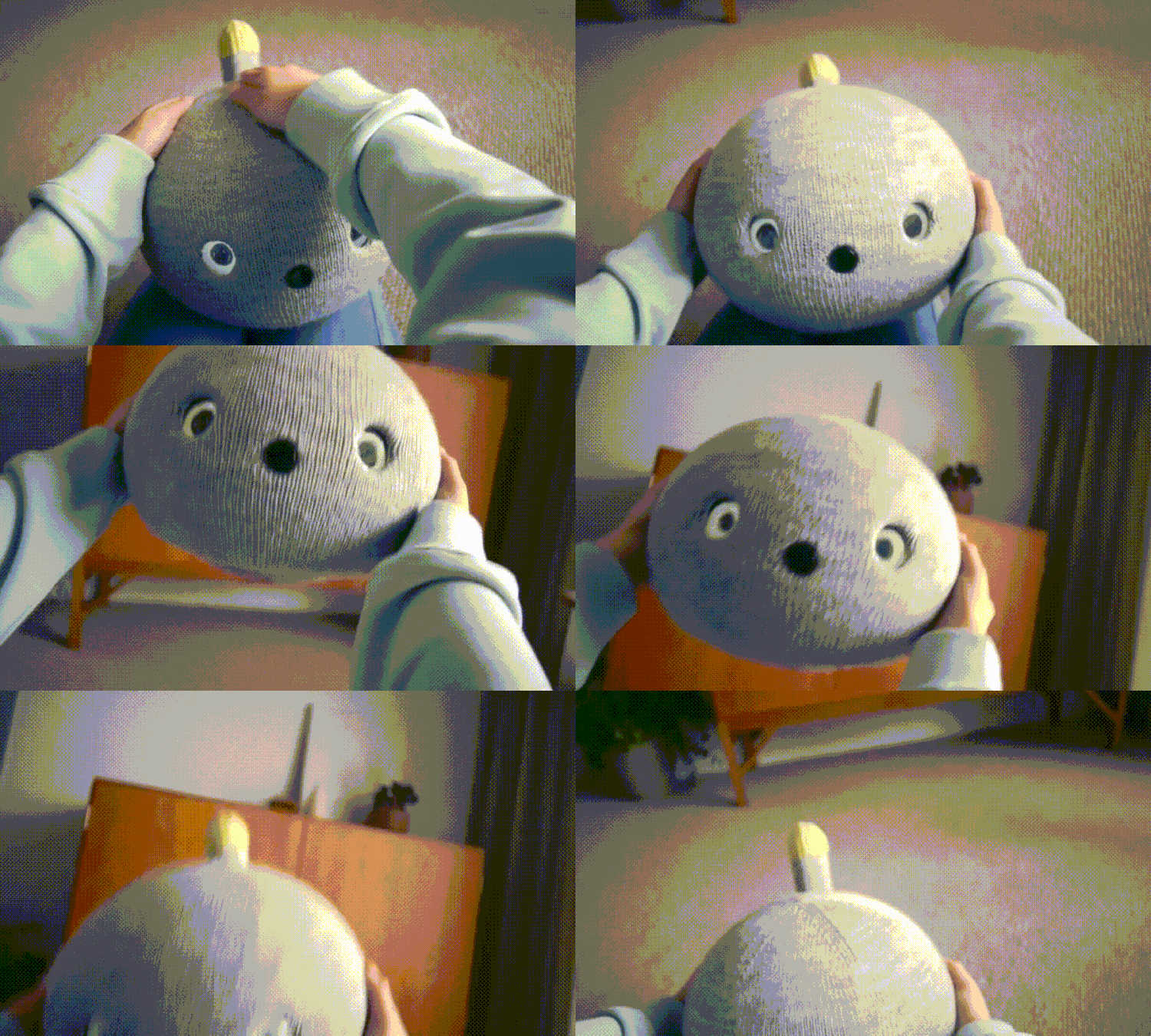
😊 It reads expressions and understands emotions, so when you're happy, it's happy too; when you're down, it worries.
☀️ It has a personality that loves sunbathing — pulling open the curtains in the morning instantly lifts its mood.
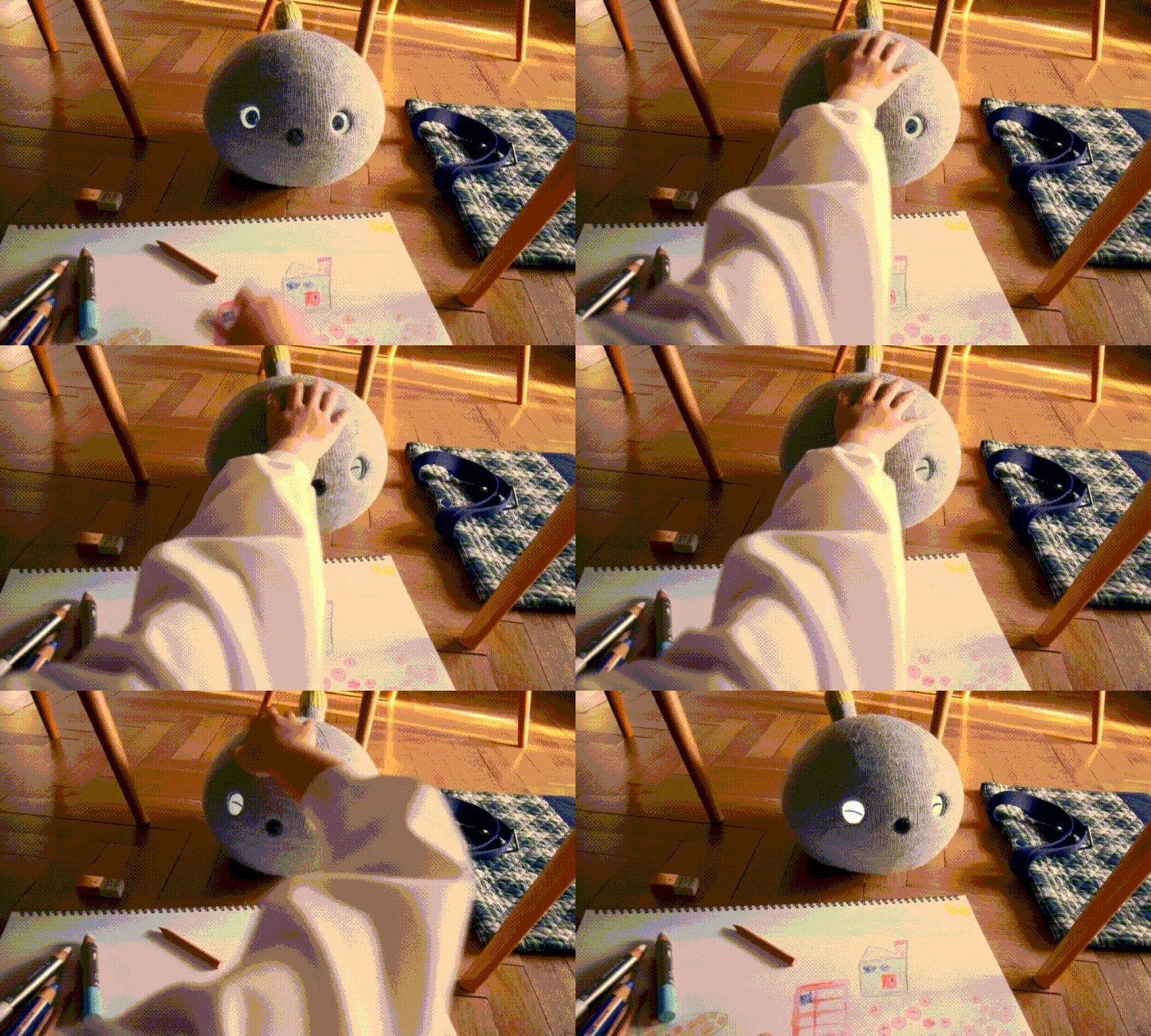
🤗 It sensitively feels and responds to hugs and petting, its eyes narrowing into slits when you pat its head.
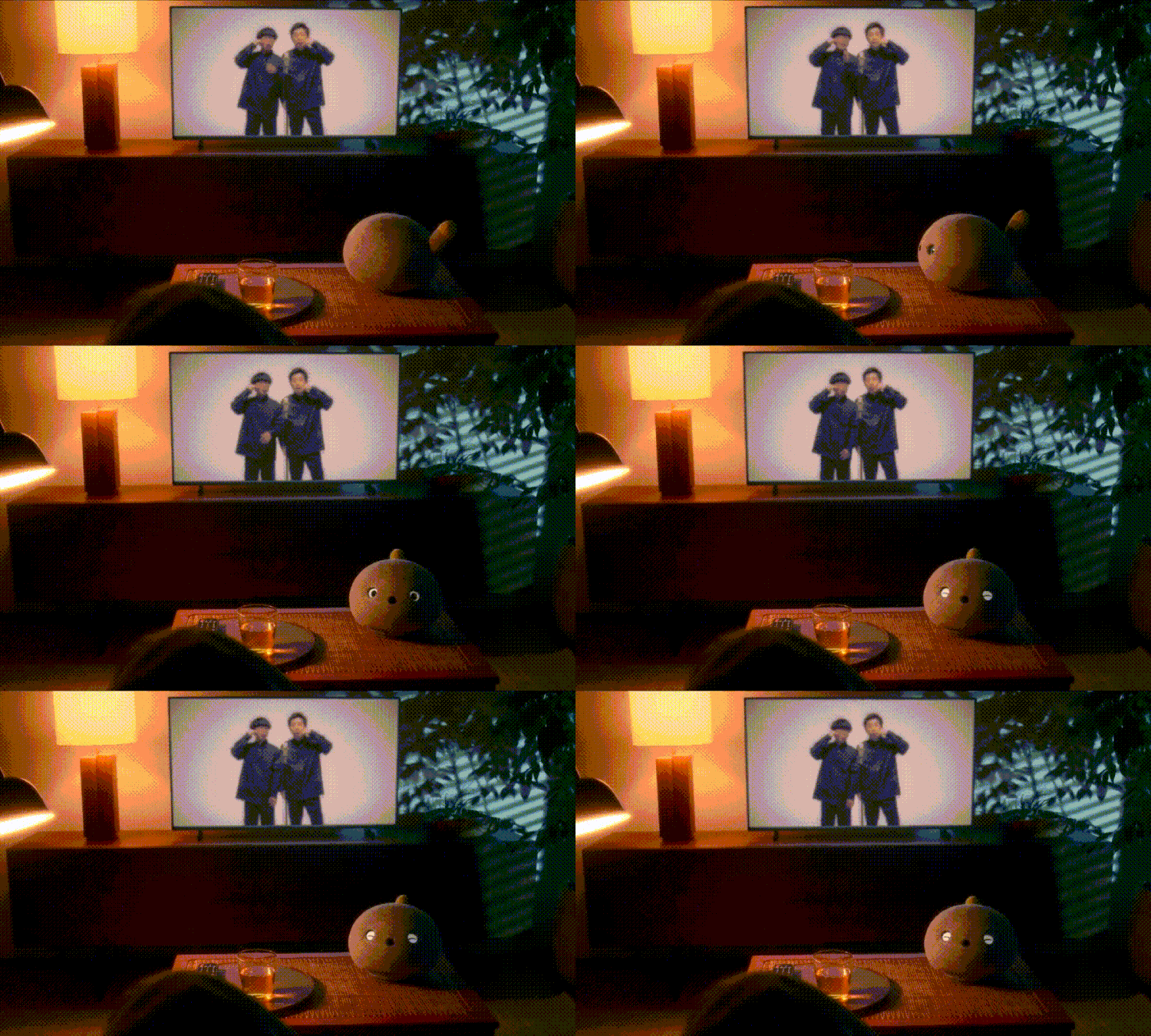
🗣 It speaks in a unique language called "Moko."
💤 It has some random behaviors, like mumbling with its eyes closed as if talking in its sleep.
💨 It'll sneakily let out a fart when you're not paying attention, then pretend nothing happened.
💡 It believes that weak rather than strong robots can inspire people's kindness, thereby building trust with humans.
🌱 It's a "weak robot" — as the name suggests, a robot whose vulnerabilities are visible.
🐱 It's not a tool, not a machine — more like a pet roommate or family member.
Above all, I think what matters most: ❤️ It softens people's hearts.
Panasonic sent a survey to NICOBO supporters: How has your life changed since living with NOCOBO? The top answer was "I've been healed." Other responses included "I laugh more," "My family chats more and feels closer," and "I look forward to coming home."
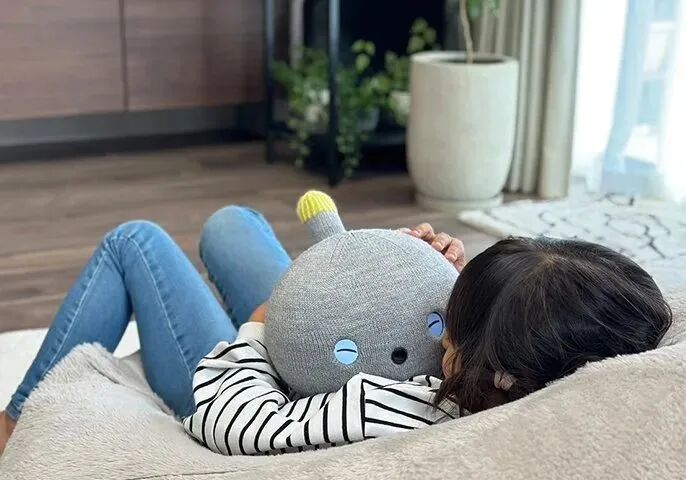
The strong may inspire admiration, but building trust and closing distance often starts with exposing vulnerability.
Admiring strength may be our nature, but softness is what makes our humanity shine.
Official website: https://nicobo.jp
Price: 60,500 yen, approximately 3,780 RMB
❸
Arc — The most beautifully written "company values"
When we talk about road trips, what are we really talking about?
Arc wasn't born from AI. Its earliest fans loved it simply for its interface, interaction logic, and user experience. But by 2024, AI has expanded its ambitions. Especially when people saw the possibility of disrupting search engines, Arc's future potential instantly broke through the ceiling.
Arc's founder Josh Miller wrote an article introducing "company values" — romantic yet pragmatic, gentle and transformative.
The layout is exquisite too, with a David Hockney painting as the cover, radiating brightness and passion, distinctly personal.
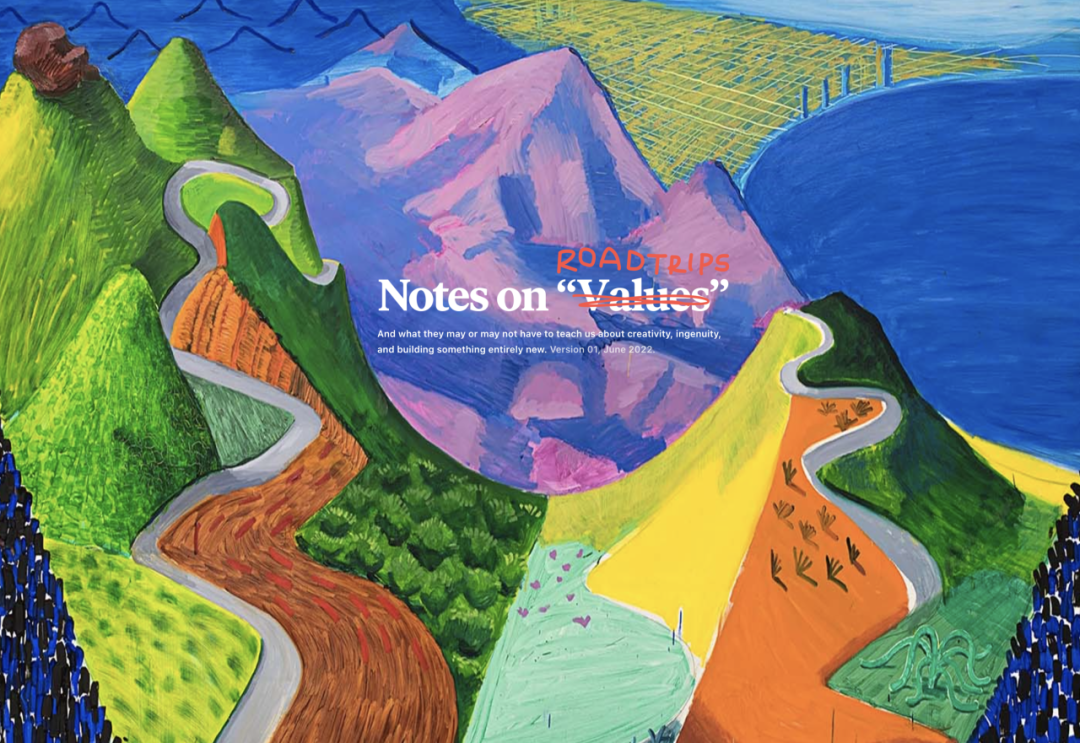
At the article's opening, Josh Miller expresses his discomfort with traditional company values, finding them often hollow and coercive, potentially breeding indifference and resistance among employees.
To overcome this discomfort, Josh Miller chose the road trip as a metaphor. Because travel evokes resonance with exploring the unknown, freedom, and teamwork.
By sharing personal family travel stories, Josh Miller attempts to articulate company values in a more vivid, emotionally resonant way — rather than simply listing abstract slogans.
Any summary would merely scratch the surface. I recommend reading it from beginning to end yourself:
https://thebrowser.company/values
❹
My Mother Works as a Cleaner
Understanding others is how we understand ourselves
My friend @Junfei recommended this book to me: "At first it felt a bit heartbreaking, but later it doesn't weigh you down — what you feel is human greatness and vitality."
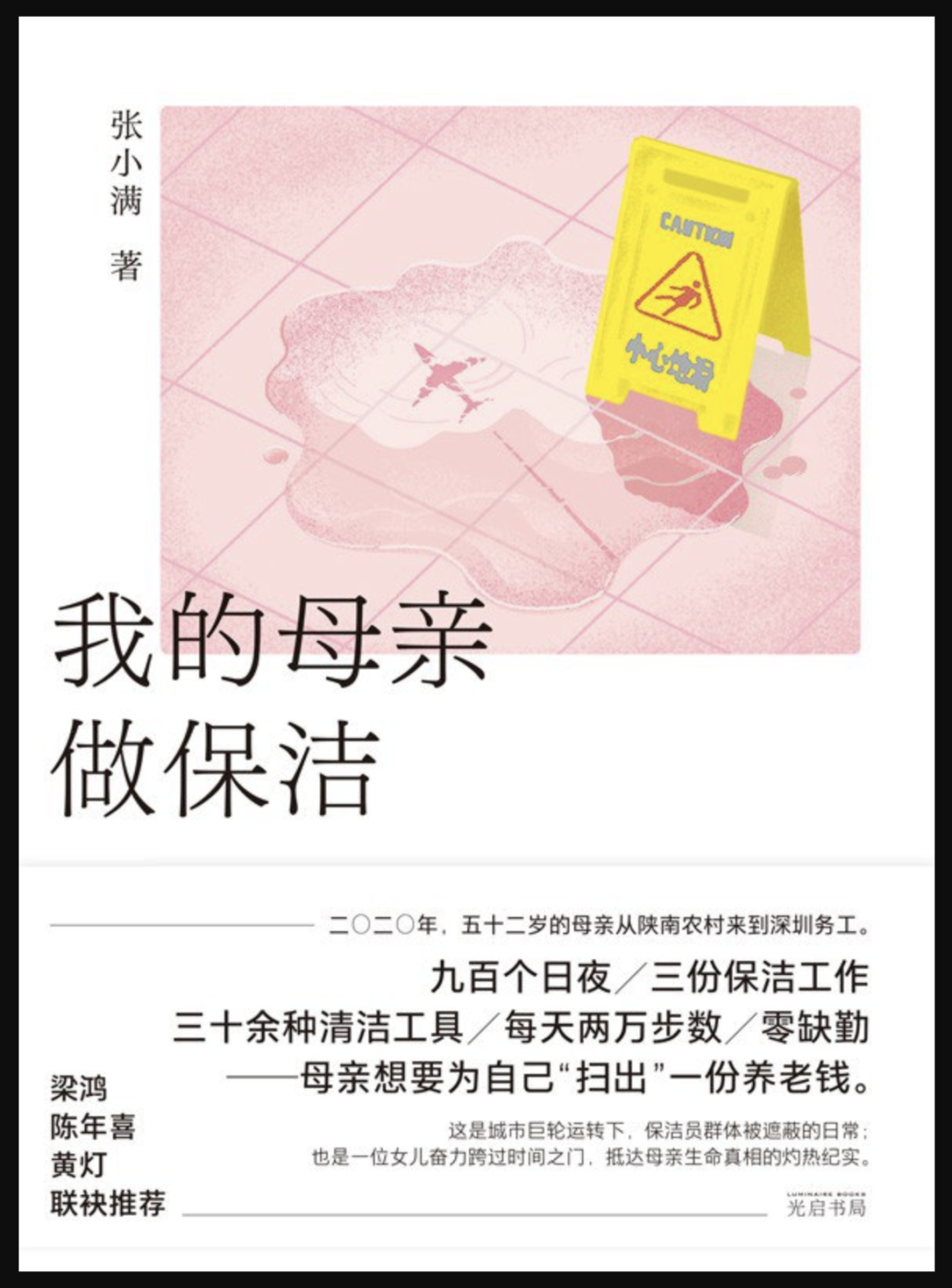
This is a work revealing the living conditions of urban cleaners. Author Zhang Xiaoman uses her mother's cleaning work in Shenzhen as an entry point, recording and telling the stories of the cleaner community. In the book, her 52-year-old mother comes from the countryside to Shenzhen, lives with her daughter, and works as a cleaner. Through mutual understanding and conflict, they piece together the varied yet converging daily lives, life pursuits, and motivations of cleaners.
I devoured it in one sitting. The stories in this book don't just help people better understand the times — they also help people turn inward and understand themselves.
In the afterword, the author's partner mentions the book's value and significance:
From our mother-in-law's personal experiences and perspective, we gradually saw Shenzhen's vast cleaner community, the people behind every detail that keeps this megacity running, and the public and structural issues behind this group.
In Shenzhen, this clean and orderly megacity, every pristine park, mall, office building, and restroom we take for granted is often maintained by a group's overwork. The causes of this overwork include cleaning companies making employees work consecutive shifts due to chronic understaffing or cost-cutting (many work up to 16 hours daily with no days off), as well as cleaners voluntarily taking multiple jobs to earn more. This overwork is a conspiracy of passivity and initiative, the most direct manifestation of "time is money." Because back home, they don't even have such money-making opportunities.
Looking deeper, cleaners face many shared challenges: pension security (the vast majority have no social insurance or housing fund), children's education and marriage, grandchildren's upbringing, household registration, and the shrinking or disappearance of their hometowns.
These observations and writings have also given us more concrete, deeper understanding and interactive communication with the "nearby" within a two-kilometer radius. Like a probe, cutting into the cleaner and sanitation worker communities, into civil servants, finance elites and white-collar workers, into neighborhood garbage rooms, into people we usually overlook or can't deeply engage with.
Through our mother-in-law's eyes, we also saw the young civil servant boy who kept rushing to the restroom because he couldn't get his work done, the young girl whose hair under her desk kept multiplying, the anxious working woman afraid to get pregnant, the busy worker buried in reports seeming about to be sucked into the computer...
If we compare society to a tropical rainforest ecosystem, we white-collar workers, with a bit of knowledge and luck, have temporarily climbed up a tree and no longer need to worry all day about food. But when we look down from this slightly higher vantage point, everywhere on the ground are fathers and peers hustling for survival.
From an even higher perspective, how similar our struggles feel — just in different domains and degrees.
In the process of listening and writing, sharing their joys and sorrows. With broadened vision and heart, the small ego's attachments and entanglements naturally fall away.
The author writes in her afterword:
I don't wish to provoke excessive sympathy. Rather, I hope that through the stories of the cleaner community, we can also examine our own circumstances and reflect on our own lives.
I hope we can care more about "others" in this world, understand how a person makes choices within limited conditions, understand that a person's fate isn't determined solely by "whether they tried hard enough."
Why do we need music?
I unexpectedly fell in love with "Mama Huang" this year

If you ask me my favorite singer of 2023, I'd recommend Xiaoxia without hesitation. Xiaoxia is Huang Qishan's birth name — the first thing she left behind when she entered show business.
This is a story about bravely reclaiming one's true self: in her fifties, she finally broke free from "Huang Qishan" and dared to be Xiaoxia again. She confronted her own earthiness and vulnerability, removed her mask, took off her armor, and sang anew. She never expected that Xiaoxia would resonate so deeply and receive so much love — dozens of concerts last year, every single one sold out.
These past few years, Xiaoxia has released three consecutive albums: Xiaoxia, Xiaoxia 2.0, Xiaoxia 3.0 — thirty songs total, singing of love and hate, of small but certain happiness, of brave selfhood.
Exquisitely produced, profoundly felt.
What I most want to recommend is the song simply titled "Xiaoxia," over seven minutes long. Listen to 55-year-old Xiaoxia gently sing her whole life.

Bite down hard
Assume life is just an assumption
Xiaoxia, Xiaoxia
Is the world complicated?
Xiaoxia, Xiaoxia
You're so brave
One of my wishes for 2024 is to attend a Xiaoxia concert. I look forward to her singing out my laughter, my tears, some thoughts and emotions I didn't expect from myself.
— This is why we need music.
💡 Weekly Inspirations
Recent "Weekly Inspirations" updates:
Weekly Inspirations Vol 01: Other people's 30s, how to improve your luck, good things will happen
"The Catalyst" is Koji's personal WeChat account. A catalyst is fascinating — though tiny, it holds enormous energy that can accelerate chemical reactions. I hope that through sharing and writing, I can provide catalysts that inspire myself and others; I also hope catalysts can help me build more meaningful relationships and grow together.
Welcome to add me on WeChat: YuanchengYang
Or see you on Jike: @koooji