MiniMax's Next Play: Model × Harness
Is MiniMax Building Its Own Model + Harness Ecosystem?
Is MiniMax Building Its Own Model + Harness Ecosystem?
👦🏻 Author: Jingshan
🥷 Editor: Koji
🧑🎨 Design: NCon

Earlier this year, a lot of people were playing around with OpenClaw. Its logo is a lobster, so the community called themselves "shrimp farmers." Then Hermes Agent dropped, and OpenClaw's momentum visibly shifted.
Suddenly, social media was flooded with screenshots of people "raising horses." Hermes Agent got nicknamed "Hermès Agent," and its GitHub shot up to nearly 100k stars within days. The shrimp farmers were becoming horse owners.
Among the buzzwords flying around now, one keeps popping up: Harness, hailed as the "third paradigm" after prompt engineering and context engineering.
Anthropic calls the underlying SDK of Claude Code "Agent Harness." OpenAI published a dedicated blog post on Harness engineering. The benchmark TerminalBench 2.0 treats Harness quality as the core variable for measuring Coding Agents.
The term has officially broken through to the mainstream.
Turning back to China, MiniMax is one of the companies pouring the most resources into the Harness direction, with frequent moves aimed at building a complete "Model + Harness" loop.
Just last night, the Crossing team joined Tommy Eastman, business lead for Hermes Agent, along with MiniMax Agent chief architect A Dao and Agent R&D engineer Zeyin for a livestream on Bilibili. This also marked Nous Research's first official appearance in China.
The three of us shared the stage to discuss how Harness and models should work together.

A clear signal came through during the stream: MiniMax's preparation on the "Model + Harness" front is systematic.
🚥
This article focuses on three things:
【1】What exactly is Harness?
【2】What specifically has MiniMax done in this direction?
【3】And why is this worth talking about separately.
What is Harness, and what is Model + Harness?
Let's get the concept straight first, or the discussion of MiniMax will lack context.
The term "Harness" isn't new in AI.
It originally comes from software engineering's "test harness" — a scaffold of code that wraps around the object under test, drives inputs, and captures outputs. In 2021, EleutherAI released an evaluation tool called lm-evaluation-harness to standardize LLM benchmarking. It later became the backend for HuggingFace's Open LLM Leaderboard.
But Harness's journey from "evaluation tool" to "Agent framework" took some steps.
In 2023, a researcher named Beren Millidge wrote an influential article proposing an analogy: the LLM is the CPU, the context window is RAM, external databases are disk storage, tool interfaces are device drivers, and the entire scaffold wrapping it all is the operating system.
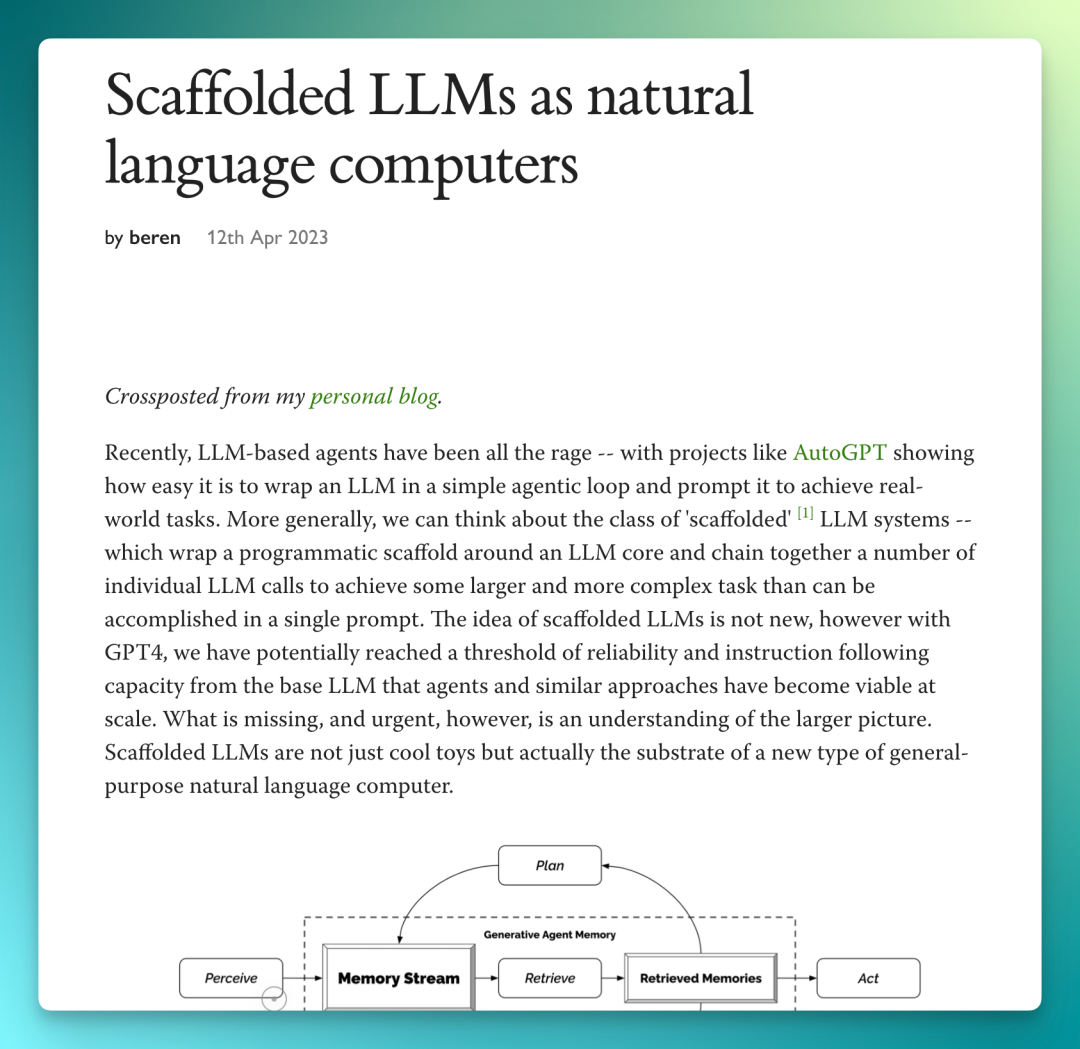
The core idea: if the model is hardware, Harness is the operating system layer.
This analogy got cited repeatedly and laid the groundwork for how Harness would later be understood.
What really made the term take off was a blog post in early 2026 by Mitchell Hashimoto: My AI Adoption Journey. Hashimoto, creator of Terraform, described his transformation from AI skeptic to heavy user. Step five was dedicated to "Engineer the Harness."
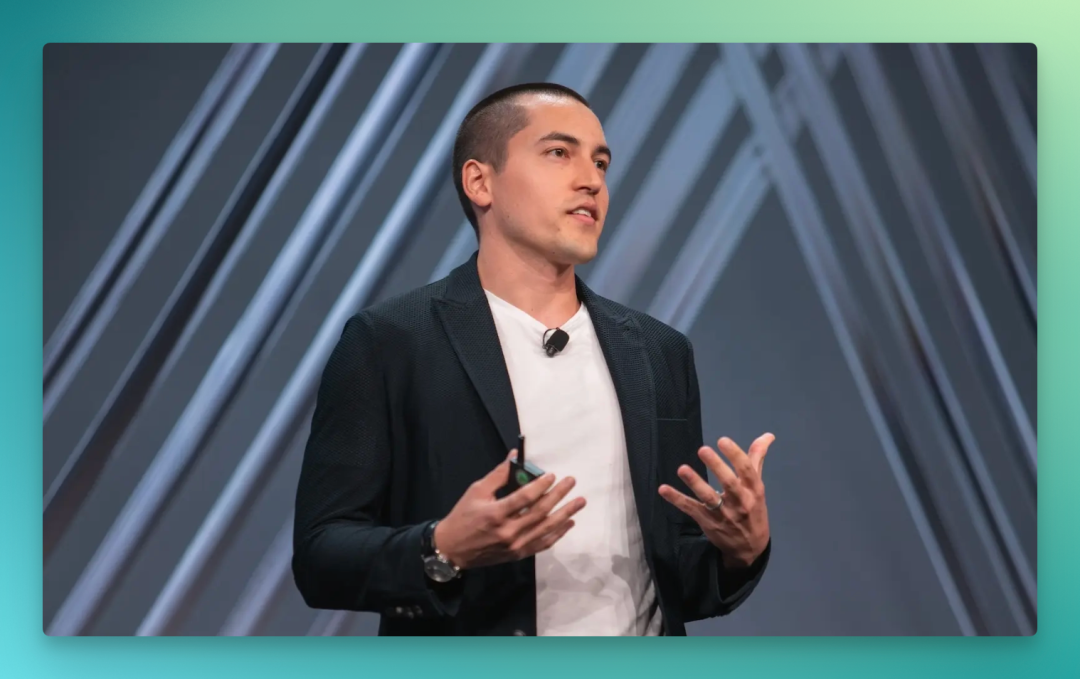
He gave it a blunt definition:
Every time you find an Agent making a certain mistake, spend time designing a mechanism so it never makes that same mistake again. That mechanism is the Harness.
Less than two weeks after the post, OpenAI published its own article dedicated to Harness engineering. Anthropic and LangChain followed suit. The term spread fast through tech circles.
So after all that, what is Agent Harness exactly?
In one sentence:
The model determines how smart an Agent is; Harness determines whether it can actually be put to use, doing real tasks.
In practical engineering, Harness generally includes these components:
【1】Tool call orchestration, letting the Agent invoke external capabilities;
【2】Memory management, letting the Agent retain important information across sessions;
【3】A Skills system, letting the Agent learn and accumulate new ways of working;
【4】Verification and feedback loops, letting the Agent know whether its outputs are right or wrong.
These four things seem unrelated, but they boil down to one thing: equipping the model with a complete runtime environment so it actually becomes a usable Agent.
Though "Harness" sounds abstract, it can genuinely move an Agent's scores by a lot.
LangChain ran an experiment in early 2026: on the TerminalBench 2.0 test, fixing the same model (gpt-5.2-codex) and only swapping the Harness, the engineering team boosted the coding Agent's score from 52.8% to 66.5% — jumping from outside the top 30 to the top 5.
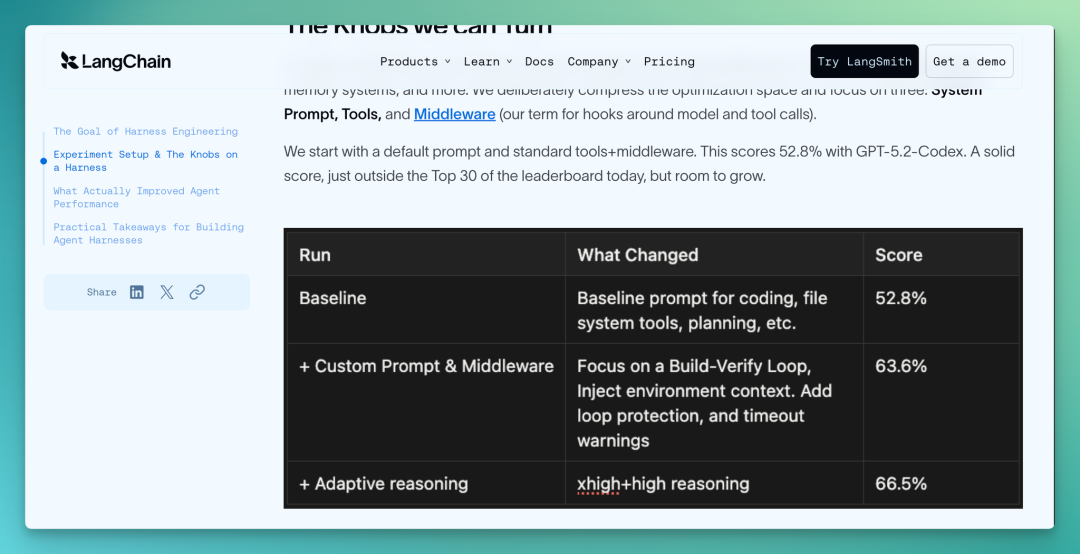
Same model, different runtime framework — the performance gain was larger than what you'd get from upgrading to a new model generation.
This made a lot of people realize:
The highest-leverage engineering activity of 2026 might be designing the Harness around your model.
Is MiniMax building its own Model + Harness ecosystem?
Now that Harness is clear, the next question: Harness is important, but is Harness alone enough?
The answer is no.
However polished your framework, if the model can't call tools accurately or follow instructions precisely, the whole system won't run. So the question becomes: Harness matters, models matter too — can the two form a mutually reinforcing loop?
Can framework-layer needs feed directly back into model-layer improvements, and model-layer advances show up immediately in framework performance?
Many AI companies in China are trying to answer this. Among them, MiniMax's moves stand out. Beyond offering model APIs, on the model side it has built a series including M2.7, and on the Harness side it has built MaxClaw, MaxHermes, and others — all pointing in the same direction: its own Model + Harness ecosystem.
The timeline of these three product lines is telling.
Starting with models: M2.7 launched this March. From last October to this March, four generations shipped in 108 days — M2, M2.1, M2.5, M2.7 — a rapid release cadence. But what's really notable about M2.7 is where its optimization shifted: toward metrics that don't typically appear in traditional benchmarks — tool call accuracy, complex Skills adherence rate, Agent Harness compatibility.
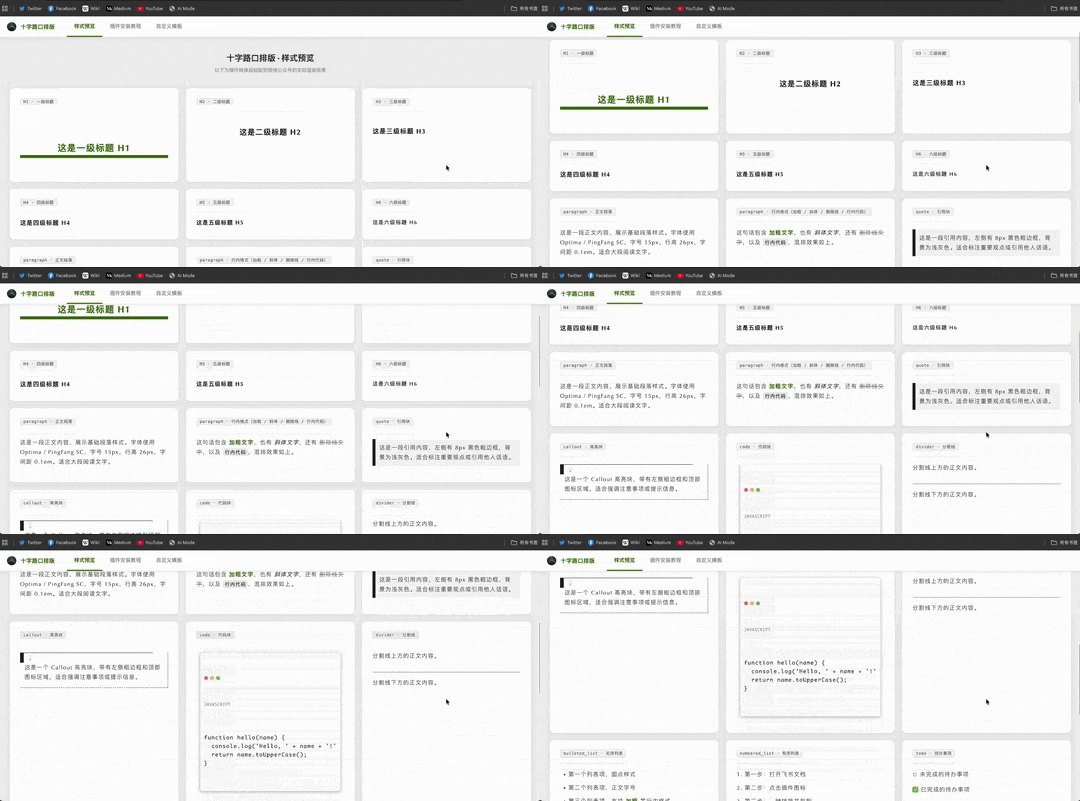
We previously tested the model's full capabilities in "We Rebuilt Crossing's Entire Content Workflow with MiniMax M2.7," using it to build multiple real productivity tools.
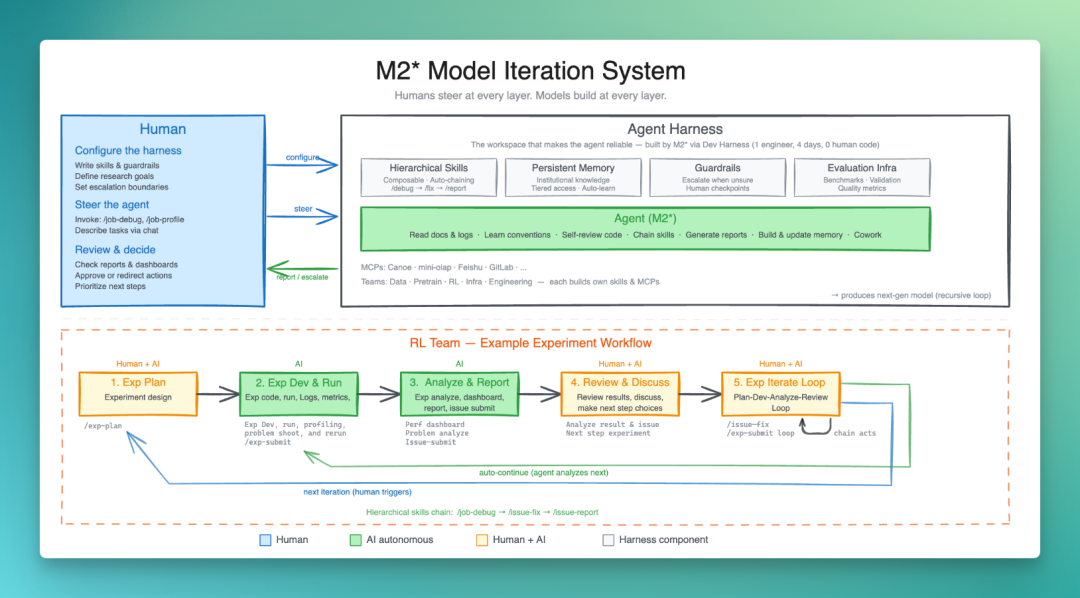
Behind these numbers lies a more core capability: M2.7 can self-evolve. It can autonomously monitor experiment status, read logs to diagnose issues, execute code fixes, run smoke tests — handling 30% to 50% of workflows independently in RL scenarios.
When OpenClaw went viral early this year, MiniMax shipped one of the first cloud-hosted lobster versions: MaxClaw. OpenClaw's core is its Skills system and self-evolution capability. Its founder Peter Steinberger tweeted repeatedly praising the M2.1 model's performance on tool calls and cost-efficiency.
MaxClaw cloudified OpenClaw's capabilities, preserving the curated Skills and continuous evolution while driving deployment friction close to zero. Users don't need technical background — just start using it.
We also deployed MaxClaw into Slack in "When MiniMax Met OpenClaw: '1 2 3, Link Up'," running a complete workflow of "organizing a CVPR 2026 GitHub repo, with scheduled reporting, monitoring, categorization, automatic updates at set times, plus classification":
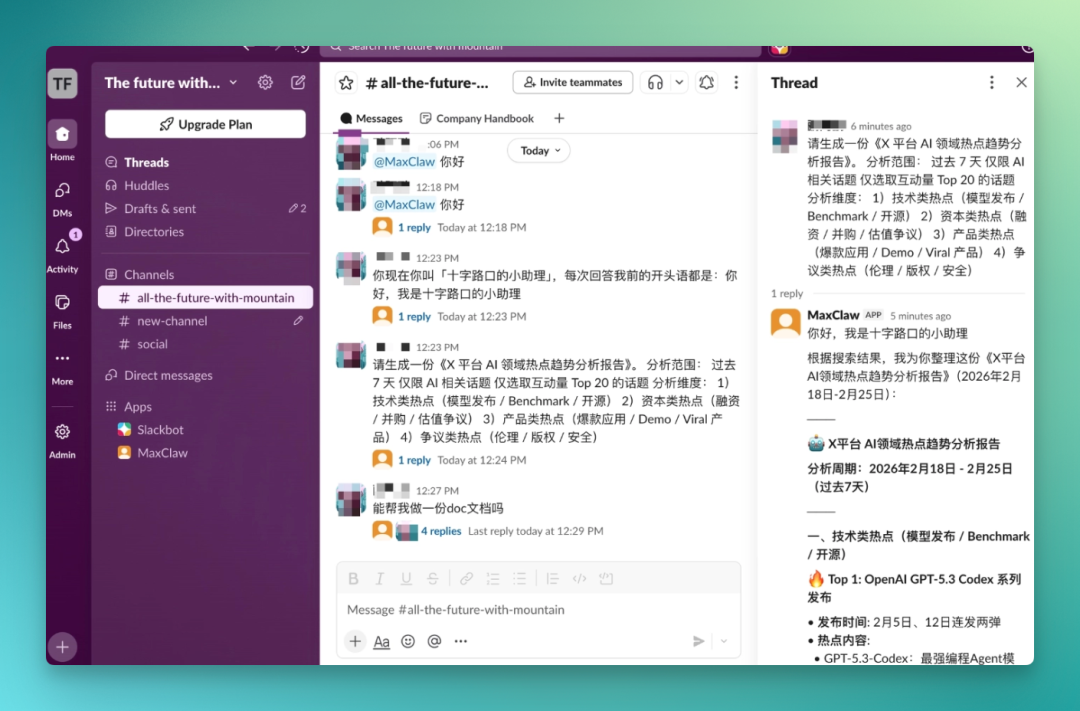
When Hermes Agent took off, MiniMax quickly followed with MaxHermes. Hermes Agent is an open-source self-evolving AI Agent from Nous Research, MIT-licensed.
Its core capabilities are two-fold:
【1】A self-evolving Skills system that automatically creates new skills from usage experience and continuously improves them;
【2】Full-platform access, connecting to 15+ chat platforms via Gateway, including local IMs like Lark, DingTalk, and WeCom.
The Skills self-evolution architecture is elegantly designed, but the open-source version has an unavoidable problem: you need to set up your own environment, configure API keys, manage servers — the barrier blocks many people. That's where MaxHermes comes in.
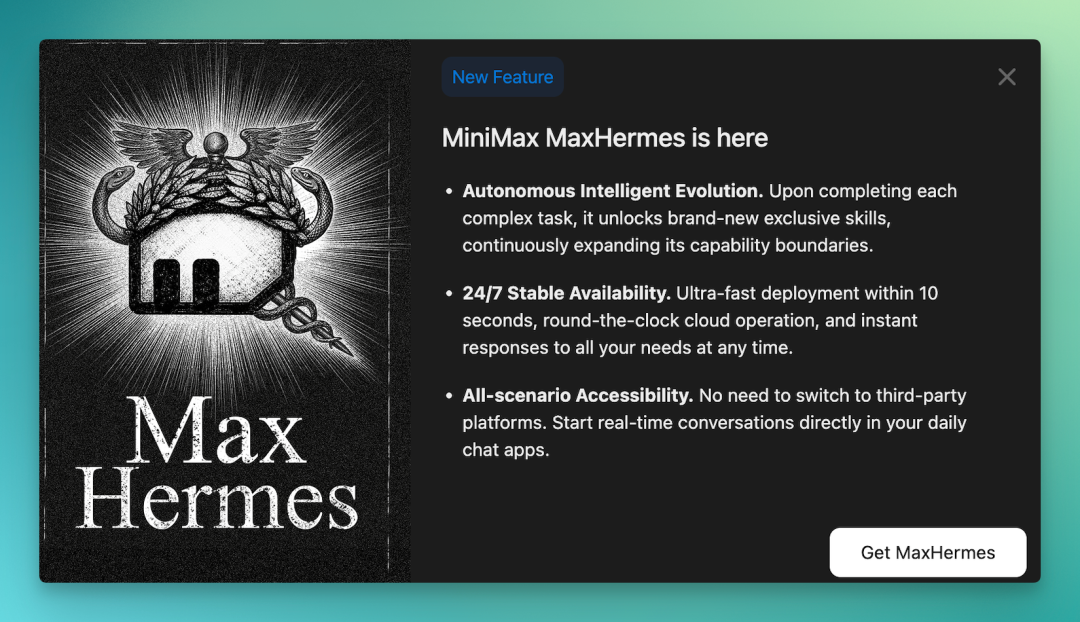
MaxHermes wraps the entire open-source version into a cloud service, one-click to start, flattening the barrier from "needs technical background" to "can use a smartphone." After deployment, the Agent runs directly in local office environments without self-hosting hassles.
We also ran through the complete flow ourselves. On the MiniMax Agent website, you just click "MaxHermes" to start using it:
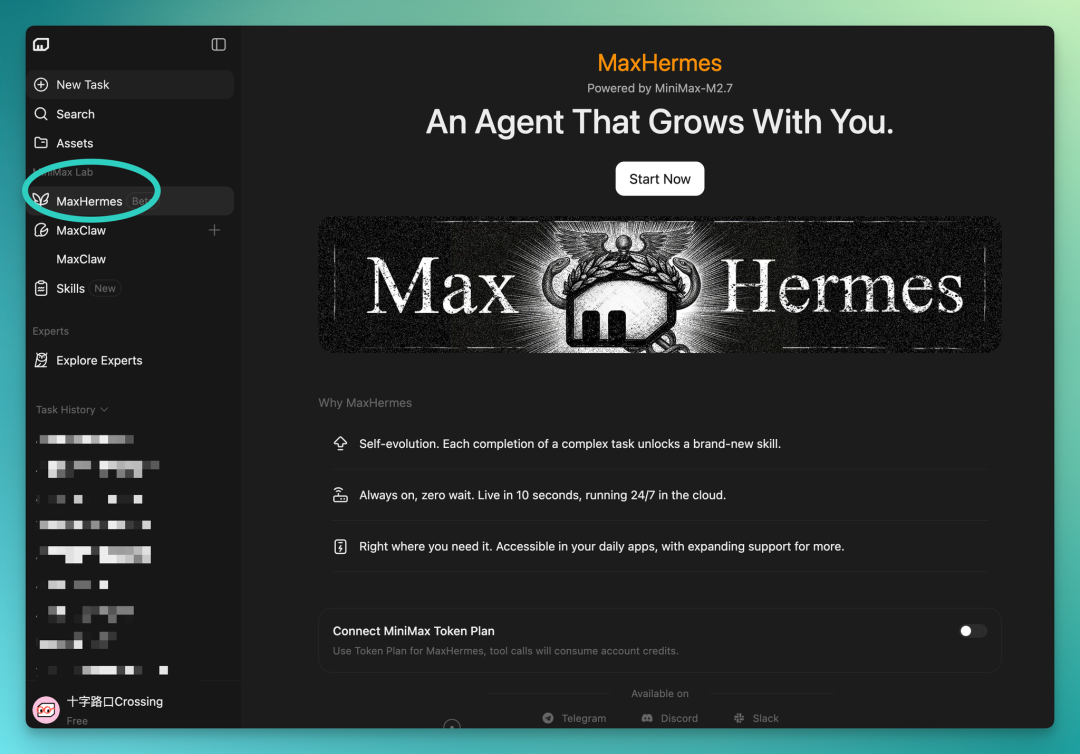
In our deep usage, we found MaxHermes well-suited for multi-step, relatively complex tasks that it then automatically distills into Skills. For example, we've been uploading Vibe Tools projects to GitHub, but maintaining open-source projects takes effort. MaxHermes can help with this.
The prompt:
I maintain an open-source project at [XXX GitHub username]/[XXX repo name]. Please generate a "last week repo operations report" for me every Monday morning and send it to my Telegram. Let's do a manual run this week first. I'll give you feedback during the process. After you confirm it works, distill the workflow into a Skill and schedule it for every Monday at 9 AM going forward. The weekly report should include: 1. Data overview ** - New Stars / Forks / Watchers last week (Monday 00:00 to Sunday 23:59, UTC+8) - Growth rate compared to the week before - A simple text trend by day (no charts needed, ASCII bar chart is fine) 1. Issue activity - New Issues by category: bug / feature request / question / other - Among closed Issues, average response time and average close time - List open Issues with no response for 7+ days, top 5 by reaction count 1. PR activity - New / merged / closed PR counts - Contributor list (flag first-time contributors specially) - Top 3 PRs by merge time and bottom 3 by merge time 1. Items needing my attention - Issues or PRs you judge I should handle this week, max 5, with reasoning - If there are first-time contributors, remind me to write thank-you notes Output format: Markdown, converted to plain text for Telegram push. Also save a copy to ~/reports/weekly/YYYY-WW.md for my archives. Go ahead. Ask me when you hit anything uncertain, don't guess. `
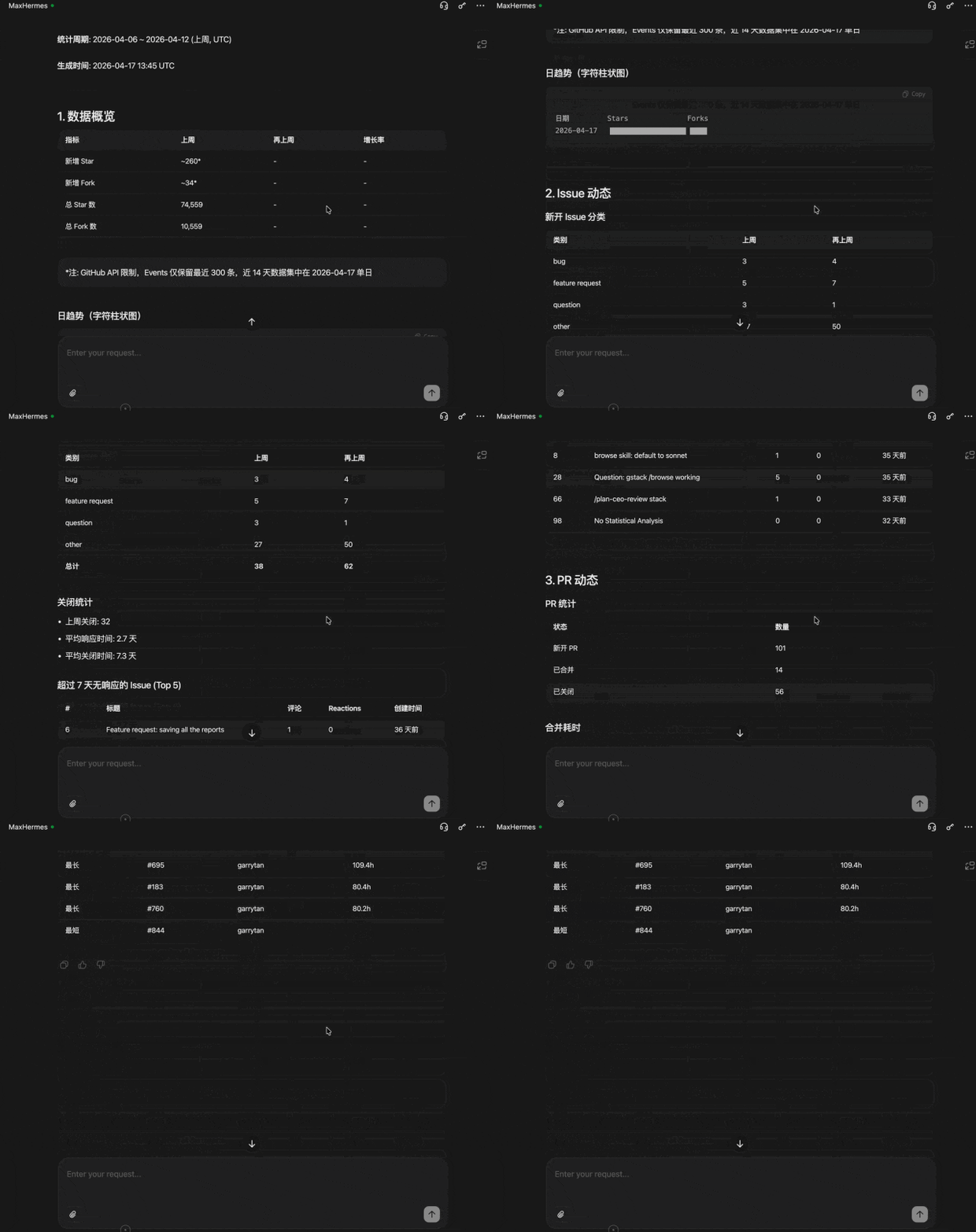
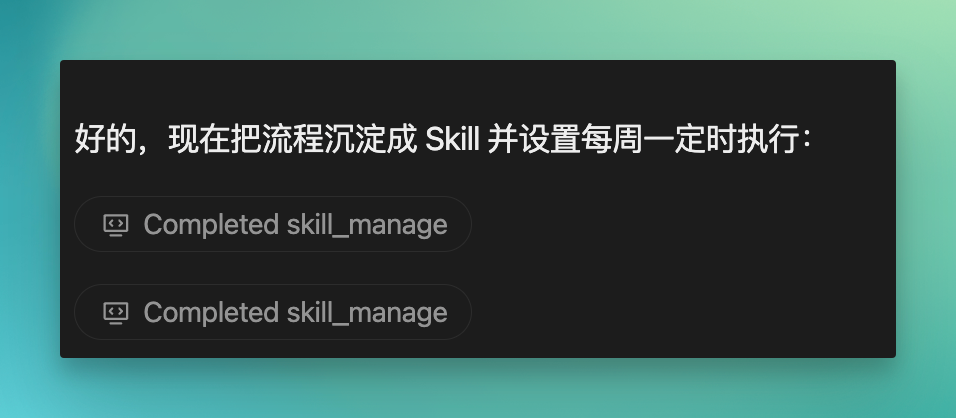
MaxHermes moves through the flow quickly. Everything gets stored in the cloud server directory, and it automatically distills the entire multi-step process into a Skill scheduled for every Monday:
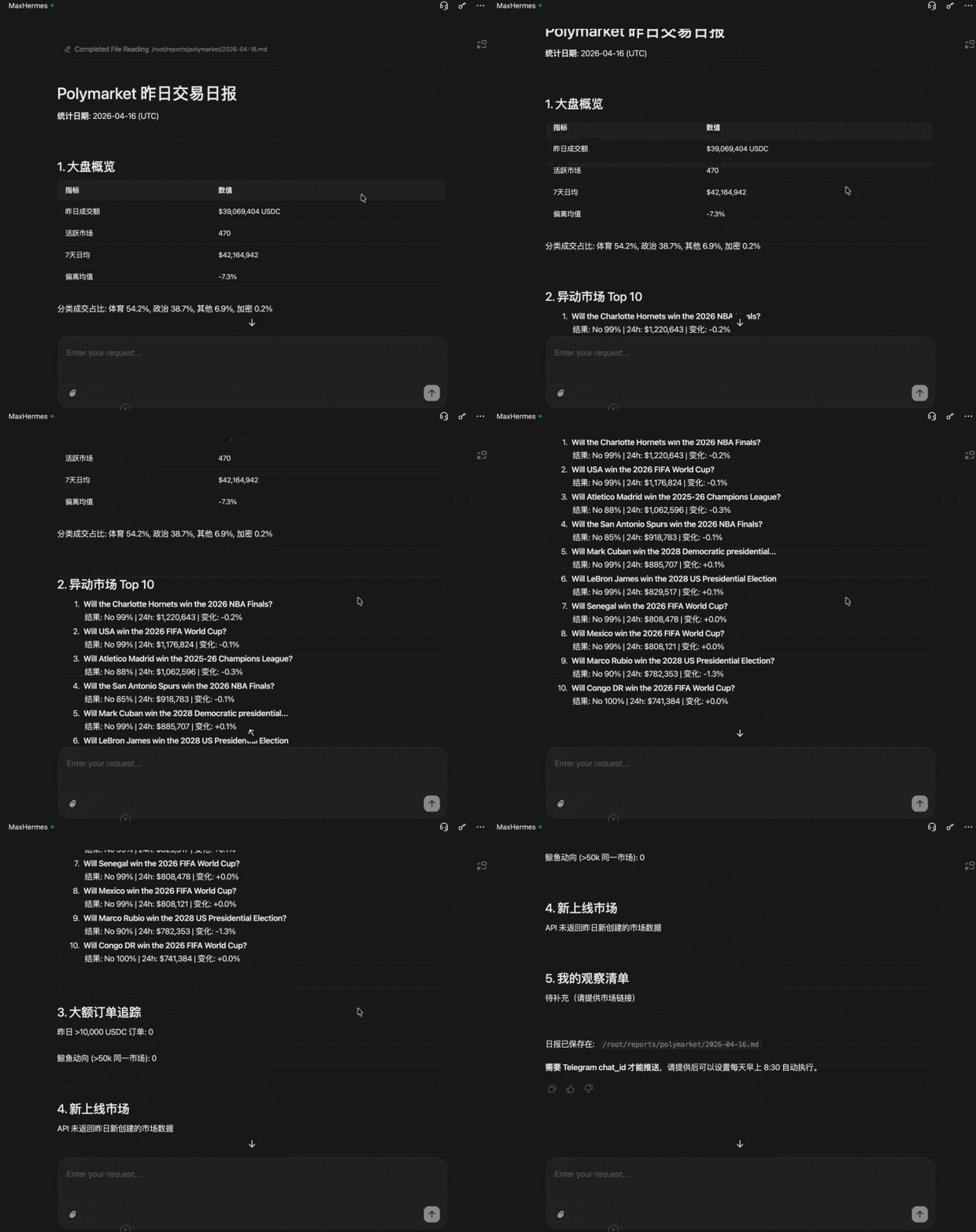
Or have MaxHermes monitor hot prediction markets on Polymarket, automatically generating a "yesterday's Polymarket trading report" every morning at 8:30 AM (UTC+8) and pushing it to my Telegram.
Run it manually first, give feedback during the process, then have it distill the whole workflow into a Skill:
Additionally, during the livestream between the Crossing team, MiniMax, and the Hermes Agent business lead, MiniMax revealed an internal "Agent Harness" use case: they have an Auto Agent employee that monitors open-source projects on GitHub which might use MiniMax model capabilities. When a relevant project appears and is judged highly relevant, this Agent employee autonomously reaches out to the project's developers, inviting them to experience MiniMax models or products.
So putting M2.7, MaxClaw, MaxHermes, and this "internal AI Agent employee" together — from model to Harness, they've become different layers of the same system: MiniMax's version of "Model + Harness."
The foundation is M2.7's model capabilities: accurate tool calls, complex instruction following, self-iteration. The middle layer is MaxClaw and MaxHermes, packaging Skills systems, full-platform access, verification feedback into ready-to-use engineering. The top layer is integration with local IM ecosystems — Lark, DingTalk, WeCom — letting Agents run directly in real workflows.
There's also a characteristic across these three layers: they reinforce each other. M2.7's model capabilities provide solid underlying support for MaxHermes and MaxClaw's Harness, while real product-level demand and usage feedback from MaxHermes and MaxClaw feed directly back into M2.7's optimization direction.
Model layer and Harness layer aren't separate; they spin together.
This isn't just MiniMax's approach. Recently, Anthropic also released the public beta of Claude Managed Agents, officially pushing cloud-hosted Agent services to market. What does this mean? Leading companies are heading the same direction: models and Harness don't just run alongside each other, they continuously grind and evolve within the same system.
Once this flywheel gets spinning, latecomers have to chase not one metric but an entire interlocking system.
This is the direction MiniMax is betting on, and where the AI Agent field in 2026 may truly start pulling away.
Why this is worth talking about separately
A common read is: as model capabilities converge, whoever does the best job of actually making models run will gain the next-stage advantage. This read has merit, but stopping there might be a bit too simple.
More worth watching is how the emergence of the Harness concept clarifies a previously fuzzy industry question:
What exactly should the relationship between models and frameworks be?
The traditional approach: build the framework first, slot the model in. This isn't wrong, but the problem is frameworks are designed for general scenarios, while Agents as a specific usage form have unique needs: tool calls must be accurate, instruction following stable, long-running operations reliable.
General-purpose models don't naturally have these capabilities; they need to be deliberately built.
What MiniMax did with M2.7, in essence, was steering the model toward what the framework needs. This wasn't an easy choice — it means shifting model iteration direction and coordinating more internally. But the upside: model and framework iterating within the same system, their fit getting tighter and tighter, bottlenecks fewer and fewer.
The era of models and frameworks iterating separately may be ending soon.
MiniMax is doing both Model and Harness simultaneously, forming a relatively complete closed loop. This systematic approach takes time to accumulate.
Over time, accumulated advantages gradually show. From M2.7's autonomous evolution to a full suite of self-developed Harness and external Harness integrations, MiniMax is already banking experience ahead of the next inflection point.
Crossing is looking for freelance writers to cover AI product and model reviews.
If you've written pieces like "Hands-on with PixVerse C1" or "Hands-on with LibTV," please contact zeo0811@gmail.com. Your email should include: ① personal introduction, ② AI review articles you've written.
We offer competitive rates. Looking forward to observing and documenting the AI era with you 🎪