ChiNext
创业板
ChiNext is a Chinese stock exchange board that competes with the STAR Market for listings of technology and growth-oriented companies, as described in a 2018 Source Code Capital policy research piece . It operates alongside other Chinese capital market venues such as the New Third Board and the then-proposed Emerging Board, with overlapping stages and industry characteristics but different issuance mechanisms . The Shenzhen Stock Exchange, which hosts ChiNext, is noted as a related entity in elsewhere's knowledge graph . Elsewhere's corpus does not contain additional detailed coverage of ChiNext's specific founding date, listing requirements, or current market position beyond this competitive framing with the STAR Market.
AI-generated — may contain errors, please verify.
Coverage
The Beijing Stock Exchange Sets Sail: A Rational IPO Planning Guide for Startups | Ronghui Practical Insights
CITIC Securities Construction Li Xudong: Key Highlights of the Beijing Stock Exchange Regulatory Framework
Huatai United Securities' Jiang Yu: How Innovative Companies Can Navigate the Path to Listing in the Registration-Based Era | Ronghui
How Can Innovative Companies Seize the Registration-Based IPO Opportunity and Make the Right Capital Strategy Choices?
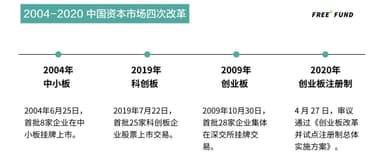
2004–2020: Four Reforms in China's Capital Markets — Who Benefited in the End? (Part 2) | Li Feng Column
Standing at the threshold of ChiNext's registration-based IPO system.
Gaorong Ventures' Chang Chen: Consumer Markets in Third-, Fourth-, and Fifth-Tier Cities Are Full of Opportunity
Third- and fourth-tier cities account for over 63% of total social retail consumption, far surpassing the combined share of first- and second-tier cities.
Capital Markets Welcome Major Reform: What's Behind the Launch of the STAR Market? | Source Code Capital Policy Research
The launch of the STAR Market will reshape China's capital markets into a new dual-track structure: the STAR Market on the Shanghai Stock Exchange and ChiNext on the Shenzhen Stock Exchange. It's a development worth watching.