Institute for Interdisciplinary Information Sciences, Tsinghua University
清华大学交叉信息研究院
The Institute for Interdisciplinary Information Sciences (IIIS) at Tsinghua University is a research institute whose faculty have become a notable pipeline for AI and robotics entrepreneurship in China. Its assistant professors include Yi Wu, a former OpenAI researcher working on multi-agent systems and human-interactive general AI ; Huazhe Xu, who founded home robotics startup Poko Robotics ; and Sunny (Gao Yang), a UC Berkeley PhD who leads research at the intersection of computer vision and robotics . The institute has also supplied technical leadership to quantum computing ventures—Yao Lin, a former associate researcher at IIIS, became CEO of HuaYi Quantum . Related coverage: IIIS faculty and alumni surface in discussions of spatial intelligence and Tsinghua's broader entrepreneur-scientist ecosystem .
AI-generated — may contain errors, please verify.
Coverage
Leading the Angel Round for "Poko Robotics": A Deep Dive with Huazhe Xu on Home Robotics and the "Real Ticket" to Physical AGI | Yunqi Attent!on Podcast
From Smart "Hatching" to Home Embodiment: Stubbornly Original in the AI Wave
Spirit AI's Yang Gao: Scientists Aren't the Most "Reliable" Entrepreneurs, But Building a Startup Is Like Playing a Game | Oasis Vitality
Counselor on Vitality
Spirit AI Closes Angel+ Round, Accelerating Commercial Rollout | Oasis Capital Vitality
Counselor on Vitality
Two Roads Diverge, But You Can't Travel Both | 2024 · Under 36
Make your choice.
How 28 Young People Spent 33 Hours on an Island
A celebration means something when it's shared.
Large Models Are Just the Beginning: Toward a Future of Multi-Agent Systems and Close Human Collaboration
Oasis Capital in Conversation with Professor Wu Yi: The Golden Age Brought by the Bubble
Open Source Drives Progress
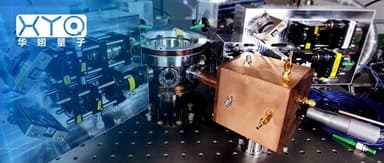
A Conversation with HuaYi Quantum: Unveiling Its First-Generation Ion Trap Quantum Computer, with World-Leading Performance | Gaorong Ventures
Twenty-five years of technical groundwork in quantum computing, six months to assemble the first commercial prototype.