MaHui Founders | From 0 to 1 to 23.4 Reading Week: "Startup Thinking"

Your journey for World Book Day starts here.
#MaHui Entrepreneurs — Resilient and Bold, Exploring Without End
Guadalajara, Mexico's second-largest city and capital of Jalisco state, was discovered in the 14th century by Spanish explorer Cristóbal de Oñate and formally founded in 1542. This ancient city is renowned for tequila production, a bastion of traditional culture, and also a major tech and financial hub in Latin America. This year, UNESCO named it "World Book Capital." Our World Book Day journey begins here.
Carlos Fuentes, Mexico's national literary treasure, once said that literature transcends history because it lets you experience diverse lives. Literature expands experience and opens doors to new opportunities. We are entrepreneurs, it seems, also using our lived experiences to sense those doors of opportunity — opportunities that come from elevated cognition, and cognition is often itself a shift in thinking patterns.
Thinking is composed of innate assumptions, but even more so, it is a tool we can continuously iterate and improve upon ourselves. Today's reading list features ten books, from Where Good Ideas Come From to The Great Self, from Algorithms to Live By to Finite and Infinite Games, empowering MaHui entrepreneurs to keep exploring — on the eve of April 23rd's World Book Day, setting out again from zero to one.
This Issue's Reading List
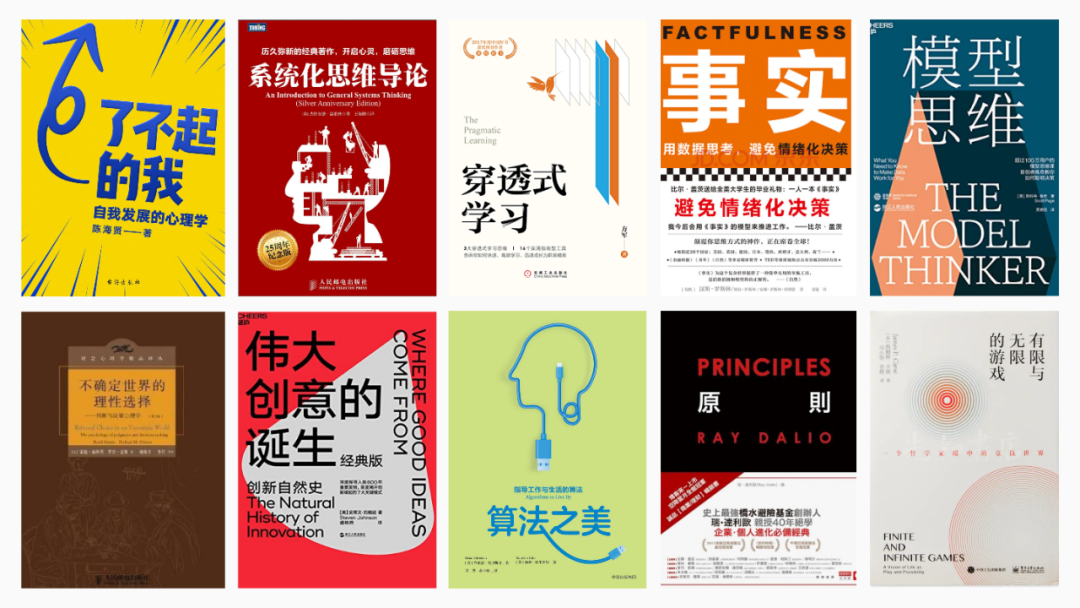
Click the images below in order to view details
01
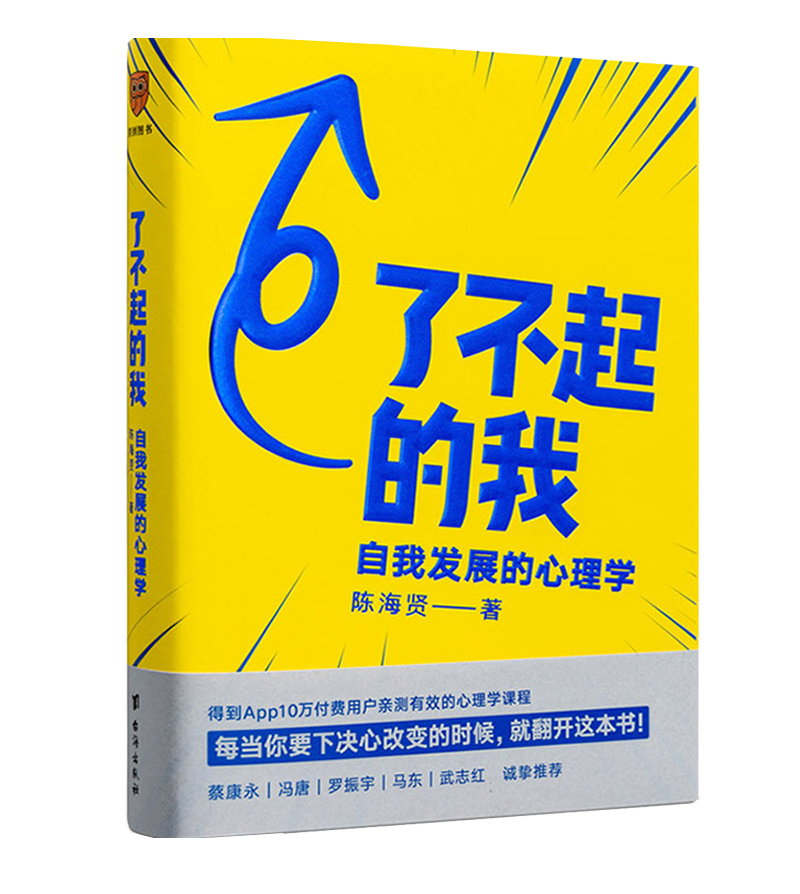
The Great Self
"
Why We Recommend It
This is a book suited for readers of all backgrounds and ages. The title sounds like "chicken soup for the soul," but it's actually a psychology book with zero connection to that genre.
A key reason for its strong reader reputation: no motivational hype, no inspirational platitudes. Instead, it offers a series of practical tools for change and personal development, tackling life's real problems head-on. How do you build a new habit? How do you mature your thinking? How do you cultivate high-quality relationships? How do you get through life's difficult moments?
The author, Haixian Chen, holds a PhD in psychology from Zhejiang University and has 13 years of counseling experience, specializing in positive psychology. In the book, he draws on multiple psychological schools of thought to address questions everyone faces, organized across five levels — behavior, thinking, relationships, plateau periods, and life maps — and provides a systematic method for achieving breakthroughs in life.
People love to say that transformation is hard. This book doesn't just explain the psychological principles behind change; it also tells you how to take that first small step and accumulate experience with transformation. You're certain to see yourself in its pages and discover many new, unexpected insights.
For entrepreneurs, this book offers an infinitely inward-looking perspective, prompting constant self-examination and examination of your relationship with everything around you, ultimately making change happen.
Recommended Chapters
Chapter 2: Advancing the Evolution of Thinking
Should-thinking toward ourselves: Why we can't accept who we are
Near thinking: How to move beyond anxiety
Chapter 3: Developing the Self in Relationships
The self in relationships: From individual perspective to relational perspective
The language of relationships: The code of interpersonal dynamics
Three stages of self-development: How to become more mature
"
02
An Introduction to General Systems Thinking

"
Why We Recommend It
This is a book that triggers "aha" moments. It summarizes general principles people have learned from exploring various systems. "It turns many isolated disciplines into a meaningful whole, and connects these disciplines with work experience." "This book attempts to teach a way of thinking for situations without labels, or where labels are misleading." Entrepreneurs are people who make money within the boundaries of their own cognition, while simultaneously facing uncertainty constantly — making this book especially valuable in such circumstances.
The author, Gerald Weinberg, is one of the most renowned experts in software and a representative figure in the U.S. Computer Hall of Fame. Consequently, the book inevitably carries some computer field conventions in its expression, which may feel somewhat obtuse to certain readers. But even setting aside the terminology, we can still perceive a kind of wisdom throughout. The book employs "general systems methods" to synthesize different thinking models.
In any system, beyond focusing on individual entities, one must attend to relationships between entities, patterns of interaction, and surrounding "environments" or rules — furthermore, the observer's own characteristics must be considered. This is the thinking model the author provides. With it, we come to see that many systems around us have merely been examined through blind men's grasping at an elephant.
Recommended Chapters
Chapter 1: Problems: Some easily overlooked problems and some foundational principles
Chapter 4: Interpretations of observation: The observer is also part of the system
Chapter 7: Some systems problems: Three important questions that dominate general systems thinking
"
03
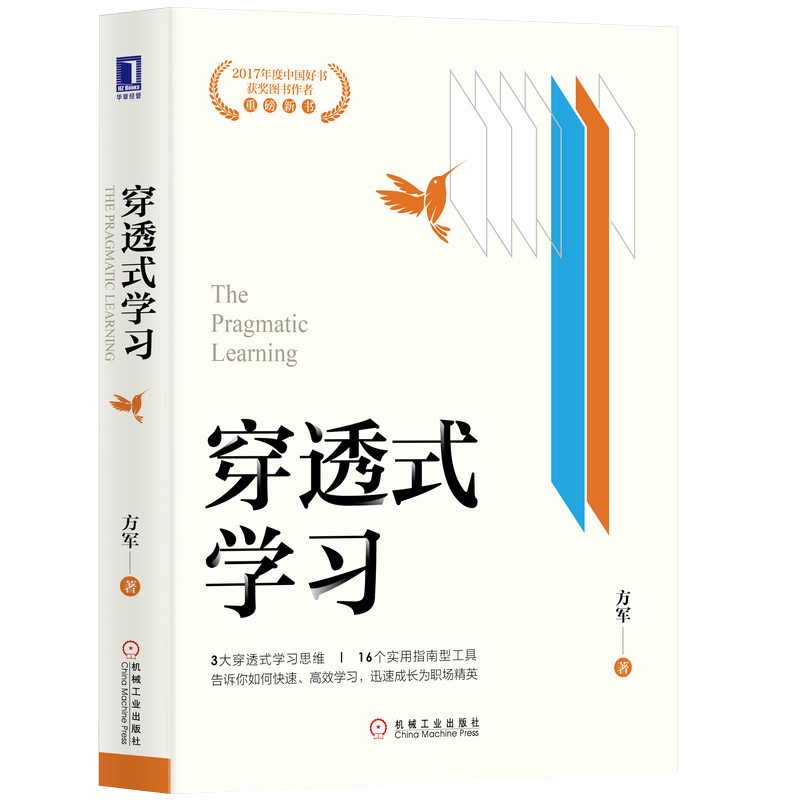
Penetrating Learning
"
Why We Recommend It
First, this book provides a complete methodology for individual learners. The author proposes two foundational principles — "the goal of learning is to possess an effective personal knowledge system" and "learning requires moving between the world of knowledge and the world of action" — using one through-line to unify familiar theories and tools including the "learning pyramid," "minimum viable product," and "Pyramid Principle and MECE rule" into a ready-to-use learning method. After reading this book, readers should be able to achieve preliminary mastery of knowledge in a given field within a relatively short time, with both comprehensive vision and deep insight.
Second, the book also provides entrepreneurs with effective tools for building learning organizations. The author integrates "learning" with his years of experience in internet entrepreneurship and company management, distilling several common on-the-job learning dilemmas employees face and their solutions. Examples include using design sprints to guide a learning project, directly applying Toyota's one-page report as a task management tool, and incorporating deliberate practice into talent development system design, among many others.
The book's strengths are threefold: first, it draws broadly from many sources, offering high ROI on learning; second, the author's internet company management experience allows him to integrate executable methods and tools into scenarios closest to our daily work; third, readers can simultaneously take existing knowledge in a given field as practice material to organize while reading. When the book is finished, the knowledge framework is also complete in the reader's mind — a uniquely satisfying and practical experience.
"The so-called masters don't possess knowledge and skills we don't know; rather, they have the ability to solve problems in complex, unpredictable reality — that is, the ability to figure things out on their own." Isn't this precisely the ability entrepreneurs need?
Recommended Chapters
Thinking: How to transform what you've learned into capability, how to form your own knowledge system
Methods: How to make learning plans, how to practice deliberately, how to achieve deep focus, how to get hands-on
"
04
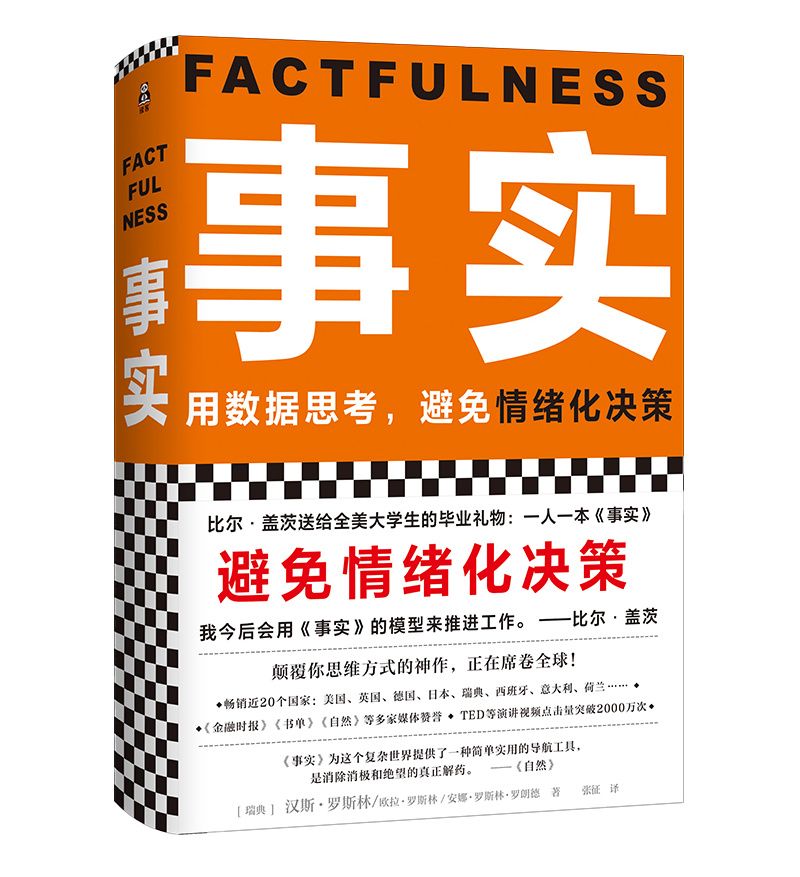
Factfulness
"
Why We Recommend It
We've recommended books about how to think; this one provides materials for thinking.
This book aims to help readers avoid being swept along by emotional instincts and excessively emotional worldviews. To this end, the author presents many facts that violate general intuition or "common sense." The author also tries to make readers more optimistic, less tense, and more hopeful after reading, using extensive data and charts to prove: the world is getting better.
The book also summarizes ten thinking instincts that mislead cognition, such as the binary instinct and the generalization instinct. Books pointing out these thinking pitfalls are common, but this one provides interesting examples that refresh judgments readers may hold without awareness. The author also gives specific advice at the end of each chapter for overcoming thinking instincts and making better decisions.
Even when we understand the limitations of thinking instincts in daily life, we rarely have dedicated opportunities to apply new thinking tools to collect data, analyze phenomena, and upgrade our cognition. This book is more like a smooth, pragmatic, globally-minded thinking exercise — gaining new knowledge through an enjoyable reading experience. Moreover, recent sudden events and environmental turmoil have been draining; the author's optimistic tendency can also serve as a comforting force, helping everyone move forward more resolutely.
Recommended Chapters
Chapter 1: The Gap Instinct
Chapter 8: The Single Perspective Instinct
"
05
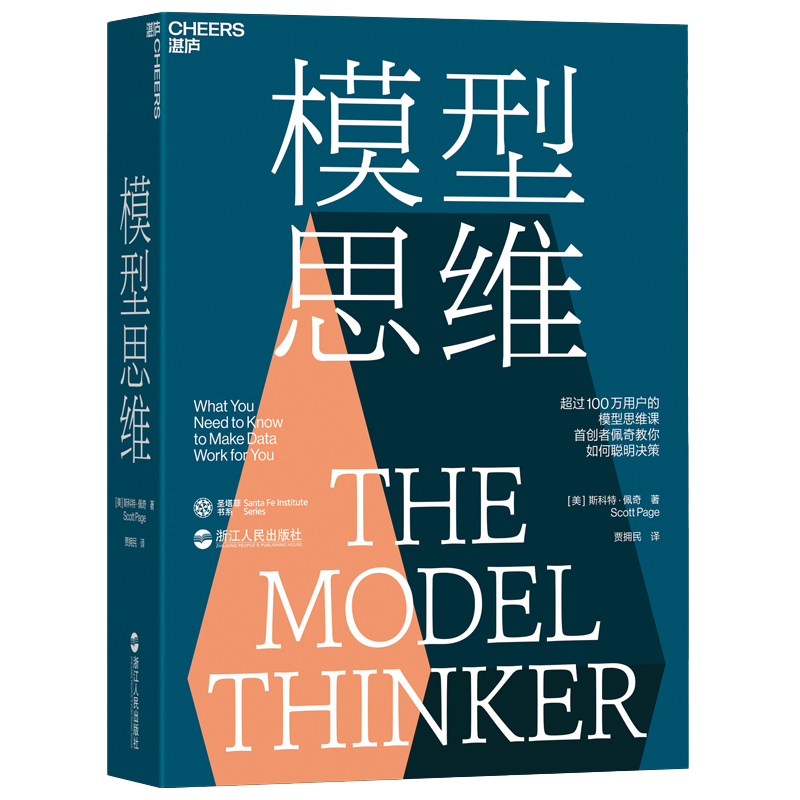
The Model Thinker
"
Why We Recommend It
This book presents 24 models covering directions valuable to entrepreneurs: innovation, prediction, data processing, learning, and market entry timing. Note that the models listed here differ from thinking paths we commonly call "endgame thinking" or "essence thinking" — they more often provide underlying logic for explaining certain phenomena through mathematical and economic models, closer to "technique" than "principle."
Second, wisdom is the ability to recognize and apply relevant knowledge. Sometimes wisdom manifests in knowing how to select the optimal model; wise individuals and teams intentionally let models "dialogue" with each other, exploring overlaps and differences between models. The book's core idea: wisdom requires multi-model thinking. A single model is "looking at a leopard through a tube"; multi-model thinking can eliminate the blind spots caused by single models, achieving "multiple approaches simultaneously."
Entrepreneurs face information volumes that may be several times those of ordinary managers, and often must make judgments under tight time constraints and enormous pressure — requiring us to think as comprehensively and rigorously as possible, making the construction of our own model networks especially necessary. A single model provides a starting point for thinking, while multi-model thinking lets us examine events with dynamic, organic vision, thereby making correct decisions.
Recommended Chapters
Chapters 2–3: On multi-model thinking methods
Chapter 9: Models related to value and power
Chapter 18: System dynamics models
Chapter 20: Spatial competition models and enjoyment competition models
"
06
Rational Choice in an Uncertain World

"
Why We Recommend It
Excellent leaders use the "unknown" embedded in choices as forward momentum, while ordinary CEOs always respond passively. This book can serve as a prescription for choice paralysis. Of course, we think it may be even more suited to helping CEOs become excellent leaders.
Excellent leaders must have high decision hit rates and continuously reduce the intellectual resources decisions consume, enabling more important decisions. But mastering this skill has two prerequisites: first, acknowledging that we live in uncertainty; second, ensuring we make decisions rationally rather than emotionally.
On uncertainty: There's Schrödinger's cat uncertainty, and then there's unknown unknowns. In this book, the author explains the importance of separating evaluation and decision-making for improving decision efficiency and effectiveness.
On rationality: Very few people are willing to admit they're making irrational decisions. In this book, the author discusses common mistakes we make and provides classic frameworks to help us avoid them.
In this book, the author attempts to establish a data-driven decision-making system — precisely where many companies have weaknesses. What data should decisions use, how to use that data, and how to obtain it are questions every company should seriously explore.
Recommended Chapters
Chapter 2: When we're making decisions, what are we actually doing?
Chapters 3–4: Decision frameworks we commonly use, and problems within them
Chapter 8: How we should scientifically incorporate uncertainty into decisions
Chapter 10: A mathematically axiomatized rational decision theory — rather hardcore, for the curious to challenge themselves
"
07
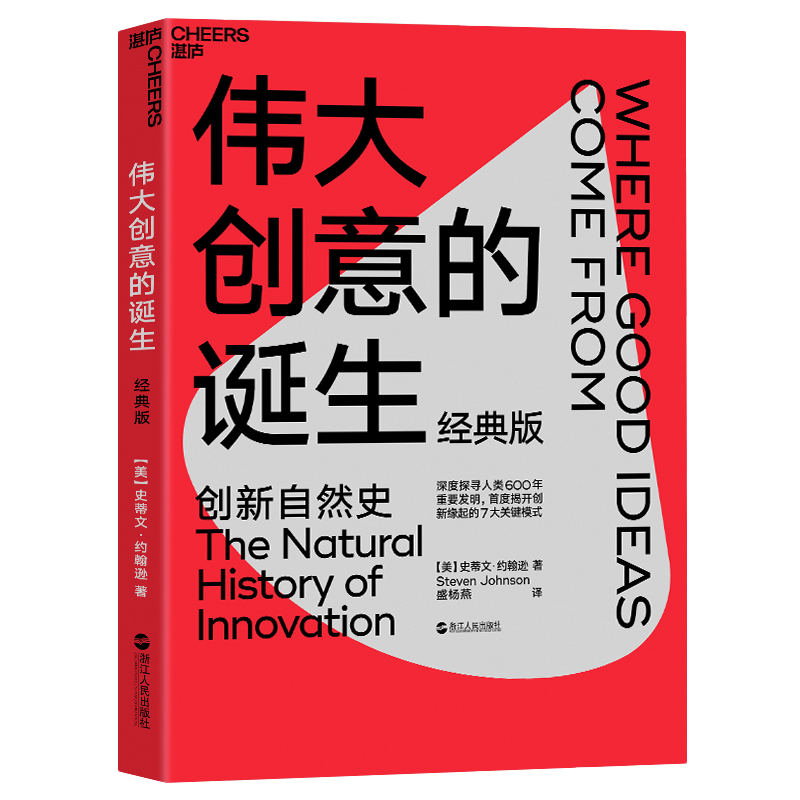
Where Good Ideas Come From
Why We Recommend It
Whether trying to gain competitive advantage in business battles of life and death, or leading an enterprise toward enduring greatness, CEOs cannot escape this challenge: how to continuously generate innovative inspiration?
To answer this question, this book examines the most important scientists and inventors before the 21st century, scrutinizing where their ideas came from and what elements facilitated the emergence of inspiration.
A "dehydrated" secret: create more scenarios for discussion with others — they can provide new ideas and also identify important revelations from what you thought was noise and error; an intuition may need to gestate in the mind for a long time before connecting with other ideas, correct ideas make you stay put while mistakes force you to keep exploring...
But we don't recommend stopping there. Because like the invention process itself, understanding something also requires time to absorb, associate, pause, and err. Thinking through reading, colliding external ideas with your own existing concepts — this is an essential path to refining your understanding.
Notably, the appendix's "Chronology of Important Human Inventions and Innovations Over 600 Years" and the conclusion's four-quadrant classification of innovations across different periods are eye-opening — unmissable for friends interested in the progress of scientific civilization.
Recommended Chapters
Chapter 1: What constraints does innovation face, and what are its boundaries
Chapters 2–3: Good ideas come from a fully connected neural network, not a single neuron
Chapter 5: Innovation cannot be born in a "sterile" environment; it needs noise and dissent
Conclusion and Appendix
08
Algorithms to Live By

Why We Recommend It
You've likely experienced "AI panic" — worrying that machines are surpassing humans in more and more jobs. But flip the perspective: what can humans learn from how computers work? In the everyday problems humans face, have computers already explored better solutions?
This book's goal is to translate the wisdom of computer science into strategies for human life. You might find comparing algorithms to human life somewhat odd, but in fact, algorithms have been part of human life since the Stone Age.
The essence of an algorithm is a sequence of steps for solving problems, and the fundamental problems facing humans and computers are remarkably similar: how to make decisions and act under limited time, limited space, limited attention, incomplete information, and an unpredictable future. Bayes' formula and simulated annealing in the book may feel challenging, but don't worry — it's fine not to fully understand them. What matters most is gaining a new vocabulary for describing the world around you and fresh perspectives for understanding yourself.
Recommended Chapters
Chapter 1: Optimal stopping theory: When to stop looking
Chapter 2: Explore/exploit: The latest or the greatest
Chapter 7: Overfitting: Don't think too much
Chapter 11: Game theory: Thinking about what others are thinking
Conclusion: Computational kindness
09
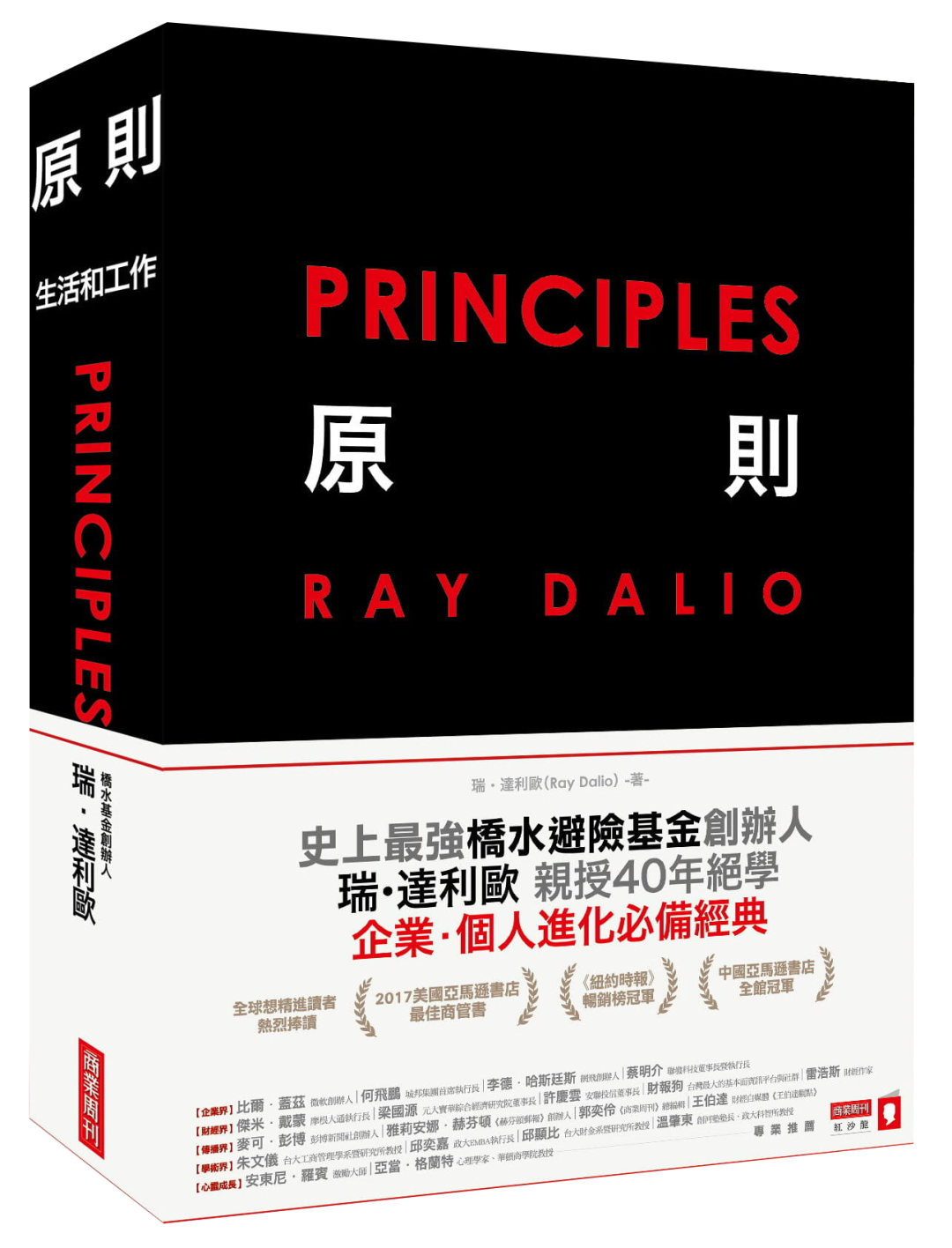
Principles
Why We Recommend It
Many have had this experience: feeling fired up and broadened when reading a master's secrets, only to return to trivial details days later, having returned everything the master taught. What's missing in between is practice and persistence. Reading principles is one thing, taking notes is another, persistent practice is another, and internalization is yet another. Reading principles alone may seem somewhat dry. But connecting them with your own practice of building enterprises and cultivating culture creates much stronger resonance. If you can also extract several of your own principles after reading, this book's value will be maximized.
10
Finite and Infinite Games

Why We Recommend It
Metaphysical yet deeply everyday; after reading, there's a feeling of "this is exactly what I knew before but couldn't accurately express"; but there are also some difficult passages requiring repeated chewing to understand.
Finite games exist in abundance, but there is only one infinite game. We should strive to break free from various finite games, participating in this unique journey of life with the identity of finite players but the mindset of infinite players. Additionally, the book explains worldviews and their products from finite and infinite game perspectives through contrasts between familiar concepts like power vs. strength, culture vs. society.
Life's beginning and end seem to start from chance and return to impermanence, neither within our control — this appears to be a destined tragedy; but from the dimension of time, the trajectory between these two points isn't optimal simply because "the shortest distance between two points is a straight line" — this requires participating with an infinite game mindset.
The world is a super-large infinite game filled with finite games, but human society particularly favors finite games. We can adopt a broader perspective, trying to ask ourselves several progressive questions without being limited by conventional thinking; stripping away the outer garments of various views reveals that the world was originally an infinite game — the game constraints we feel are self-imposed, participation is entirely voluntary. Equanimity comes from recognizing what you can and cannot do — if one understands this, most people actually have sufficiently good conditions to participate in this infinite game.
Recommended Chapters
Chapters 1, 2, and 7
- MaHui Entrepreneurs | Exploration Never "Extinguished," Saluting the Spirit of Aerospace
- MaHui Entrepreneurs | Your Moment of "Joy, Anger, Sorrow, Delight" Could Awaken 2 Million Children with Autism
- MaHui Entrepreneurs | Sleep Well, Then Explore a More Awake Entrepreneurial Life
- MaHui Entrepreneurs | When Entrepreneurship Becomes Their Way of Life
- James Webb Space Telescope Launches, Exploring the Infinite
- Source Code Capital's Hongjiang Zhang Elected Foreign Member of U.S. National Academy of Engineering
- GalaxySpace's Seven Satellites, One Rocket
- The Cross-Disciplinary Intersection of "Technology + Biomedical," A New Consensus on Convergent Innovation Investment
- Source Code Capital Completes RMB Fund V Raise: Driving Technological Innovation, Empowering SMEs
- 2021, Original Aspiration Is the Future