Hongjiang Zhang in Conversation with Zexiang Li: How to Break Through in Tech Entrepreneurship | Code Meet 2018

A better model for tech startups is to go from scenario to technology.
On April 20, Source Code Capital's 2018 Code Meeting annual conference, themed "Open Source Iteration · Decoding the Future," was held in Beijing. Zhang Peng, founder and president of GeekPark, Dr. Hongjiang Zhang, investment partner at Source Code Capital, and Professor Zexiang Li — chairman of Googol Technology and Songshan Lake Robotics Industrial Park, and professor at The Hong Kong University of Science and Technology — jointly explored the hottest topic of the moment: the current state, trends, and challenges of "tech entrepreneurship," and how to better integrate it with business.
"We shouldn't start a business by working backward from technology to find scenarios. We need to go from scenario to technology. China's economy, manufacturing sector, and internet industry have grown so massive today — there are too many problems in between that can be solved with Internet+ and AI+. We should look at it from this angle. This also echoes what was said earlier: scientist entrepreneurs tend to go from technology toward scenarios, but the better model is to go from scenario toward technology."
Quotes:
- AI as a tool is, at least for now, very important. It will be involved in every field, especially manufacturing, where it will have major applications. But don't forget one crucial point: it's just one of many tools.
- Over the past three decades, both industry and technology have changed enormously, but our education model hasn't changed much compared to thirty years ago — it's still the planned-economy model.
- When schools encourage different ways of cultivating students, you won't worry about producing graduates who are all cut from the same cloth. The talent you need at that point is diverse. This is where China's education system needs to improve.
- They eventually found that in the process of recruiting, many people who were very high-profile in academia were passed over; those who remained were often people genuinely interested in the business.
- If a candidate is interested in your business, they'll find every possible way to apply technology to it. These are the people a company needs most.
- If you're doing AI for AI's sake, apart from burning through piles of investors' money or churning out one app after another, you won't get very good results. The belief that no matter what problem or business model, simply adding AI will solve it — this view is very dangerous.
- Think about your business today: which parts can be digitized, which can be software-ized, which can be systematized? This is our opportunity to overtake on the curve, and also the opportunity to build systems for the future.
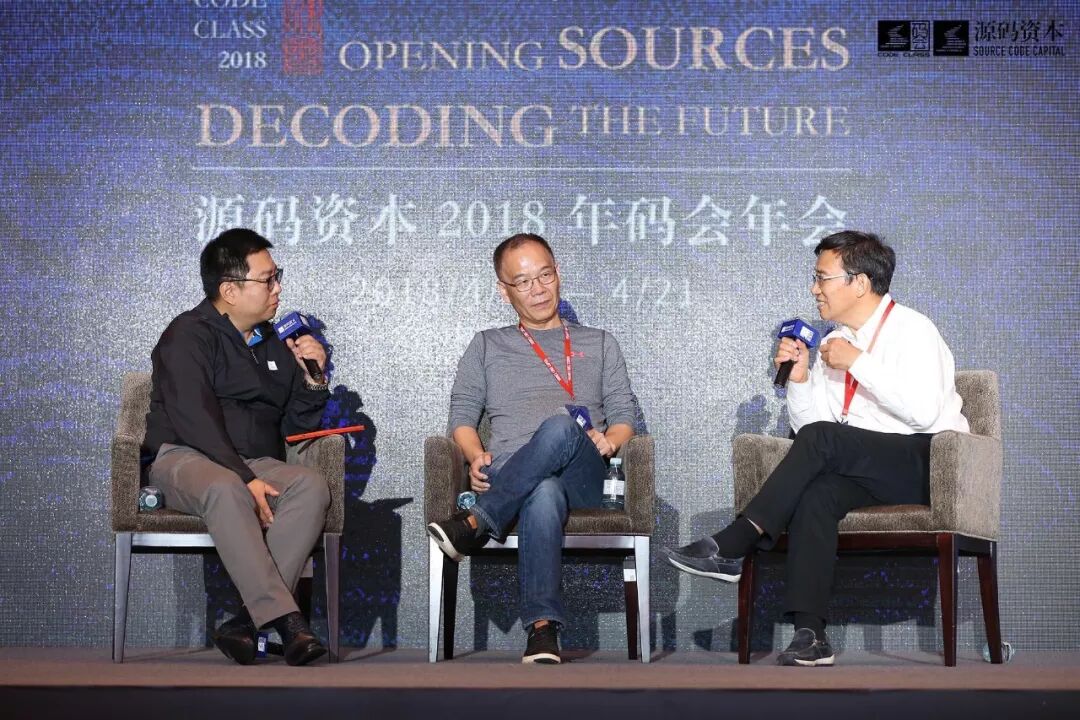
From left: Zhang Peng, Dr. Hongjiang Zhang, Professor Zexiang Li
Full transcript of the forum session
GeekPark Zhang Peng: The two guests in this conversation are both connected to technology. One is Dr. Hongjiang Zhang, investment partner at Source Code Capital; the other is Professor Zexiang Li, chairman of Googol Technology and Songshan Lake Robotics Industrial Park, and professor at The Hong Kong University of Science and Technology. Both are scientists I deeply respect. Today we'd like to discuss three topics: How can new companies break through in the tech industry? How do we retain talent to support the industry's development? And what are the major technology trends? Professor Li is highly respected in the industry. You were an early supporter and champion of DJI, and now you have new ideas around the Songshan Lake Robotics Industrial Park. Could you introduce this idea and how it came about?
Professor Zexiang Li: The founding of Songshan Lake Robotics Industrial Park was actually the accumulation of a very long process. I returned to The Hong Kong University of Science and Technology in 1992, and my research direction has always been in robotics and automation. HKUST was a new university established 26 years ago, positioned as a modern research university. Hong Kong had several universities before, but they had always focused primarily on teaching, with research being secondary. Whether it was possible to build a modern research university on Chinese soil was the challenge the school faced at the time. After 20 years of development, HKUST has become a globally recognized research university, essentially achieving its original goal. There was also a large group of people like me who had attended high school and university in mainland China, then gone to Europe or America for graduate studies and PhDs, but had always wanted to come back and do something — and finally ended up at HKUST.
Coming to HKUST to build a modern research system was indeed our early goal. If I were just doing research, I believe I could have stayed in America. But HKUST had a uniquely advantageous condition: we are right next to Shenzhen, right next to the Pearl River Delta — places where manufacturing has been highly active over the past 20-plus years. I wondered whether it might be possible to connect HKUST's education and research with the Pearl River Delta's manufacturing. Later, in Shenzhen, my colleagues and I founded our first company, Googol Technology — China's first motion control company. Through the entrepreneurial process, I gained many valuable insights, such as what kind of students and what capabilities are needed to stand firm on the front lines of industry.
1 Scientist Entrepreneurs
GeekPark Zhang Peng: In the past two years, I've noticed a trend: many researchers are shifting toward becoming entrepreneurs. For these researchers making the transition, how do we evaluate whether someone will be an excellent entrepreneur?
Professor Zexiang Li: We've found that students and researchers who perform very well in school may not actually be suited for entrepreneurship. So we need to determine what else is needed for professors and students to excel on both fronts. This is also why we founded the Songshan Lake Robotics Industrial Park — not just to build a robotics industry, but more importantly to gather more experience and data for the school's education.
Dr. Hongjiang Zhang: What Zexiang just said was excellent. Researchers who do very good work, especially those who do very good theoretical work, generally have a higher probability of failure when they come out to start businesses than entrepreneurs who have spent considerable time in companies. There are several factors worth examining, such as their motivation and ideas for starting a business — whether it's something they genuinely enjoy; whether it's something they're good at and prepared for. What you fear most is following trends. Recently AI has become a fad, causing some professors and research institute researchers to suddenly think: if I come out and start a business, maybe I can become a billionaire too; I can be like certain people, running from one forum to another, basking in the limelight. People like this who come out to start businesses carry enormous risk.
We've seen many AI companies where several researchers are quite capable, but they came out to start businesses without having thought through application scenarios at all. Many of you here are in investment. So much money blindly pouring into the industry has allowed startups that should have stumbled, woken up, and then thought things through properly to instead keep going without falling. This has a very negative impact on the industry.
I particularly agree with Zexiang's thinking. The talent needed for entrepreneurship and the talent needed for research and technology in universities actually have different dimensions and requirements. In entrepreneurship, you should be thinking: what is the future product? How is it different from your competitors? What role can your technology actually play in which product? People who research technology often see a product as 90% complete. But we who work in technology know that technology only gets you up the first step. Whether you can reach the second and third steps depends on your ability to respond to the market, your ability to raise financing, and a series of other factors叠加 together. I believe that when researchers and professors come out to start businesses, they must first think this through clearly.
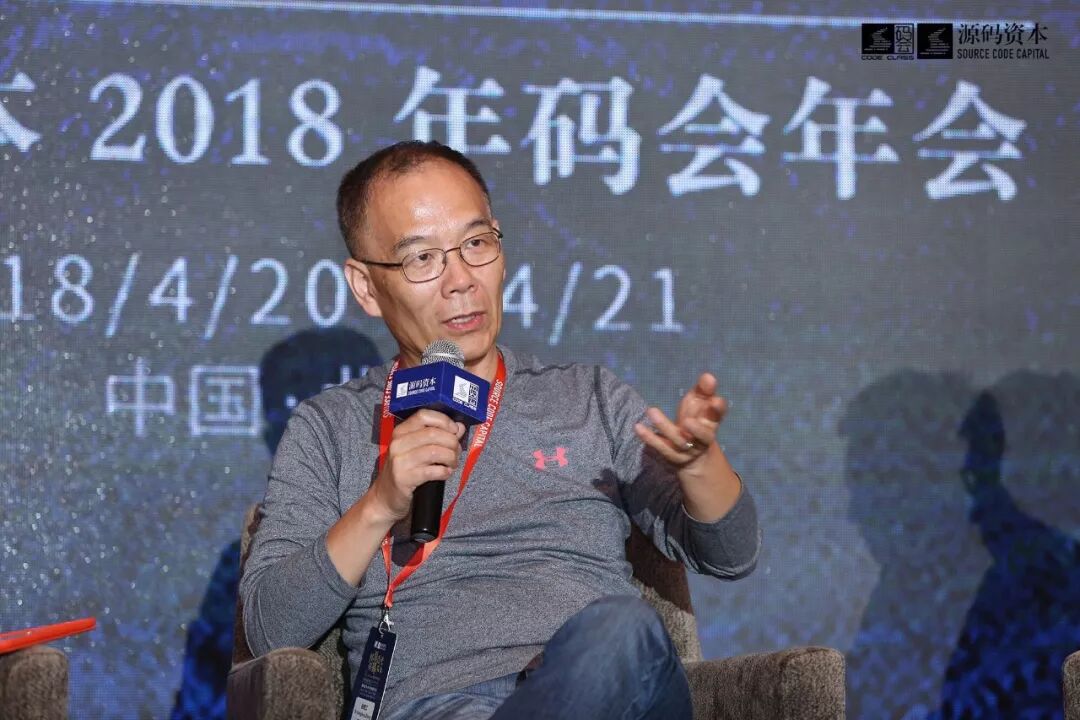
Hongjiang Zhang, Investment Partner, Source Code Capital
2 Urgently Needed: A Diversified Talent Cultivation System
GeekPark Zhang Peng: Not all scientists are naturally suited for entrepreneurship. They may need to fill in gaps from what was missing in their original education system, or find good business partners. This happens to connect to education. Many people say China's education system is relatively backward compared to Europe and America — at least in terms of business innovation. What approaches are needed to build an innovation-friendly system? In the next two to three decades, cultivating people is crucial. Our generation may have seen the opportunities, but going further, if we don't have generations of excellent people, many opportunities won't materialize. How do we cultivate these people?
Professor Zexiang Li: We can see that entrepreneurship is increasingly connected to technology, especially technology that requires accumulation. Today, without good technological tools, it's very difficult to start a business. Over the past three decades, both industry and technology have changed enormously, but our education model hasn't changed much compared to thirty years ago — it's still the planned-economy model. The people we select can get into good schools because good schools are scarce resources. But whether the people selected are relevant to industry and entrepreneurial standards is a problem. After entering school, whether what they learn prepares them for entrepreneurship or for solving modern engineering problems is also relevant. We see many problems and are exploring various solutions, but we don't yet have a solution that everyone recognizes and can be rolled out comprehensively.
Dr. Hongjiang Zhang: I don't think there's a standard or uniform solution that can cultivate the talent needed by every industry, including entrepreneurial talent, engineering talent, and research talent. What Britain and America do well is having diverse schools. In America, you have comprehensive schools like the Ivy League that do very well from undergraduate foundations through graduate studies. There are also very small liberal arts colleges that admit only two to three hundred students a year, cultivating students' liberal arts qualities, learning abilities, and critical thinking abilities. State schools then train more in disciplinary foundations for each major. When schools encourage different ways of cultivating students, you won't worry about producing graduates who are all cut from the same cloth. The talent you need at that point is diverse. This is where China's education system needs to improve.
GeekPark Zhang Peng: Many people believe that with the rapid development of China's tech companies, they will play a very important role in the world going forward. This development is a process of overtaking on the curve using technology. Will there be new possibilities in educational form? Today we may not be doing as well as others; if we just learn from them, will we fall behind again in twenty years?
Dr. Hongjiang Zhang: Zexiang has excellent ideas on this point, and Zexiang has executed very beautifully.
Professor Zexiang Li: We're making attempts in this direction. Songshan Lake is actually a practice base, using tech entrepreneurship and robotics entrepreneurship to test what qualities and capabilities our students actually need, and how they should learn, to go further on the path of robotics or technology innovation. Through practical testing, we obtain large amounts of first-hand data, then feed it back into the school's curriculum design. At present, we're still in the experimental phase.
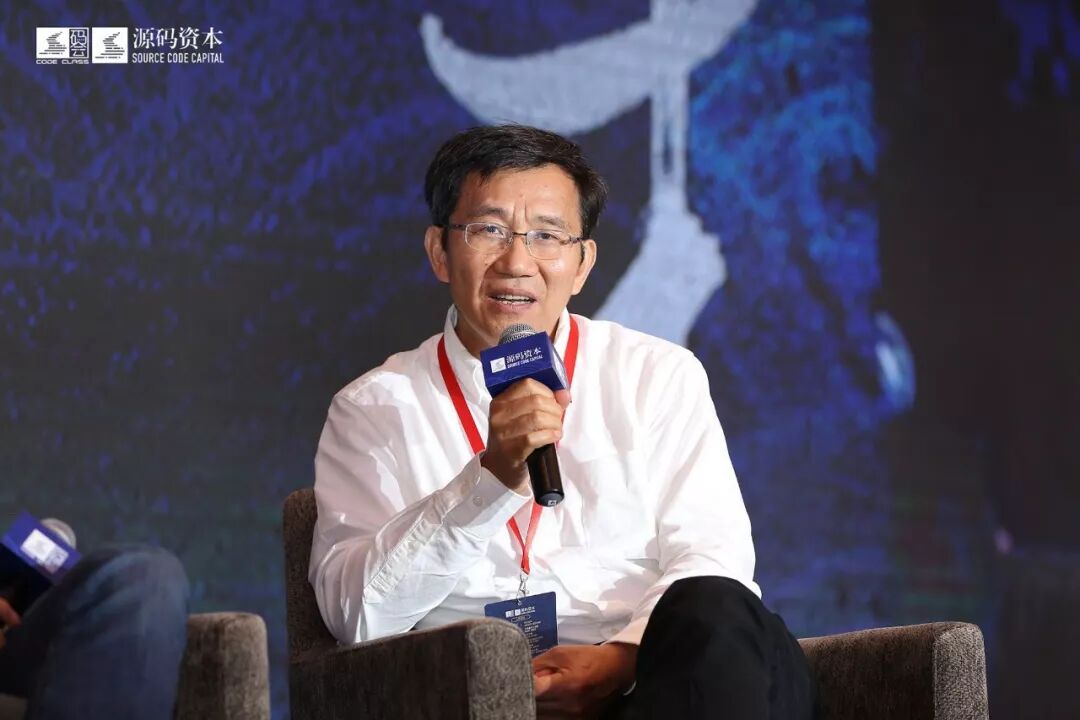
Zexiang Li, Chairman of Googol Technology and Songshan Lake Robotics Industrial Park, Professor at The Hong Kong University of Science and Technology
3 AI Companies Competing for, Supporting, and Retaining Talent
GeekPark Zhang Peng: For future excellent technical talent, where can we effectively acquire them? This is probably a concern for many companies and CEOs today. Many tech companies say they want to build AI capabilities in the future, but in the past two years AI companies couldn't hire anyone at all — they all had to cultivate talent themselves at universities. Both of you come from research systems. In your view, where are people with scientific literacy and technical ability? How do you attract these people? Could you offer some advice on how to recruit top talent from your circles?
Professor Zexiang Li: This is a very interesting question. I've observed that many startups, after receiving investment money, use very high prices to poach AI talent from elite universities. This in turn attracts the supply side — many students in school pivot toward this direction. After taking one or two years of AI courses, their resumes say AI, artificial intelligence major. This is the current situation we see: salaries, employment, and opportunities abound.
But these CEOs may soon pay the price for this recklessness. Students recruited this way may after some time prove incompetent for the work. Rather than this vicious cycle, it's better to spend more energy and resources focusing on or investing in cooperative cultivation models with schools.
Dr. Hongjiang Zhang: To add something — looking at many companies today, including many fund friends here, everyone is anxious. Anxious about why their companies can't find AI talent. I don't think everyone needs to be so anxious. Take ByteDance as an example. ByteDance has done very well in combining AI with applications. The entire company's business is basically built on algorithms — whether it's precise user targeting, precise ad placement, or using AI for video and text review, AI applications are basically in every corner of the product. Thinking from this angle, they certainly need large amounts of AI talent.
But you eventually find that in the recruiting process, many people who were very high-profile in academia were passed over; those who remained were often people genuinely interested in the business. If a candidate is interested in your business, they'll find every possible way to apply technology to it. These are the people a company needs most. If you just spend money to hire some people who don't understand the business just to look good, and eventually find they're not suitable and have to fire them, this cost is very high.
Those large-scale companies — Google, Facebook, Microsoft, Amazon — I used to think that when these companies recruit, they look at whether your major is relevant. But I later discovered this isn't the case. My two sons graduated from Ivy League schools and liberal arts colleges in America, and I found that when these companies recruit, first, they recruit very early — starting in junior year to bring people into the company for internships. Second, they do layering. In the past, investment banks would recruit Ivy League students in junior year with offers around $100,000-plus; now Microsoft, Facebook, and others come in at $150,000, nearly $200,000, with the best students snapped up by large companies very early. The logic of these companies' talent competition is also very clear: they're not just recruiting you to be a software engineer, but recruiting people with the potential to be cultivated into future leaders of the company. This is the mindset with which they recruit and cultivate.
GeekPark Zhang Peng: Professor Zexiang, you have numerous students, with disciples all over the world. From your observation, is it easier for people with research backgrounds to recruit such scientists? Or is it easier for someone without a technical background but with business and industry perspective to attract such people? What are the reasons we often discussed for not being able to recruit people?
Professor Zexiang Li: We have many insights in this area. For example, the robotics competition that Tao Wang initiated — now the scope has expanded from fourth-year university students to first-year students, and now extends to high school. His goal isn't even recruiting talent; more importantly, it's building an engineering culture, which must start early. This is also our experience: over the past decade-plus, we recruited many people from large companies, but ultimately none produced good results. So, you have to start cultivating from their qualities and recognition of the culture. Learning technology is secondary — as long as someone loves this thing, they'll have tremendous motivation to quickly learn and master the relevant technology.
GeekPark Zhang Peng: So in the long term, an excellent company needs to start capturing talent before university. Tao Wang is cultivating culture, building an atmosphere that's helpful to him. Otherwise, with fewer and fewer talented people, it's unfavorable for enterprises. Dr. Zhang, for our industry to develop, should startups also start thinking about going into universities?
Dr. Hongjiang Zhang: I'm pleasantly seeing that first-tier companies and startups have already started doing this — whether establishing joint laboratories, hosting competitions, or recruiting interns, everyone is moving in this direction. But I also want to remind everyone: this isn't something where you do it today and harvest tomorrow. You must persist in doing this long-term.
Why haven't China's chips produced good results after so many years? Why can't we produce core software like operating systems and databases? Some say, if you let China's top scientists, Tsinghua's top professors do this, it can be done. But my view is that at least operating systems and core software are engineering and ecosystem problems. For example, Windows was built with Intel plus a group of partners; Android was built with all the phone manufacturers plus a series of app developers and Android app stores — this is a large ecosystem problem.
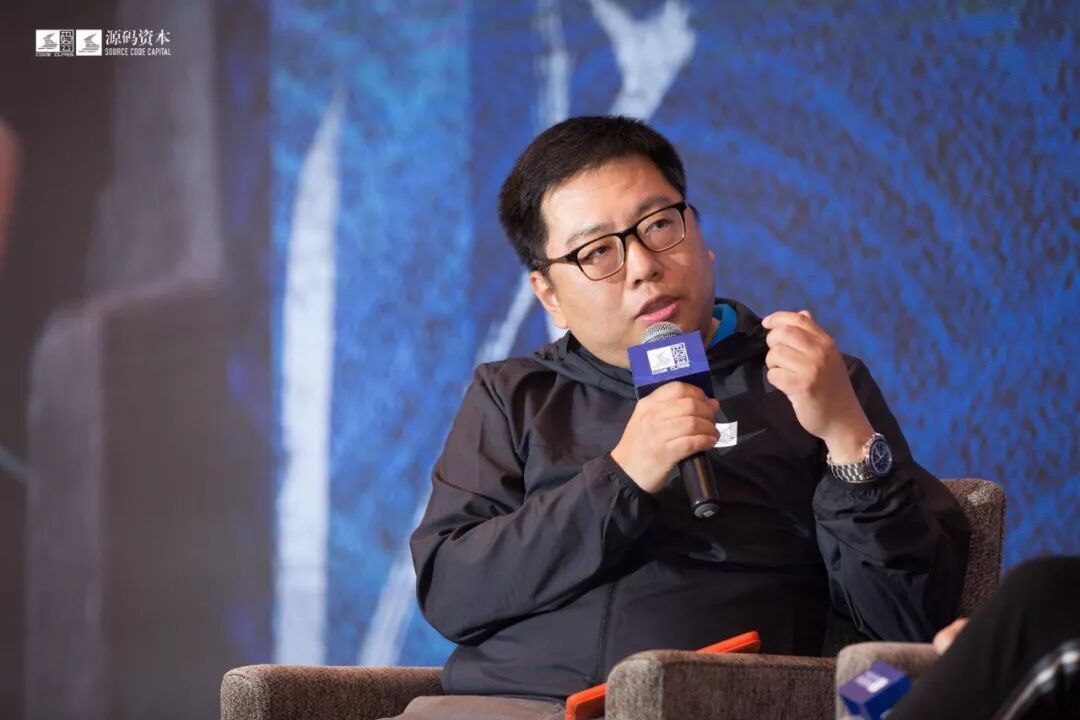
Zhang Peng, Founder and President of GeekPark
4 Scenario First, Technology Second
GeekPark Zhang Peng: The role enterprises play here is actually quite large — an industry needs support from behind. In automatic control, for example, if DJI hadn't established such achievements, we might still be lagging far behind in the future. Our second topic is: the AI intelligence that everyone values now — what kind of impact will it have on business in the coming years? How will it affect things? Am I being changed, or am I changing it? I think Professor Zexiang has a lot of practical experience in intelligent manufacturing, and I'd like to hear how you view AI, intelligence, and how they'll affect the rhythm, process, and form of future business?
Professor Zexiang Li: AI as a tool is, at least for now, very important. It will be involved in every field, especially manufacturing, where it will have major applications. But don't forget one crucial point: it's just one of many tools. To apply it well, you first need fundamental understanding of the problems in our current manufacturing technology and manufacturing scenarios. If you're doing AI for AI's sake, apart from burning through piles of investors' money or churning out one app after another, you won't get very good results. The belief that no matter what problem or business model, simply adding AI will solve it — this view is very dangerous. Especially with the chip issue heating up, there may be another wave of similar things coming, and it seems like people think a quick, short-term approach can solve this problem — this kind of thinking is wrong.
Dr. Hongjiang Zhang: To add something — Yi Cao at Source Code constantly emphasizes Source Code's investment philosophy of "three horizontals, nine verticals." In the nine verticals, each vertical domain is a useful scenario for us. Mobility, food, lifestyle — these traditional economies have always existed. The so-called three horizontals are "Internet+," "Intelligence+," and "Global+." Using the internet, intelligent AI to empower them, or transplanting China's good models overseas. This can't be done in reverse. We shouldn't start a business by working backward from technology to find scenarios. We need to go from scenario to technology. China's economy, manufacturing sector, and internet industry have grown so massive today — there are too many problems in between that can be solved with Internet+ and AI+. We should look at it from this angle. This also echoes what was said earlier: scientist entrepreneurs tend to go from technology toward scenarios, but the better model is to go from scenario toward technology.
GeekPark Zhang Peng: It's still that old saying: are you holding a hammer looking for nails, or holding a nail looking for a hammer? I think what Professor Zexiang is doing with the Songshan Lake Robotics Industrial Park is very meaningful — relying on China's massive manufacturing accumulation and a pile of problems that need solving, to work in robotics and intelligent manufacturing, rather than using AI to define problems. Listening to entrepreneurs on stage this morning, there was a commonality. They said opportunities have always been there, just waiting for the right technology, the right people, and the right social environment, and then they'll explode. It's not that something new appeared — the nine verticals have always existed. But technology keeps iterating, people keep iterating, and how we use good technology to solve problems is what matters.
One last question: DJI is already a very successful company today. As DJI's chairman and someone who was very important in promoting their growth back then, I think DJI is a company with industrial power. Its core isn't some particular technology, but industrial power. Perhaps my judgment isn't accurate, and I'd like to hear your assessment: what value does DJI most embody today?
Professor Zexiang Li: What you call industrial power may be a company that combines software and hardware, products, scenarios, and technology. Shenzhen and Hong Kong — what we call the Greater Bay Area — provide a very unique environment and conditions, allowing young people with ideas to integrate hardware, software, products, production, and many other factors, and also to define some very innovative things that didn't exist before. From this perspective, DJI may have blazed a trail: you don't need to follow behind others, making what they already have a bit cheaper, or selling it through lower prices. You can use this excellent big environment, this big platform, to build something completely different.
GeekPark Zhang Peng: You're speaking at a higher level. What I see is its competitiveness, supply chain, and product production design capabilities are very strong. You said it did something that tech companies and hardware companies didn't dare to do before. I think as an entrepreneur of that post-80s generation, the biggest difference from the 60s and 70s generations may be that he dares to be different — this is truly admirable.
Let me hear from Dr. Zhang. You've long observed large companies and emerging companies in the tech domain, and you've experienced several waves of hype. For a company with a tech heart, what qualities should it most focus on to achieve a hundred-billion scale, or to become a truly remarkable company?
Dr. Hongjiang Zhang: This question is big, and I may not be able to reach the commanding heights of Zexiang's answer just now. Looking at AI companies, many of China's AI startup technical entrepreneurs came out of Microsoft Research Asia. I've seen some of their common blind spots and common successes, and have summarized some insights. If starting from technology, the first point is to think about how to turn our technology into platform technology? From the AI angle, you need to see how long it will take for your technology barrier to transform into a data barrier — you must acquire data. This data then forms a loop for building products: with the product, you get user feedback, which improves the technology, which brings more and more users and more and more data. This loop is a very traditional internet iteration cycle.
Today AI is the same: technology drives product, product gets more users, users create more data. This loop must keep turning. Eventually your barrier may not be a technology barrier, but a loop barrier — the larger and faster this loop turns, the higher the barrier. At the same time, in the process of iterative cycling, because you see more and more use cases, see more and more data, you can define more and more applications, making it increasingly easy to establish your technology. Today DJI drones occupy 70% of the market — they'll certainly see more applications, and certainly see problems arising in the production process. Which parts of their efficiency can be improved? This is very important.
Regarding the post-80s entrepreneurs mentioned earlier, they indeed have far fewer burdens than those of us from the 1960s and 1970s. First, they're not starting businesses to escape poverty — their pursuit of ideals is genuinely much better than our generation. Our generation still had to solve survival problems, problems like only being able to eat one jin of meat a month. They don't have this; they see further than we do, and their ideas, especially their pursuit of technology, are relatively high.
I recently visited Shenzhen, including Professor Zexiang's Songshan Lake Robotics Industrial Park. I saw that in the manufacturing domain, in technology upgrading, in transforming traditional manufacturing into data-driven manufacturing, China is moving very fast. We have to thank pioneers like DJI for driving much of the manufacturing industry, especially component manufacturing, ahead of the Japanese. The important point is that we've succeeded in overtaking on the curve with data. Think about your business today: which parts can be digitized, which can be software-ized, which can be systematized? This is our opportunity to overtake on the curve, and also the opportunity to build systems for the future.
GeekPark Zhang Peng: I very much agree — establishing a complete closed loop and operating it with high efficiency. This isn't just so-called AI companies; it's a process that any company using technology should go through. I think ultimately all technology will integrate into business, all technology will integrate into scenarios — this is probably something all entrepreneurs need to think about. We're limited on time today. Thank you very much to both teachers for bringing us such deep thinking. You've given us a profound understanding of how technology and business can form value exchange and positive closed loops.
Thank you all!
Past Code Meeting Articles
- 3rd Edition | Yiming Zhang: A CEO Must Avoid Rational Arrogance
- 3rd Edition | Huiwen Wang of Meituan: Insist on Doing the Right Thing, the Payoff Cycle Is Shorter Than Imagined
- 2nd Edition | Xiang Li on CHJ Automotive for the First Time: Transforming Urban Mobility
- 2nd Edition | Yiming Zhang: Why I Don't Agree with Controlling Labor Costs
- 1st Edition | Xing Wang: On Entrepreneurship's "Self-Cultivation, Family Management, State Governance, World Peace"

Source Code Capital
Creating Lasting, Genuine Value

WeChat ID: sourcecodecapital
More professional content
Follow our official WeChat