Code Brain 'Standing Together Against COVID-19' Series Session Five: Interpreting Macro Policies and Industry Logic Amid Pandemic Shock

Speaker: Zhongmin Wang, Former Vice Chairman of the National Council for Social Security Fund (SSF), and Chairman of the FOF Committee at the Asset Management Association of China (AMAC)
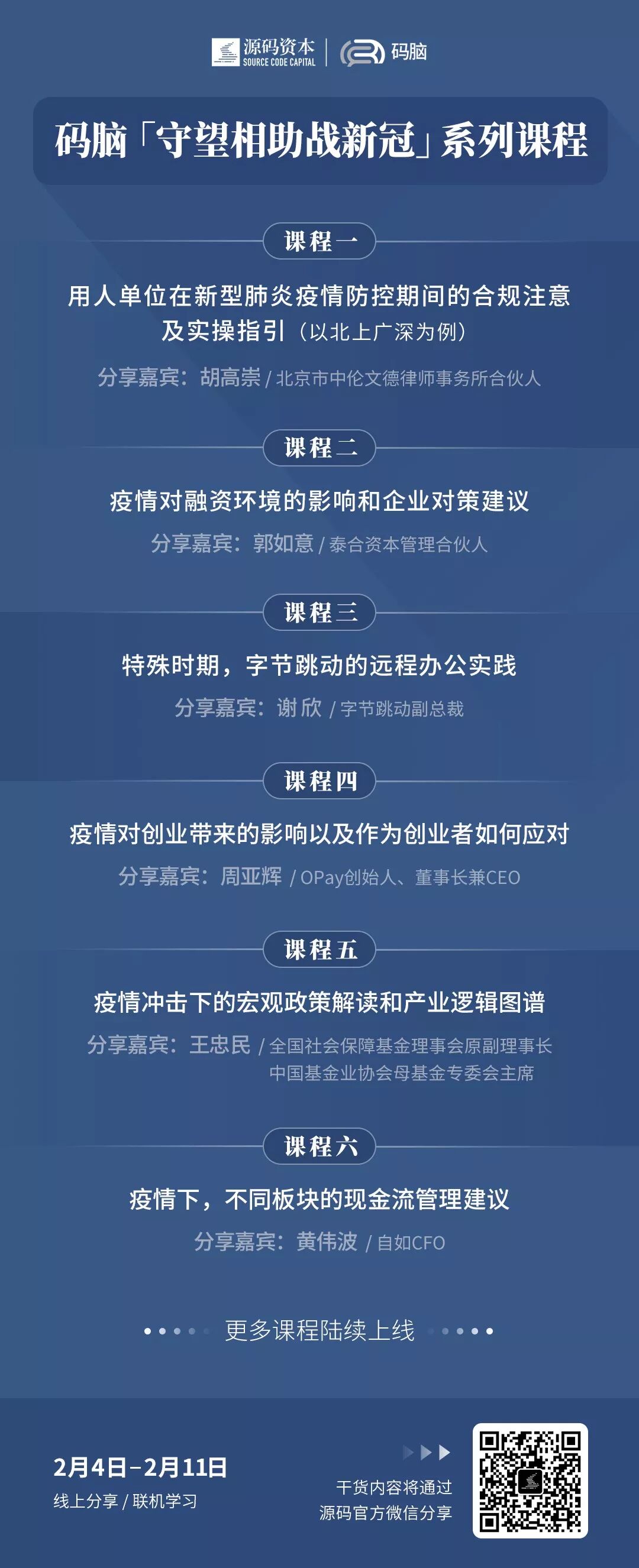
As the pandemic deepened, every sector of the national economy came under immense pressure. On one hand, healthcare systems and logistics supply chains urgently needed expanded capacity; on the other, online education and remote work became essential needs. Market demands and business models were quietly shifting — new opportunities were emerging from the crisis. To address the new landscape under the pandemic, Source Code Capital's post-investment services team organized the Code Brain "Standing Together Against COVID-19" webinar series. From February 3 to 11, we invited experts and leading figures in relevant fields to share insights online on topics including employee leave and return-to-work policies, startup financing, remote collaboration, financial and cash flow management, and policy analysis — hoping to provide intellectual support to Ma Hui members from multiple angles, ease anxieties, and face challenges together.
Addressing these issues, Professor Wang Zhongmin analyzed two fundamental characteristics of this outbreak: its suddenness and its fragmentation. Starting from these two points, he interpreted the series of macroeconomic policies the state had adopted to preserve growth and promote development; he also offered forward-looking analysis of opportunities and challenges in the digital economy — including upgrades to the healthcare industry, big data analytics, cloud migration of back-office services, open-source thinking in social applications, and blockchain technology — all under pandemic conditions.

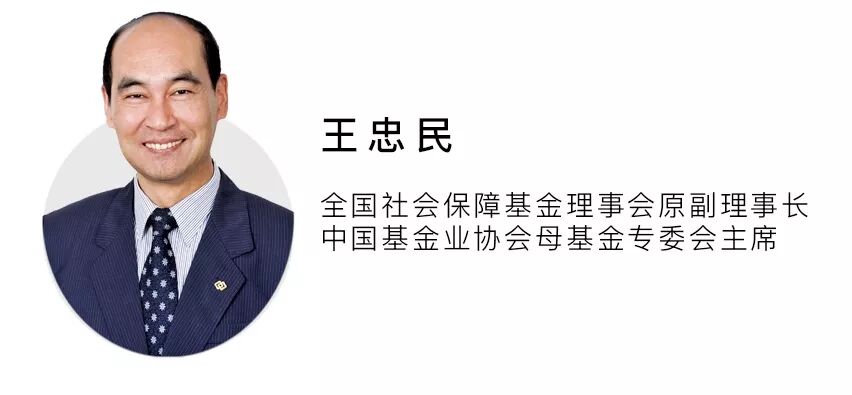
Wang Zhongmin holds a Ph.D. in economics from the Graduate School of the Chinese Academy of Social Sciences, where he specialized in political economy. He is a professor and doctoral advisor, a nationally recognized expert with outstanding contributions, and a recipient of the State Council Special Allowance.
He previously served as a Party Standing Committee member and president of Northwest University; as a Party member of the Shaanxi Provincial Government, secretary-general, and director of the General Office; as Party secretary of Ankang, Shaanxi; as director of the Equity Department and later as a Party member and vice chairman of the National Council for Social Security Fund. He was a member of the Ninth CPPCC National Committee and of the 17th and 18th Central Commission for Discipline Inspection. He currently serves as chairman of the FOF Committee of the Asset Management Association of China, academic chairman of the China Wealth Management 50 Forum, and chairman of the Shenzhen Institute for Financial Stability and Development.

Under these emergency pandemic conditions, I am very glad to still be able to discuss and share perspectives with Ma Hui members through video conference. Let me first describe the two key characteristics of this outbreak; the subsequent policy analysis and industrial logic map extend from these two points.
First characteristic: suddenness. From the very beginning, whether the response was timely or delayed, the outbreak had the feature of suddenness. The suddenness involved vast numbers of people and companies, and extensive industrial chains across social and economic life.
Second characteristic: fragmentation. Grid management and isolation divided and managed all people according to different pandemic risk levels. As the primary method, this would to some extent interrupt both consumption and production.
I. Macro Policy Analysis
Analyzing current emergency macroeconomic policies
Looking at current macroeconomic responses, we can also view them through these two characteristics:
First, suddenness. After the sudden outbreak, whether from simulation research or market reactions, analyses and judgments about the economic impact — particularly the economic indicators and conditions that would immediately manifest, whether CPI, PPI, or stock market openings — were followed by emergency economic policies and measures. Regarding the stock market opening, there were various viewpoints beforehand: should it open according to the original schedule, or be postponed to delay the pandemic shock? After opening, the People's Bank of China provided substantial monetary supply to compensate for short-term market demand. This was both a fulfillment of existing broad social contracts and a financial policy and decision-system response under emergency conditions. Not only were sufficient policy preparations and measures in place from day one to allow the stock market to operate according to existing social contracts, but additional supportive economic conditions were also provided. The four consecutive days of steady recovery that followed helped stabilize market panic.
Looking at the broader macroeconomic response from the consumption side, industries such as transportation, tourism, film and television, and education — which should have been at peak season — instead fell into frozen troughs. What emergency policy preparations could be made for this phase? For example, encouraging mask production, allocating transportation and logistics resources, encouraging online education to leverage its centralized and functional characteristics to replace the original clustered and explosive consumption scenarios and work methods. In this sense, emergency policies were introduced relatively promptly.
Economically linked to this is the issue of work resumption. If work cannot resume promptly, it will cause disruptions to production contract chains and industrial chains. In this sense, economic policies from different angles have provided some extensions for industries. For example, simulation research on how banks, financial institutions, and enterprises' original credit maturities and defaults would cause cash flow interruptions and credit risks — what kind of monetary and financial policies would be needed to provide extensions.
The relationship between transforming a public health crisis into a public fiscal and tax crisis. Under emergency conditions, the central government required that all public fees and tax collections could adopt corresponding deferral measures. For example, social insurance and housing fund contributions for small and medium enterprises could be postponed; annual taxes could be spread evenly, with Q1 and January-February pushed back for settlement; or resolved through offsetting against other methods. Between the national accounts, tax accounts, social security accounts for social insurance and housing funds, and corporate balance sheets, the state has already provided short-term emergency treatment methods, and even given some accounting treatment logic and methods, thereby resolving the relationship between corporate income statements and national income statements.
Attention to next-step macroeconomic policies
The most effective impacts will come next. If the pandemic is a social emergency mechanism combining suddenness with fragmented management, what kind of policies will it catalyze? Today, when people cannot go out to purchase consumer goods in large quantities, logistics and express delivery methods can be used; demand for online industries, internet industries, and digital industry scenarios will explode for a time, and enterprises already in these fields will develop more rapidly.
Let's look at this round of social and economic policies from a broader perspective. What we should be more concerned about is that China is a country with global economic weight, occupying a significant share of global GDP, global trade, and industrial chains. The impact in this regard, though not yet expressed in data, has already begun to attract economic policy and social attention. In the foreign exchange balance data released yesterday by the foreign exchange administration, no sharp decline was yet visible. Several data points may be of concern:
First, China has for decades been the country with the largest FDI inflows — that is, foreign direct investment into China. In recent years, we have also brought in foreign investment into China's securities and financial markets, including dollar funds entering China's private equity investment sector. In securities markets, because liquidity is relatively strong, northbound capital inflows since opening have not shown clear sharp declines. What concerns me is the volume of FDI investment and where dollar funds are landing in this context. If FDI decreases, can all foreign-invested enterprises in China operate normally? Foreign enterprises had already begun moving toward national treatment, but under this pandemic situation, the related macroeconomic policies need to be reanalyzed. This difficult problem also arises after the global US-China trade war; the first-phase agreement has already been signed, with a mandatory execution list for goods trade. But after the outbreak, what will the fulfillment rate of this list be? Will it affect subsequent rounds of deeper negotiations?
Second, if our funds mostly invest in mobile internet new scenarios and digital companies, we will find that China's industrial chains in non-digital fields are embedded with foreign countries — we produce some components and parts for them. If this outbreak causes partial or large-scale interruption of embedded industrial chains, it will prompt other non-epidemic countries to follow up with their industrial chains. The production capacity and competitiveness originally formed in this area will face new industrial chain substitution. Even if not systematic and comprehensive substitution, these enterprises' production conditions and supporting facilities after resuming work require high policy attention. Once this part of the industrial chain is lost, the impact on GDP and employment would also be severe.
If in the original industrial chain, even with relatively large systematic breakthroughs, can we rapidly capture global market share in the global industrial chain at this time? For example, can Huawei's 5G continue to break through globally? This is also something macroeconomic policy needs to pay attention to. If enterprises that have struggled hard in this segment for a long time could capture certain market share in new industrial chains, but because of this outbreak, the resumption rate, technical personnel, production efficiency, and supply rate, timeliness, and matching rate in production management processes cannot meet requirements, it may affect these industries' breakthroughs in the global industrial chain. At this time, it would affect China's macroeconomy, particularly the development of leading industries.
Currently, from the macro policy perspective, the central government and the State Council have already attached high importance, and various emergency policies are relatively sufficient. But in the response process, with everyone divided and isolated, extensive big data analysis, policy simulation effects, and stress testing are now being conducted. If we look at the long term, after overcoming the pandemic, there will certainly be recovery and explosive growth in all aspects. It will take some time to resolve these issues. The first round of policies has started from the demand and consumption side; subsequent second, third, and fourth rounds will introduce more effective policies at deeper dimensions and broader scope.
Take masks as an example. This time, everyone was physically separated from one another. To prevent airborne saliva from transmitting the virus, the most effective method was wearing masks. Our domestic production capacity for masks was sufficient. But how could we use big data analysis to determine how many masks each consumer in society needed? In an emergency state, when balancing strategic material allocation, what methods should be used to distribute them? Big data analysis and management were required. And precisely because this big data did not exist, everyone panicked and stockpiled. Current production capacity would expand dramatically, while existing non-mask manufacturers pivoting to mass production would lead to excess capacity, potentially causing enormous resource waste down the line. In a modern society, the most effective physical tools and medical methods for managing social segmentation would become even scarcer when shortages arose due to absent production and service management systems, and even more excessive when supply outstripped demand.
II. Industrial Logic Map
Opportunities in Healthcare Services
The biggest impact of this outbreak was the realization of service sector shortages, following decades of concentrated urbanization and infrastructure and manufacturing development. Today, in the national economy and even in new investment, manufacturing and infrastructure still account for the largest share, with services in second place.
When an outbreak occurs, the effective establishment of epidemic prevention systems is the most critical piece of healthcare services. This crisis will certainly spur development and advancement in healthcare services—specifically, whether we can build emergency resource allocation tools and systems on top of nationwide medical resource distribution to address sudden, explosive healthcare demand. In this response, medical personnel, equipment, and health standards revealed themselves as weaknesses. Through SARS and now this epidemic, society as a whole will increase investment in these areas. When major outbreaks strike, this investment and growth will accelerate, raising their importance in the national economy.
What I want to emphasize today is that services must develop toward institutional systems. Deep health services—effective institutional construction and systematic platform building for exceptional circumstances—will enable the service sector to address fundamental problems more deeply and effectively. Service institutional system building is the real weakness in today's service sector. We must see that service effectiveness + manufacturing effectiveness + infrastructure effectiveness, with the institutional systems connecting all of these, constitutes the depth and breadth behind services. This isn't merely a point of interest for investors; the Party Central Committee and the State Council have already recognized this as a matter of institutional reform and management system construction.
Third-Party Big Data Analytics Services
How do we understand the two characters "危" (crisis) and "机" (opportunity)? If you cannot find opportunity within crisis, "crisis" remains merely "crisis." Only by discovering, seizing, and growing opportunities can you truly capture the "机." Some companies will see their market share surge dramatically, while expanding companies can capture social demand at the lowest cost. But this epidemic must be understood through several deeper logics regarding the digital economy, digital finance, and digital social order.
The first logic is "big data." This time we discovered how data is generated, how it is transmitted, how it is analyzed, and how new applications, new results, new socioeconomic applications, and new socioeconomic policies are simulated. In this sense, big data analytics is the analytical framework for logic when physical isolation operates online. The mask example I just gave is a big data problem. If a small or medium enterprise, or an entire industry, does not resume work, what impact does it have on the industrial chain?
Today, in this era of information explosion, particularly under sudden epidemic conditions, in a scenario with massive population, industry, GDP, finance, and globalization, our challenge remains: how to efficiently store, analyze, and apply information. Whether in production management, consumption management, or social governance, what companies can provide third-party analysis? This is the moment when micro-level individuals, enterprises, and industries, as well as macro-level policies, urgently need society-wide third-party big data analytics services. Whoever has prepared early and can deliver effective products and services will capture this market—this is the deep application of big data in sudden, segmented states.
Massive Social Demand for Cloud-Based Middle and Back Office Services
When comparing the digital economy to the internet economy, one massive industrial structure emerges: cloud tools, cloud thinking, and cloud services, producing cloud infrastructure, cloud service platforms, cloud market share, cloud GDP, and so on.
Currently the biggest scenario in finance is mobile payments, yet cloudification can solve far deeper problems. Global cloud development occurred because leading ToC scenarios required back office services. All back office and middle office services are the social demand driving cloudification—after leading scenarios digitize, cloud-based digital infrastructure follows. Globally, cloud economies and cloud companies have reached trillion-dollar market caps. In the internet era, Microsoft's Windows Office was an operating system tool, but after new open-source operating systems and Android conquered the market, its growth space was greatly compressed. At this point, Microsoft cloudified all its ToB operating systems, making B-end back office operating systems open-source tools, with cloud-based back office and middle office service systems following in succession. Microsoft transformed from an internet company into a digital company, generating massive cash returns and crossing trillion-dollar market cap.
From an industrial chain perspective, digitization of leading scenarios is complete, but this has created massive social demand for cloudified middle and back office services. Because masks physically separate people in space, new scenarios demand back and middle office cloud services that are higher, faster, and more comprehensive in scope. We have entered an explosive growth period for digital infrastructure cloudification demand triggered by the epidemic. For example, if a company's finances are not currently managing accounts using blockchain logic, it will certainly suffer disruption and impact from the current segmentation.
View the industrial chain as a supply chain, and the supply chain as the financial and back office services behind it. Only then do we sense that under sudden epidemic conditions, the back office and cloud services behind physical rental space, capital account space, and payroll/labor space are the root of the supply chain. Industrial internet exists only in product and production chains; if we consider finance and contracts, behind all contracts lie financial payments and enterprise clearing—this entire cloudified industrial complex represents a series of social changes that explain why such massive social demand exists now. We believe in the importance and value of cloud in this era.
All large platform-level and ecosystem-level companies certainly use PaaS platform series offerings, and behind them one can clearly see point-level changes: under the epidemic, how do profit margins, cash flow, credit risk, and industrial chain risk evolve? How can everyone's stock benefits, flow benefits, continuous benefits, ongoing benefits, and sustainable benefits be calculated more precisely? This is the value and function of an ecological chain and platform system.
Public Health Crisis as a Catalyst for Open-Source Logic
If segmentation is the physical response to epidemic conditions, the resulting demand for digital development becomes the most powerful logic. After all physical spaces, production spaces, and consumption spaces are segmented, when digitization is needed to substitute for them, then all these points, lines, and surfaces should be open source. In any epidemic, when all of society and humanity cannot yet cure it, we use isolation. But the viral genes discovered throughout the treatment process after isolation must be open source. Only through open source can the research power of all society and all humanity be mobilized to prevent, treat, and respond to it. The benefit of open source is solving data acquisition and processing problems in locally closed environments.
When acquiring data during sudden social epidemic conditions, we must apply the second logic of open source: "free." If we borrow this data when others have open-sourced theirs, our services to others should be free. "Open source, free acquisition" is the most important value orientation and tool in digital scenarios. Once Android became free, all mobile phone manufacturers, and future autonomous vehicle manufacturers, would massively adopt this free platform operating system. For the free provider, this equals deep market penetration. Viewed this way, public health crises are the natural engine of open-source, free logic.
Today, if you make your systems and platforms open source, the logic is that others will freely build new extensions, new applications, and new developments on your source code. The more free developers who enter, the lower the cost of solving this problem, and the greater the probability of solving it. Future marginal benefits, marginal applications, and marginal revenues become my marginal growth.
Blockchain in Industrial and Financial Applications
Blockchain logic certainly follows digitization, particularly emerging from the ABCDE development process. It also shows the strongest connection to today's public health epidemic conditions. In physical form, when people are isolated from one another, this happens to be a naturally distributed state. Blockchain asks: in a distributed state, what happens to our consumption? Our production? Our finance? Our value creation? Value extends infinitely on the chain. What's interesting is that public health methods for controlling viruses naturally use partitioning and segmentation—isolation is distribution. Distribution already has some application scenarios and value chains in blockchain. Without the epidemic, society's past block structures were organizational states, group states, or functional states. This epidemic has happened to knock everyone back from existing structural organizational states into initial distributed states. This is a return state and logic for blockchain technology, applications, and market. In this sense, blockchain technology and applications will receive new development.
III. New Observations from an Investment Perspective
Investment Logic Under the Epidemic
Finally, I want to emphasize investment logic. After the epidemic occurred, from a social services perspective, in responding to the epidemic, was it that hospitals were too few, or that other social response mechanisms were too few? If doing online education or internet education, does it feel like universities are too few, or that the force doing online education is too few? Deep medical health, all marginal expansion and scenario applications of online education and internet education are market-company-led. In global public health, particularly healthcare, there is certainly a division between basic public health and additional social public health—these are two service systems. One is the social public service system; one is the private market service system. This is the dual-track development of education and health systems. Now we sense that in China's response to the epidemic, it is the application of big data and organic resource allocation in the social dimension, and even more so the supply capacity and development opportunities of the market system, that will also bring changes to investment logic. Mapping against the industrial map, blockchain technology, big data analysis systems, open-source social scenario applications, and cloudified social market supply service systems will certainly be society's greatest demands.
Viewing the Current Epidemic and Economic Policy from the Capital and Investment Portal
Private equity investment, particularly digital private equity investment, must today look at the asset income statements of invested enterprises. From a macroeconomic perspective, large companies may show effects in a month or a quarter. Small companies' asset income statements certainly react most strongly within a month, a quarter, or half a year. From an investor's perspective, if most investments are on the balance sheet, and the balance sheet must eventually be monetized, listed, or priced. So we must look not only at technology development and market growth during today's pre-profit period, but also at future asset income statements that already show profits.
One thing to note: when the income statements of small and medium-sized companies change in the short term, that's precisely when investors can acquire good companies at attractive prices. Helping them through difficult periods — when they face short-term cash flow shortages or credit pressure — through capital injection serves both to rescue them and to validate their long-term viability. With new digital technology applications, we should increase investment and promotion, because their front-end scenarios and the explosive social demand generated by this sudden event may not be reflected in current income statements, but will certainly become growth areas in future balance sheets. We need to establish effective relationships between the short-term and long-term income statements and balance sheets of our portfolio companies and our own.
The social security fund I work for is a long-term investor with the longest possible capital horizon. The longer the time horizon, the more one can ride out short-term fluctuations — whether economic or public health-related. This is why the National Council for Social Security Fund operates as a fund-of-funds, an investor in investors. When we look at investors of investors today, two investment dimensions emerge.
First, at the fund-of-funds level, we need to identify among the funds we invest in and the companies those funds invest in, those capable of addressing long-term issues — extending layer by layer from income statements to balance sheets. Fund-of-funds should particularly focus on how to capture long-term balance sheet growth and development through the short-term shocks to income statements. If a company is uninvestable, we must cut losses, trade, and adapt in a timely manner. If it's investable technology and scenarios, and if a one-time public health crisis creates free-entry market opportunities, we must incorporate these into long-term balance sheets — converting layer by layer from corporate income statements to corporate balance sheets, then to fund income statements or fund balance sheets, and finally to fund-of-funds income statements and balance sheets.
Extending the fund-of-funds and investment chain further: if China suddenly faces a pandemic, what will global investors do? In recent years including 2019, dollar funds benefited from relatively accommodative foreign financial policies and richer capital accumulation. Dollar funds have also accumulated experience navigating different economic cycles. In a pandemic, both economy and society experience asset declines, followed by recoveries — this is an opportunity long-term investors should seize.
We observe dollar FDI, dollar fund annual fundraising and exit volumes, and QFII and QDII data to understand the relationships in international long-term investors' capital chains. In responding to today's one-time social crisis, new technologies, service models, institutions, market expansion, open-source logic, cloud-based tools, and social demand scenarios present opportunities for fund-of-funds and long-term funds. At this moment, I particularly emphasize that government PPP must pivot toward new leading industries and technology development. Government PPP funds need to rely more on market-based GPs to capture opportunities in one-time social and economic crises; simultaneously converting into a model that addresses the changed investment logic under public health shocks, thereby achieving effective growth. Industrial chains will become healthier and smoother through healthy capital chains, and even through multi-layered, multi-level effective connections between balance sheets and income statements — both capturing opportunities under pandemic shock and overcoming contradictions and conflicts during crises.
When we look at macroeconomic analysis, everyone senses that large companies have more abundant methods, while small and micro innovative enterprises are most affected. Because their income statements are still in the cash-burning phase, not yet profitable. Even when they capture short-term pandemic opportunities using free and social expansion strategies, this may not be reflected in their income statements. At this time, we need social and public economic policies, tax policies, social insurance and housing fund policies, credit and other policy tools — from an investor's perspective, we also need to use these multi-level balance sheet connections. If both social policy and investor perspectives are implemented, we can precisely turn crisis into opportunity — without interrupting corporate industrial chains and product chains, while capturing future growth opportunities. This is what I finally wanted to share about effective development from the capital and investor perspectives.
Today, from macro financial and economic policy to industrial mapping, to digital crisis transformation and social-economic development in industrial mapping, and from the investor's perspective on social-economic policy, I've shared some observations and logic from the capital perspective. Thank you all.

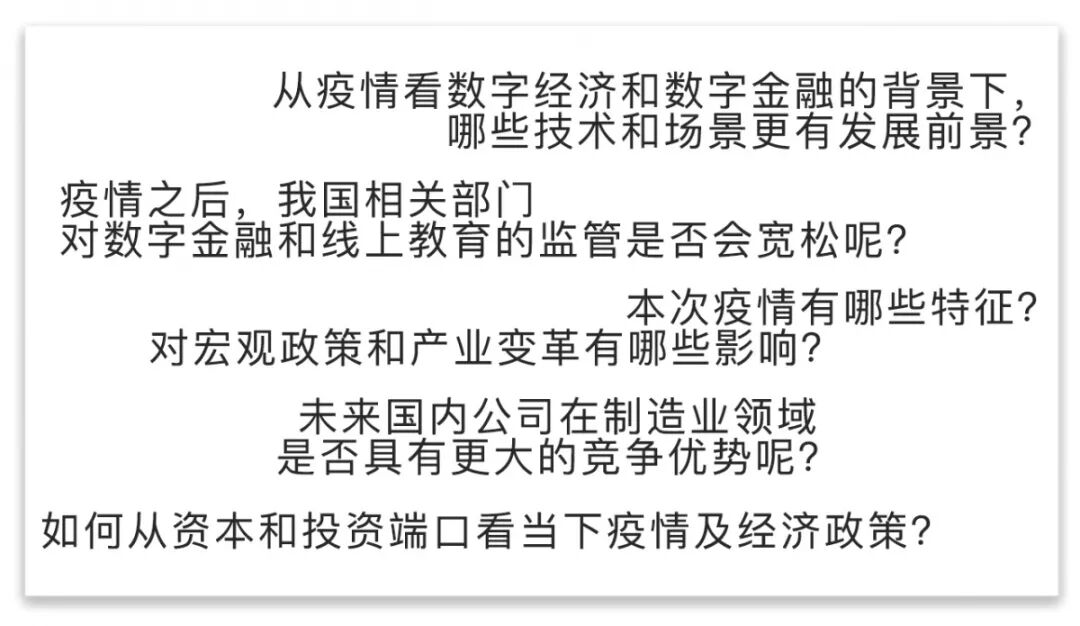
Question 1: Against the backdrop of the pandemic, digital economy, and digital finance, which technologies and scenarios have greater development prospects?
Wang Zhongmin: For example, in the digital economy, companies providing cloud service platforms in cloud-based services will certainly experience rapid development. From a valuation perspective, companies with this capability that can offer more free services this time will certainly gain more market share and product offerings afterward — this is the analytical angle.
From a financial perspective, the value-sharing among different macro-level departments, industries, and systems versus micro-level enterprises after the pandemic is a difficult problem. Behind the open-source and free logic is post-facto distribution according to default agreements, yet today we lack effective financial instruments to achieve this. Our blockchain infrastructure is insufficiently prepared; we cannot implement from accommodative monetary policy down to specific groups and individuals, and corresponding social management systems have not emerged. For digital currency, particularly as it evolves from simple payment to credit and assets, regulation will certainly loosen afterward.
Question 2: After the pandemic, will relevant Chinese departments relax regulation on digital finance and online education?
Wang Zhongmin: After the pandemic hit, regulation will certainly relax, but the critical threshold hasn't been found to clarify risk prevention and control methods under big data — only through new big data, new blockchain, and digital economy methods can we find it. If risk assessors, systems, and companies all operate within the system, regulation should fully open rather than completely block through licensing. The key is finding that regulatory release threshold. And in finding thresholds, third-party social services will certainly be faster and better than regulators; the latter can then provide regulatory full-scenario, full-information, holographic, full-stack complete services.
Question 3: Setting aside this pandemic, regarding global embedded industrial chains, will domestic companies have greater competitive advantages in manufacturing going forward?
Wang Zhongmin: In the past, Foxconn doing OEM in China represented China's industrial chain embedding into the global chain, but Foxconn's switch to producing medical masks this time represents the global industrial chain embedding into China. Under the pandemic, we must be careful not to separate China from the global industrial chain. Industrial chains only completely break when goods potentially transmit disease — I believe the central government is going all-out to solve this problem.
The world will not proactively separate China from industrial chains. Under today's public health shock, China's attitude toward global supply chains remains open, allowing global supply chains to find embedding points in China — this is the fundamental issue. For medical care, pharmaceuticals, patents, etc., by introducing their elements and growing as they enter the Chinese market, China should remain open to the global industrial chain.
Question 4: Government holds massive amounts of industrial data; digital open-source requires government support. Will this pandemic accelerate the process? How do you anticipate government data will be open-sourced to society, ensuring accessibility without compromising information security and privacy protection?
Wang Zhongmin: This is precisely the application scenario for blockchain. Major problems don't arise from human or physical separation, but from data separation. Data separation is the biggest problem in today's digital economy and digital public services. Strongly impacted by the pandemic, there will certainly be subsequent improvements — faster and broader on the consumer side, and further development on the business and government sides. This is the trend.
The improvement process will involve security and other issues. Here, blockchain's security and confidentiality features can form upper and lower chains with other dimensions of openness, forming society-wide information disclosure and even open-source information — this is the effective solution tool, method, and industrial logic. This is also why I predict blockchain logic and applications will be precisely the important future direction in this domain.
Question 5: We noticed that this month the People's Bank of China and Ministry of Finance have introduced re-lending policies with fiscal interest subsidies. Historically, how effective have such re-lending policies been?
Wang Zhongmin: This time, a one-time re-lending policy extends past approaches. During SARS and when supporting large-scale infrastructure construction, this policy played a positive role. But on the other hand, it won't solve all problems in economic life and for micro, small, and medium enterprises. Solving all problems requires multi-dimensional tools and methods from public society, finance, and fiscal policy, and also depends on effective market-based application within supply and industrial chains.
One more point to emphasize: government and social public policies still have room for expansion. In market-based space, one tool is preferred stock. In past private equity investment, later-stage investors, when valuation consensus became difficult, created the special structure of valuation adjustment mechanisms. Preferred stock is a commonly used equity structure globally in equity relationships. I inject capital, not necessarily taking much equity percentage, but taking your intelligence and future direction — particularly helping you through difficult periods — after which you should buy back at a certain annualized return rate. If this tool is fully utilized, the market-based capacity, scale, and scope for enterprises and investors to mutually assist through difficulties will expand. Another tool is junk bonds; once these two market-based tools for solving difficulties become widely used, the quantity and scale of problems solved will also amplify.
Question 6: You introduced opportunities for many internet and digital industries from this pandemic. What impact do you think this pandemic will have on subsequent internet and innovation industry regulation? For example, regarding open-source you mentioned, will regulators implement standards?
Wang Zhongmin: I believe this pandemic has two positive aspects: First, higher emphasis on services, particularly healthcare — healthcare investments will certainly see valuation growth in this round; and within healthcare, institutional construction and digital operations will become even more substantial. Second, society-wide digital transformation and upgrading, cloud platform development, and blockchain logic will certainly make great strides through this experience.
We need to note that currently under the pandemic, open-source logic is free, but after the pandemic ends, how this demand transitions to normal operation and development. And when we enter normal times in the future, whether government will manage it. The social, financial, and economic logic of open-source has become a highlight in new digital logic development, but corresponding regulation is still in preliminary exploratory stages — globally and in China. Therefore, we should actively use this public health event to allow China's open-source economy to develop rapidly, while also providing regulators with foundational logic for how to regulate. This requires market forces to proactively embrace regulation, rather than waiting and watching.
Question 7: Many policies currently target small, medium, and micro enterprises, but large private enterprises also face survival difficulties. Could you explain how the government directionally views large private enterprises?
Wang Zhongmin: The ones struggling most right now are large private enterprises that haven't gone digital. If they've undergone digital transformation, their platforms, cash flow, and growth prospects are all in better shape. Non-digital large private enterprises will still benefit from current macroeconomic policies, especially the accommodative monetary policy in the financial sector, targeted bonds, and credit bond benchmarks. The industrial chains of large private enterprises are where social public policies can actually take effect. I believe that after February, we'll definitely see corresponding socioeconomic measures introduced.
Question 8: From your perspective, what are the urgent issues in social governance that need addressing going forward? And what opportunities will there be for new-economy companies to participate?
Wang Zhongmin: During the SARS period, as a member of provincial and local leadership teams, I handled many issues and accumulated some understanding. But in 2003, the digital economy was still just at the internet stage. The major trends and currents of today's digital economy hadn't yet formed. Drawing on my role back then, the evolution of the digital industry landscape, the structural composition of China's GDP, and the trajectory of global leading industries, I've made some comparisons and arrived at what I'm sharing today. The GDP scale and socioeconomic relationships during SARS could be addressed relatively easily through segmentation and isolation approaches. Today we have a digital economy, and it happens that distributed and digital logic can solve our current challenges.
Comments and Discussion
Entrepreneurs are welcome to leave comments and engage with us on this session. Share the questions that concern you, and we'll select representative ones for Professor Wang Zhongmin to answer in follow-up.

Code Brain "Standing Together Against COVID-19" Series
"Counterintuitive Thinking: Entrepreneurs Must See the Pandemic From a Different Angle"

"The Pandemic's Impact on the Funding Environment and Strategic Recommendations for Companies"