Inclusive Finance in the New Economic Landscape | Code Brain Episode 11

As a complement to traditional finance, inclusive finance sits at one end of the capital chain, bearing immense liquidity pressure from shifts in policy and market conditions; yet it also sits closest to micro and small-business customers, giving it the fastest path to spotting new scenarios and finding market opportunities.
Code Brain
Issue 11

Code Brain is a key component of Source Code Capital's systematic, productized post-investment service system, and a flagship product designed to help entrepreneurs in the Code Club upgrade their knowledge. At every stage, we deeply understand and continuously explore entrepreneurs' needs, iterating on Code Brain in real time so that entrepreneurs at different phases receive sustained intellectual nourishment. Our goal is to make post-investment services that "actually help," creating unique value for founders.
As a complement to traditional finance, inclusive finance sits at the end of the capital transmission chain, bearing immense liquidity pressure from environmental and policy shifts; yet it also sits closest to micro and small customers, able to quickly identify scenarios and find markets.
Six years since inclusive finance was written into the Decision on Major Issues Concerning Comprehensively Deepening Reforms, extensive practice has unfolded across the sector, from state-owned financial institutions to private innovative enterprises. Meanwhile, China has adopted more proactive and open policy measures in the financial sector, with substantial tax cuts and consumption stimulus bringing new opportunities for economic improvement and social development in the second half of the year.
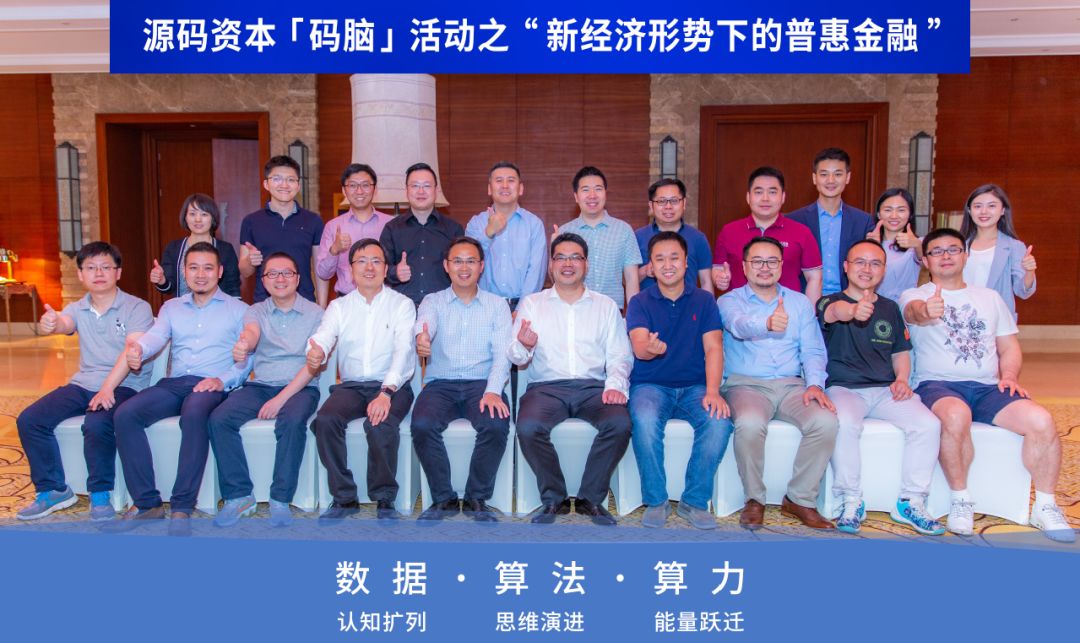
Under these circumstances, how should inclusive finance seize opportunities and find new scenarios? How should it adapt to industry trends driven by environmental changes? This issue's Code Brain closed-door seminar on "Inclusive Finance in the New Economic Environment" invited Source Code Capital portfolio companies and strategic partners to explore inclusive finance from two directions: consumer finance services and micro and small enterprise finance services. Yunnan Trust was the organizer for this issue. Source Code Capital partner Wu Jian moderated the session, with Yunnan Trust chairman Gan Yu and president Shu Guang delivering remarks and participating in discussions.


From left: Gan Yu, Chairman of Yunnan International Trust Co., Ltd.
Shu Guang, President of Yunnan International Trust Co., Ltd.
The following is a selection of highlights from this closed-door seminar.
I. Consumer Finance
Viewpoint 1: While overall consumption growth has slowed slightly, structural shifts still favor consumer finance development
Xinwang Bank President Zhao Weixing believes that with consumption-stimulating policies continuing to take effect, the future development space for internet consumer finance remains substantial.

Zhao Weixing, President of Xinwang Bank
As comprehensive deepening of reforms continues to advance, consumption-stimulating policies remain effective. In 2018, China's total retail sales of consumer goods grew 9.0% (nominal growth), while per capita disposable income growth reached 8.7% (nominal growth). Although both indicators declined slightly quarter-over-quarter, online retail sales growth remained at a high level of 25.4%, and the trend of consumption growth in rural areas outpacing that in cities continued unchanged, with the potential of rural consumer markets being rapidly unleashed.
The policy environment and development achievements of recent years have laid the foundation for high-speed growth in consumer finance. In 2017, China's internet consumer credit balance reached 933.3 billion yuan, up 137.79% quarter-over-quarter; in 2018, the internet consumer credit balance was estimated at around 1.5 trillion yuan, up over 60% quarter-over-quarter, with penetration increasing to 4%. ABS related to consumer finance continued to accelerate, with credit ABS—personal credit loans and corporate ABS—personal consumer loans both maintaining explosive growth over the past two years.
Behind the high-growth data, we can see structural adjustments. As scale has gradually been established, both consumers themselves (shifting from making ends meet to enjoying life and planning life) and consumption patterns (survival-oriented giving way to service-oriented and development-oriented) and consumption domains (new domains such as entertainment, housing, and healthcare) are undergoing earth-shaking changes. Compared to quantitative growth, the impetus that consumption upgrading provides to supply-side reform in terms of quality will be even more prominent, opening up new and extensive space for consumer finance.
Viewpoint 2: Mainstream consumer finance models each have their strengths
Participants generally agreed that licensed consumer finance companies currently operate under three main business models: the channel partner model, the self-built omnichannel model, and the pure online model. Each model has its advantages and disadvantages, and all institutions have been able to achieve decent performance when the industry is growing rapidly. As the industry has developed, some cross-pollination between business models has occurred, and a future omnichannel model integrating online and offline may become more prevalent, with consumer finance companies placing greater emphasis on deep scenario mining.
Channel Partner Model: Business is concentrated offline, with large-sum credit acquisition initially relying primarily on offline channel partners for customer referrals. This model is relatively dependent on channel partners, enabling rapid rollout across various regions in the early stage, but later-stage profits and other aspects are easily constrained by channel partners.
Self-Built Omnichannel Model: Consumer finance companies build their own offline ground teams, handling everything from customer acquisition to scenario management independently. Early-stage personnel and promotion costs are high, making this a heavy-asset model, but later-stage risk control and costs are controllable, channels are self-managed, and development is relatively steady.
Pure Online Model: Customer acquisition, risk control, loan management, collection, and other processes are all completed online. Early-stage capital investment is relatively low, enabling large-scale lending in a short time, but risk control reliability decreases and later-stage management costs rise.
Viewpoint 3: Understanding of consumer finance scenarios can be broadened
In recent years, regulators have imposed requirements on consumer finance scenarios. Source Code Capital Vice President Xingchen Zhang compared some overseas cases and believes the regulatory requirements are reasonable and appropriate, but that thinking about scenarios could be more expansive.
He noted that most overseas consumer finance companies have scenarios or some degree of scenario integration. In China, scenarios are divided into two parts: first, the touchpoint with C-end consumers—where does the traffic come from; and second, the asset use of the loan. These two parts together constitute the scenario. From a certain perspective, traffic touchpoints can have various scenarios—even downloading an app is itself a scenario. It's just that some lack clear purpose, not being based on buying something specific. For example, overseas credit cards are also a touchpoint method, with consumption scenarios. From this angle, as long as there is an appropriate user touchpoint, and the user makes a borrowing decision while consuming in the present context, that counts as a scenario—it doesn't necessarily require buying something specific. However, under current domestic regulatory interpretation, this may be viewed as having no scenario.
Why do regulators find this kind of light scenario ambiguous at this time? Mainly because development has been too rapid, user demand is particularly direct, and the breadth and depth of balance growth may significantly exceed that of specific consumption scenarios—so this is still a correct consideration for risk prevention.
Fulin Jinke Founder and CEO Tang Kewei pointed out that if strictly divided by scenario, only when money is paid to the corresponding consumption object does it constitute true consumer finance. If a consumer finance company simply sends money to an individual, the consumption scenario corresponding to the fund use is difficult to control. Platforms that rely entirely on pure information advertising almost count as having no scenario. True scenario integration means money doesn't pass through the platform's account—it's equivalent to a credit card where money isn't withdrawn in cash, but is directly transferred from the bank to the account of the corresponding consumption scenario.

Tang Kewei, Founder and CEO of Fulin Jinke
Viewpoint 4: Two core problems are difficult to solve for scenario-integrated consumer finance enterprises
Xinwang Bank President Zhao Weixing, after comparing operating conditions across the industry, stated that scenario-integrated enterprises overall perform slightly worse than non-scenario-integrated enterprises. A large number of enterprises are currently transitioning away from scenario integration. To date, scenario-integrated enterprises have two core problems that are difficult to solve. First, massive expenditures and profits are consumed by the scenario itself. Second, anti-fraud is very difficult to integrate into scenarios.
Fulin Jinke Founder and CEO Tang Kewei pointed out that the vast majority of scenario platforms have several hundred thousand customers. The input-output ratio for serving several hundred thousand customers is actually relatively low—the scenario platform conversion rate from application to disbursement is about 20%. Scenarios are too small, and with insufficient data requiring substantial external data supplementation, actual disbursement ratios are not high, making it difficult to scale up.
Viewpoint 5: Scenario-integrated enterprises need to provide value based on the characteristics of their respective scenarios
KE Holdings Financial Services Senior Vice President Wang Qingsong introduced his company's situation, noting that its proprietary business basically unfolds around existing scenarios. Financial services within scenarios serve as traffic monetization on one hand, but more importantly, they address customers' rigid financial needs within transaction scenarios. For example, the rigid need for redemption loans when selling property—this transaction scenario appears to be traffic monetization, but from the perspective of business and transactions, it addresses customers' rigid financial needs; without meeting this rigid financial need, business and transactions would be seriously affected.

Wang Qingsong, Senior Vice President of KE Holdings Financial Services
Meituan Financial Services Platform Senior Director He Yi believes that Meituan itself is a micro, dispersed scenario, requiring a product lighter than credit cards that maximally satisfies the small-sum, high-frequency needs of long-tail customers. Meituan's own living expenses product is quite suitable for the Meituan scenario, understood and operated from the micro, dispersed angle. Living payment scenarios are actually a means—the fundamental point is being able to better understand the customer base and customer data. If customers are clearly understood, plus internal and external data support, that constitutes a more trustworthy scenario-based consumer credit.

He Yi, Senior Director of Meituan Financial Services Platform
Viewpoint 6: Scenario data alone is insufficient for risk control
Fulin Jinke Founder and CEO Tang Kewei pointed out that from a product perspective, product design cannot entirely revolve around scenario-based customization. If products are custom-designed for scenarios, corresponding investments in system development and risk control development will fall into the trap of poor input-output ratios. From a risk control perspective, scenario data should not be treated as the primary source of risk control data, and corresponding risk control foundations should not be formulated around scenarios. For example, when encountering anti-fraud challenges, the corresponding scenario data often cannot serve as a strong credit source for anti-fraud.
KE Holdings Financial Services Senior Vice President Wang Qingsong, using the example of redemption loan rigid needs, believes that in this type of scenario, talking about completely independent risk control is difficult. Scenario parties' requirements for financial service providers—whether internal financial teams or independent third-party partners—basically take meeting customers' rigid needs as a precondition. This places enormous demands on product design, risk control models, and other middle- and back-office functions. Scenario parties' demand is the degree to which real rigid needs are met, which essentially doesn't conflict with the design philosophy of financial services risk control, especially anti-fraud design. But to resolve the tension between business parties and financial service parties, the middle- and back-office of financial services should move ahead of business; for example, anti-fraud should happen before transactions are concluded, not after.
II. Micro and Small Enterprise Financial Services
Viewpoint 1: With strong policy support, micro and small enterprise financial services will become the next growth point
In China, the household sector includes individual business operators, who constitute an important component of micro and small enterprise financial services, and overlap significantly with micro and small enterprises under the enterprise sector statistical口径. Analyzing data since 2007, the household sector's operating loans as a proportion of total loans fell from 35.3% in 2007 to 20.8% in 2018—a very significant decline. This suggests that the increase in household sector leverage ratio mainly came from mortgage-based debt, while individual business operators received very limited financial services. During the same period, the non-financial corporate sector's leverage ratio rose substantially, and structural analysis shows this mainly came from increased debt among above-scale enterprises. Clearly, financial services for micro and small business operators fall far short of market demand. Against this backdrop, government departments have introduced a series of policies encouraging micro and small enterprise financial services, the industry environment is increasingly favorable, and market space is enormous.
Cijinrong Founding Partner Li Xiao, based on enterprise development conditions and years of industry experience, believes that the tipping point for micro and small enterprise financial services is approaching. The core logic rests on two points: first, low customer acquisition costs; and second, strong stickiness among micro and small enterprises.

Li Xiao, Founding Partner of Cijinrong
Viewpoint 2: Mainstream micro and small enterprise financial service models each have problems, but can be improved
Current market approaches to micro and small enterprise finance fall into three categories: the credit factory model, the IPC model, and the internet model. Each has its problems: the credit factory model finds it difficult to control the authenticity of underlying assets; traditional IPC has a major problem in being unable to make statement adjustments for non-operating data, only making adjustments for hard operating data; the internet model is technology-driven, but results show that pure online business cannot achieve scale.
Cijinrong Founding Partner Li Xiao shared his own experience, suggesting breakthroughs from two aspects. First, demand-oriented, locking in one scenario. In the B-end domain without scenario-based customers, default rates are very high. The best way to find a customer base is still through scenario entry, filtering customers through scenario-based data. Second, combining technology + big data, first establishing a generalized supply chain finance system, connecting with these scenarios through API interfaces, allowing customers to complete applications through scenarios and supply chain finance interfaces; then grafting on large amounts of third-party credit data. Since third-party operating company data mostly targets C-end with less B-end coverage, B-end risk control must combine individual and corporate entities—doing B+C. For example, independent modeling including enterprise diversification, marital status, transaction data, etc. Cijinrong's micro and small customer base has credit limits between 300,000 and 1.5 million yuan, with stable operating entities that generally don't change industries, with average operating history exceeding five years; borrowing has genuine purposes and is for working capital. Methods to verify and confirm include enterprise procurement agreements, order agreements, etc.—though this approach also has certain difficulties.
Fulin Jinke Founder and CEO Tang Kewei believes that the overall micro and small customer base is large, with fund concentration far higher than ordinary consumer groups, while market fragmentation is also severe. Micro and small enterprise financial service companies each have their own approaches, with various methods for product design, customer acquisition channels, risk control principles, and risk control data source logic. Customer acquisition and risk control for micro and small customers are relatively difficult. Looking at various companies' customer acquisition channels, they fall into three categories: sky net, ground net, and people net. Sky net refers to internet channels, ground net refers to ground teams including the channels we discussed, and people net actually refers to call centers. The optimal approach is sky net plus people net, plus internal data, to select a batch of customers with high urgency but controllable risk for telemarketing.
Meituan Financial Services Platform Senior Director He Yi introduced that his company's service targets are mostly mom-and-pop shops—the smallest economic units penetrating to the capillaries of the national economy, which need financial services even more. Meituan Finance's approach is "B+C combination," conducting risk control from both B (enterprise) and C (borrower) perspectives, treating C as a very important aspect for judgment. After comprehensive assessment, appropriate manual intervention is also applied in lending decisions.
III. Overall Conclusion: Industry Development Brings More Refined Division of Labor
All participants agreed that whether B2B or B2C, the inclusive finance industry chain is very long. As the industry continues to develop, it will inevitably bring more refined division of labor, involving everything from licensed institutions such as commercial banks, consumer finance companies, and trust companies, to financial arms of internet giants, to fintech startups and other financial service providers. Based on their positions in the industry chain, their understanding of the industry, and their data mastery, each has its strengths, forming synergistic complementarity that can promote an orderly, professional, and prosperous industry landscape.
(The above remarks represent personal views of the speakers, not Source Code Capital, and are for reference only)

More Code Brain Content
Issue 10 Brand: Meaning, Symbol, Value
Issue 9 Lighting the Fire of Financing
Issue 8 Mining Gold in India: Practical Sharing
Issue 7 How to Design Mini Program Virality for Low-Cost User Acquisition
Issue 6 How to Use Douyin for Customer Acquisition?