James Webb Space Telescope Launches, Exploring the Infinite

Create Lasting, Genuine Value
The James Webb Space Telescope has launched, and humanity's exploration of the cosmos will reach farther than ever before. Because of the time-traveling nature of light, seeing farther means seeing older — closer to the origins of the universe. To look infinitely outward is, at the same time, to look infinitely inward.
We are always on the path of creation. Looking farther is the infinite outward: pushing boundaries, exploring and creating across ever greater scales. We are also moving infinitely inward: drawing closer to origins and essence, finding optimal paths from first principles. Some say our logo resembles the vast river of stars in the cosmos, its glimmering waves concealing Morse code for three universal constants: e (elementary charge), g (gravitational constant), and c (speed of light). We hope to explore the infinite with you.
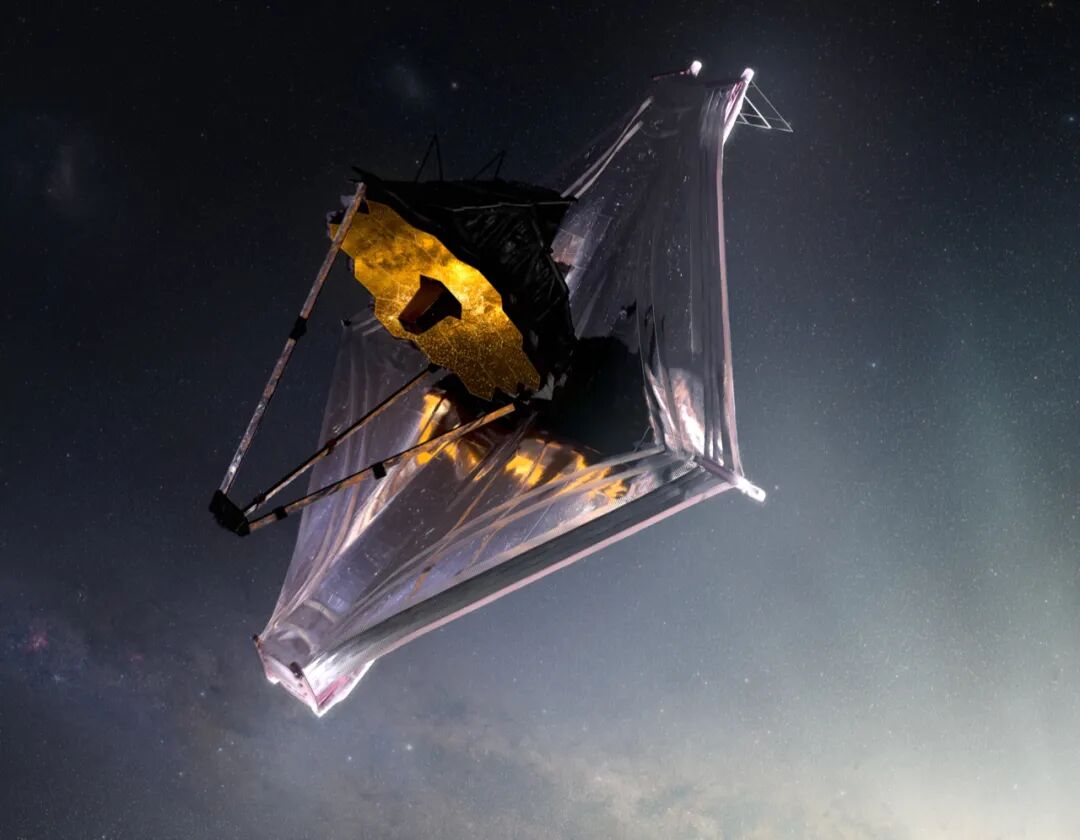
The James Webb Space Telescope stationed at Earth's L2 point. NASA GSFC / CIL / Adriana Manrique Gutierrez
After repeated delays upon delays, the much-anticipated James Webb Space Telescope (formerly translated as "Weber") has finally launched. At 8:20 PM Beijing time on December 25, an Ariane 5 rocket lifted off from the Guiana Space Centre in Kourou, French Guiana, near the equator in South America, carrying this successor to Hubble into space.
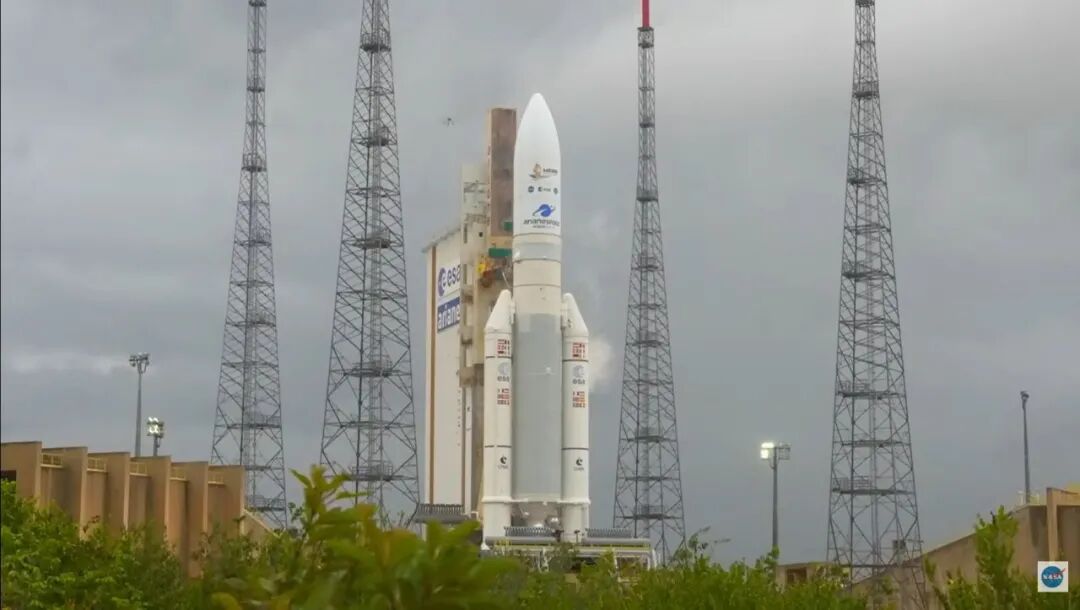
Webb telescope launch (pre-launch). NASA
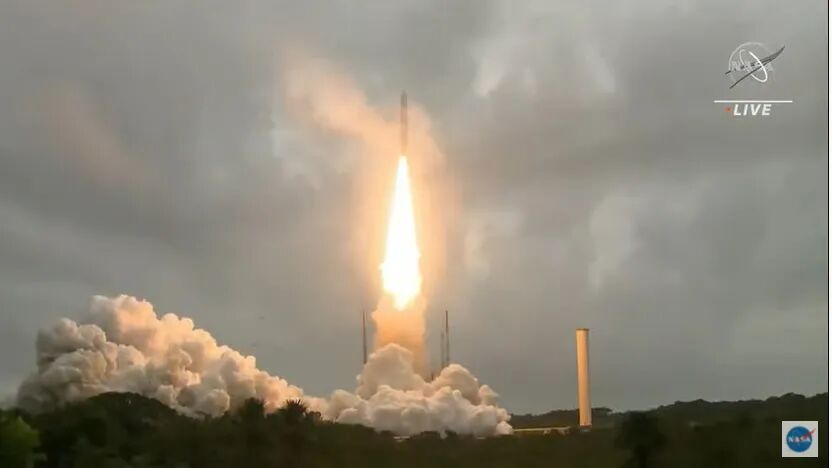
Webb telescope launch (ignition and liftoff). NASA
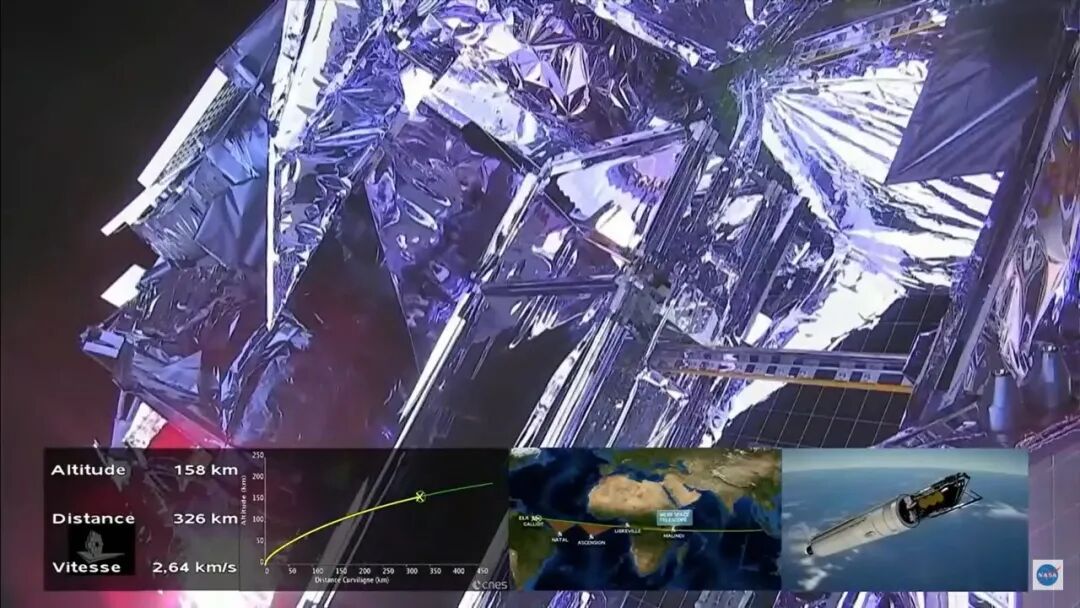
Webb telescope launch (inside fairing). NASA
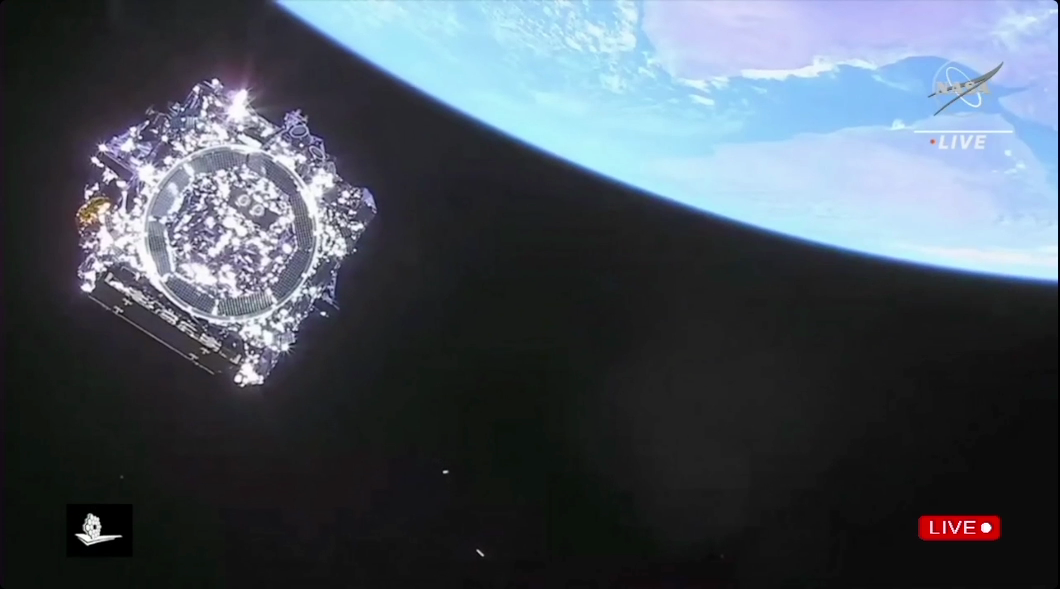
Webb telescope launch (spacecraft separation). NASA
The James Webb Space Telescope cost $9.7 billion and took over two decades to design and build — now finally coming to fruition. It was originally scheduled for launch in 2007 but was delayed by 14 years for various reasons.
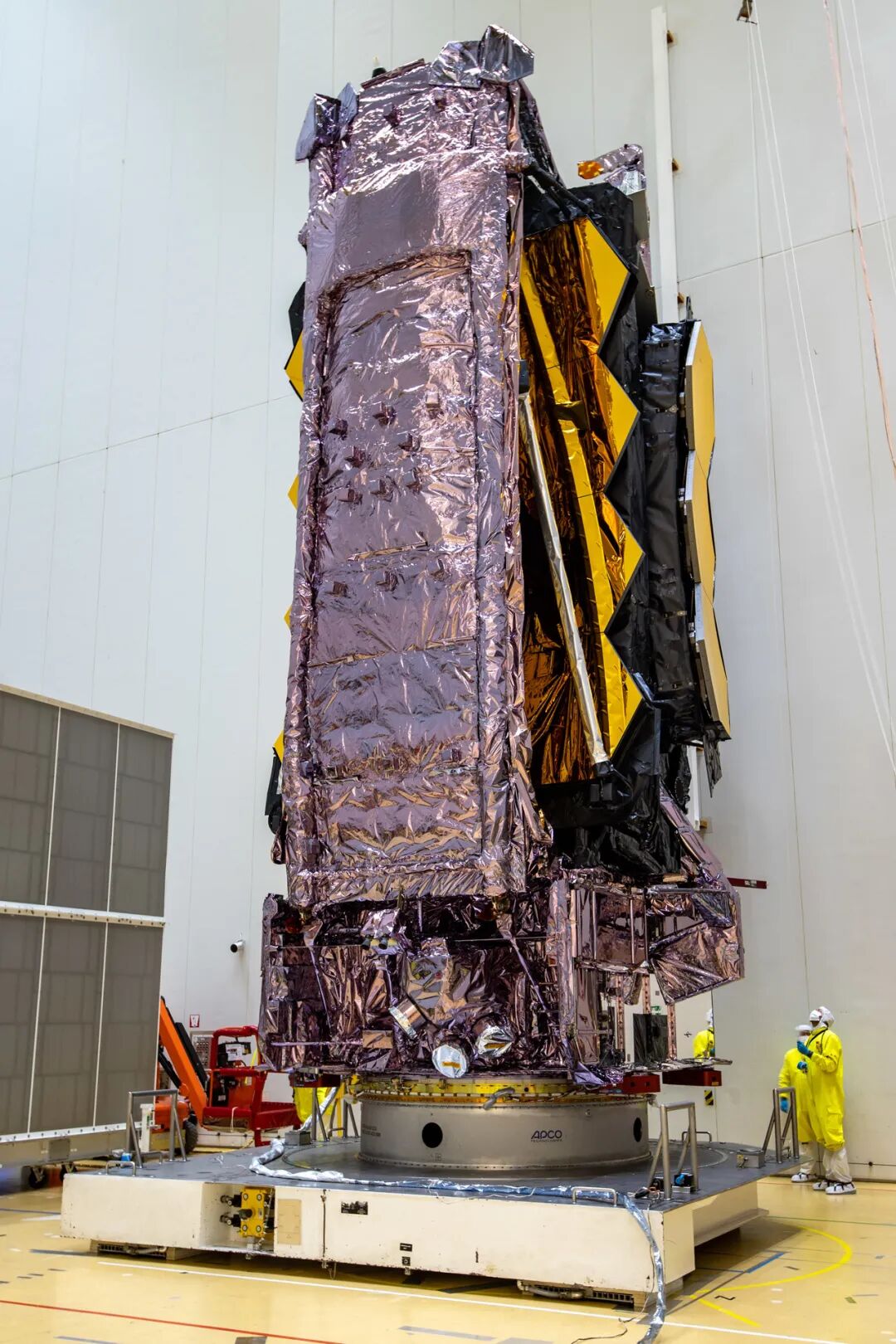
The folded Webb telescope. ESA
For engineers and technicians, the greatest anxiety wasn't actually the launch, but the telescope's deployment. The James Webb Telescope is enormous; to fit inside the cramped rocket fairing, it had to be folded up and then unfolded in space. Full deployment takes over a month.
The Webb telescope will travel to a relatively distant location from Earth and take up station there. This point is four times the average Earth-Moon distance away. Though far, gravitational perturbations are minimal, making it ideal for long-term stationing of spacecraft like space telescopes. This is the second Lagrange point, or L2. L2 is roughly 1.5 million kilometers from Earth. By comparison, the Hubble Space Telescope orbits only about 500 kilometers above Earth, in low Earth orbit.
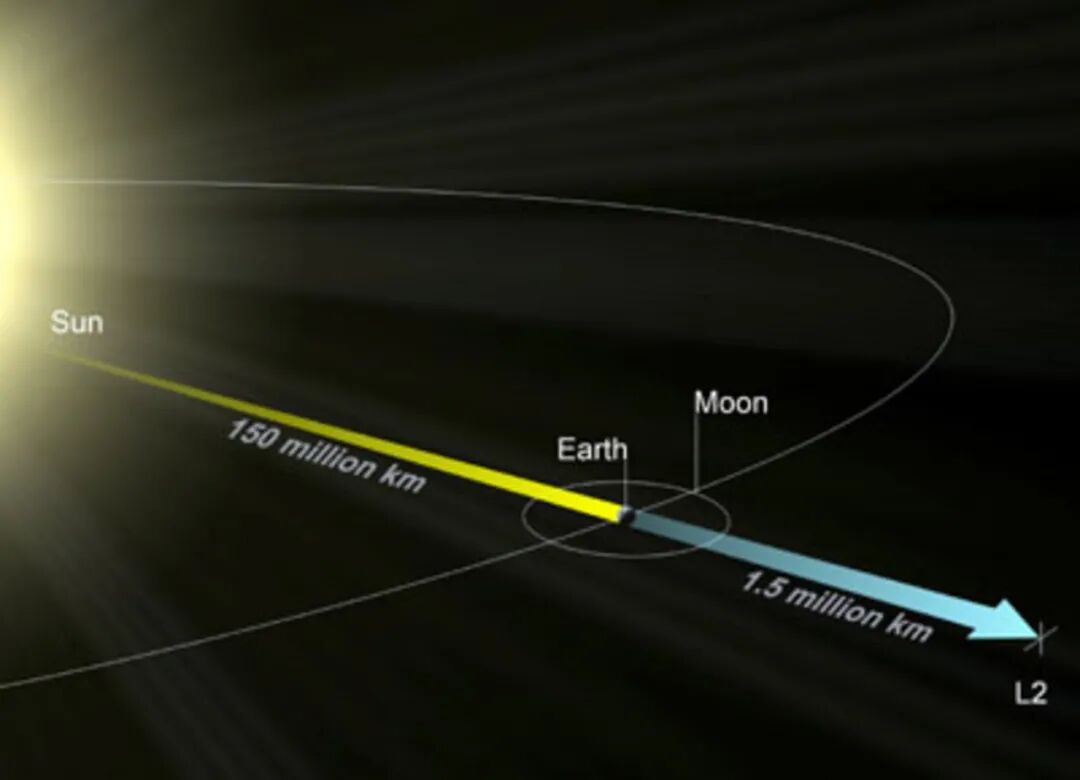
Diagram of L2 position. ESA
Among the various parts of Webb that will gradually deploy, one of the most important is its massive sunshield. This shield is the size of a tennis court, designed to protect the telescope from solar thermal radiation.
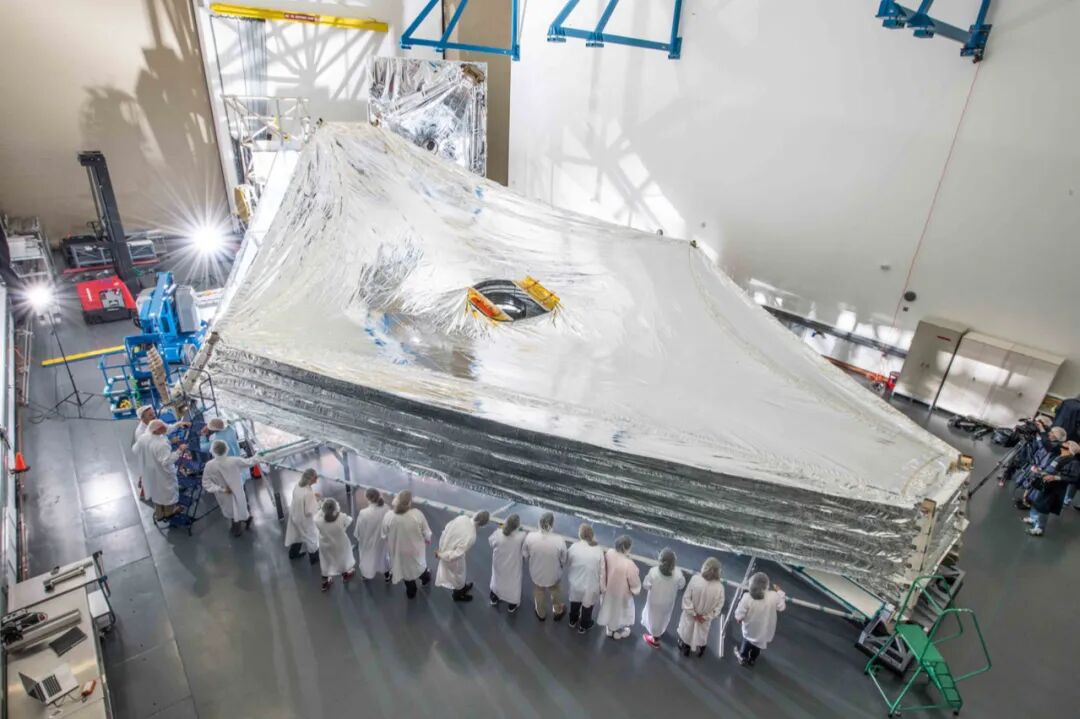
Webb's enormous sunshield (pre-installation). NASA
Webb is an infrared telescope; its mirrors and instruments must be kept cold, otherwise they would generate infrared radiation that interferes with observations. This point is critical.
After all components are deployed, engineers will perform optical alignment and instrument commissioning. Only when everything checks out can its gleaming golden mirrors begin exploring the universe.
One of Webb's signature features is its enormous golden primary mirror. The mirror has a diameter of 6.5 meters and consists of 18 hexagonal segments. These segments are made of beryllium, an ultra-light element of exceptional strength. Each hexagonal surface is also coated with gold, optimizing the mirror's infrared reflectivity.
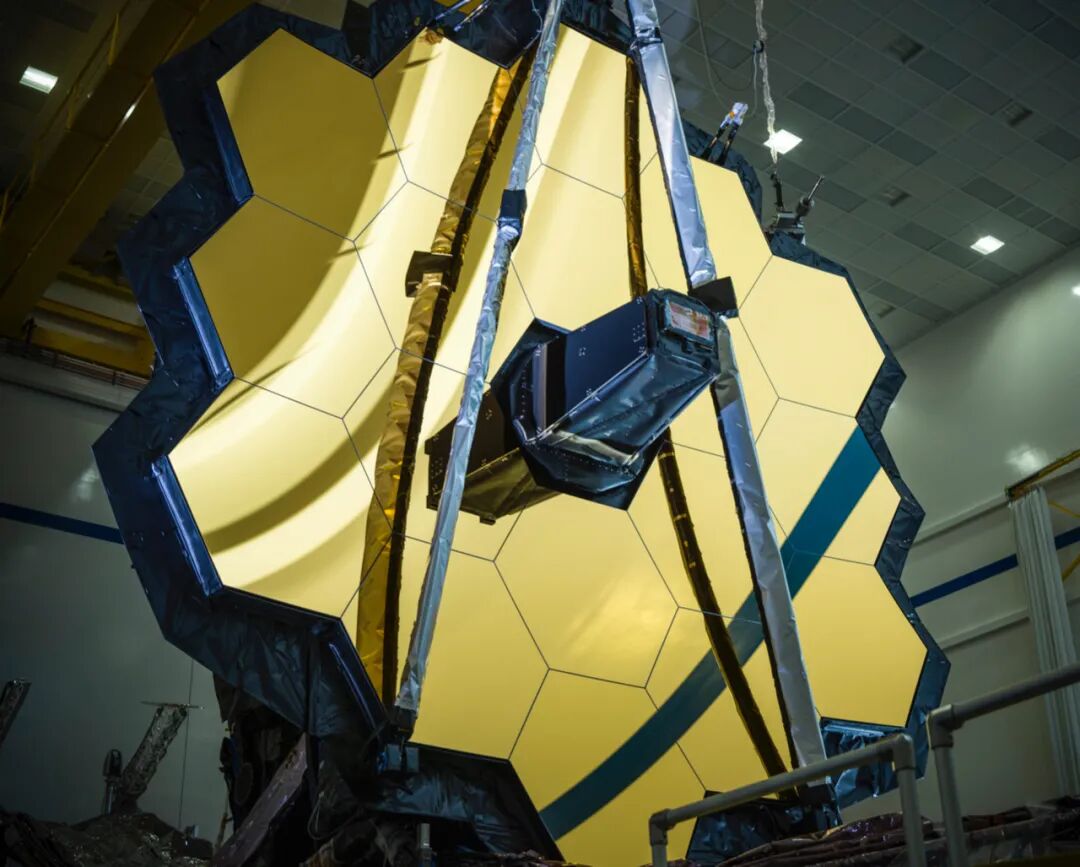
The massive mirror of the Webb Space Telescope. NASA / Chris Gunn
Though hailed as Hubble's successor, Webb will not immediately replace the Hubble Space Telescope after launch. For a period, the two will work together.
Yet in many respects, Webb is indeed far superior to Hubble. It incorporates numerous new technologies and lessons learned from previous space telescope designs.
Even comparing only how far each can see, Webb's vision outperforms Hubble's.
Hubble excels at visible-light observation. Visible light refers to electromagnetic waves detectable by the human eye — a specific band of the electromagnetic spectrum. Because the universe is expanding, electromagnetic waves from distant space are stretched, gradually shifting into the infrared band. The farther from Earth, the more these wavelengths are stretched. Beyond a certain distance, distant celestial objects become visible only in infrared or longer wavelengths. Infrared observation is precisely Webb's strength.
Because light takes time to travel, what we see in the universe is more distant and therefore more ancient — closer to the origins of the universe. So in a sense, the universe Webb sees will be closer to cosmic origins than what Hubble reveals.
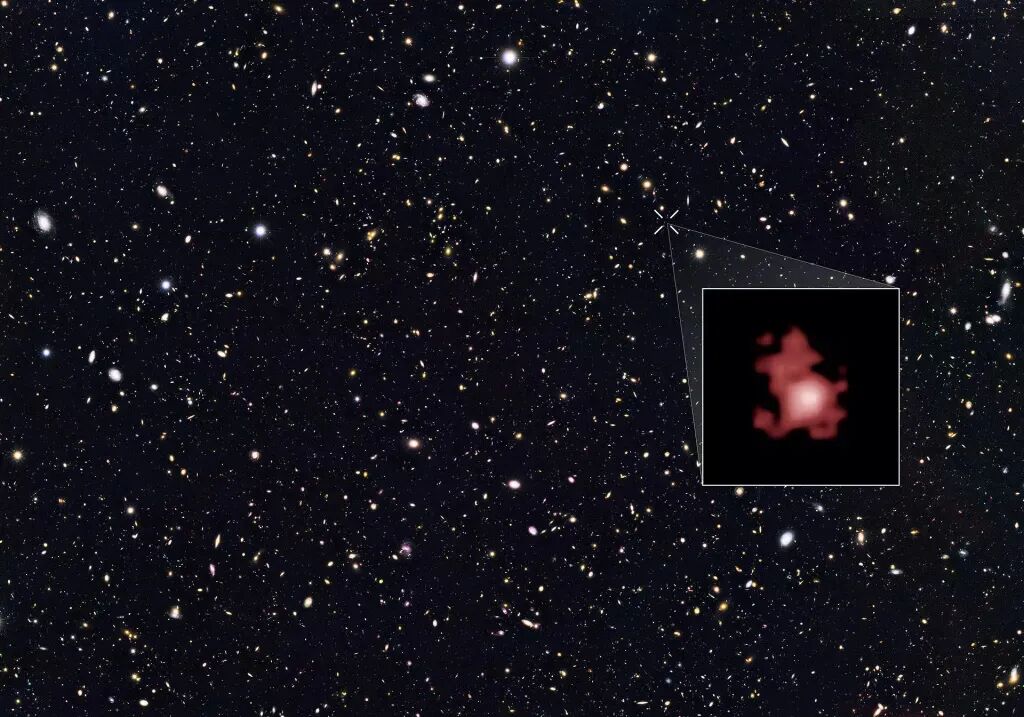
GN-z11, the most distant galaxy observed by humans to date. NASA / ESA
Additionally, because infrared radiation penetrates more effectively, Webb will also reveal many scenes previously invisible to us — such as stars obscured by dark dust.
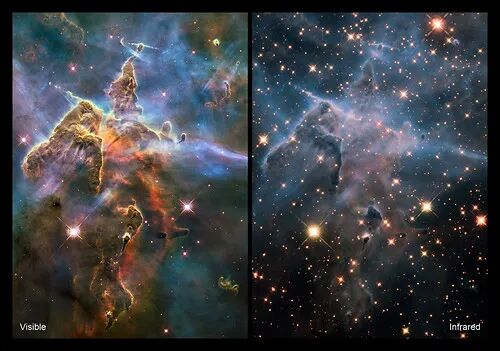
Comparison of the same sky region (Carina Nebula) in visible light (left) and infrared (right). We can see many stars in the infrared image invisible in the visible-light image. NASA / ESA
Webb telescope development began in 1996 with an initial investment of only $500 million. The telescope was originally planned for launch in 2007, but the entire R&D and construction process progressed slowly and budgets gradually ballooned, leading to delay after delay.
The Webb telescope is massive and structurally complex. Webb's design was revised in 2005, with the adjusted launch date set for March 2020. Who could have foreseen that the sudden pandemic would stall the project once again.
The Webb telescope was originally named the "Next Generation Space Telescope"; it was renamed "James Webb" in September 2002 to honor a former NASA administrator. But it is an international collaboration, not belonging to NASA alone — participating institutions also include the European Space Agency (ESA) and the Canadian Space Agency.
Science knows no borders. We look forward to Webb further advancing humanity's understanding of the cosmos.
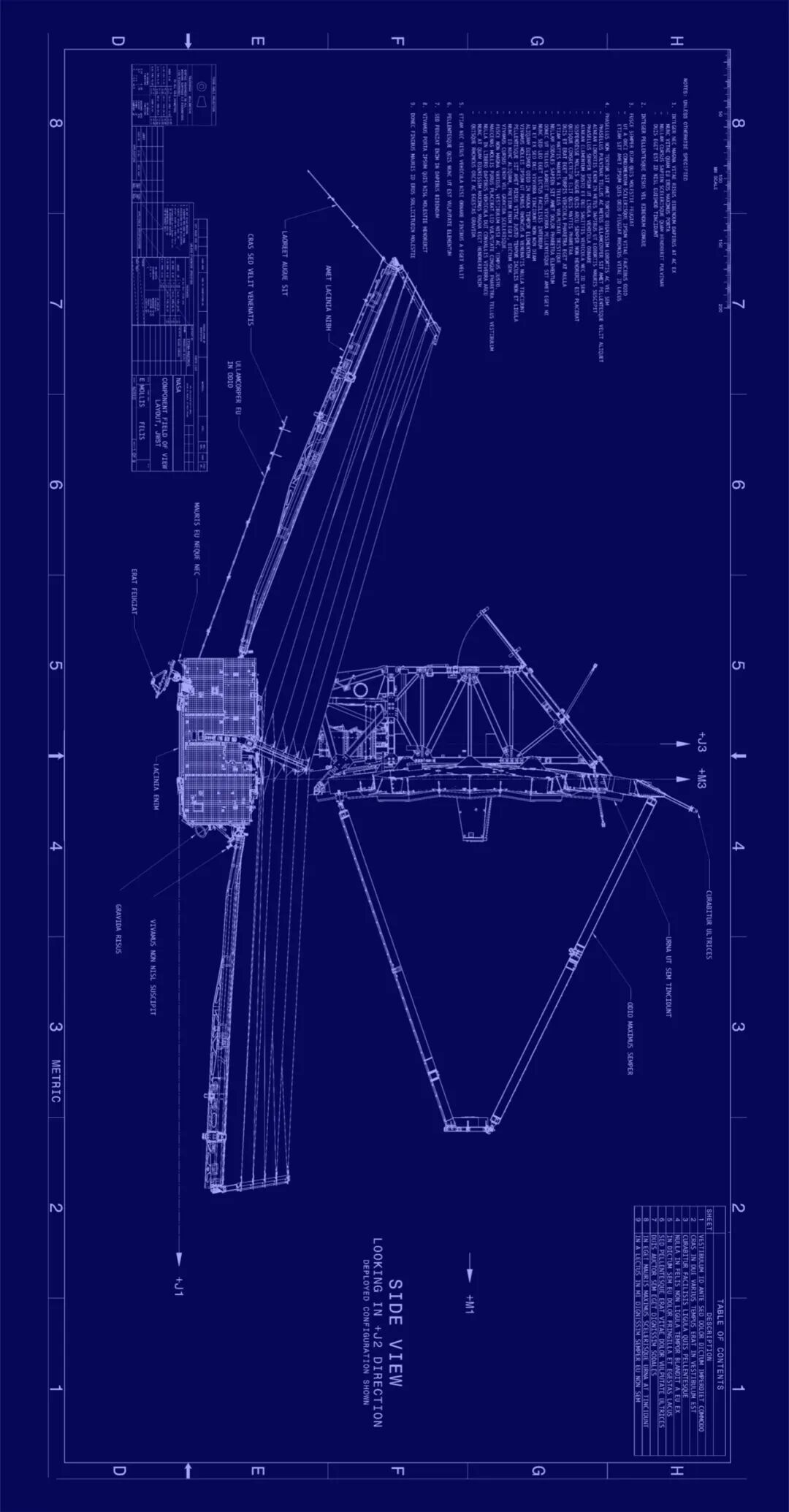
Webb telescope design diagram. NASA
References
James Webb Space Telescope
https://www.nasa.gov/mission_pages/webb/main/index.html

- 2021, Original Aspiration Is the Future
- Source Code Capital Closes Fifth RMB Fund to Drive Technological Innovation and Empower SMEs
- Congratulations to Source Code Capital Portfolio Company GalaxySpace on Successful First Satellite Launch!
- Congratulations to Source Code Capital Portfolio Company Space Transportation on Successful First Horizontal Recovery Technology Verification Rocket Test Flight!