AI glasses startup BitFantasy raises hundreds of millions of yuan in angel round, partners with hundreds of offline stores selling thousands of units monthly | Unity Ventures

Making Smart Glasses a Product Users Actually Want to Wear Long-Term
Smart glasses brand NIMO's parent company BitFantasy recently closed a Series Angel round of several hundred million RMB, bringing its latest valuation to 1.5 billion RMB. Unity Ventures was BitFantasy's seed-round investor.
The Series Angel investors include Broad Vision Funds, Gobi Partners, Yuanhe Puhua, and Shangshi Capital, among others. The proceeds will primarily fund product R&D, channel expansion, and overseas market development.
BitFantasy was founded in July 2025. In April 2026, NIMO brought its first product to market. Currently, NIMO's monthly sales volume has reached several thousand units. The company is steadily advancing its product placement in LOHO offline stores and has established a deep partnership with Hong Kong-listed international eyewear manufacturer Asia Optical International (01120.HK), which brings over 50 years of industry experience.
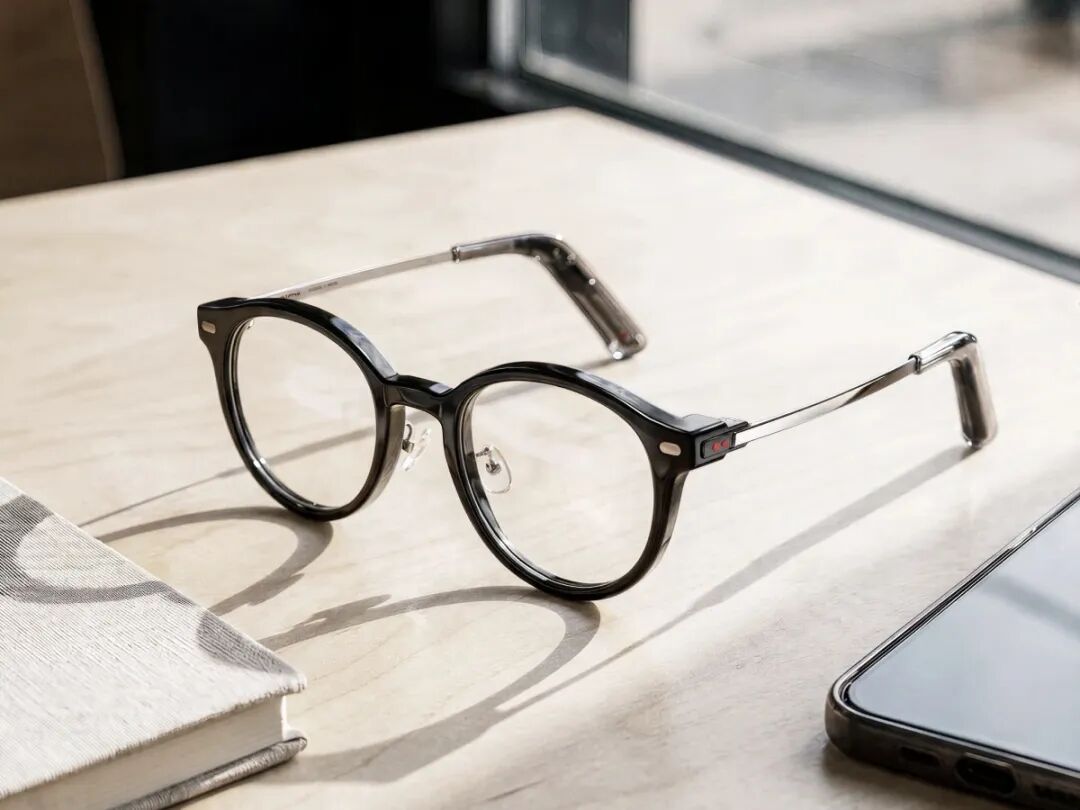
If the past few years of smart glasses have been a feature arms race, NIMO is attempting a different path — making smart glasses into a pair of glasses people actually want to wear. This stems from the founding team's observation: while capital has continued pouring into smart glasses, ordinary people in everyday life still rarely see anyone around them actually wearing them.
Co-founder Dilong He believes that the real threshold this category must cross isn't merely display, AI, or chip capabilities, but whether smart functionality can naturally integrate into the original form factor, wearing experience, and consumption logic of glasses.
With this philosophy, NIMO positions itself as a fashion-tech eyewear brand. The team's starting premise for the product wasn't "how many smart features can we add to glasses," but first making it a pair of glasses with everyday wearability — form, proportions, materials, tactile feel, and wearing comfort all had to meet traditional eyewear standards.
This judgment directly shaped NIMO's feature trade-offs. Rather than cramming cameras, audio, and additional main control chips into the frames, NIMO actively cut certain features from its debut product, devoting limited weight and space to display, structure, and wearing experience.
He noted that after extensive user research, NIMO found wearing comfort to be users' top priority when choosing smart glasses. Cameras and speakers significantly increased product volume, creating discomfort. The relentless pursuit of minimal weight ultimately drove NIMO's feature sacrifices. "At the same time, we're also developing new custom camera and speaker solutions to give users more scenario options in the future."

This product definition of "make a good pair of glasses first" ultimately manifested in a series of technical choices around optics, structure, and materials.
The display system starts with a MicroLED micro-display chip measuring just 0.06 inches. According to available information, this chip ranks as the smallest mass-produced silicon-based micro-display product globally, with power consumption 70% lower than comparable chips. The miniaturized display core frees up more space for optical engine and overall device design; lower display energy consumption supports longer battery life while maintaining lightweight construction.
Built around this micro-display chip, NIMO compressed its self-developed ultra-miniature optical engine to 0.03cc — 30 cubic millimeters — integrating the optical core that projects images into the hinge area at the front of the temple, hiding complex display capabilities within the glasses' original silhouette.
Paired with this is a 0.6mm-thick volume holographic waveguide lens. Through nearly invisible grating design and precise light leakage control, the lens maintains a transparent, natural appearance while displaying information, reducing outward green light leakage during display.
Lightweight construction represents another technical thread running through the product design. NIMO's current product weighs approximately 29 grams. He claims this marks the industry's first time achieving display-capable AI glasses under 30g. The frame uses high-performance polymer composite carbon fiber material, the structure employs β-titanium alloy hinges, and weight distribution is managed through the layout of the front optical engine, rear temple batteries, and bilateral components.
For smart glasses, weight itself is merely an outcome; what matters more is where that weight falls, whether the temples create pressure, and the actual feel after extended wear. Therefore, NIMO doesn't tout "29 grams" as a standalone selling point, but considers materials, structure, hinges, and front-rear weight distribution as an integrated system. Traditional eyewear manufacturing processes like polishing and electroplating are likewise incorporated into product development — the logic being that beyond electronics, smart glasses should also meet traditional eyewear's demands for tactile feel, surface finish, and structural detail.
On the supply chain front, NIMO doesn't simply procure standard components, but attempts to bring upstream suppliers into co-development. He explained that some key components lack off-the-shelf mature solutions; instead, NIMO proposes product requirements and technical solutions, then completes development jointly with suppliers. The 0.03cc miniature optical engine, for instance, resulted from redefining the temple space.
Commercially, NIMO has also chosen a path closer to the traditional eyewear industry. For NIMO, offline stores aren't merely an additional sales channel, but exist because smart glasses still face the traditional eyewear industry's challenges of fitting, try-on, lens replacement, after-sales service, and user education — if the product's primary attribute remains "glasses," then it needs to enter the scenarios where users already buy glasses.

In the longer term, NIMO hopes intelligence gradually becomes a natural capability of glasses, with users still choosing eyewear based on aesthetics, wearing needs, and lifestyle, while gaining display and smart features. "Ultimately, we hope NIMO isn't just a single smart glasses product, but combines eyewear itself, intelligent capabilities, and future application ecosystems to make smart glasses truly a product users are willing to wear long-term."
The following is an excerpt from an interview with NIMO co-founder Dilong He:
Q1
Why did NIMO start from "glasses" themselves in making smart glasses? What's your core product judgment?
He: I believe smart glasses are first and foremost still glasses. They can't just pile functions onto glasses, but must first solve glasses' own problems — whether they look good, whether they're comfortable to wear, and whether they suit Asian facial structures.
So from the start we've emphasized "glasses-ness," hoping users feel first that it's a normal, good-looking pair of glasses, not an electronic device. On that foundation, we then add intelligent capabilities.
We'll also actively cut functions we consider unnecessary, because if everything gets added, you might end up with a product that has many features but users aren't willing to wear long-term. For us, the real prerequisite for smart glasses to become mainstream is still whether users are willing to wear them daily.
Q2
In product design, how specifically does NIMO resolve the tension between "smart" and "glasses"?
He: We've actually spent enormous effort on weight, materials, structure, and wearing experience.
For example, the temples use β-titanium material, the nose pads are designed for Asian facial structures, and we use carbon fiber and other materials for lightweighting. The product itself is about 29 grams; with prescription lenses added, final weight might reach 34 to 36 grams depending on prescription and refractive index.
We've also retained many traditional eyewear manufacturing processes. Temple polishing alone takes several days; wood-grain polishing even requires two days and nights continuously. We hope that stripped of its electronic attributes, it's still a pair of glasses with complete craftsmanship.
Battery is also a major challenge. We use steel-case batteries; so far in actual use we haven't observed noticeable heating issues, and charging for 15 minutes reaches about 80%. The display portion is made as invisible as possible, with light transmittance up to 98%, so users don't noticeably feel it's a display device in normal conditions.
Q3
How are users actually using NIMO now? Why didn't you make the features especially complex?
He: Currently we're focused on functions directly relevant to users' daily lives — stocks, news, messages, maps, teleprompter, translation, and auto-brightness, for example.
We hope these functions naturally integrate into wearing scenarios, rather than adding features to showcase technology. Functions like teleprompter and translation essentially put information directly before users' eyes, reducing the need to frequently pull out phones.
Going forward we'll also consider opening SDK and developer ecosystems. We believe smart glasses ultimately may not be just us defining all application scenarios; developers can build more things based on the glasses' inherent capabilities. For now, we prefer to first get the hardware, display, and foundational capabilities right, then gradually open the ecosystem.
Q4
From market feedback, how far are smart glasses from truly entering the mass market? How is NIMO currently advancing this?
He: We started official shipments in April this year, with roughly 1,000 units in pre-orders at the start, then several thousand units monthly since. Our channels currently include Douyin, JD.com, and offline stores — about 150 or so. We emphasize offline because smart glasses differ from ordinary consumer electronics; users often need to actually wear and experience them before understanding their value.
Offline also presents challenges — different store staff have varying levels of product understanding, and consumer awareness of smart glasses itself is still building. So we conduct offline training, hoping staff can fully demonstrate the product's main functions in relatively short time, helping users quickly understand.
From this perspective, we believe smart glasses' popularization isn't only a hardware problem, but also requires user education and channels to mature together.