Endless Ark Co-Founder Publishes Breakthrough Cancer Research in Nature, Proposing New Therapeutic Approach | Unity Ventures Portfolio

A New CRISPR Therapeutic Strategy Brings New Hope to Previously Undruggable Cancers
Recently, Jingkun Zeng, co-founder of Unity Ventures' seed-stage portfolio company Endless Ark, published a breakthrough study as first author in the top-tier academic journal Nature.
The research focuses on a problem that has long plagued the medical field: "undruggable cancers." It proposes an entirely new approach: if cancer cells cannot be repaired, can they be precisely identified and directly eliminated? Around this concept, the research team developed a novel CRISPR therapeutic strategy.
Endless Ark is a biotechnology company focused on longevity science and aging intervention, dedicated to extending human healthspan through cutting-edge life science technology exploration. The core team includes seven Oxford PhDs, as well as multiple PhDs and postdoctoral researchers from world-class institutions such as UC Berkeley and MIT, covering artificial intelligence, computational biology, gene editing, aging biology, and drug translation.

Do you want to live longer, or do you want to live healthier? What we hope for is to live longer while maintaining health, vitality, and high quality of life. The prerequisite for achieving this goal is understanding the underlying biological mechanisms behind disease and aging.
For decades, scientists have been exploring a key question: when cells become abnormal, can we detect them earlier, identify them more precisely, and ultimately intervene effectively?
Recently, the international top-tier academic journal Nature published a breakthrough study titled Targeting Cancer-Specific Mutations with RNA-Triggered Chromatin Shredding. Endless Ark co-founder Dr. Jingkun Zeng participated in the study as first author. The research was led by Nobel Prize in Chemistry laureate Jennifer Doudna's team.
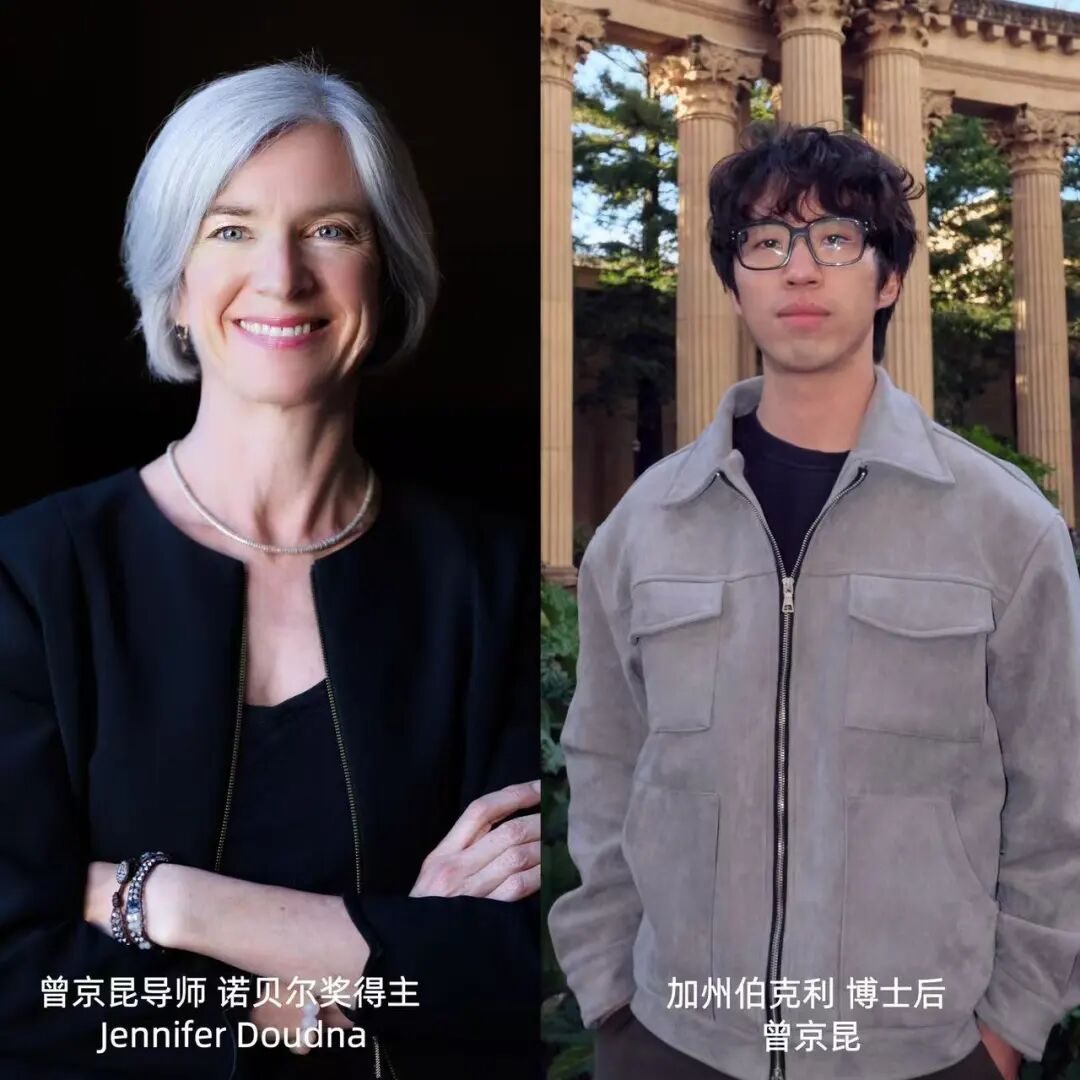
This research focuses on the long-standing problem of "undruggable cancers" in the medical field and proposes a completely new solution: when abnormal cells cannot be repaired, can they be precisely identified and selectively eliminated?
Although this is a cancer study, the scientific thinking it embodies — precise identification of abnormal states and precise intervention — is also an important direction that modern longevity science continues to explore.
A Problem That Has Troubled the Medical Field for Decades
In cancer research, there is a well-known term: Undruggable Targets.
Simply put, scientists already know that a certain gene is an important cause of cancer, but they have been unable to develop effective drugs. One of the most typical representatives is p53.
Known as the "guardian of the genome," p53 is one of the most important tumor suppressor genes in the human body. Research shows that more than 40% of cancers are related to p53 mutations.
However, for decades, countless research teams worldwide have invested substantial resources in developing drugs targeting p53, yet progress has remained limited.
The reason is simple: many cancers occur not because a gene is "overactive," but because it has "lost its original function." Broken things are often harder to fix than things running out of control. Therefore, p53 has long been regarded as one of the most challenging "undruggable targets" in cancer research.
If It Can't Be Fixed, Can It Be Directly Eliminated?
The development logic of traditional gene editing technology is usually: identify the problem → fix the problem. Whether gene editing or targeted therapy, the core goal is mostly to restore normal cellular function.
But Dr. Jingkun Zeng's team asked a different question: If cancer cells cannot be repaired, can they be precisely identified and directly eliminated?
Around this concept, the research team developed a novel CRISPR therapeutic strategy.
Unlike the familiar CRISPR-Cas9, this study utilized a new CRISPR system called Cas12a2. It functions more like a strictly controlled "safety device."
When the system recognizes abnormal RNA signals unique to cancer cells, it becomes activated and initiates what is called Chromatin Shredding. Simply put, it causes the genetic material inside abnormal cells to rapidly disintegrate, thereby triggering the cell death program.
Research results showed that this system can accurately identify cancer cell-specific mutations, achieving effective distinction even when the differences between normal and cancer cells are extremely minute.
This means: in the future, when facing certain cancers that have long been difficult to treat, people may no longer need to attempt to "repair" cancer cells, but can directly and safely eliminate them.
The True Significance of This Research
On the surface, this is a cancer treatment technology. But at a deeper level, it represents a new scientific approach.
In the past, medical research focused more on: how to repair abnormalities. In the future, scientists may also consider: how to precisely identify abnormalities and implement precise interventions.
This approach applies not only to cancer. It may also be applicable to viral infections, genetic diseases, and other complex disease research. It provides new possibilities for the future development of life sciences.
From Disease Research to Longevity Research
In recent years, with the development of longevity science, people have increasingly realized: aging is not merely the passage of time.
It involves complex biological processes, including epigenetic changes, chronic inflammation, cellular functional decline, and decreased tissue repair capacity, among others.
Therefore, longevity research focuses not only on extending lifespan. More importantly, it seeks to understand how these changes occur and how to effectively intervene.
Cancer research and longevity research may seem to belong to different fields. But at the underlying logic level, they are both answering the same question: how to maintain a healthy, orderly, and stable operation of the living system for a longer time.
Every deeper understanding of disease mechanisms may provide new tools and new inspiration for the future development of longevity technology.
Scientific Innovation Is Endless Ark's Most Important Foundational Capability
Endless Ark has always believed that what will truly change the future longevity industry is not just one product, nor merely one technology. Rather, it is the ability to continuously drive scientific breakthroughs and continuously create innovative achievements.
This Nature publication not only demonstrates the team's research strength at the international forefront of life sciences, but also reflects Endless Ark's long-standing development philosophy of placing equal emphasis on basic research and industrial translation.
From disease mechanism research to aging mechanism exploration; from laboratory innovation to real-world application; from extending pet healthspan to the broader future enterprise of human longevity. Endless Ark firmly believes that scientific innovation is the most reliable path to a healthier future world.
📖 Nature paper (click "Read Original" to access)
https://www.nature.com/articles/s41586-026-10738-7


Yaotang Bio Completes Nearly RMB 500 Million Series C Financing | Unity Ventures Portfolio News