真格基金

真格基金

@zhenfund

206 articles52 episodes

Articles

ZhenFund angel project "MenuSifu" announces $40 million Series B funding round | Z News

MenuSifu helps Chinese restaurant brands go global.

真格基金·

The user wants me to translate a Chinese title into English. Let me analyze this: "两万字产品销售深度干货:Clari CRO 揭秘 4 万亿收入管理背后,驱动销售增长的独家法则|Z Talk" Breaking it down: - 两万字 = 20,000 words - 产品销售深度干货 = in-depth product sales干货 (干货 is a Chinese internet slang for substantive/practical content, often translated as "insights," "know-how," "practical guide," "deep dive," etc.) - Clari CRO = Clari CRO (keep as is, it's a company title) - 揭秘 = reveals / unveils / breaks down - 4 万亿 = $4 trillion (or 4 trillion - need to decide if currency is implied; in Chinese business context this is likely USD or just a number; given Clari is a US company, probably USD) - 收入管理 = revenue management - 背后 = behind / under the hood / behind the scenes - 驱动销售增长的独家法则 = exclusive rules/principles for driving sales growth - Z Talk = Z Talk (keep as is, likely a publication/series name) This appears to be an article title for elsewhere.news. Let me craft a natural English headline. Options: - "20,000 Words of Deep Product Sales Know-How: Clari CRO Reveals the Exclusive Principles Driving Sales Growth Behind $4 Tr

As a salesperson, my job is to understand all the internal constraints within the client's organization.

真格基金·

Moonshot AI Founder Zhilin Yang's Latest Take: Deep Reflections on OpenAI's o1 Paradigm Shift | Z Talk

The Next Phase of Foundation Models: A New Paradigm?

真格基金·

Castbox's Wang Xiaoyu: 50+ Products, 50M+ MAU, How a Podcast App Went Global and Became an AI-Powered Product Factory

Stay at the table and wait for a better opportunity.

真格基金·

ZhenFund Early-Stage Project "XCharge" Successfully Lists on Nasdaq | Z News

Warm congratulations to XCharge! A new journey begins — the future is bright!

真格基金·

YC Founder's Latest Viral Silicon Valley Essay: Founder Mode May Be the Better Operating Model for Startups | Z Talk

In reality, there are two fundamentally different ways to run a company: founder mode versus manager mode.

真格基金·

Flexiv's strategic incubatee **Qiongche Intelligence** announces completion of hundreds of millions of RMB in Pre-A funding round | Z News

Proceeds from this round will go toward product R&D, commercial expansion, and talent recruitment.

真格基金·

ZhenFund Wins "Most Active Early-Stage Investment Firm" and Multiple Other Awards from First Voice | Z News

**China's Most Active Investors in Q2 2024**

真格基金·

China Resources Beer CEO Hou Xiaohai in Conversation with Orienspace's Yao Song: Building Rockets and Brewing Beer Both Require Innovation | Z Talk

Yao Song's WeChat Moments signature: "Today is the youngest day of your life."

真格基金·

Iterating the Last 1%: A Founder's Guide to Organizational Growth | Z Talk

Closed-Door Talent Salon Recap: How to Control Organizational Growth?

真格基金·

Podcasts

A Three-Way Dialogue on AIGC Creativity, Product, and Investment: Will the Future Pixar Be Born Inside an AI Company?

A Three-Way Dialogue on AIGC Creativity, Product, and Investment: Will the Future Pixar Be Born Inside an AI Company?

真格基金·
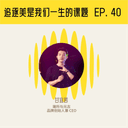
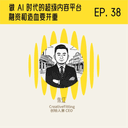
CreativeFitting Founder Zhu Jiang: Building a Super Content Platform for the AI Era — Fundraising and Self-Sustaining Revenue Must Go Hand in Hand

CreativeFitting Founder Zhu Jiang: Building a Super Content Platform for the AI Era — Fundraising and Self-Sustaining Revenue Must Go Hand in Hand

真格基金·
A Conversation with Zhaogang Group's Wang Dong: One Team, One Email, Thirteen Years of Building Zhaogang

---

When Wang Dong, founder of Zhaogang Group, sent that email thirteen years ago, he didn't know he was assembling what would become one of China's most resilient B2B platform teams.

The email went out to a small group of former colleagues and industry contacts. The subject line was simple, almost too simple for what it would set in motion. They were going to digitize steel trading — an industry notorious for opacity, fragmentation, and old-school relationship-based dealmaking.

"We were basically a group of people who understood steel but didn't understand the internet," Wang Dong recalls. "And somehow that turned out to be an advantage."

The early years were brutal. Steel is a commodity business with thin margins and entrenched middlemen. The platform model required convincing buyers and sellers — many of whom had operated through personal networks for decades — to transact online. Trust had to be built transaction by transaction.

What separated Zhaogang from the wave of B2B platforms that emerged in the mid-2010s was operational discipline. While competitors burned capital on rapid geographic expansion, Wang Dong's

A Conversation with Zhaogang Group's Wang Dong: One Team, One Email, Thirteen Years of Building Zhaogang --- When Wang Dong, founder of Zhaogang Group, sent that email thirteen years ago, he didn't know he was assembling what would become one of China's most resilient B2B platform teams. The email went out to a small group of former colleagues and industry contacts. The subject line was simple, almost too simple for what it would set in motion. They were going to digitize steel trading — an industry notorious for opacity, fragmentation, and old-school relationship-based dealmaking. "We were basically a group of people who understood steel but didn't understand the internet," Wang Dong recalls. "And somehow that turned out to be an advantage." The early years were brutal. Steel is a commodity business with thin margins and entrenched middlemen. The platform model required convincing buyers and sellers — many of whom had operated through personal networks for decades — to transact online. Trust had to be built transaction by transaction. What separated Zhaogang from the wave of B2B platforms that emerged in the mid-2010s was operational discipline. While competitors burned capital on rapid geographic expansion, Wang Dong's

真格基金·
A Long Conversation with Yusen Dai on Agents: Every Industry Will Face Its "Sedol Moment" — Is Attention Not All You Need?

A Long Conversation with Yusen Dai on Agents: Every Industry Will Face Its "Sedol Moment" — Is Attention Not All You Need?

真格基金·
A New Year Conversation with Koji: 2025 — The Critical Year for AI, the Dawn of the Agent Era

A New Year Conversation with Koji: 2025 — The Critical Year for AI, the Dawn of the Agent Era

真格基金·
The Evolution of Coding Agents: In-Depth Conversations with Chinese and American Agent Founders, Alibaba Researchers, and Investors

The Evolution of Coding Agents: In-Depth Conversations with Chinese and American Agent Founders, Alibaba Researchers, and Investors

真格基金·
A Conversation with Google DeepMind and LLM Researchers: Deconstructing OpenAI o1 and the LLM+RL New Paradigm

A Conversation with Google DeepMind and LLM Researchers: Deconstructing OpenAI o1 and the LLM+RL New Paradigm

真格基金·
Acquired by a multinational after just five years in your first startup? Ren Dongni, founder of Fanqu, breaks down the game of entrepreneurship and exits

---

When Ren Dongni co-founded Fanqu in 2016, the cross-border e-commerce space was already crowded with well-funded players. Five years later, the company had been acquired by a multinational corporation — a relatively swift exit by startup standards. In this conversation, Ren reflects on what it took to build and sell a company, the calculus behind taking strategic investment from a potential acquirer, and why he believes first-time founders often overcomplicate the "game" of entrepreneurship.

**On the acquisition decision**

"The offer came at a point where we saw the competitive landscape shifting dramatically. Cross-border e-commerce was consolidating, and the platforms with the deepest pockets were starting to squeeze out mid-tier players. We had built something valuable — a supply chain infrastructure and brand relationships that took years to cultivate — but scaling to the next level would have required capital and operational bandwidth we didn't have."

The acquiring company, Ren explains, had been a strategic investor in Fanqu's Series B round. "That relationship gave them visibility into how we operated. When they approached us about a full acquisition, it wasn't

Acquired by a multinational after just five years in your first startup? Ren Dongni, founder of Fanqu, breaks down the game of entrepreneurship and exits --- When Ren Dongni co-founded Fanqu in 2016, the cross-border e-commerce space was already crowded with well-funded players. Five years later, the company had been acquired by a multinational corporation — a relatively swift exit by startup standards. In this conversation, Ren reflects on what it took to build and sell a company, the calculus behind taking strategic investment from a potential acquirer, and why he believes first-time founders often overcomplicate the "game" of entrepreneurship. **On the acquisition decision** "The offer came at a point where we saw the competitive landscape shifting dramatically. Cross-border e-commerce was consolidating, and the platforms with the deepest pockets were starting to squeeze out mid-tier players. We had built something valuable — a supply chain infrastructure and brand relationships that took years to cultivate — but scaling to the next level would have required capital and operational bandwidth we didn't have." The acquiring company, Ren explains, had been a strategic investor in Fanqu's Series B round. "That relationship gave them visibility into how we operated. When they approached us about a full acquisition, it wasn't

真格基金·
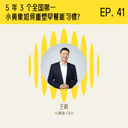
Talking AI Tech Applications, Founder Mindset, and the Scale of Entrepreneurship | A Conversation with Xiaoyu Wang of Castbox

Talking AI Tech Applications, Founder Mindset, and the Scale of Entrepreneurship | A Conversation with Xiaoyu Wang of Castbox

真格基金·
A Chat with Xiaoyezi Founder Ye Bin: How to Learn an Instrument Painlessly? Try Going Smart!

A Chat with Xiaoyezi Founder Ye Bin: How to Learn an Instrument Painlessly? Try Going Smart!

真格基金·