MaHui Entrepreneurs | From 0 to 1 to 23.4 Reading Week: Strategy and Operations

Day 2: Exploring Startup Strategy and Operations
#MaHui Entrepreneurs — Resilient and Bold, Exploring Without Cease
Since its establishment in 1995, World Book Day has consistently advocated for and promoted reading and writing, paying tribute to great thinkers who have made enormous contributions to human civilization.
These masters of thought include strategists and practitioners alike. Chairman Mao once said: "We must carefully filter the outstanding strategic thinking in The Art of War, critically accept its principles and laws for guiding warfare, and enrich them with new content." Thinkers who unite knowledge with action believe that "what we learn from books is superficial after all; to truly understand something, we must practice it." After trudging through swamps, swimming through undercurrents, paddling upstream, and finally facing the light, they return to write down new insights for readers. Through their own journeys and accumulated wisdom, they connect the individual self with the greater self and with value creation.
Today we recommend 12 books on strategy and operations, most of them memoirs by entrepreneurs who have lived through turbulence and hardship. Together, let us explore Lean Business Thinking and Rethinking Entrepreneurship, and then take the second step beyond the 0-to-1 breakthrough in thinking: exploring strategy for entrepreneurship and operations for startups.
This Issue's Reading List
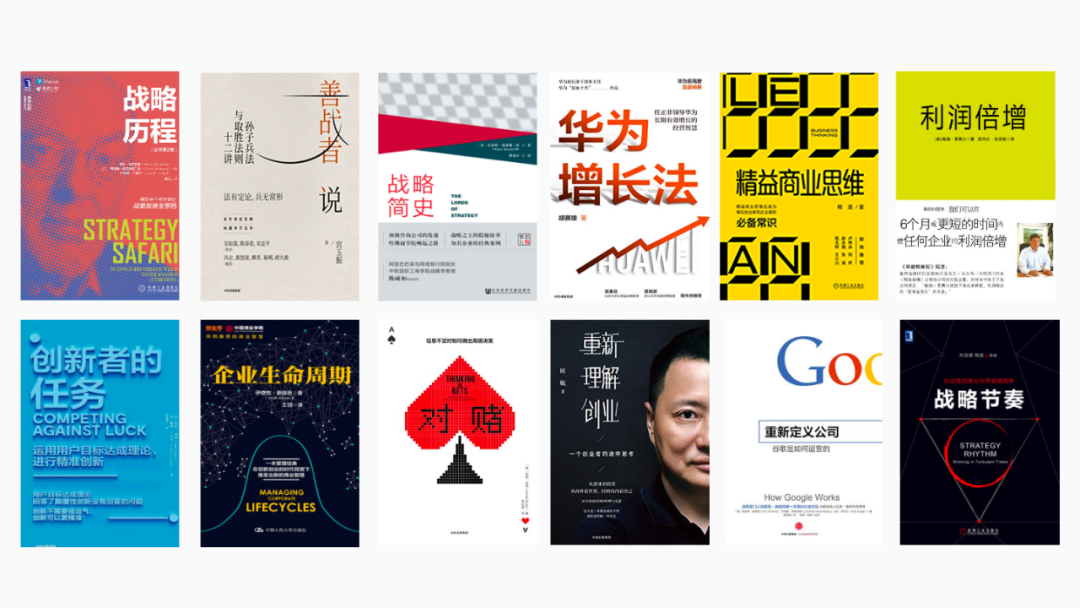
Click the images below in order to view details
01
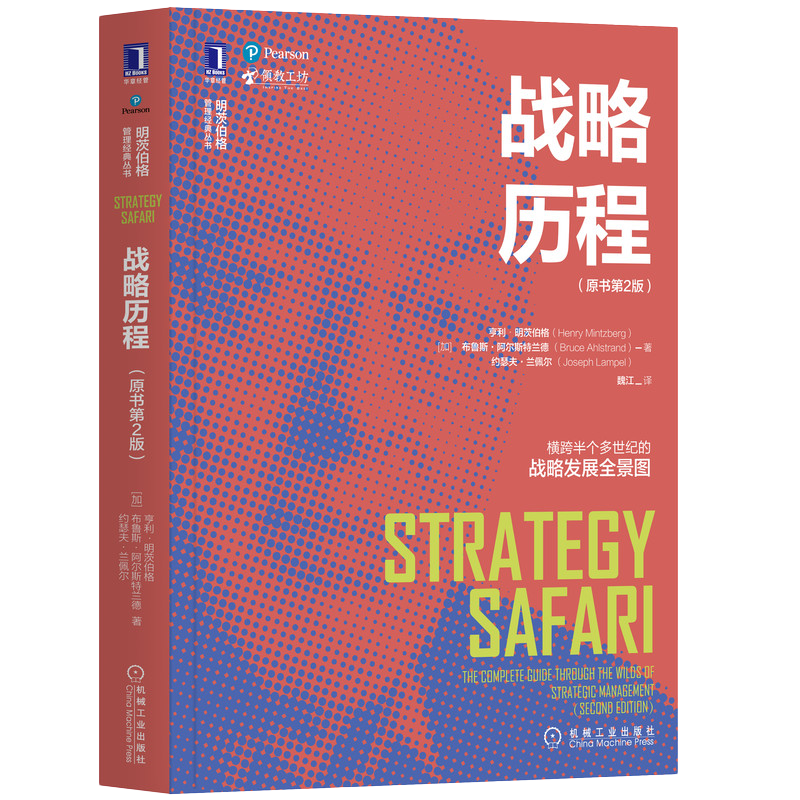
Strategy Safari
Why We Recommend It
This book is a classic in the field of strategy, often called "a guide through the wilds of strategic management." It synthesizes, organizes, and distills decades of research from many renowned strategic management scholars. All three authors are management professors at top Canadian universities, and Henry Mintzberg in particular is celebrated as management's great heretic, with multiple influential works to his name.
Strategy Safari comprises twelve chapters that introduce and analyze ten schools of strategic management: the design school, planning school, positioning school, entrepreneurial school, cognitive school, learning school, power school, cultural school, environmental school, and configurational school. Each school reflects the objective laws of strategy formation from a different angle or level, contributing to strategic management theory and complementing one another to form a complete theoretical system — an internally connected genealogy of how strategy takes shape.
Strategic formulation is regarded as the highest-level management activity, yet many entrepreneurs still grope around "strategy" like the blind men touching the elephant, searching for weapons to solve their problems. This book is an excellent introduction to strategic management thinking. Its value lies not only in showcasing the essence of strategic management thinking spanning more than half a century, but more importantly in giving management novices a view of the whole elephant.
Recommended Chapters
Chapter 6 — The Cognitive School: Strategy Formation as a Mental Process
Chapter 7 — The Learning School: Strategy Formation as an Emergent Process
Chapter 11 — The Configurational School: Strategy Formation as a Process of Transformation
02
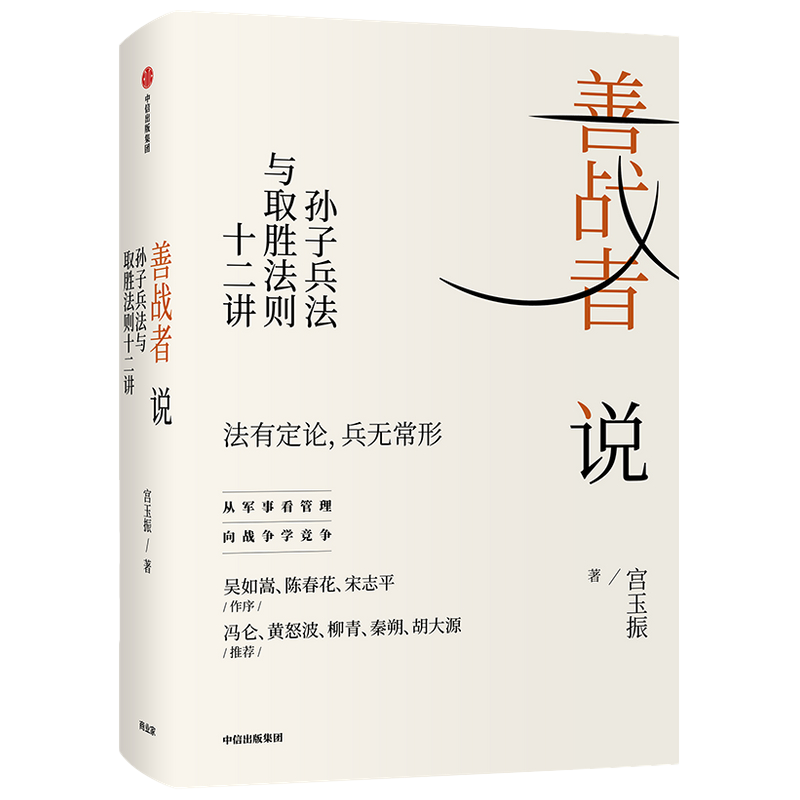
The Art of War for Business
Why We Recommend It
This book is a well-regarded Chinese work that interprets The Art of War from a management perspective. The Art of War is the earliest extant and most influential military treatise in China. It reveals the fundamental elements and principles of victory in warfare from a strategic height, defines the basic characteristics of Chinese strategic thinking and preferences, and is universally recognized as a strategic classic.
The Art of War for Business approaches its subject through the theme of "learning to think strategically." It breaks The Art of War's original chapter structure to extract Sun Tzu's twelve core concepts, organizing them into twelve lectures across three business dimensions: the deep foundations of organizational management, nine principles of competitive strategy, and the essential connotations of leadership. Rich with vivid real-world cases, it comprehensively and accessibly explains the inspiration and application of The Art of War to business management and operations.
The author is Gong Yuzhen, a professor at Peking University's National School of Development, with dual backgrounds in military science and management. This is the key to why the book stands out among numerous interpretations of The Art of War: it combines the author's unique understanding of both warfare and business competition, bridging the gap between the path to victory in war and the path to success in corporate competition. It summarizes fundamental strategic concepts for turbulent and uncertain competitive environments, and has been praised by many business leaders as a rare specialist work that views management through the lens of military affairs and competition through the lens of war.
For entrepreneurs, the value of The Art of War for Business lies in its careful extraction from an ancient military classic of underlying thinking that can be projected onto and validated in today's business world. Through this cross-disciplinary perspective, readers can examine their own management practices, review their corporate strategy, assess market competition, and evaluate the external environment — becoming "skilled warriors" themselves.
Recommended Chapters
Lecture 2 — The Seven Calculations: Seven Dimensions of Comparison
Lecture 4 — Winning First: Mastering the Timing of Attack and Defense
Lecture 6 — Striking at Weakness: Choosing the Direction of Breakthrough
Lecture 12 — The Way of the General: Leadership in Dynamic Environments
03
The Lords of Strategy

Why We Recommend It
A single critical strategic decision can mean life or death for a company, and every great company's development is inseparable from a distinctive strategic path. By narrating the history of the Western strategic consulting industry, this book shows us that "each emergence and transformation of strategy was designed to address entirely new problems in a changing world, and strategy is the most effective method for solving these problems" — and in this process, it answers the question of "how to do strategy."
In an environment where market rules grow increasingly complex and competitive density continuously increases, only enterprises with strong strategic design and execution capabilities can benefit from strategy through practice. The book focuses on the history of a unique industry, weaving in the use of numerous strategic models and tools so that we can learn immersively. Meanwhile, the thought processes and discoveries of outstanding strategic management masters when facing difficulties can also inspire us.
Competition in the business world is becoming ever more complex and multidimensional, yet strategy experts continue striving to simplify complexity and see ahead. They provide enterprises with theoretical guidance, analytical tools, and additional information channels, attempting to help companies find optimal solutions and resolve market and internal uncertainties. Strategic consulting firms are most criticized for being "unable to land" — and this book attempts to address this question in its conclusion. But for company founders, the greater value lies in gaining some insight into "how to make good use of expert advisors" after reading it.
Recommended Chapters
Chapter 7 — Michael Porter's Extraordinary Journey: How a Strategy Master Broke Through Difficulties
Chapter 10 — The Struggle from Strategy to Reality: The Dilemma of Strategy Implementation
Chapter 13 — How Capabilities Become Core: From Behaviors to Capabilities
Chapter 15 — Three People-Centered Strategies: The Latest Strategic Theory Framework
04
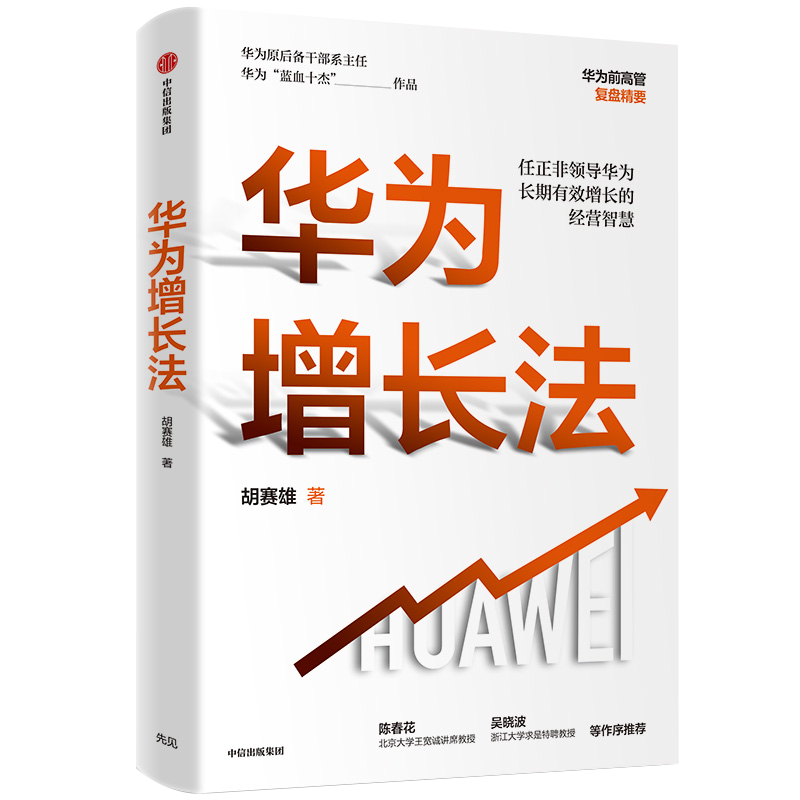
Huawei's Growth Method
Why We Recommend It
Drawing on 17 years of experience at Huawei as both "athlete and coach," author Hu Saixiong systematically expounds the key strategies that have driven Huawei's long-term effective growth across six dimensions: achieving customer growth, reasonable profit growth, breakthrough growth in uncertain environments, talent development mechanisms, growth drivers, and cultural forging — making Huawei's 30-year miracle of rapid growth into a replicable method.
Hu Saixiong's advantage in writing about Huawei lies in his combination of internal and external perspectives. He deeply excavates the technical know-how and application boundaries behind management concepts, effectively mapping methodologies to specific management scenarios at particular enterprises. He tells readers the practical methods for transforming and landing experience, enabling readers to truly absorb the essence of Huawei's growth method through "training and combat."
On the subject of sustained effective growth, Huawei's most important insight is perhaps returning operations and management to common sense. Good management means returning to the customer, returning to customer value, and returning to how to activate organizational members — basic common sense that helps entrepreneurs solve the problems of where to grow and how to grow. At the same time, we can also see where Huawei's bones and power to withstand storms come from when external tempests strike.
Recommended Chapters
Chapter 1 — Customer Growth: When Customers Make Money, the Enterprise Makes Money
Chapter 3 — Breakthrough Growth: Escaping Survival Limitations, Achieving Dynamic Management
Chapter 5 — Growth Drivers: Establishing a Diverse Incentive System, Activizing Organizational Vitality
05
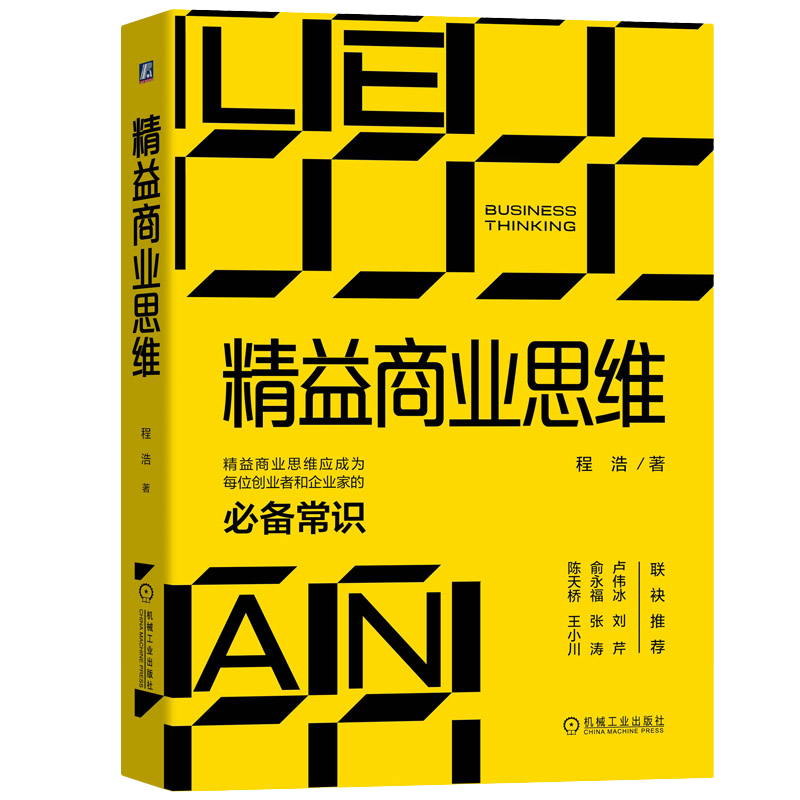
Lean Business Thinking
Why We Recommend It
Cheng Hao, founder of Xunlei, is one of the earliest practitioners and pioneers in China's internet industry. He worked in Silicon Valley and at Baidu before co-founding Xunlei in 2003, which listed on NASDAQ in 2014. Cheng Hao wields enormous influence in the tech and internet space and commands extensive high-end connections; he is a leading authority on AI and internet entrepreneurship in China.
Cheng Hao holds a master's degree in computer science from Duke University and a bachelor's degree in mathematics from Nankai University.
This book distills Cheng Hao's decade-plus of internet industry experience. He identifies the two most common problems facing startups as "finding the wrong need" and "building the wrong solution," and shares what lean means, how to achieve it, common non-lean practices and their harms to enterprises, how companies can innovate effectively, and where future innovation opportunities lie.
The book is highly readable, proceeding from the core principle of "returning to common sense, maintaining focus." It combines case studies to explain the three steps of lean business thinking: need exploration, user validation, and promotion — from the macro analysis of entrepreneurial direction selection to the micro design of MVPs and user interview methods. Depending on business model and user type, it details methodologies for accelerating user acquisition and stimulating internal innovation.
Recommended Chapters
Chapter 2 — The "Pits" on the Road to Success
Chapter 6 — How to Pivot When Project Development Stumbles
Chapter 7 — How to Accelerate Customer Acquisition
06
Double Your Profits

Why We Recommend It
The COVID-19 pandemic in 2020 posed unprecedented challenges for enterprises. In extraordinary times, "survival is king," and all entrepreneurs needed to reconsider how to increase revenue, reduce costs, and improve operational efficiency. Though published in 1993, this book offers many practical ideas and guidance for our present moment, earning its reputation as a "treasury of cost control."
From the perspectives of corporate culture, cost reduction, and revenue enhancement, the author deeply analyzes management practices. Under a "profit-first" mindset, he summarizes 78 methods from his years of work experience to help enterprises double their profits.
Some methods in the book have become business common sense, such as delaying payments and increasing inventory turnover. But more are approaches easily overlooked by managers, even requiring adjusted thinking to implement — for example, that the goal of a profit-oriented organization is not to satisfy customers without limit, but to provide consumers with what they are willing to pay for; or the suggestion that managers list their company's 20 largest customers and ask themselves of each: if I raised prices by 2%, would I really lose this customer? If the answer is no, then try 5%, 8%, 12%, 15%.
Unlike other books focused on cost control or marketing techniques, this one covers nearly every aspect of business operations, including supplier negotiation tactics, principles of employee motivation, methods of customer communication, even how companies should run meetings.
This book has been designated reading for executives at many Fortune 500 companies. Jack Welch ordered 125 copies for General Electric executives at the time; deeply influenced, those executives then ordered 2,700 more for their own employees. It is a practical book well-suited for startup teams to study together and align their thinking.
Recommended Chapters
Part IV — Increasing Sales
Section 57: The Five Elements of Closing
Section 62: The Sales Process as the Best Opportunity to Demonstrate Capability to Customers
Part V — A Few Words of Advice
07
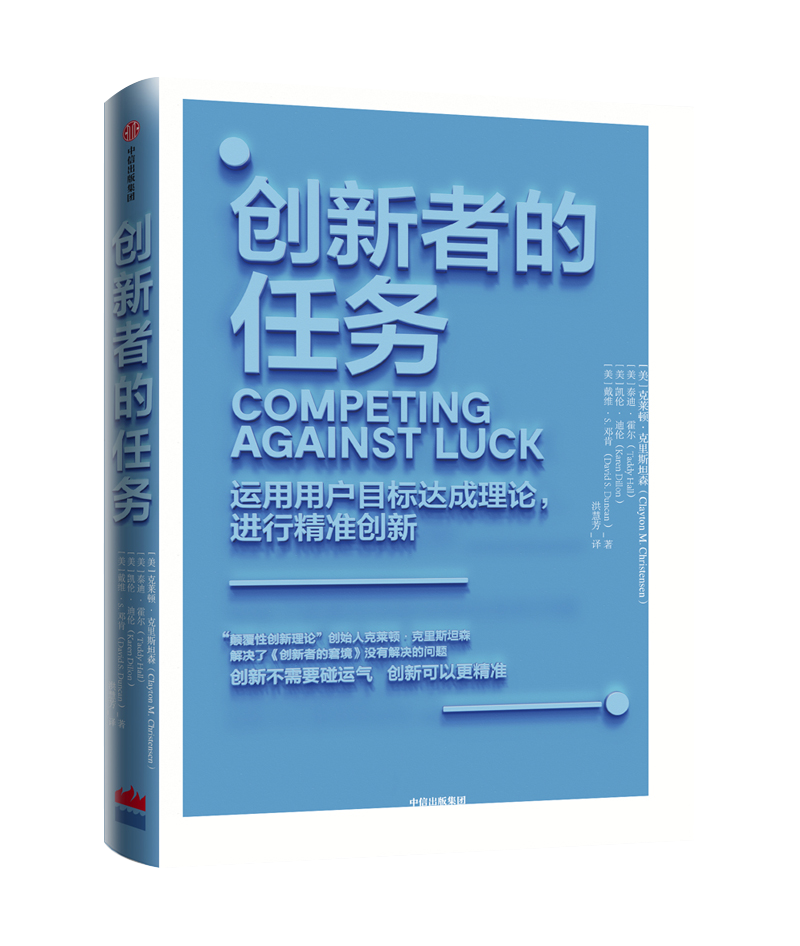
Competing Against Luck
Why We Recommend It
Building a company requires innovation; sustaining one requires innovation too. But few have considered the commonalities and differences between these two types of innovation.
Author Christensen proposed in the 1990s his theory of "disruptive innovation" to explain how new companies overthrow established ones. But he also realized this theory couldn't tell entrepreneurs where to seek new opportunities, nor guide enterprises in integrating innovation into organizational structure and process. So he began considering the inverse of "why big enterprises fail" — how do successful companies achieve initial success, and how do they maintain it?
From this, he developed a new theory called "jobs to be done." Its core is: the prerequisite for innovation is understanding why users employ your product or service — what job they want to get done. People bring products into their lives when they have a job that needs doing, not because they are attracted by flashy new features.
Readers can easily connect this to China's entrepreneurial environment, thinking of related concepts like needs, pain points, scenarios, and user-centric thinking. Indeed, for experienced entrepreneurs, the first part of the book may feel like familiar territory. But we still recommend spending time on the second and third parts, as they address two other critical questions: how to identify what users truly want to do from what they don't say; and how to design organizational processes and culture to be more conducive to innovation.
Recommended Chapters
Chapter 4 — How to Identify the Jobs Users Need to Get Done
Chapter 8 — Why Startups Easily Lose Their Sense of Users During Development
Chapter 9 — How to Define a Competitive Mission and Vision
08
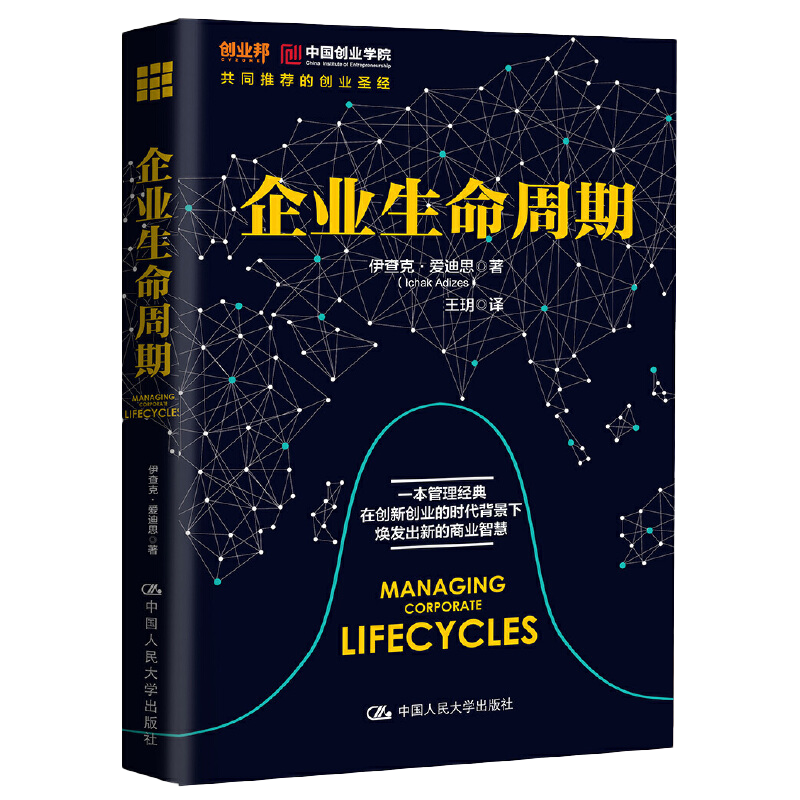
Managing Corporate Lifecycles
Why We Recommend It
Founding a company is not difficult, but leading one to sustained growth is hard.
Especially for first-time entrepreneurs, nurturing a company is like raising your first child — you need to distinguish which "cries" are minor fussing and which "mild symptoms" might worsen, so you don't overreact to normal problems or find yourself powerless after disaster has struck.
This book analogizes corporate development to human growth: the birth of a business idea is like conception, while a thriving Series A/B round is like an energetic but troublesome adolescence. In this growth process, which errors and conflicts are normal phenomena, and which imbalances require parental intervention — this is what the book explores with readers.
For example, startups often feature a CEO with an autocratic management style. Is this necessarily a problem? Yes for an adolescent company, but no for an infant one.
In the transition from infancy to adolescence, most CEOs are conscious of the need to delegate authority, but they commonly struggle with how to empower others without losing control of the company. This stage also typically involves team expansion and bringing in new executives — how to avoid conflict between old and new employees, and the loss of core talent, are discussed in depth.
The author introduces an analytical framework called PAEI, breaking down management capability into:
Purposeful (goal management),
Administrative (administrative management),
Entrepreneurial (entrepreneurial spirit), and Integrative (integrative capability), and drawing on his consulting experience to explain why these four dimensions cannot develop in parallel but require different emphases at different times.
A vivid metaphor: the four capabilities are like four dancers who must rotate through the "center position" as the dance progresses, making the whole performance fluid and vivid. But this exchange of positions is not a simple substitution — the supporting roles must carefully observe the relative positions of the lead dancer and those around them to find the optimal steps and path. The allocation and balance among management elements is much the same.
Recommended Chapters
Chapter 4 — Opportunity Selection and Cost Accounting Issues Easily Overlooked by Startups
Chapters 10–11 — The Rhythm Organizations Should Maintain in Developing Four Management Capabilities
Chapters 14–15 — Identifying Management Capabilities Required by Each Department, and Designing Organizational Structures Conducive to Strategy Implementation
09
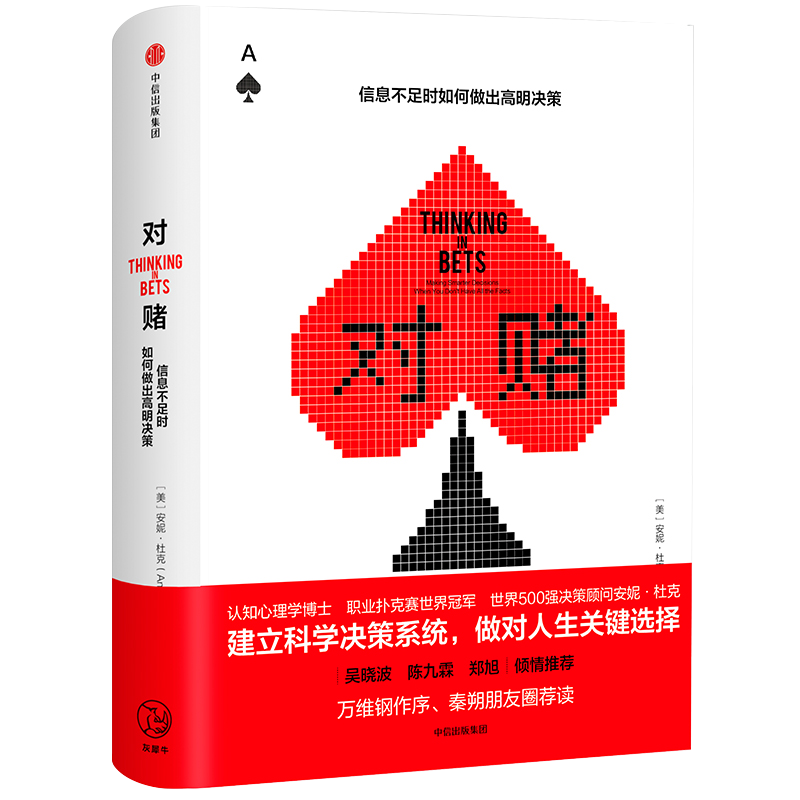
Thinking in Bets
Why We Recommend It
Strategic decision-making is a core CEO function, and decision quality can be improved through practice.
Texas hold'em is a classic game for practicing decision-making, and this book's author is an accomplished player. From her practical experience, she extracts a generalizable way of thinking — viewing every decision through the lens of a bet. In her view, decision-making is more like poker than chess, because chess is a game with fixed optimal solutions, seeking optimal paths through open and transparent information. The poker table, by contrast, is full of uncertainty: beyond having to accept the influence of luck, "every hand is a bet" means you pay for wrong decisions, so you need to consider all possibilities and alternatives as much as possible, view every event through probability, determine your strategy accordingly, and exclude emotional influence, continuously reviewing and optimizing this strategy.
This way of thinking applies not just to individuals but can extend to teams. To build a team culture that promotes high-quality decisions, here are several recommendations:
Share data fully: sometimes data owners don't realize the value of their data to others, so encourage everyone to share data as much as possible, however trivial or unnecessary it may seem;
Don't dismiss information lightly: regardless of where information comes from or how unpleasant or untrustworthy the provider may be, insist on verifying and evaluating the information itself rather than being influenced by emotion;
Be alert to potential conflicts of interest: conflicts of interest distort thinking processes, so exclude from the mechanism any factors that might influence group decisions;
Encourage participation and dissent: accept others' doubts to see all possibilities and options for a matter, or establish a dedicated "challenger" role to promote dissent.
Recommended Chapters
Chapters 3–4 — How to Build Betting Thinking and Improve Individual Cognition
Chapter 5 — What Kind of Team Culture Can Promote Decision Quality
10
Rethinking Entrepreneurship
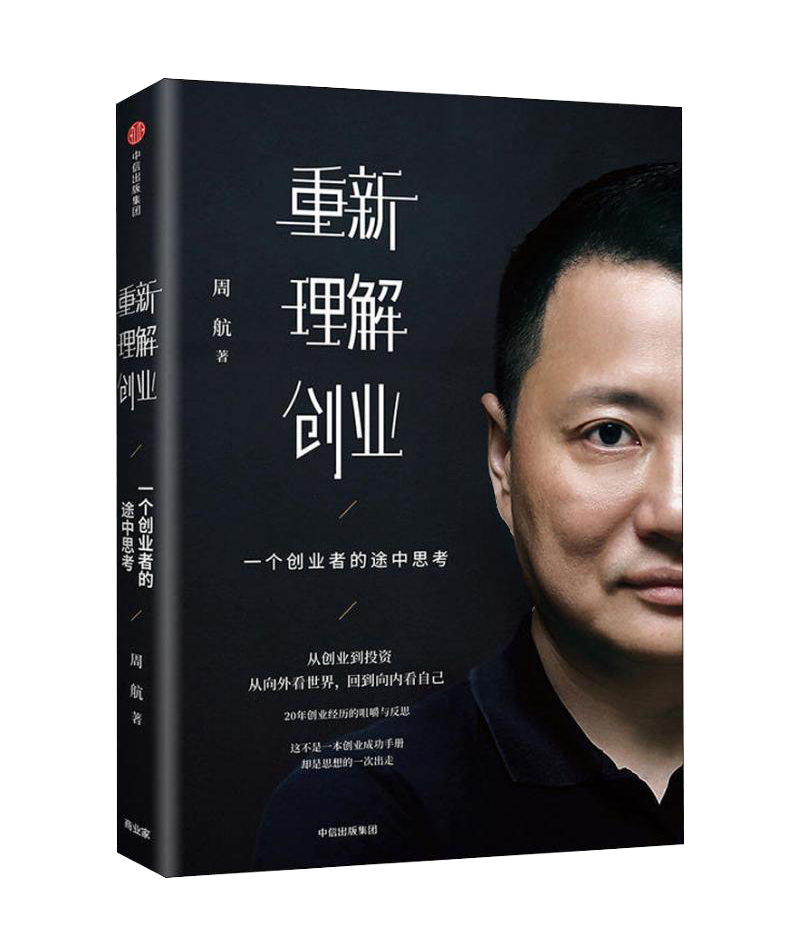
Why We Recommend It
There is no fixed formula for success. Directly applying others' experiences risks ignoring important changes in environment, needs, and competitive landscape — and taking a hard fall. But conversely, failure is excellent learning material: it helps you avoid detours and prevents you from building wheels users don't need.
Author Zhou Hang was CEO of Yidao, founded in May 2010 — earlier than Uber — but this first-mover advantage failed to translate into ultimate victory. Reasons vary, but the CEO's own perspective undoubtedly carries the most lessons. As a captain who has witnessed both highs and lows, the amplitude of this life experience gives the book's reflections broader applicability.
The book addresses twelve topics; we especially recommend the chapters discussing brand, management, and low periods, because these are lessons bought with real money and earned leading large teams, not textbook principles. Take management: a classic question is, who can you actually lead? Those who love you, or those you love?
The author's answer: "You can only lead people you like. How many people you can like determines the boundary of your leadership. You can dislike everyone, even yourself, but that means you can't even lead yourself. So the fewer labels you put on someone, the higher your acceptance of them, and the stronger your leadership over that person."
This answer is uncommon in most leadership books. But think carefully — it makes sense.
We hope more entrepreneurs can use others' retrospectives to examine themselves, better responding to cycles and transcending them.
Recommended Chapters
Preface
Chapter 3 — Brand
Chapters 6–7 — Leadership
Chapters 10–11 — Dealing with Low Periods and Bottlenecks
11
How Google Works
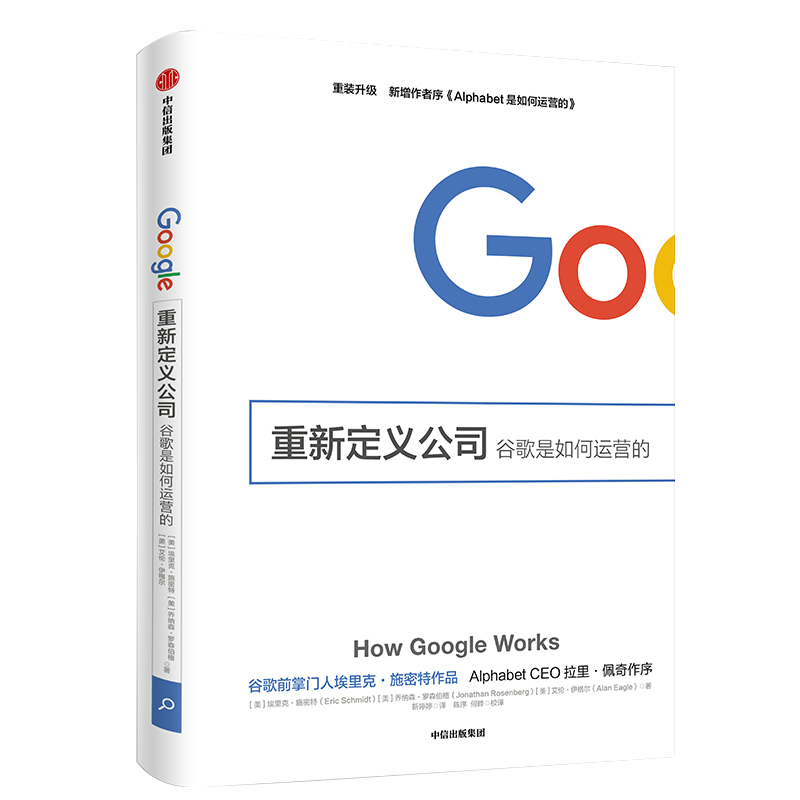
Why We Recommend It
Books on the art of corporate operations are not rare, but few match Google's combination of "principle and practice."
Take the common topic of "hiring." The familiar advice is to "attract lifelong learners," but this book's authors refine this need into a carefully designed question: "In the 1996 internet wave, what opportunities did you miss? What did you do right? What did you do wrong?" The trick of this question lies in guiding interviewees to describe their foresight at the time, then comparing it against actual developments to explain their mistakes and insights. Interviewers can thereby assess whether the candidate's cognition of facts is sharp and honest, and test their potential to summarize experience and learn from errors — far more efficient than simply asking "what are your greatest strengths and weaknesses?"
Or, to probe character and thinking patterns, you shouldn't rely solely on MBTI tests. You can also ask in interviews: "What unexpected things have you experienced?" or "If we searched your name in a search engine, what would we find that isn't on your resume?" These differ from typical interview questions; candidates can't get by with rehearsed answers, allowing you to see their potential flaws and limitations with less pretense.
Similar techniques include: establishing hiring committees modeled on universities, setting interviews at 30 minutes, discouraging interviewers from giving vague neutral evaluations, and using more creative methods to retain elite employees when they resign.
Many CEOs worry that Google's culture may not suit China's national conditions, or may not apply to the brutally competitive internet environment. Our understanding is: in the broad trend, knowledge workers' share across industries will continue rising, and their "selection, employment, development, and retention" will become unavoidable management issues for enterprises. Google's explorations in this area are forward-looking. And compared to the eras of Andy Grove (former Intel president) and Jack Welch (former General Electric president), Google's internet platform represents a business model closer to today's new economy. Even if the entire system can't be imported, the practical experience in strategy, talent, decision-making, communication, and innovation offers strong reference value.
Recommended Chapters
Chapter 3 — Talent and Hiring
Chapter 4 — Decision-Making and Meetings
Chapter 5 — Communication
12
Strategic Rhythm
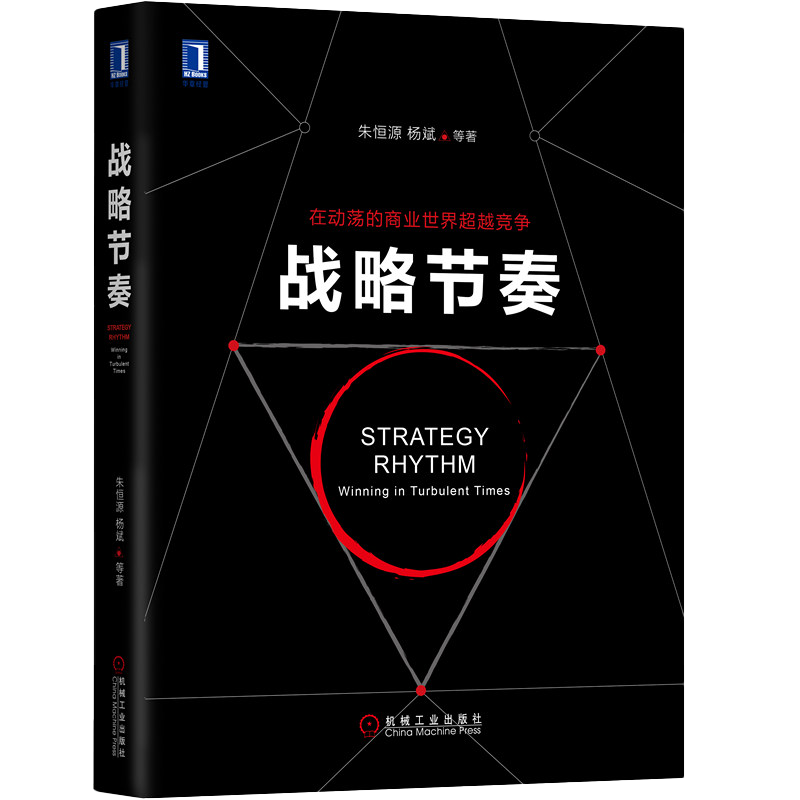
Why We Recommend It
Books on competitive strategy are common, but few directly address the problems facing startups. Whether Michael Porter's Five Forces model or Jay Barney's VRIN framework, both emerged in an era of relatively stable American business structure, lacking sufficient explanatory power for the dynamic, highly competitive environments startups face.
In response, some suggest: enterprises should continuously update their competitive advantages in dynamic environments. But what is competitive advantage? How is it built? Under what circumstances should what kind of advantage be amplified — without answering these specific questions, this advice remains merely a correct but empty slogan.
While this book doesn't (and couldn't) provide a universally applicable winning strategy, it can help you clarify a main thread: if you ambitiously want to bring a new product or service to market, then from niche market to mass market, then to segmented market and hybrid market, what is the most important goal at each stage? How to avoid mismatch between competitive strategy and market stage? How to avoid pioneers becoming martyrs?
For entrepreneurs who have already solved the "0 to 1" problem, a clear framework alone may not satisfy your appetite. Don't worry — the book's second half explores a larger question: after achieving survival, how do enterprises develop, evolve, and transform? The authors use three metaphors — "farmers" (focused on one product market), "hunters" (migrating intentionally or unintentionally across multiple industries), and "enclosers" (simultaneously involved in multiple industries, developing umbrella-style) — to characterize different enterprises, and provide success and failure cases plus key skills for transforming to other forms.
The core of corporate strategy is grasping the rhythms of factor markets, product markets, and equity markets, and planning ahead and timely acquiring matching competitive advantages according to these rhythms. Enduring through long winters, recognizing trends when they first stir, seizing initiative when great waves strike, and keeping pace when demands change.
Recommended Chapters
Preface
Chapter 1 — The Chinese Market That Defies Understanding
Chapter 3 — Tracking Product Market Growth
Chapter 6 — Segmented Markets
Chapter 9 — Hunters
"

- MaHui Entrepreneurs | From 0 to 1 to 23.4 Reading Week: "Entrepreneurial Thinking"
- MaHui Entrepreneurs | Exploring Without "Extinguishing," Saluting the Spirit of Aerospace
- MaHui Entrepreneurs | Your Moment of "Joy, Anger, Sorrow, Delight" That Awakens 2 Million Children with Autism
- MaHui Entrepreneurs | Sleep Well, Then Explore a More Awakened Entrepreneurial Life
- MaHui Entrepreneurs | When Entrepreneurship Becomes Their Way of Life
- James Webb Space Telescope Launches, Exploring the Infinite
- Source Code Capital's Hongjiang Zhang Elected Foreign Member of National Academy of Engineering
- GalaxySpace's Seven Satellites in One Launch
- The "Tech + Biomedical" Crossover: New Consensus on Convergent Innovation Investment
- Source Code Capital Closes Fifth RMB Fund: Driving Technological Innovation, Empowering SMEs
- 2021, Original Aspiration Is the Future