MaHui Entrepreneurs | From 0 to 1 to 23.4 Reading Week: "Organization and Talent"

Day 3, ten books, shared with all you fellow founders for mutual encouragement.
#MaHui Entrepreneurs — Resilient and Bold, Exploring Without End
Jixia Academy, the world's earliest state-run institution of higher learning and China's first university, had its archaeological site confirmed earlier this year after excavation. Having traversed more than two millennia of shifting sands, Jixia Academy now resonates anew with our thinking on talent cultivation.
An army of thousands is easy to raise; a single general is hard to find. This is the sentiment of most entrepreneurs. Especially in our rapidly changing VUCA era, once-capable lieutenants and established talent models may no longer match current business demands due to shifts in the external environment — making learning all the more urgent. This is a timeless reflection, and also echoes the Western world's earliest university, Plato's Academy: Excellence is not born but cultivated. We do not "make correct choices" because we are "inherently excellent"; rather, we become "excellent" through repeatedly practicing "the right things."
In entrepreneurship, we must know how to select talent; talent must continuously iterate itself; and organizations must keep evolving. Zheng Yunduan, CHO of Source Code Capital, once noted that organizations must address four critical disconnects: between individual dreams and organizational dreams, between employees and their roles, between parts and the whole, and between the present and the future. Only by breaking through the "fog of war" within organizations can we create lasting, genuine value.
Three days, ten books, to share with fellow entrepreneurs.
This Issue's Reading List
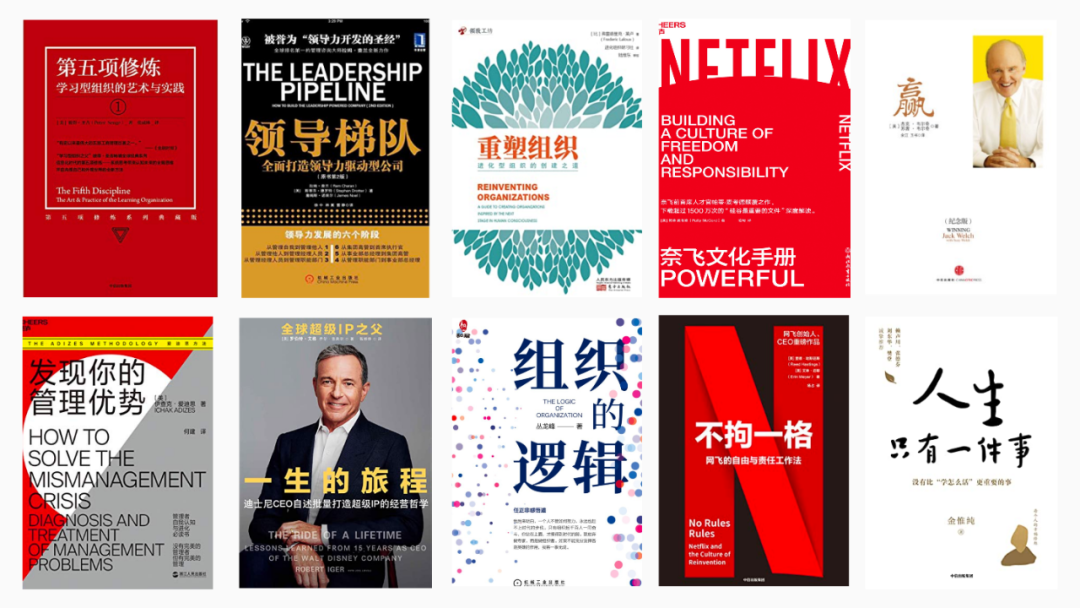
Click each image below for details
01
The Fifth Discipline
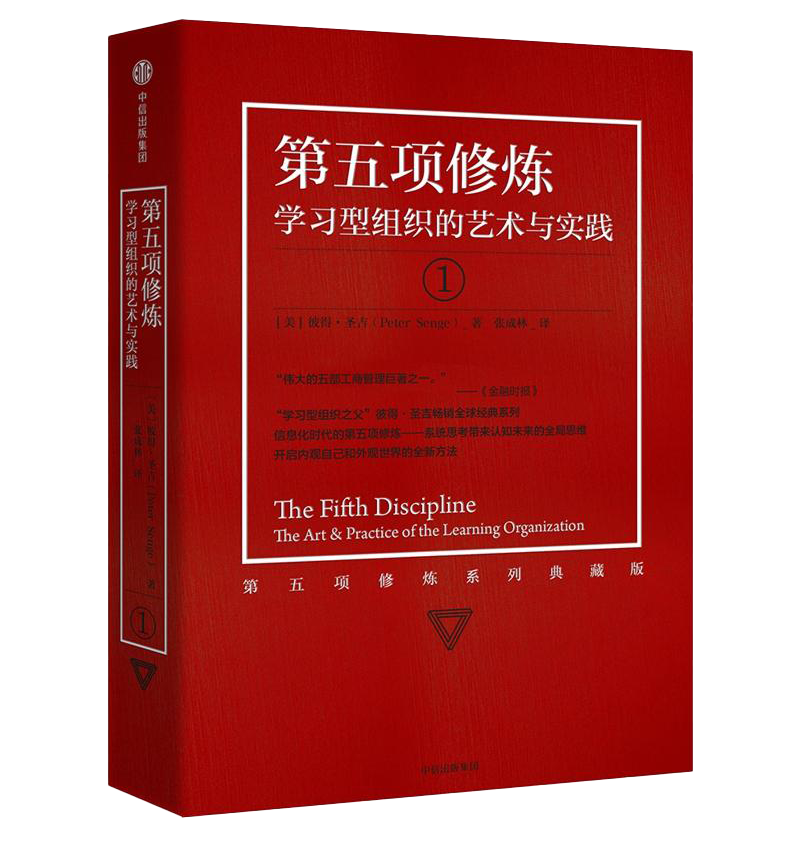
Why We Recommend It
An organization's most enduring competitive advantage is its ability to learn faster than rivals. Yet in fiercely competitive and rapidly changing markets, relying solely on the CEO's or management's experience is insufficient; so is learning confined to a select few. What must be built is an organization capable of continuous learning — a Learning Organization.
A learning organization is not simply about reading a few books or holding periodic training sessions. It requires sustained transformation of the organization across multiple dimensions: vision, habits, systems, and ways of thinking. This process demands what the author champions as the "fifth discipline" — systems thinking.
Systems thinking is easily confused with another popular management concept, Total Quality Management. But as Dr. W. Edwards Deming notes in his foreword to this book, management transformation is not some fashionable tool or slogan but a profound cognitive shift. "People are born with intrinsic motivation, self-esteem, curiosity, and the joy of learning. But forces that destroy these appear from the moment a child begins to walk — prizes for best Halloween costume, school grades, gold stars," and so on. Such things persist through university and into the workplace. Well-meaning organizations may not realize that their evaluation methods are eroding people's passion and aspirations.
The tools and principles introduced in this book aim to dismantle those false notions and mental barriers. The content is dense; if you're accustomed to short-form reading, you may find it challenging. Consider starting with Chapter 2 to assess "whether your organization has learning disabilities," then jumping to Chapter 4 to review the author's eleven principles of internal cultivation — see if any resonate with questions you've pondered. If these chapters engage you, you may find greater motivation to mine the book's other treasures: "how system structures influence member behavior" (Chapter 3), "the two most common models in management problems: limits to growth and shifting the burden" (Chapter 6), "how to build shared vision" (Chapter 10), and more. The latter half offers reflections from practice; you can continue reading to see what difficulties other managers encountered applying these principles, or first close the book and examine your own management practice for the problems and insights mentioned earlier, then collide those with the book's cases.
We hope this book brings you as much reward and pleasure as it brought us.
Recommended Chapters
Chapter 2, Chapter 4, Chapter 6, Chapter 10
02
The Leadership Pipeline
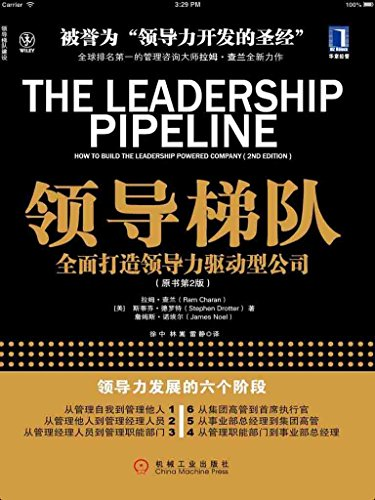
Why We Recommend It
People tend to assume that if an employee excels in one role, they will excel equally in a higher position. But this is not the case. The most common mistake among promoted employees is "competency-role" mismatch — unconsciously retreating to their previous comfort zone and taking on work that subordinates should handle. The result: they neither realize their own value nor free those below them to act.
For startups, another common risk is external hiring. Executives brought in from other companies are typically promoted to a higher level than their previous role. This means they must simultaneously learn to operate at a higher level, adapt to a new organizational culture, build interpersonal networks, and navigate potential jealousy and non-cooperation from existing staff. Under pressure, many resort to management techniques and methods from their previous company and role rather than crafting solutions tailored to the new situation — this "marking the boat to find the sword" approach often leads to failure.
The crux of these problems is that companies lack an endogenous engine for continuously supplying talent to critical roles. To address this, the book proposes a six-stage leadership pipeline model, analyzing in detail the capability upgrades and mindset shifts required at each transition: from individual contributor to first-line manager, to department director, to business unit vice president, to business unit general manager, to group vice president, and finally to CEO. It serves well as shared learning material within companies because whatever intermediate level you occupy, it offers dual value: how to better coach and evaluate your subordinates, and how to plan for your next career stage.
However, not all companies need to establish all six levels. Level development should match company growth. The CEO's responsibility is to define a pipeline model suited to the company's current state and industry attributes, defining key competencies for each level and coaching and evaluating accordingly. In this design process, the conceptual frameworks and practical experience the authors provide can be borrowed — this is the book's greatest value.
Recommended Chapters
Introduction
Chapter 1 Overview
Chapter 13 Coaching
Startups may also read Chapters 2–4 to understand the transition from "managing self" to "managing a functional department"; more mature companies are recommended to selectively read Chapters 11–12, using the model to diagnose internal talent pipeline risks while making better plans for functional department development paths.
03
Reinventing Organizations
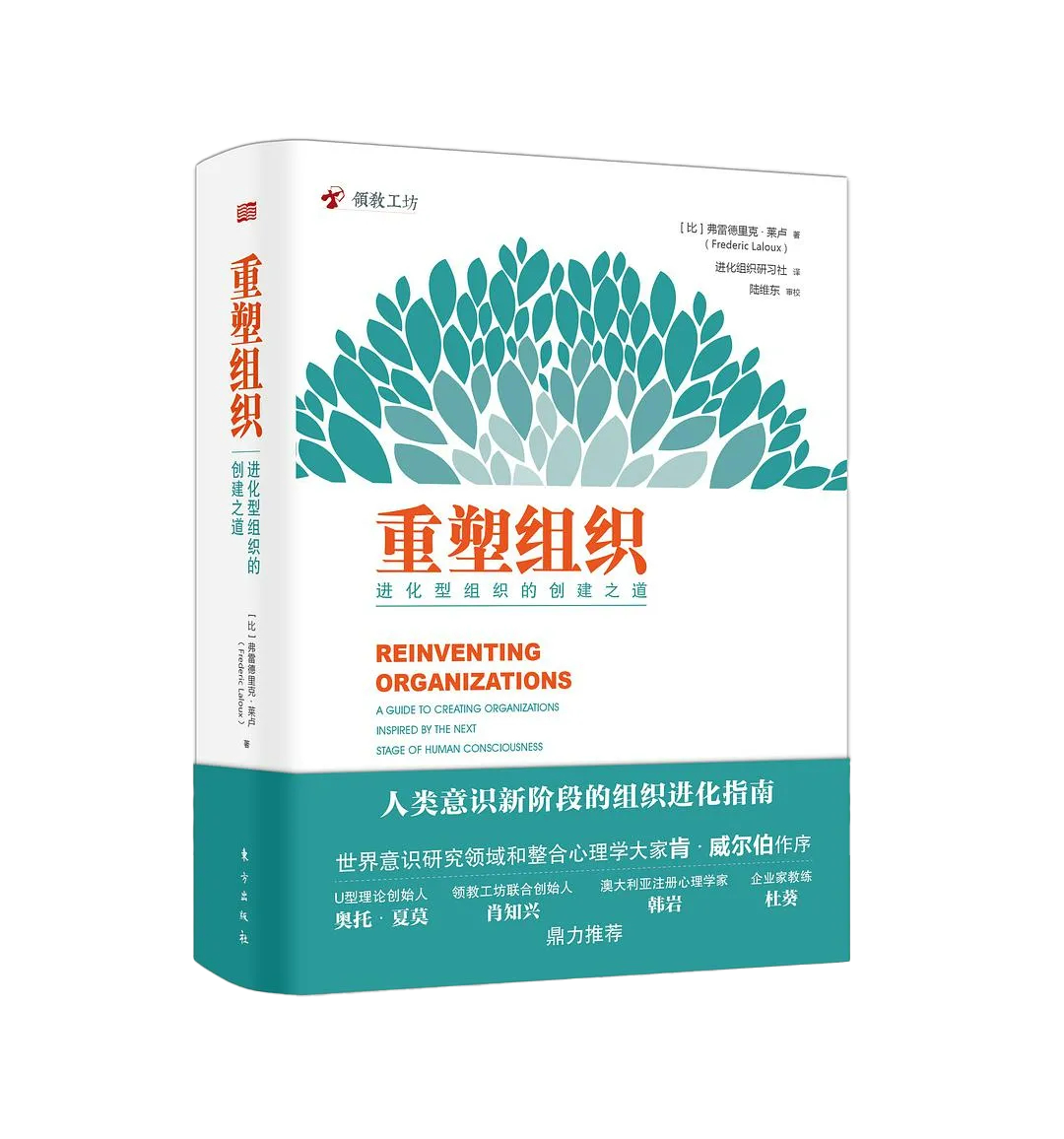
Why We Recommend It
In this book, the author maps organizational evolution onto human development, dividing paradigms into past, present, and future:
- Past: Reactive-Infrared, Magic-Magenta
- Present: Impulsive-Red, Conformist-Amber, Achievement-Orange, Pluralistic-Green
- Future: Evolutionary-Teal
Roughly 10,000 years ago, the Impulsive-Red paradigm emerged: organizations with chiefs and division of labor, cohesion maintained through force, prevalent in chaotic environments, ego-centric. Around 4000 BCE in Mesopotamia, civilization produced the Conformist-Amber paradigm: ethno-centric, morally constrained, stability-seeking, process-driven, long-term planning, hierarchical and specialized, lacking inclusivity. Subsequently came the Achievement-Orange paradigm: goal-driven, with clear authority, responsibility, and benefit; meritocratic culture; modern human resource management introduced; efficiency-first, results-oriented; money and social recognition as measures of success. The Pluralistic-Green paradigm emerged almost simultaneously. In the foreseeable future, as technology advances and social structures shift, people's demands for self-actualization and self-transcendence will surge. Individuals will become more capable of self-management; organizations will cohere around purpose, operate bottom-up, and make independent decisions.
Evolutionary-Teal organizations remain faithful to organizational purpose, share a common culture, practice wholeness in general practices and HR processes, and meet the needs of self-management in structure and process. So how does one build an Evolutionary-Teal organization? The necessary condition is the leader's worldview — very much "as you sow, so shall you reap." Results belong to the future and are downstream; in the present moment of choosing what kind of organization to build, the leader's decisions are based on fundamental assumptions, and this fundamental assumption is precisely their worldview. If leaders cannot unite knowledge and action, they will struggle to sustain an Evolutionary-Teal organization when facing difficult choices.
Building an Evolutionary-Teal organization is no easy feat. Perhaps your current organization lacks the conditions for establishing such an organization. But you can at least make horizontal progress. The organizational states described in the book may currently seem perfectly unimplementable, but they at least provide a fresh angle on organizational construction: first examine what our fundamental assumptions about organizational building are; how to view organizational goals from a higher vantage point; how to create environments where individuals can express their wholeness; how to stimulate people's higher-level needs for self-actualization; how not to predict the future but to create it together.
04
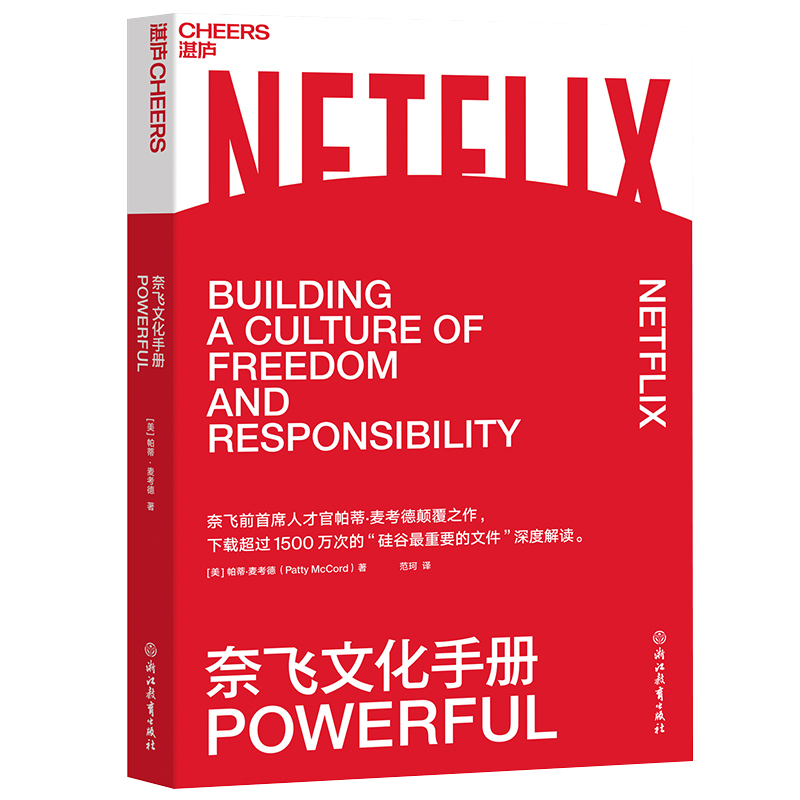
The Netflix Culture Deck
Why We Recommend It
Netflix is a company that places tremendous emphasis on "innovation." This spirit of innovation manifests not only in its strategy but also in its corporate culture and organizational management philosophy.
Compared to strategic innovation, cultural innovation is far rarer and more difficult to pull off. The market is flooded with corporate culture and organizational management data, with countless mature models and frameworks ready to be adopted. Precisely because of this, innovating in organizational management feels like challenging established authority—constraining and intimidating. But discussing organizational management divorced from the specific character of an organization is like mechanically applying textbook theory: armchair strategizing at its worst. Organizational management philosophy is more of a framework for thinking, giving business leaders a particular mindset. The culture of a successful company is invariably tied to that company's unique identity; simply copying it to your own organization usually fails. Yet innovation is non-negotiable. New enterprises built by new generations of people demand new cultures and new management mechanisms. This is why Netflix actively dismantled and reinvented its old cultural system, striving to build a fresh cultural framework suited to Netflix as it exists today.
To understand Netflix's culture, what matters is grasping the essential thinking behind how Netflix built its culture, and how it integrated these reflections on human nature into every mechanism and cultural practice. Netflix believes: 1) The genuine driver of people's passionate engagement at work is not primarily money, but rather the opportunity to create value and the pleasure of working alongside exceptional people. Companies should create environments where money serves as a reward for the value employees create, not as compensation for following rules. 2) Companies shouldn't "empower" employees; from day one, they should remind employees that they already possess power, and create every condition for them to exercise it.
Supplementary Reading
The Netflix Culture Deck
(Netflix Culture Deck)
Recommended Chapters
Chapter 1 Cultural Tenet 1: We Only Hire Adults
Chapter 2 Cultural Tenet 2: Everyone Needs to Understand the Business
Chapter 3 Cultural Tenet 3: Absolute Candor Enables Truly Effective Feedback
05
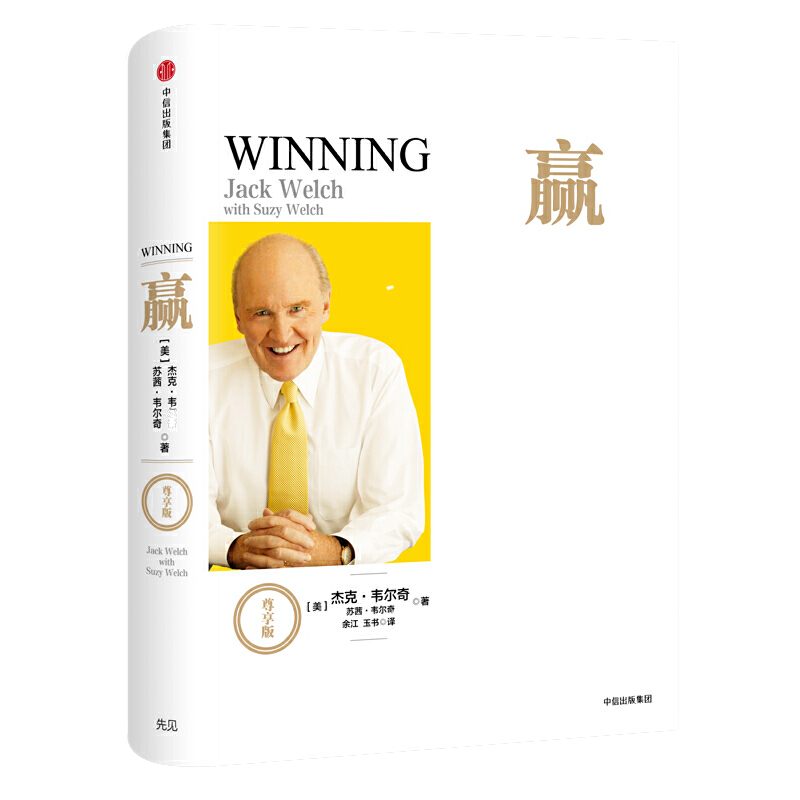
Winning
Why We Recommend It
Jack Welch, the legendary CEO, believed that every question people asked him could be distilled to one thing: "How do I win?" He argued that winning isn't merely "good"—it's truly "great." So in 2005 he wrote this book as a guide to "how to win."
The book is divided into five sections addressing: the fundamentals, how companies can win, how to win in competition, how individual careers can win, and other questions about winning—all delivered with simple yet thunderously resonant arguments. Running throughout is Welch's focus on "people." When it comes to winning, he believed, people are the decisive factor. Hence his repeated emphasis on fostering candid, fair environments; taking initiative; effective performance evaluation; listening attentively; and "never thinking of yourself as a victim."
Unlike other management books with complex, clearly mapped structures and closed-loop logic, Winning reads more like an elder sharing a lifetime of experience with the reader. These insights may not form a tightly woven knowledge network, but they constitute foundational bedrock for business management and entrepreneurial spirit. When Welch passed away this March, revisiting his classic at such a moment only deepens one's appreciation for the power of his wisdom, foresight, and experience.
Amid the COVID-19 crisis, "how companies can win" is the paramount concern facing every founder. The topics Welch addresses in this section—leadership, hiring, people management, "breaking up," transformation, and crisis management—directly echo the management improvement and efficiency enhancement issues on everyone's minds lately.
The book reads effortlessly, almost in one sitting—a genuine case of profound simplicity masking deep wisdom. In the leadership section, for instance, he proposes that leaders must "relentlessly upgrade their team, using every encounter as an opportunity to evaluate, coach, and build self-confidence"; must "get into employees' midst, conveying positive energy and optimism"; must "build trust through candor, transparency, and prestige"; yet also "have the courage to make unpopular decisions and say things that offend people." These concise action guides, combined with vivid cases, follow the familiar format of seasoned expert sharing: "what works, what doesn't"—ample material for readers to identify gaps and fill them.
Recommended Chapter
Part 2 How Companies Can Win
06
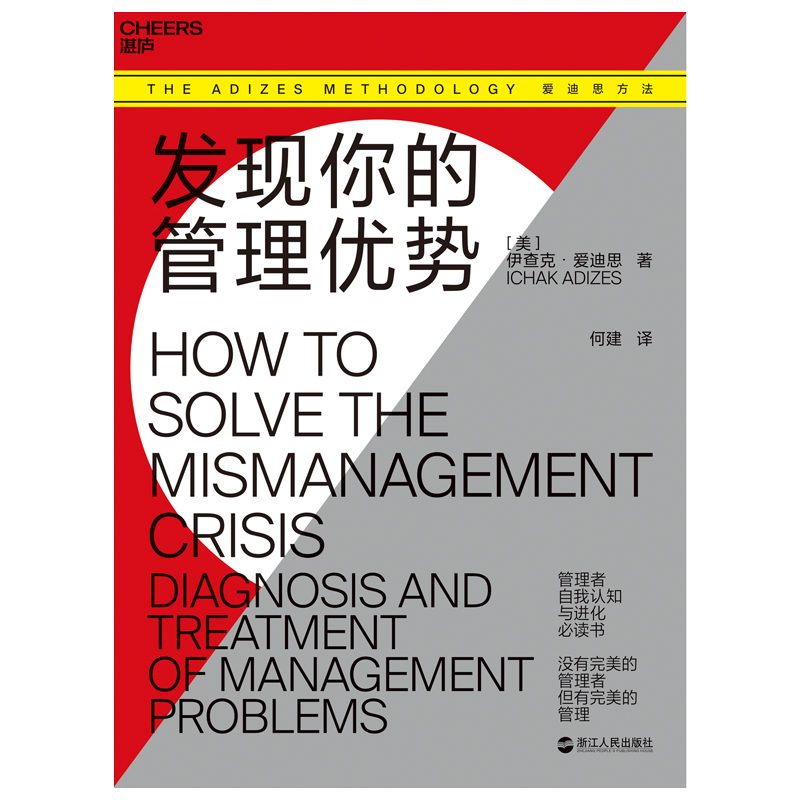
Discover Your Management Strengths
Why We Recommend It
The core of this book is the PAEI model, with four letters representing four managerial roles: Producer, Administrator, Entrepreneur, and Integrator.
PAEI first serves as a strengths assessment model for managers. By comparing themselves against the traits of these four roles, managers can gain clear self-awareness of their management strengths and gaps. Combined with the requirements of different positions and the evolving needs of organizations at different stages, this enables targeted responsibility assignment and development planning.
PAEI also functions as a management team composition model. The author proposes that no one can be a perfect manager embodying all four role traits; what organizations should pursue is the right mix of different management roles to build a perfect management team. Moreover, an organization's unique atmosphere affects how well specific role-types integrate, providing a clear analytical framework for defining talent profiles, appealing to specific types of talent, and ensuring smooth onboarding.
PAEI is also an organizational behavior coding model. Ichak Adizes, the author, is best known for Corporate Lifecycles. In this book, he combines both models to discuss the managerial characteristics and typical problems of organizations at different stages, the types of managers needed, and different "treatments" to help organizations grow smoothly into their next phase.
This book is exceptionally well-suited for enterprises that haven't yet established their own management philosophy and system, serving as foundational material for mapping manager profiles. It clarifies many situations that startup-phase companies struggle to grasp. For entrepreneurs lacking relevant experience, whether as a supplement to their own thinking models or as learning material for business骨干 transitioning to management roles, the returns should be considerable.
Recommended Chapters
Part 1 Manager Self-Assessment: Discover Your Management Strengths
Part 2 Avoiding Management Failure: Four Steps to Building a Perfect Management Team
07
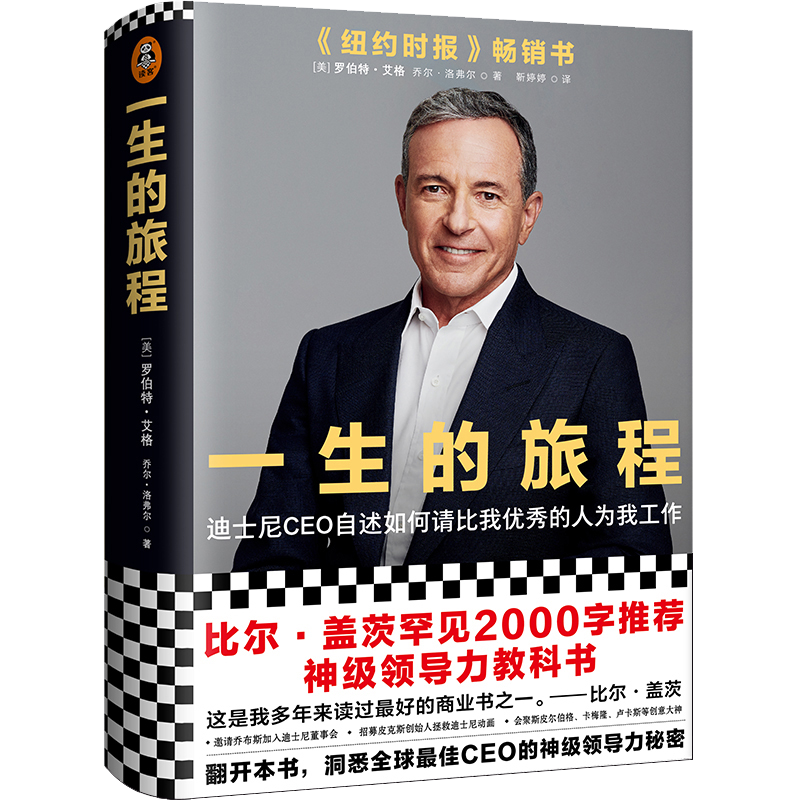
The Ride of a Lifetime
Why We Recommend It
Over his 45-year career, Robert Iger held 20 different positions and worked under 14 bosses before becoming Chairman and CEO of The Walt Disney Company. In this memoir written as he approached retirement, he distilled 10 indispensable principles of true leadership. For example: Optimism ("One of the most important qualities of a good leader is optimism, a pragmatic enthusiasm for what can be achieved"); Courage ("Innovation is life-or-death, and people can only achieve true innovation when they have courage"); Deliberation ("Taking time to cultivate insightful perspectives") and others. "In the simplest terms, this book is about how to guide yourself forward with a set of principles that help cultivate strengths and manage weaknesses."
To prevent these important ideas from seeming abstract and hollow, he also recounts many significant stories and examples from his career. We see him as president of ABC Broadcasting, joining Disney through merger, and navigating a series of challenges to eventually become CEO of this behemoth. We also see how, from this position, he made decisions that profoundly shaped global culture industries.
But the book's greatest appeal lies in the distinctive spirit of top-tier entrepreneurship that suffuses every story. It is this same spirit that has sustained generations of entrepreneurs through complexity and adversity, through ever-shifting uncertainty—persisting with conviction, never surrendering to exhaustion or anxiety. This is a book that instills confidence, ideal for reading in moments of weariness or solitude, drawing strength to carry on.
Recommended Chapters
Chapters 4–7 Disney's acquisition of ABC, and Iger's path to becoming CEO
Chapter 8 The Power of Respect: Truly Becoming the Company's Leader
08
The Logic of Organizations
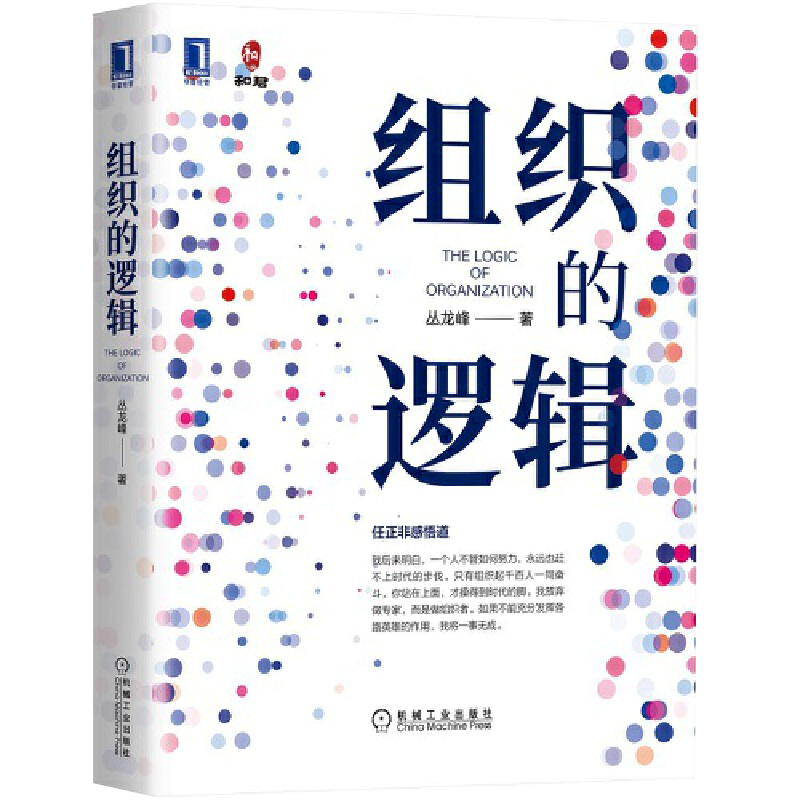
Why We Recommend It
Everyone says organizations matter, but what does it actually feel like to "have an organization"?
This book is essentially a "beginner's handbook" for organizational management. Dr. Cong Longfeng states that he hopes to help readers first establish a framework-level understanding of core organizational management issues: the three core concepts of "organization, organizational function, and organizational form," and the relationships among them. Organizational function is particularly central: "function" (ji) refers to organizational mechanisms—the horizontal processes, vertical hierarchies, and matrix-integrated departments within an organization; "capability" (neng) corresponds to organizational functions and capabilities. With this thinking framework, what to do and how to do it in building an organization suddenly becomes much clearer.
"Team management deals with 'direct management' problems, while organizational management must confront the challenges of 'indirect management.' Many founders are excellent at team management; what they truly struggle with is often the leap from team management to organizational management."
"At the organizational level, if you want to manifest a capability, there should be a set of mechanisms supporting it. Otherwise that capability remains concentrated in a single department, team, or individual rather than being organizationalized."
"Organizational processes determine operational efficiency; organizational hierarchies determine decision-making efficiency; organizational structures generate structural efficiency; organizational forms affect overall efficiency."
Insights like these abound throughout the book, and the author has found a rigorous logical thread to tightly weave them together, making for an exceptionally smooth reading and knowledge-retention experience that readily produces a sense of "mastery through comprehension." Additionally, in the practice section, the author provides in-depth analysis of three case studies: Desheng Yanglou, Handu E-Commerce Group, and Xiaomi's ecosystem, further enhancing the book's practical applicability.
For startups, the first challenge of organizational management is always the founder's cognitive upgrade. Even entrepreneurs who have "seen good systems" or even "built good systems" must still face organizational challenges brought by new uncertain situations—not to mention some founders who are quite unfamiliar with organizational management. This book is precisely a "quasi-textbook" aimed at the company's top leader, able to help founders clarify their thinking about organizational building. With clear thinking, it becomes much easier to then find professional HR to provide corresponding tools and implementation.
Recommended Chapters
None. The logical connections between chapters in this book are very tight, and the writing is smooth and readable. Full-text reading is recommended.
09
No Rules Rules: Netflix and the Culture of Reinvention
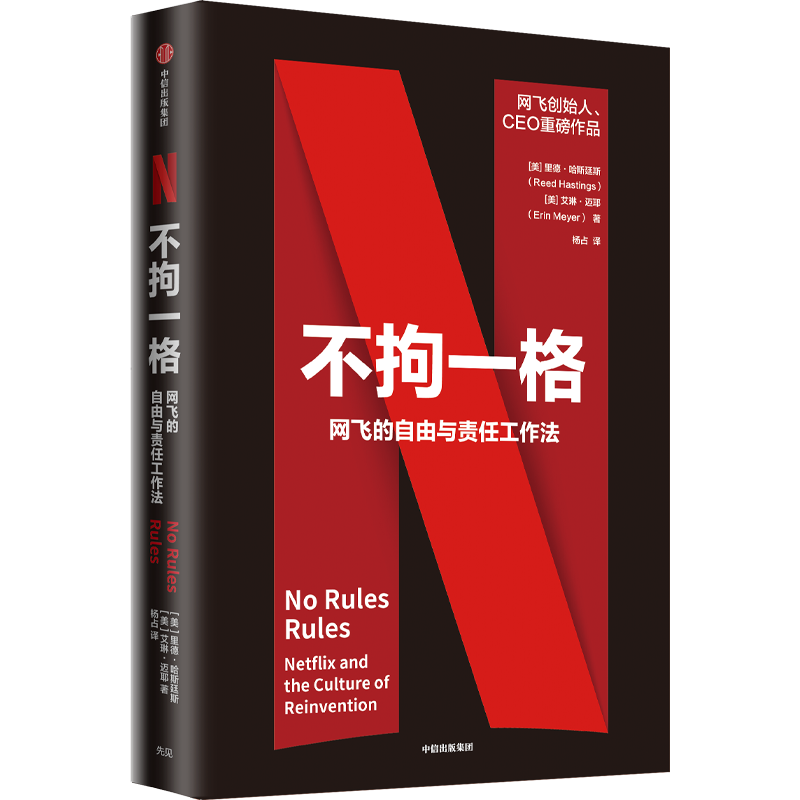
Why We Recommend It
If you actually click into this book's Douban comment section, you'll find plenty of complaints—mostly about how Netflix's principles and methods are difficult to implement, how most companies don't have the right soil for them...—which makes for an interesting contrast with the book's high ratings, perhaps reflecting a certain longing.
When it comes to managing teams, what we're doing has never been copying methods wholesale. Rather, we're being inspired by successful experiences to create solutions that fit us, constantly testing and iterating—there's no such thing as getting it right in one step or once and for all. Behind Netflix's success, we see the emphasis on high-quality talent and heavy reliance on corporate culture. High-quality talent is the prerequisite for all of this to work, and building corporate culture is the biggest lever of Netflix-style management. So what we should really be asking ourselves is: In my business, how important is high-quality talent? Where do they come from, how do they come, and what key positions should they be placed in? What kind of corporate culture have I built, and what kind of working model has it formed? What other management methods do I need to compensate for where corporate culture falls short? And a series of other questions.
At the same time, we can still borrow Netflix's management techniques—for example, how to implement corporate culture effectively, how to gradually feel out the right measure of culture-based management, even how to recruit good talent, how to conduct performance management, and so on. In this book, we'll also see how some popular management tools were implemented at Netflix.
Moreover, what's most inspiring in the Netflix case is that courage to trust people completely and break conventions. Entrepreneurship is an adventure. Netflix bet on "freedom and responsibility"—what are we betting on, and do we also have the courage to press forward?
Recommended Chapters
Part One, Chapter 2 Increasing Corporate Candor: Feedback is one of the most effective management tools
Part Two, Chapter 5 Further Increasing Talent Density: You don't necessarily need to learn Netflix's high salaries, but you can reference the practical implementation of compensation incentives
Part Three, Chapter 7 The Keeper Test: Without movement, there is no vitality
10
There Is Only One Thing in Life
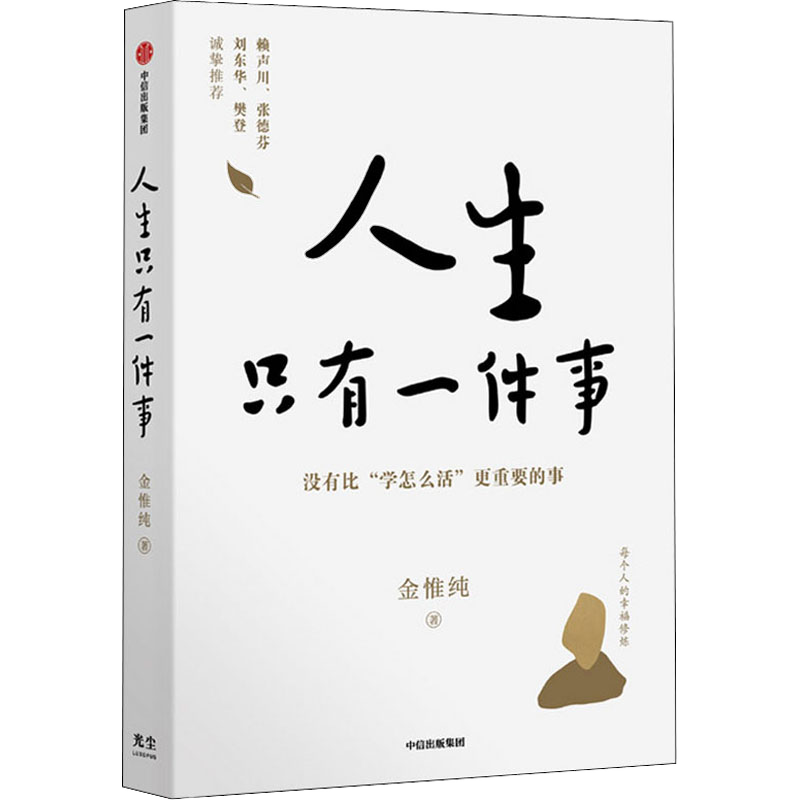
Why We Recommend It
The author of this book, Weichun Jin, is the founder of Business Weekly, an influential business and finance magazine in Taiwan. After its launch, the magazine experienced seven consecutive years of losses, which he could only describe as "utterly worthless." While contemplating whether to shut down the company, he "realized that the source of all mistakes was himself, and that all mistakes should end with him—and instead felt relieved." After leaving the company to practice at a temple for seven days, he "was no longer anxious, no longer angry, no longer wondering when the company would turn profitable, no longer asking colleagues why they hadn't met their targets. I just needed to do one or two 'good deeds' at the company each day to feel joyful. I changed my question to ask colleagues what they liked doing most, what gave them the greatest sense of accomplishment." Ultimately, Business Weekly turned around from losses of over 100 million NT dollars to become Taiwan's highest-circulation magazine, setting a global media record for a business magazine's circulation surpassing that of gossip magazines.
This was Weichun Jin's answer. There is only one thing in life: "learning how to live." He no longer distinguished between life and work, but cultivated himself through life, then influenced those around him through the power of "love and example."
This book is a collection of essays. Reading the text alone, it may feel somewhat "light" or "chicken-soup-ish." The author rarely tells stories, only sharing some personal reflections. In the few chapters that mention methods for cultivating the mind, he also brushes over them without going deep. But whether intentionally or not, the author has indeed left space for readers to "speak for themselves" as they read. This is also the proper way to use this book—it's more like an index, a collection of questions. While reading, readers might look inward, bringing their own experiences into the book's scenarios, asking not "Is this useful?" but "Do I have this?" After finishing the entire book and looking back, perhaps you'll be able to grasp the "true heart" within it. If discussed together at an internal book club, surely some interesting experiences would emerge.
The first two parts of the book are mainly the author's words of self-reflection. The third part, "The Wisdom of Cultivation," especially the final chapters mentioning corporate situations, should resonate with those currently building companies.
Recommended Chapters
Part Two, Chapter 5 High-Effectiveness Life: The Power of "Listening"
Part Three, Chapter 9 The Cultivation of Leadership
Part Three, Chapter 10 The Cultivation of Enterprise

- MaHui Entrepreneurs | From Zero to One: 23.4 Reading Week — "Strategy and Operations"
- MaHui Entrepreneurs | From Zero to One: 23.4 Reading Week — "Entrepreneurial Mindset"
- MaHui Entrepreneurs | Exploration Never "Extinguished": Saluting the Spirit of Aerospace
- MaHui Entrepreneurs | That Moment of Joy, Anger, Sorrow, or Delight Could Awaken 2 Million Children with Autism
- MaHui Entrepreneurs | Sleep Well, Then Go Explore a More Lucid Entrepreneurial Life
- MaHui Entrepreneurs | When Entrepreneurship Becomes Their Way of Life
- James Webb Space Telescope Launches, Exploring the Infinite
- Source Code Capital's Dr. Hongjiang Zhang Elected Foreign Member of US National Academy of Engineering
- GalaxySpace's Seven-Satellite Single Launch
- The Intersection of "Technology + Biomedicine": A New Investment Consensus on Convergent Innovation
- Source Code Capital Completes Fundraising for Fifth RMB Fund: Advancing Technological Innovation, Empowering SMEs
- 2021: Original Aspiration Is the Future