Industrial Internet: Connecting, Enabling, and Building Ecosystems | Code Meet 2018

Decoding Industrial Internet
On April 20, Source Code Capital's 2018 Code Society annual meeting, themed "Open Source Iteration · Decoding the Future," was held in Beijing. At this year's conference, CEOs of Source Code Capital's portfolio companies discussed topics ranging from industrial internet, new retail OMO, going global, entrepreneurial mindset, pacing, and talent acquisition and management — sparking lively exchanges of ideas.
On industrial internet, Yuemei Lü, Vice President of Investment at Source Code Capital, joined Meng Li, founder of Xiaoyaoyao; Chang Gao, founder of Ruigu; and Yubin Zheng, founder of Zhangshang Kuaixiao, to share their insights on the massive market opportunity and how to empower businesses.
"S2B (Supply chain platform To business) already represents a preliminary platform and ecosystem concept," Lü said. "You can standardize and replicate empowerment services, ultimately forming an ecosystem that operates far more efficiently than traditional industry chains."
Founder Quotes / CEO QUOTES:
- The share of top brands is steadily declining, while niche brands continue to rise.
- Many competitors say they want to monopolize small Bs and force concessions from big Bs upstream. That's completely irrational.
- B2B is a highway; S2B is a forest.
- Many VCs think B2B is hard to monetize because as more vehicles crowd the highway, you can only compete on price — it's still just selling goods.
- Only by empowering your partners and making downstream businesses thrive can your own business thrive.
- Wholesale margins are limited. Saving them a few percentage points while losing money yourself makes far less sense than helping them earn a few more points.
- The essence of an industrial internet company should be empowering small Bs to run their own businesses better.
- The foundational driver is technological revolution and scientific progress.
- To capture margin, you must assume an industry role — we need to outperform ordinary provincial wholesalers.
- Our mission is to become the infrastructure of the pharmaceutical industry, the water and electricity that powers it.
- If we build the highway connecting brands to consumers, the entire industry's efficiency will dramatically improve.
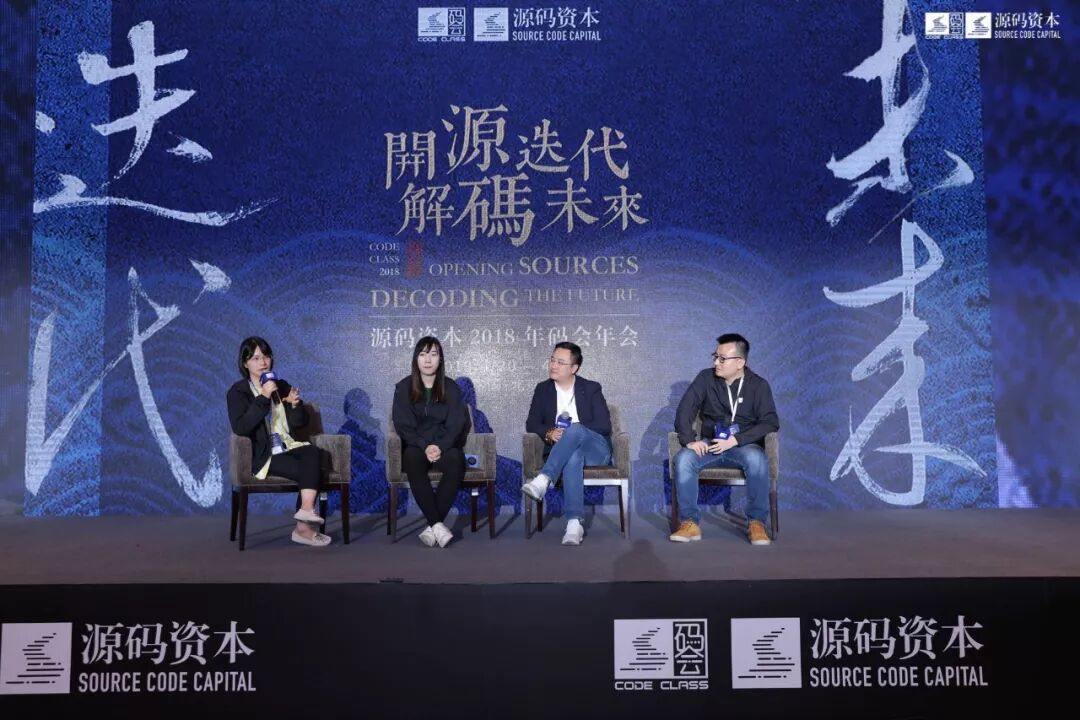
From left: Yuemei Lü, Meng Li, Chang Gao, Yubin Zheng
Full transcript of the panel discussion below
Yuemei Lü, Source Code Capital: When Source Code was founded, Yi Cao brought me into this massive industrial赛道. We've spent nearly four years here. In the industrial internet space, we've gone from the early budding stage, to a flood of entrepreneurs that weren't quite ready for prime time, to a more mature and stable phase with increasingly abundant investment opportunities. I feel very fortunate that we've avoided some pitfalls, and through continuous interaction with CEOs, close observation of industries, and persistent research, we've kept iterating our understanding of sectors and our vision for the future. To briefly recap, when we started investing in this space, we roughly proposed three concepts.
First, industrial internet. Yi Cao wrote an article about "nine verticals, three horizontals." Each vertical represents a major domain and industry. Every industry has two sides: one facing consumers (2C), one facing businesses (2B). All consumer demand, products, and fulfillment comes from B-side supply. The B side has many segments — production, logistics, product matching, all the way down to sub-terminal distribution. We define this entire chain as industrial internet.
In 2014-2015, the concept was B2B — trading platforms connecting two segments. It was a relatively simple definition back then; people were still debating whether to do self-operated or matchmaking models. By early 2017, the S2B concept emerged. I personally see this as a major upgrade over B2B. Breaking it down, it's essentially a supply chain platform concept: integrating resources across different B-side segments to empower the final tier of B, which then delivers better service to the C end. The end payer is the consumer. Only by giving them the best service and products can our sub-terminal, final-layer B gain competitiveness — that's the meaning of S2B. This is a shared understanding. Today I'd like our three CEOs, each from different industries, to explore from their perspectives how they understand S2B and how they implement it.
Meng Li, Xiaoyaoyao: Hello everyone! I'm Meng Li, founder of Xiaoyaoyao. We're a B2B e-commerce and technology services company focused on the pharmaceutical sector. The pharmaceutical industry is very traditional with high regulatory barriers. We primarily serve upstream pharmaceutical manufacturers and downstream — hundreds of thousands of pharmacies and millions of clinics. Beyond B2B transactions themselves, we empower both upstream and downstream through SaaS systems and big data algorithms to reduce costs and improve efficiency across the entire industry chain.
Chang Gao, Ruigu: Hello everyone! I'm Chang Gao, founder of Ruigu. Ruigu is a self-operated e-commerce platform for MRO industrial supplies. Our target customers are the 600,000 industrial supply retail sub-terminals nationwide, including large terminal procurement for many key accounts. The industrial supplies market is relatively complex; wholesale transactions are typically conducted in very chaotic ways. Ruigu empowers all 600,000 offline retailers through self-operated warehousing and logistics.
Yubin Zheng, Zhangshang Kuaixiao: I'm CEO of Zhangshang Kuaixiao. We're the largest fast-moving consumer goods (FMCG) B2B platform in South China. Simply put, we supply small shops, replacing traditional lengthy wholesale channels to directly connect brands with stores. We're purely self-operated, focused on second- and third-tier cities. We entered this space in late 2017, and I'm especially grateful for the support from Yi Cao, Xingshi, and Yuemei at Source Code Capital. Our goal is to become China's largest self-operated FMCG B2B platform by year-end or first half of next year.

Yuemei Lü, Vice President of Investment, Source Code Capital
1 National Infrastructure
Yuemei Lü, Source Code Capital: Could each of you, based on your industry's characteristics, share your understanding of S2B and what your goals are in pursuing it?
Yubin Zheng, Zhangshang Kuaixiao: Before discussing S2B, let me talk about B2B. B2B is about retrofitting infrastructure for existing markets. Take FMCG: in the United States, small supermarkets and restaurants upstream have only 50-60 large supply chain companies. But in China, 6 million stores upstream are served by only 100,000-300,000 small wholesalers. No brand can directly interface with so many channel partners, so above the small wholesalers, bulky wholesale and mid-tier wholesale layers form around matchmaking and distribution needs — from an efficiency standpoint, this makes no sense.
So I believe in China's supermarket retail sector, large-scale modern supply chain companies will inevitably emerge upstream — this is a highly certain opportunity. Yesterday at the new consumption forum, we were discussing how consumer demand fragmentation is becoming very apparent. The share of top brands is steadily declining, while niche brands continue to rise. Imagine five years from now — a large proportion of the consumer goods market will likely be captured by precisely defined niche brands. The probability of creating another national brand like Rejoice will keep shrinking, meaning fewer and fewer brands will have the capacity to independently build nationwide distribution networks or complete channel matrices. So infrastructure like FMCG B2B platforms will become increasingly indispensable.
At the same time, we must approach this industry with humility. Any new category starts as a new channel with its own customers to serve and chain masters to respect. You need to solidly demonstrate channel value and clearly define your position in the industry chain. Many competitors say they want to monopolize small Bs and force concessions from big Bs upstream. That's completely irrational. As a new channel, development follows cycles. Right now, FMCG B2B is still at the supplementary channel stage. Next it becomes a mainstream channel. Only later might it grow into a dominant channel — this cycle could be quite long. S2B entrepreneurs need patience.
Two curve breakthroughs. S2B essentially operates in existing markets. Existing business means you're definitely taking someone's lunch. I've always told my team to maintain two boundary concepts. First, focus on core user needs to break through industry service level boundaries. In our business, what small shops value most is reliable, high-quality supply and delivery speed, so we went self-operated, keeping inventory rights and fulfillment capabilities in-house. This makes our model heavier with higher early costs, but our scale is also growing rapidly. So we need to study how to drive down expense ratios through scale growth until we break through industry cost-efficiency boundaries. With better service and higher efficiency, you achieve dimensional reduction against traditional models. So B2B needs these two boundary concepts. Get the first part right, and when your volume is large enough, then look at how to connect — building connections across the entire industry chain. This follows a sequence.
Yuemei Lü, Source Code Capital: I understand this as a very grounded, practical answer that fits the massive FMCG赛道.

Yubin Zheng, founder of Zhangshang Kuaixiao
2 Fully Empowering Downstream Small Bs
Chang Gao, Ruigu: I studied science, but today's questions are very humanities-oriented. S2B and B2B are linguistic distinctions. In my eyes, the essential difference is: B2B is a highway, while S2B is a forest.
A highway connects point-to-point product sales. Whether self-operated or matchmaking, you buy from upstream and sell downstream — the essence is product transaction. In this process, it's mostly about information symmetry, or more bluntly, price transparency. But in the industrial internet transformation, price transparency is no longer enough. Overcapacity is the backdrop of China today; prices will inevitably become more transparent. Upstream wants to move inventory quickly, and because they can't, they'll inevitably break down information asymmetry. Many VCs think B2B is hard to monetize because as more vehicles crowd the highway, you can only compete on price — it's still just selling goods.
S2B is a forest. A forest must be a natural ecosystem with water, air, and nutrients — the capabilities it gives downstream Bs are enormous. For example, in B2B, the quantitative change is logistics and delivery efficiency improving from traditional provincial agents delivering to downstream sub-terminals twice a week, to next-day delivery when you order today, with daily delivery. This is quantitative change in delivery frequency. What's the qualitative change? Helping downstream Bs accelerate inventory turnover, reduce inventory pressure, unlock cash flow for sub-terminals, and enable them to do business more efficiently. This is one example of empowering small Bs.
Only through empowerment and reform can we eventually extend to models like C2B, C2M. Only by empowering your partners and making downstream businesses thrive can your own business thrive, and can you carve out your own space. Not all Ruigu products are the cheapest, but many customers still prefer to buy from us because Ruigu helps them make money, not simply by lowering their purchase prices.
Wholesale margins are limited. Saving them a few percentage points while losing money yourself makes far less sense than helping them earn a few more points — this is the essence of industrial internet overall. It's not just about category structure changes, but logistics, after-sales service, and operations. Ultimately, the essence an industrial internet company should pursue is empowering small Bs to run their own businesses better.
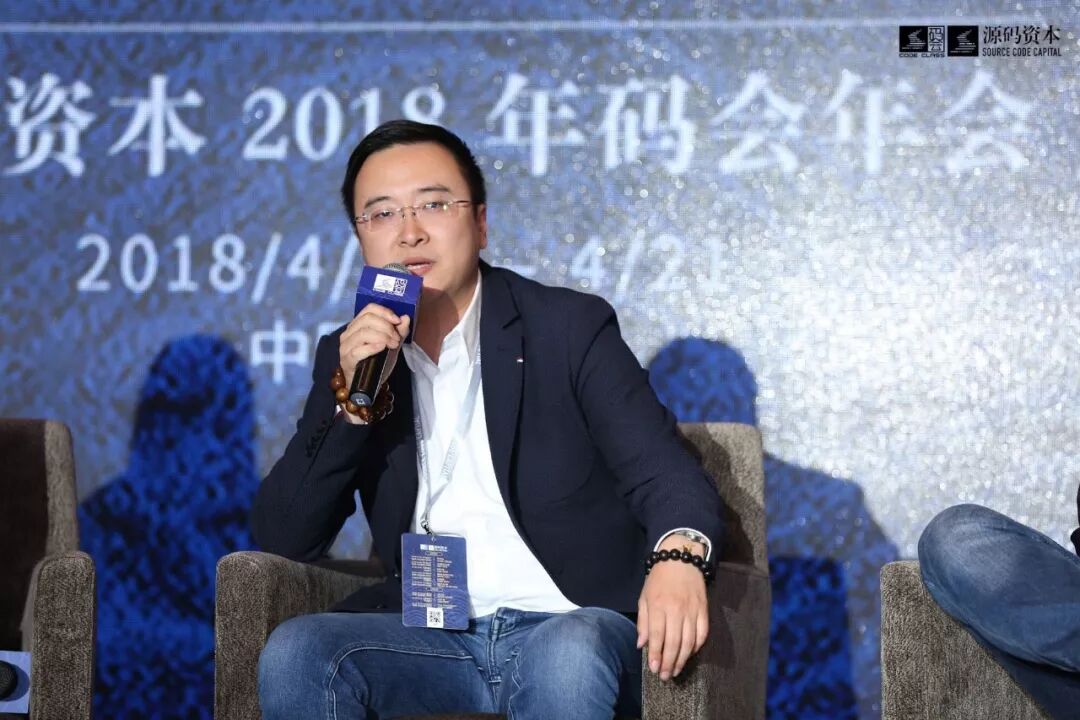
Chang Gao, founder of Ruigu
3 The Tech Dividend Is the Winning Formula
Meng Li, Xiaoyaoyao: From a macro perspective, nearly 40 years into China's reform and opening up, we've experienced a period of rapid development with long-term GDP growth above 8%. We haven't experienced low or negative growth. Every industry has done well. Take pharmaceuticals: China has over 10,000 drug distributors, while the United States has 3 companies controlling 95%. The largest one did over $200 billion in sales last year, ranking 11th in the Fortune Global 500. Thirty years ago, U.S. pharmaceutical distribution looked like China today — relatively fragmented. After 30 years of major consolidation and information efficiency transformation, large giants remain. But China's difference is: the U.S. had 30 years of information technology transformation, while we've leaped directly to the internet, from PCs to mobile payments and beyond. This is B2B's massive opportunity.
For us, B2B started as pure goods-selling. What we're doing now, step one, is disintermediation — removing ineffective, redundant first-, second-, and third-tier layers. For example, from pharmaceutical factory to pharmacy, you used to go through tier-one, tier-two, and tier-three wholesale. Through Xiaoyaoyao, a village doctor in Enshi Tujia Autonomous Prefecture can access the same supply as a core Beijing district pharmacy — this is the internet dividend.
Step two: empowering small shops. With internet tools, algorithms, and data — this is the core of evolving from B2B to S2B. Help them with facial recognition, membership management, finance, building a good ecosystem — going much further than simply selling and delivering goods. When data accumulates to a certain level, algorithms can enable so-called C2M, C2B. This is an evolutionary process step by step, with the foundational driver being technological revolution and scientific progress.
Yuemei Lü, Source Code Capital: Mr. Li described in very plain language the driving force behind our industrial internet investments: seeing the inefficiency of Chinese industries, benchmarking against mature industries in Europe and America, and recognizing massive opportunity. In Europe and America, from upstream production through midstream distribution to downstream retail, everything is highly concentrated — maybe just three or five players, or in some industries one company or system handles everything from production and distribution to final retail. This represents enormous efficiency gains and is the ultimate goal of the industrial internet concept. Under this ultimate goal, it can't happen overnight. B2B may be phase one, with phase 2.0, 3.0, 4.0 to follow. S2B is the current 2.0 approach. In the farthest future, we can use data to satisfy customer needs, doing customized production and providing customized products and services.
Yubin Zheng, Zhangshang Kuaixiao: To add, this process may happen faster than we imagine. It's not just B2B and S2B startups working hard — giants across industries are also opening up. Many things are gradually becoming social infrastructure: supply chain platforms, urban delivery infrastructure, major connectors (2C scenarios). If leveraged well, these can effectively link factory-store-consumer together. For us, how to access these resources is something that requires serious consideration.
Meng Li, Xiaoyaoyao: Where is B2B's biggest opportunity? Not long ago, maternal and infant e-commerce was very hot — you had Miyabaobei, Beibei, and JD.com and Tmall maternal and infant channels. But you'll find the entire maternal and infant market is less than 10% online, 90% offline. The most valuable thing in the future is data. Having the ability to capture precise data for the entire industry will be most valuable, and B2B internet companies have the capability and opportunity to capture industry-wide data.
Take pharmaceuticals: across all of Beijing, less than 2% of drug sales go through B2C e-commerce. 98% comes from offline pharmacies, hospitals, and clinics. By empowering downstream with information systems and SaaS transformation, transactions and data accumulate within the channel. For example, early this year, we detected the flu outbreak in advance because we monitored abnormal sales data for cold medicine, antibiotics, and clinic prescriptions.
Yuemei Lü, Source Code Capital: Why will industrial internet continue to create value? As Mr. Li said, it's about data. And this data network is vast with many nodes. Mastering this data is our S2B direction in the near term, and in the long term, it's our value proposition and foothold for sustained competition against C-end giants.
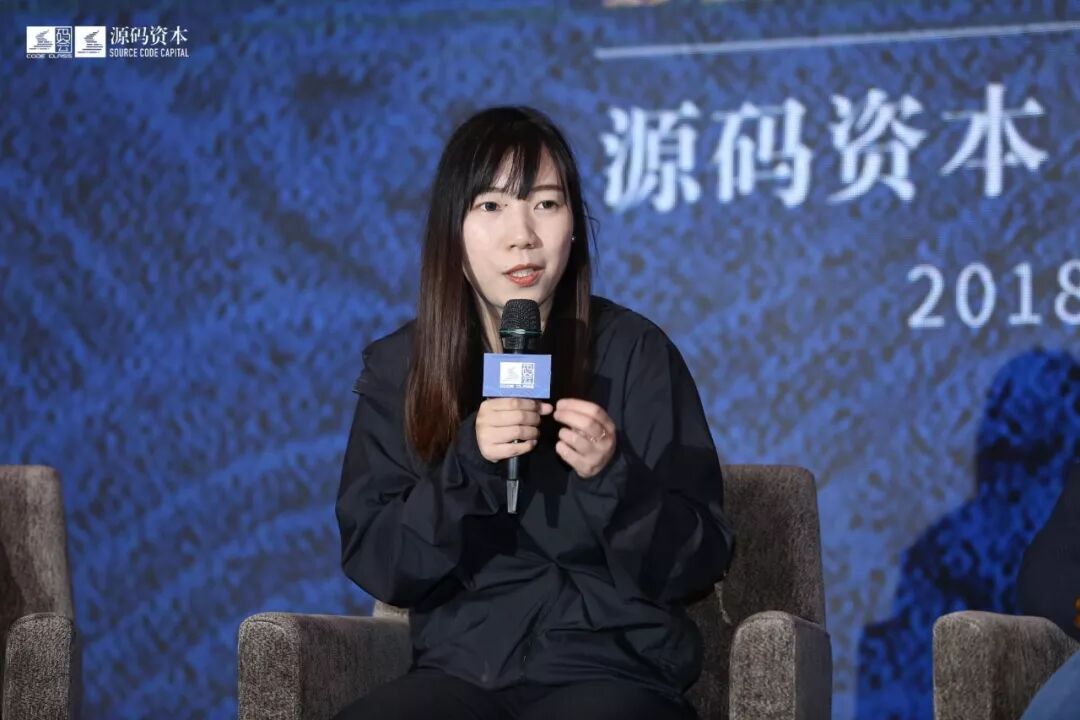
Meng Li, founder of Xiaoyaoyao
4 Industry Role Positioning
Yuemei Lü, Source Code Capital: Let's return to S2B. I'd like to ask how each of you implements it specifically?
Chang Gao, Ruigu: The S2B process for industrial supplies must be viewed from industry decision-making. How does S2B operate in a forest context? B2B's industry role is just product transaction. But in industry evolution, many roles change — for example, tier-one distributors handle consolidation, tier-two handles fragmentation, retail handles service.
From a margin distribution perspective, many entrepreneurs talk about trillion-dollar markets, but how much of that can you actually capture? In industrial supplies' trillion-dollar market, 600 billion is factory ex-factory price. Unless you own factories, that 600 billion has nothing to do with you. In the channel, there's 120-180 billion in value-add, and retail generates 300 billion in value-add. To capture margin, you must assume an industry role — we need to outperform ordinary provincial wholesalers. On logistics, we need to be faster. Ruigu has proposed convenient, fast, and guaranteed service. On products, ordinary B2B tries to sell you products. We think about how to assemble product lines, pre-screening profitable products for customers. When customers select, we guide them toward products more suitable for them, helping them analyze through internet tools, CRM, etc. whether they're overstocking certain products. We provide better service so customers feel we're not a selling company, but a major backer helping them do business better.
Meng Li, Xiaoyaoyao: Our mission is to become the infrastructure of the pharmaceutical industry, the water and electricity that powers it. Currently, there are no more advanced infrastructure operating companies in the industry. Take pharmaceuticals: there are large tier-one wholesalers that only handle搬运 and credit/financing services — very primitive. But both upstream and downstream have many pain points. 2B customers differ from 2C — they purchase to serve their consumers. Pharmacy owners depend on this to support their families. They need capital, training, promotions, customer acquisition, and expansion. These are real empowerment points.
Manufacturers also need empowerment. Many single products with annual sales over 1 billion RMB — pharmaceutical factories don't know their products' channel situation or who ultimately buys them. We run ahead first, building out technology, infrastructure, and empowerment, and volume quickly follows. The industry leaves us many opportunities. Getting infrastructure right, solving problems for upstream and downstream, multi-dimensional empowerment. Why do some small wholesalers do well, dominating their regions? Because they solve most of their customers' pain points — but this is relatively inefficient offline,贴身 service.
What we need to do is standardize processes, using technology to replicate and scale this service across time and space — this is what S2B should do most.
Yubin Zheng, Zhangshang Kuaixiao: I strongly agree with Mr. Li. Many industries are still very primitive. FMCG is naturally consumed by consumers; the industry's ultimate model must be B2B2C. In the past, top-tier hair care brands spent 30% of costs on channels, 25% on consumer marketing. Whether channels or marketing, the ultimate goal is to reach consumers. If we build the highway connecting brands to consumers, the entire industry's efficiency will dramatically improve.
Yuemei Lü, Source Code Capital: To conclude: S2B already represents a preliminary platform and ecosystem concept. We've discussed how to empower, from what dimensions — IT, finance, logistics, products, proprietary products, external traffic, new traffic, and more. You can standardize and replicate empowerment services, ultimately forming an ecosystem where we are the core. This system operates far more efficiently than traditional industry chains. Like water flowing downhill, industry will naturally evolve from inefficient to efficient states. I believe you can all achieve this. Thank you very much to our three CEOs and all friends here for your time.
Thank you all!
Past Code Society Articles
3rd Edition | Yiming Zhang: The CEO's Rational Arrogance to Avoid
3rd Edition | Hui Lianjia: My Understanding of the Real Estate Industry
3rd Edition | Jingbo Wang: Deep Operations Are What Make Financial Licenses Matter
3rd Edition | Meili United Group CEO Qi Chen: The Difference Between Mules and Unicorns Is Focus
3rd Edition | Zhi Qin: The Things Only Entrepreneurs Can Teach Themselves
3rd Edition | Yu Zheng, Microsoft Research Asia: AI Applications in Urban Management and Business
3rd Edition | Potholes We've Hit in Three Years of Entrepreneurship
2nd Edition | Xiang Li on CHJ Automotive: Transforming Urban Mobility
2nd Edition | Yiming Zhang: Why I Don't Agree with Controlling Labor Costs
1st Edition | Chenchao Zhuang: How Should Startups Compete? How Should They Lose Money?
Source Code Capital
Creating Lasting Real Value

WeChat ID: sourcecodecapital
More professional content
Follow our official WeChat