Going Global: Finding Value Opportunities Worldwide | Code Meet 2018

Decoding Overseas Entrepreneurship: From 0 to 1
On April 20, Source Code Capital's 2018 Code Society annual meeting, themed "Open Source Iteration · Decoding the Future," was held in Beijing. Yuan Di, Vice President of Investment at Source Code Capital; Xia Kai, founder of Zenjoy; Rui Chen, founder of BluePay; and Chen Ning, founder of RozBuzz, shared their insights and reflections on building businesses overseas.
Yuan Di said: "Going global is a vast blue ocean. In this process, you might catch a shark in the open sea, or you might struggle in the deep water. So Chinese companies going global is a very long-term, highly valuable track to mine. But it also faces many challenges, and everyone needs to approach overseas business with a sense of reverence."
Founder Quotes / CEO QUOTES:
- The overseas market is enormous — global GDP is roughly seven times that of China. Even feeding on the plankton at the surface is a substantial piece.
- Our vision is to transform mobile payments and daily life for 600 million people in Southeast Asia.
- The first five years of going global were driven by necessity.
- Identify a major "going global" direction, and try an opportunity where execution isn't particularly difficult.
- We started light and went heavy. We're a very typical company that was born and grew organically in the local market, bringing China's internet technology and operational know-how to Southeast Asia.
- India is a promising and relatively massive regional market.
- Our advantage is China's resilience and execution capability — they're highly competitive overseas. China's speed, its indomitable entrepreneurial spirit — after eight years operating abroad, we feel this deeply.
- Matching or even surpassing the market understanding of entrepreneurs who grew up locally in Europe and America is extremely difficult.
- For Chinese internet companies to achieve further growth, they must go global. This is the opportunity of our generation.
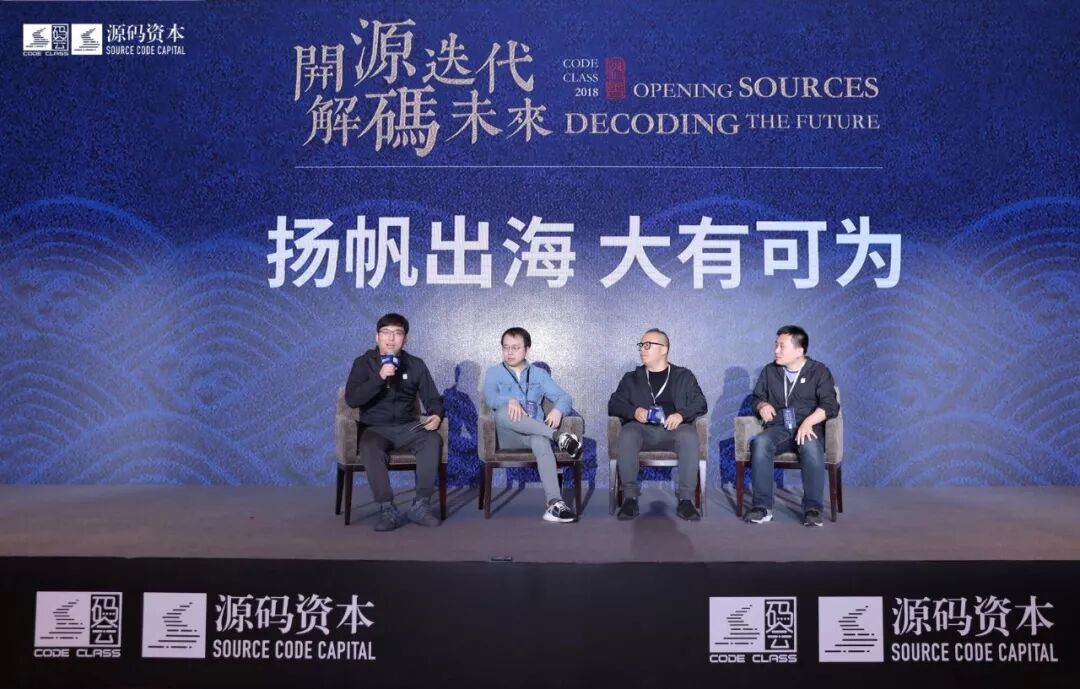
From left: Yuan Di, Xia Kai, Rui Chen, Chen Ning
Full transcript of the panel discussion below
Yuan Di, Source Code Capital: Source Code has been paying close attention to the going-global space, continuously learning, exploring, thinking, overturning our assumptions, and rethinking. Throughout this process, beyond our own efforts, we've been fortunate to work with outstanding companies in our portfolio that are focused on going global, deepening our understanding of these markets together and exploring the major opportunities. First, I'd like to invite our three guests to introduce their businesses.
Xia Kai, Zenjoy: Hello everyone, I'm Xia Kai from Zenjoy. From 2010 to now, we've been among the earlier Chinese companies to go global. Our approach to going global: identify a major "going global" direction, and try an opportunity where execution isn't particularly difficult.
We've developed over a hundred products — things similar to Cheetah Mobile's utility and security tools, Meitu-style apps, plus music and video tools, casual games. The development difficulty isn't especially high, but the overseas audience is large.
The overseas market is enormous — global GDP is roughly seven times that of China. Even feeding on the plankton at the surface is a substantial piece. Gradually we hope to go deeper. We haven't focused on any single country globally; Europe and America are where we've done the most.
Rui Chen, BluePay: Hello everyone, I'm Rui Chen from BluePay, focused on online payment retail in Southeast Asia.
We're active in Thailand and Indonesia. Our vision is to transform mobile payments and daily life for 600 million people in Southeast Asia. Founded in January 2015, we started with B2B payment gateways locally, then moved to mobile payment user platforms, and now we've built our own offline scenarios, creating an integrated online-offline lifestyle portal.
We started light and went heavy. We're a very typical company that was born and grew organically in the local market, bringing China's internet technology and operational know-how to Southeast Asia.
Chen Ning, RozBuzz: Hello everyone, I'm Chen Ning from RozBuzz. We're a content service platform based in the Indian market. Personally, I'm an internet veteran — over a decade in China's internet industry, about five years going global, and roughly two years building this company.
The well-known reason for choosing India: India is a promising and relatively massive regional market. We hope that as a Chinese team with Chinese capital, we can build a successful enterprise in the Indian market.
This vision sounds simple, but if we look back at the PC internet era and the mobile internet era, the strongest American companies seemingly didn't succeed in China. Yesterday I heard Xing Wang say to approach going global with reverence — we're also treading carefully. Will Chinese teams encounter the same process and setbacks that American companies experienced in China? Can we avoid that trap? That's what we're considering.
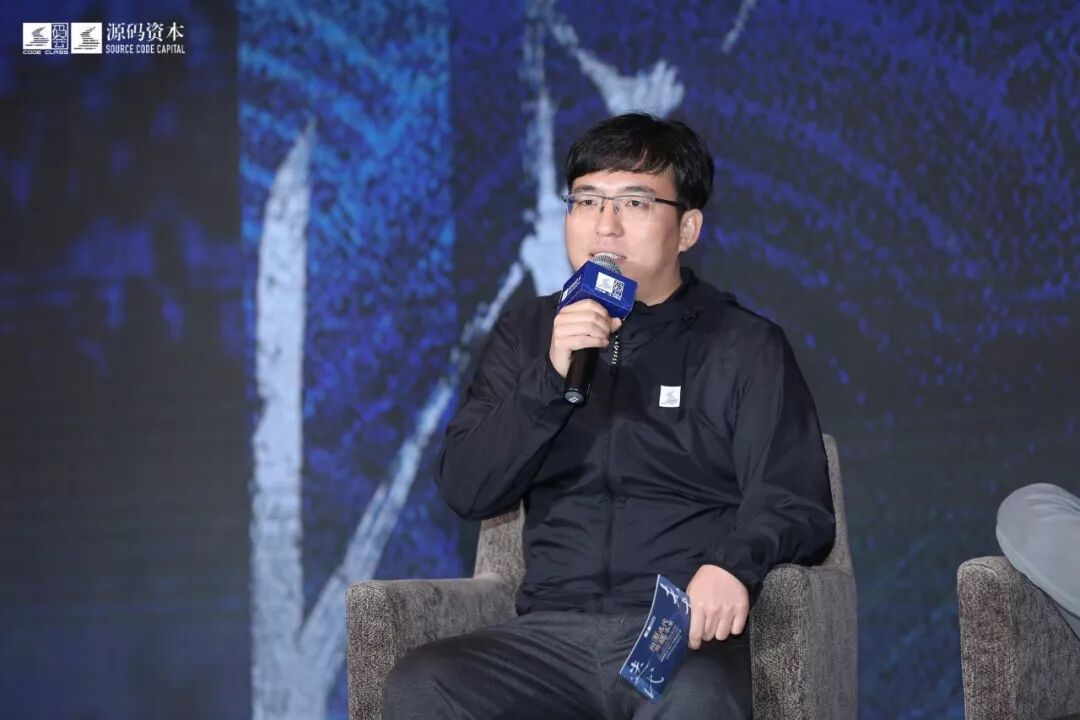
Yuan Di, Vice President of Investment, Source Code Capital
1 What Changes and What Doesn't in Going Global
Yuan Di, Source Code Capital: I'd like to ask all three of you to share your understanding of Chinese companies going global, from macro to micro perspectives. Chinese internet companies began going global around 2007–2008, after Apple released the first iPhone and the App Store launched. From your personal experience over these ten years of China's mobile internet going global, what core competitive advantages of Chinese companies have remained constant? What has changed with geography and product type?
Xia Kai, Zenjoy: Chinese companies going global have encountered and overcome more challenges overseas than they've faced domestically in recent years. These include language, culture, and a general lack of understanding of overseas markets.
In terms of breadth, insufficient knowledge of various countries' demands across product lines. In terms of depth, for relatively deeper industries like e-commerce and payments that involve legal dimensions — what's actually going on there — this understanding is lacking.
The past decade has been a foundation-building process. So Chinese companies have accumulated experience, and our cognition and understanding of overseas markets have gradually improved. We started with very light, purely online products. Later we did bike-sharing in Germany, live streaming in Europe, America, and Japan — more operationally intensive things. It's all been a process.
Our advantage is China's resilience and execution capability — they're highly competitive overseas. China's speed, execution, indomitable entrepreneurial spirit — after eight years operating abroad, we feel this deeply. If cognitive depth in a given field is equal, we're faster than American or other countries' companies. The improvement in breadth and cognition is an accumulation process for Chinese companies. Chinese companies integrating into overseas environments, including language, etc. — these things are improving and changing. I believe that in the next decade, as Chinese companies gradually catch up to overseas competitors in terms of cognition, explosive opportunities will emerge. That's my view.
Chen Ning, RozBuzz: The first five years of going global were driven by necessity. For example, early gaming companies didn't make big money distributing domestically, development costs were already sunk, so they'd tweak localization and try other overseas markets. The past five years have been about actively going out — one reason is overseas markets are opening up, another is China's market has become increasingly red ocean.
Another change: the regions people went to earliest were Hong Kong, Macau, Taiwan, then Southeast Asia, because their cultural backgrounds are very similar to mainland China, making these relatively easy destinations. Looking at the past five years, that's no longer the case. It's blooming everywhere globally — Africa, India, and other relatively less developed regions already have Chinese teams working there.
A third change: Initially, companies going out leaned toward games and utility products. These were relatively simple to localize — translate the language, adapt to local religious customs and cultural habits, without needing strong ground operations or boots on the ground. Globalization back then was an air force approach — send the bombers, no need for ground troops. Now many businesses are using an army approach, leaning toward heavy local operations — e-commerce, content products, many teams are doing this.
Yuan Di, Source Code Capital: Let me extend this question to Rui Chen from BluePay. Many of you may not know Chen's background — he joined Huawei straight after graduation and spent over 15 years in Huawei's overseas operations, dedicating a very substantial portion of his career to building the Southeast Asian market. Over these 20 years of Chinese companies going global, Huawei has been a very representative enterprise. So I'd like to ask Chen to share his understanding of Chinese companies going global, combining it with his own experience — what do you see as the core methodology for this wave of new technology and internet-driven opportunities, and what do we need to keep pace with the times in this new era driven by mobile internet?
Rui Chen, BluePay: Based on my past experience, I started overseas from the beginning — I'm only familiar with the Southeast Asian market. People say going global requires reverence; I have a somewhat different view. Doing business overseas is a kind of faith. From graduation, I followed the tide of history and joined this development.
Over a decade ago working at Huawei, when we went out to expand, clients would say: Chinese companies don't make leather goods, daily necessities, shoes and clothes — how can they do high-tech equipment? But starting ten years ago, massive changes began. Our clients included Southeast Asian telecom executives, British, French people — we had very good relationships. When we communicated, we heard from some Western clients: if anyone in the communications industry considers Chinese equipment technology and quality second-rate, they need to be educated. That's the genuine voice of clients as I remember it. This is China's change, the upgrade of China's productivity.
Our company's founding and development also followed this historical tide. We're a local company founded by Chinese founders in Southeast Asia, not a Chinese company expanding into the local market that fills gaps through M&A and investment.
We started from zero in the local market — cold start, acquiring customers, building business, developing capabilities, obtaining resources — and continuously iterated rapidly, optimized, and adjusted. Our end-to-end team and capabilities were all built by ourselves. The downside is we chose a genuinely exhausting path. The upside is end-to-end controllability,磨合 iteration, and evolution are all particularly fast — faster than many local competitors. And we're especially fortunate to continuously have outstanding Chinese colleagues and local colleagues join us. Cross-cultural, cross-language barriers haven't prevented us from teaming up around shared beliefs, goals, and core values — and the more we fight, the more energized we get, the bolder we grow. Many things that seemed uncontrollable in terms of resources and capabilities at the time — after some time, the change was dramatic, and we quickly established them.

Xia Kai, Founder of Zenjoy
2 Going Global: From Zero to One
Yuan Di, Source Code Capital: When you've discovered opportunities in Europe/America, Southeast Asia, and India markets, what reflections and experiences have you had in the business landing process, especially from zero to one?
Chen Ning, RozBuzz: We're relatively familiar with the Indian market, and we can see many global teams working this market. We typically categorize them into three types: First, Chinese teams with similar approaches, competing on who can be more grounded and execute better. Second, European/American companies, mainly American ones, with more advanced technology and products, but when encountering heavy-operation businesses, no one wants to do the落地 work, so they develop slowly. Third, Indian locally-grown startups — there weren't many two years ago, but quite a few have emerged recently with extremely strong vitality.
Yuan Di, Source Code Capital: How do you view the relatively intense competitive landscape in Europe and America globally, and what experiences can you share?
Xia Kai, Zenjoy: Europe and America are very large markets. For example, the US alone is larger than China. If you add other English-speaking countries — UK, Australia, Canada — it's a substantial market. This relatively mature market doesn't have as high growth rates as emerging markets. In Europe and America, everyone's looking for products and market space within relatively limited incremental growth.
And Chinese companies in Europe/America don't have the talent advantage or cognitive advantage they have in some emerging markets. They have mature teams, mature understanding. In incremental markets, Chinese companies don't have the speed advantage — this becomes Chinese companies' advantage: we're extremely execution-strong, flexible and adaptable in changing environments, which plays a crucial advantage in European/American company environments.
Matching the market understanding of entrepreneurs who grew up locally in Europe and America, or even surpassing them, is extremely difficult. Of course, there are products with Chinese characteristics, like Cheetah Mobile, where this category hadn't reached very large scale in Europe/America. In recent years, things like music and community products might emerge.
The feeling about Europe/America is: if Chinese companies want to land there, initially it's relatively shallow, spanning many countries and domains — somewhat like Source Code's framework of three horizontals and nine verticals, multiplied by dozens of European/American countries. It's hard to grasp all the links. When we did bike-sharing in Germany, we found local teams there and bound them to these projects, fully unleashing their initiative. You can reflect on how foreign companies entering China were ungrounded — all foreigners, such an environment makes survival difficult.
Similarly, it's hard to survive overseas doing local things. We try to leverage local people's support as much as possible, letting everyone play to their strengths. Overseas is such a vast domain that it's impossible to cover everything. Especially Europe/America, where locals have strong understanding of their own markets — we need to fully leverage local people's strength.
Rui Chen, BluePay: Southeast Asia's market situation differs from Europe/America. Southeast Asia is an incremental market with very clear growth in coming years — population age, smartphone penetration, and international giants' industry assessments all show very clear consensus. That's the market itself.
The market itself may also be among the more competitive overseas regional markets now. Domestic giants and local traditional industry giants trying to transform into new economy giants — somewhat like the competitive environment China's internet giants faced when they started out ten years ago. In reality, neither foreigners nor compatriots have broken out yet. That's the current market situation. Looking at Southeast Asia, the opportunity is undoubtedly enormous in the next 3–5 years. That's my view of the market.

Rui Chen, Founder of BluePay
How to Localize
Yuan Di, Source Code Capital: From a commonality perspective, roughly 80% of demand for internet products and services is consistent globally; the other 20% differs and is often the key to winning. Of course, within that 20%, a major theme is localization. So the next question I'd like to ask our three guests: how have you solved business localization in recent years, and what have you learned about going deep with localization? Please share from the dimensions of product, on-the-ground operations, and service.
Xia Kai, Zenjoy: Localization is an area we've been continuously accumulating. I think the challenges of localization domestically and internationally are several. On the product level itself, different countries have different demographic demands. For example, in the US, Facebook's main users are older — the older they get, the heavier the users, playing Facebook games. The situation in China differs.
Internationally, the games generating main revenue on major charts also come from older users, unlike China where it's younger people — Honor of Kings, for example. This is the difference in target demographics between China and overseas. There are also differences in promotion and operations. In China, we do some operations through infrastructure like WeChat, while overseas, whether doing promotion, user acquisition, or user operations, it's all configured through Instagram. This challenge is different overseas. In some regions like Russia, there's VK social media; in Korea, Kakao Talk. So it's very fragmented.
Landing overseas requires some patience. A major difference in feeling between China and overseas: China is a very broad concept, while overseas is very fragmented. Unlike China, where what works in Beijing will work in Shanghai, Nanjing, or anywhere else — almost just a matter of time, with relatively minor demographic differences.
But overseas is very different. I think Chinese companies can only approach it with patience. In my view, it's very long-term, truly requiring time investment. The prospect is huge — the market may be many times larger than China — but each individual market is relatively small.
Rui Chen, BluePay: Actually, looking at localization, we were already a local Southeast Asian company from the start. Our core team from founding was an international team — a management team combining Chinese and local people, including at the management level. So we had to localize — we were already a localized company. From this perspective looking at the local market, we just applied Chinese know-how, building R&D team capabilities. We're somewhat different from companies going out.
Looking at the local localization environment and user demand differences, there was a consensus from last night's discussion that I think is even more obvious in Southeast Asia: 80% of user demand is common with Chinese users, 20% differs.
Especially Southeast Asian users' living habits, residential density, daily trajectories, consumption habits, consumption preferences, entertainment habits, mobile phone usage habits — even interpersonal communication cultural habits, expression habits — are more similar to China, more like China than American users.
Another point: from a payments perspective, credit card and bank card penetration is more like China. There's ample reason to believe that within two years, or no more than three, the Southeast Asian market will be dominated by mobile payment formats similar to China's — QR code scanning for online-offline mobile payments — as the mainstream with the largest share.
Chen Ning, RozBuzz: Chinese teams doing overseas markets — our approach is somewhat representative.
I think talent selection and usage divides into three stages. First stage: you must use some Chinese people — seamless communication is foundational. What problem does the first step solve? In my view, it's a survival problem. You go to a foreign land you've never been to; maybe you can't even adapt to the food there, don't know how to register a company — you simply can't break through. The first wave of people sent out aren't business personnel, but people who can handle logistics.
Second stage: business personnel go out. They solve business setup and startup. The challenge is organizing teams, recruiting high-quality local people.
Third stage: integrating the advantages of both regional teams to achieve 1+1>2. If it's all Chinese people staying overseas, theoretically it becomes another Chinese company. If it's entirely locals with no Chinese inside, it becomes purely an investment play, missing the maximum dividend.

Chen Ning, Founder of RozBuzz
Future Opportunities
Yuan Di, Source Code Capital: Going global is a vast blue ocean. In this process, you might catch a shark in the open sea, or you might struggle in the deep water. So Chinese companies going global is a very long-term, highly valuable track to mine. But it also faces many challenges, and everyone needs to approach overseas business with a sense of reverence. Final question — today's theme is "Set Sail, Great Potential." I'll tie it back to the theme: please share a few sentences on your outlook for Chinese companies going global in the next three to five years.
Xia Kai, Zenjoy: Chinese companies going global have two types: one goes deep in a single domain, or thoroughly penetrates key countries; another looks broader but not necessarily as deep.
Startups with limited resources have no choice — for us, both approaches are valid, and both types of companies will emerge in the future going-global process. We'll tend more toward the broader approach, connecting more opportunities. Somewhat like high and low pressure systems, like wind — high pressure somewhere, low pressure elsewhere, wind forms in between. We generate electricity from these flowing wind opportunities. I think this is a very promising trend to capture.
Chen Ning, RozBuzz: China's reform and opening up is roughly 40 years. The first 30 years, I think, achieved tremendous development mainly driven by the domestic market. In the past decade, we've seen many Chinese enterprises going out, with the global market bringing a new wave of development that will continue for decades to come. We see Chinese manufacturing — Haier, Hisense and other appliance companies that went out early — already have overseas sales exceeding half their total. For Chinese internet companies to achieve further development, they must go global. This is the opportunity of our generation.
Rui Chen, BluePay: I'll still speak only about Southeast Asia. I predict that in five years, Southeast Asia will see a very significant development: 10–20 companies at the $5 billion to $10 billion level will emerge. Their business formats will resemble China's today, but not be identical. In this, Chinese founding teams, capital, and technology will certainly occupy important positions and shares.
Past Code Society Articles
- 3rd Edition | Yiming Zhang: As CEO, Avoid Rational Arrogance
- 3rd Edition | Lianjia's Hui Lian: My Understanding of the Real Estate Industry
- 3rd Edition | Meituan's Huiwen Wang: Persist in Doing the Right Thing, the Payoff Cycle Is Shorter Than Imagined
- 3rd Edition | Wang Jingbo: In Finance, Deep Operations Are Required for Licenses to Matter
- 3rd Edition | Meili United Group CEO Chen Qi: The Difference Between Mules and Unicorns Is Focus
- 3rd Edition | Qin Zhi: The Things Only Entrepreneurs Can Teach Themselves
- 3rd Edition | Source Code Capital Investment Partner Dr. Hongjiang Zhang: The Essence and Opportunities of AI
3rd Edition | Microsoft Research Asia's Yu Zheng: AI Applications in Urban Management and Business
3rd Edition | What Pits We've Stepped in These Three Years of Entrepreneurship
2nd Edition | Xiang Li's First Discussion of CHJ Automotive: Transforming Urban Mobility
2nd Edition | Yiming Zhang: Why I Don't Agree with Controlling Labor Costs
1st Edition | Zhuang Chenchao: How Should Startups Compete? How Should They Lose Money?

Source Code Capital
Creating Lasting, Genuine Value

WeChat ID: sourcecodecapital
More professional content
Follow our official WeChat