Decoding New Retail: Online-Offline Integration Opens Up New Possibilities | Source Code Capital 2018

New Trend: OMO
On April 20, Source Code Capital's 2018 Ma Hui Annual Meeting, themed "Open Source Iteration · Decoding the Future," was held in Beijing. Kaisi Chang, Managing Director at Source Code Capital; Zhongjian Liu, former Chairman of Shizu Convenience Store; Yue Jiao, VP of Operations at Pagoda; Chen Wang from Meituan's Strategic Investment Department; and Jie Min, Founder and CEO of Shanghai Yiker Information Technology, gathered to discuss the hottest topic of the moment — the current state of OMO (Online-Merge-Offline), integration challenges, store empowerment, and future value.
The fusion of online and offline will dramatically reshape future traffic patterns. Once the massive offline traffic pool is unlocked, the incremental gains will open up tremendous possibilities. And the consumer base never changes: "It's always about good products, good prices, and good service."
Founder Quotes / CEO Quotes:
- Infrastructure, including payments and mini-programs, represents a massive window of opportunity over the next two to three years.
- From online marketing, to in-store experience, to off-store conversion; plus city-wide front warehouses and same-city delivery. Once all products are digitized, the pan-retail industry will unlock enormous opportunities.
- Most enterprises today are "connected but not locked in."
- Mini-programs have deconstructed the super one-stop app.
- I believe social marketing mini-programs will become a major variable starting this year.
- When offline businesses try to go online, there's a lot of anxiety and fear.
- Current AI products, including many digitalization tools, are still relatively expensive.
- I hope that in this process, platforms won't be so dominant, and capital can stay more sober.
- No matter how things change, there are people both online and offline, and caring for employees must never change.
- The platform-as-traffic-gateway model will shift. A new distribution model based on service and word-of-mouth may emerge — no longer buying traffic with money, but achieving true survival of the fittest through consumer praise and organic sharing.
- Half-hour delivery will likely become standard for merchants. Next-day or same-day delivery won't satisfy us anymore.
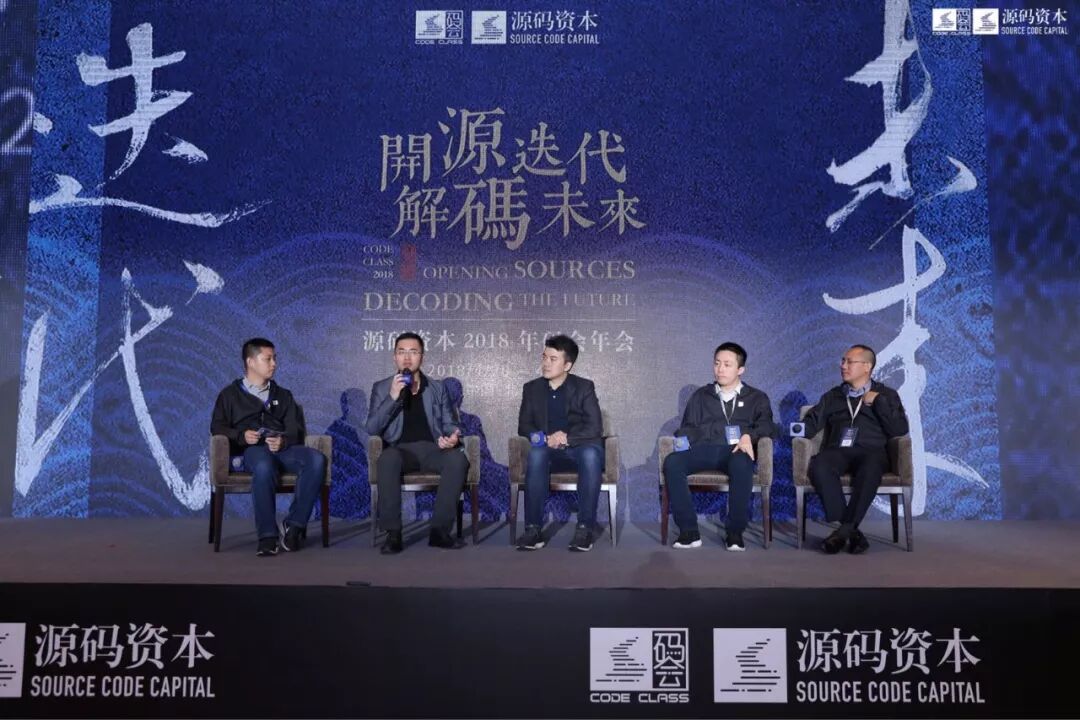
From left: Kaisi Chang, Chen Wang, Jie Min, Yue Jiao, Zhongjian Liu
Full transcript of the panel discussion below
Kaisi Chang: Hello everyone, I'm Kaisi Chang from Source Code Capital. Our theme today is "Online and Offline, the Dao Follows Nature." I don't know much about the Dao, but when it comes to online and offline, everyone here has their own experience. First, a quick advertising slot for each of you.
Chen Wang: Hi, I'm Chen Wang from Meituan's Strategic Investment Department, mainly responsible for investments in "to-store" and "to-home" businesses.
As a platform, Meituan rarely invests directly in merchants. Instead, we invest in high-tech companies with empowerment capabilities, hoping to build an ecosystem together. Over three years, we've made roughly 30-plus investments totaling over 5 billion yuan. For example, in food and beverage, we've invested in some restaurant ERP companies; in shopping malls, we invested in Smartmap, which provides marketing solutions; last year we invested in K Mi, the largest KTV industry systems integrator. We hope to connect with traditional offline systems, empower them with Meituan's resources, deliver better experiences for consumers, and create more revenue opportunities for merchants.
Jie Min: Hello, I'm Jie Min from Shanghai Yiker. We help offline stores with online marketing. Our biggest role is helping brands connect offline and online traffic to drive store visits. After "new retail" took off in 2016, the entire retail industry, including platforms, has become increasingly bidirectionally open. We help brand clients connect with traffic from WeChat, JD.com, VIP.com, Dianping, and Tmall Smart Stores, achieving digitization and omni-channel integration from store to platform and store to consumer. We connect store membership with headquarters data, integrate with third-party same-city logistics, and enable front-warehouse and in-store businesses.
Additionally, we provide modular empowerment for consumers going to stores and platforms. We're not a traffic front-end ourselves, but we serve as a traffic mid-platform for brands, helping them connect with all-network traffic while controlling and managing their own traffic. We focus on relatively high-margin, high-average-ticket industries like apparel, cosmetics, department stores, sporting goods, and some FMCG. Three years into our startup journey, we received investment from Tencent and JD.com last year, and hope to go all-in on store mini-program engagement to further build momentum.
Yue Jiao: Hello, I'm Yue Jiao. I'm somewhat of a serial entrepreneur. My first venture was a data company that I sold to Alibaba, then I founded Yimixian, which merged with Pagoda in 2016. I'm currently responsible for operations at Pagoda, but still very much in an entrepreneur's role.
Pagoda started in Shenzhen in 2002 and is now the world's pioneer in integrated online-offline fruit retail, and the leader in this format. Even today, while there may be some fruit specialty chains in the United States, Spain, and Japan, I feel quite proud that it was Chinese retailers who pioneered this unique business model.
Pagoda's strategy can be explained with "one, two, three":
-
Keep doing the fruit business forever. In this enormous market, we hope to be a continuous innovator and leader.
-
We want to be both a channel and a full fruit industry chain, from growing, supply chain to marketing. So from a "Dao" perspective, we hope for "yin-yang complementarity" — both channel and content. Pagoda has accumulated considerable expertise in this over more than a decade.
-
We have three pillars:
(1) Information technology: Pagoda, as a traditionally chain-oriented company, has made substantial IT investments. We currently have a 300-plus-person R&D team, and we're committed to building bottom-layer, middleware, and top-layer tools. We even hope to "externalize" these tools to supply and demand sides in the fruit industry, building industrial internet.
(2) Research and training: There have been tremendous opportunities in agricultural technology in recent years. From planting to procurement handling, there are many opportunities for qualitative leaps. We've invested heavily in research, as well as talent training for both growing and retail ends.
(3) Finance and capital: We're developing supply chain finance, insurance, and other innovative businesses. We also hope to leverage capital to make Pagoda a platform that transforms capital power to help China's fruit industry achieve greater development.
Zhongjian Liu: Hello, I'm Zhongjian Liu, formerly Chairman of Shizu Convenience Store. Convenience stores are a relatively traditional and ancient industry, but they've been especially hot lately — though actually quite tough. Many people complain about 996 being hard, but we're 365 days a year, 24 hours a day, so we're tougher than all of you. I'm not riding a trend into convenience stores; I've been in retail since graduating, and previously built a leading domestic convenience store chain with 2,000 stores, doing that for 18 straight years. I started my new venture last year, and from October to now have opened 85 stores, expecting to reach over 200 directly-operated convenience stores this year.
Kaisi Chang: Everyone's introductions were excellent, actually quite modest. Let me add some context. Liu's previous 2,000 stores ranked first among directly-operated convenience stores in China. Pagoda is also being modest — 2,800 stores ranks very highly regardless of what chain format you compare it to in China. Min's connected stores now exceed 100,000, which is massive scale from a connectivity perspective. And Meituan needs no introduction.

Kaisi Chang, Managing Director, Source Code Capital
1. The Greatest Value of OMO
Kaisi Chang: As you can see, everyone comes from different backgrounds — some cutting from online to offline, others from offline to online. Through the combination of online and offline, where is the greatest value created? Is it traffic integration, operations integration, membership integration, or does the combination fundamentally transform the original business format?
Chen Wang: Since I'm in investments and not operations, my perspective may differ. Let me briefly review the online-offline evolution. Meituan was founded in 2010, and I see roughly three key transformation periods over these eight years.
- Seven or eight years ago, mobile internet and smartphone普及. This shifted consumer behavior from PC to mobile, bringing the biggest change in the relationship between people and goods, people and services. Previously, we didn't know where consumers were or where inventory was — mostly just displaying online for people to actively search. After shifting to mobile, the biggest change was that merchants knew where their customers were and what they liked, creating a shift from goods and services seeking people. This affected store-side operational efficiency.
- Three or four years ago, WeChat Pay rose. Before this, Alipay was a purely online payment tool. But after WeChat Pay emerged, the biggest change was transforming consumer experience — it rapidly expanded mobile payment offline. So the second transformation brought huge benefits in C-side experience improvement.
- What we're experiencing now, the so-called great online-offline integration. I think the biggest opportunity here is through the combination of massive online and offline data. The end form can better satisfy personalized consumer experiences on the C-side, while on the B-side helping merchants further optimize their cost and expense structures — increasing revenue and reducing costs. This contains enormous opportunity, greater than the previous two transformations, and more of a bilateral effect driving simultaneous evolution on both B and C sides. That's my preliminary view.
Jie Min: I started my venture three years ago wanting to do this. To supplement Chen's points, one is infrastructure improvement. Before my startup, I worked on merchant-side tools at Dianping. I had this feeling that original group buying was a form of online marketing driving store traffic. Due to infrastructure investment in 2014-2015, we completed digitization and online work, including menu digitization, electronic and structured data, basic logistics capabilities, networking capabilities, etc. Going forward, I believe Chinese retail brands should learn from lifestyle services of the past. Now when I enter a store, I can completely use mobile methods to order, collect coupons, and verify — no human intervention needed. Offline retail still needs traditional methods, including customer identification, product information access, even off-store transaction portions.
There's a very interesting case: HLA's cooperation with Meituan Dianping. What happened in lifestyle services three years ago will happen across the entire retail industry and pan-retail industry. In the past, why didn't retail brands want to complete product digitization and online presence? Because their only e-commerce channel was Tmall. But today it's different. Today brands have their own traffic within WeChat — members are my own traffic, stores are where I do content and demand distribution based on own traffic. Infrastructure, including payments and mini-programs, represents a massive opportunity over the next two to three years. The entire retail industry will rapidly converge with lifestyle services of recent years, starting to have in-store comprehensive and delivery services. Their future is the same: from online marketing, to in-store experience, to off-store conversion; plus city-wide front warehouses and same-city delivery sales experience. Once all products are digitized, the pan-retail industry will unlock enormous opportunity.
Kaisi Chang: Min, you think consumer changes will become in-store experience, off-store conversion?
Jie Min: Our retail partners extensively use RFID tags for self-checkout scanning. And beyond fission, mini-programs also enable lighter B2C applications. Mini-programs can help offline stores achieve online virtual stores, analyzing virtual store traffic flow and interest points digitally — this is another wave of data dividends from mini-programs.
Yue Jiao: I see three levels. From my familiarity with chain enterprises, the highest level is chain upgrading. Most enterprises today are "connected but not locked in" — truly branded chain enterprises, I can think of fewer than three. With online channels forming branded chains, you can even start replicating from single-location viral stores. I think this is a dividend, especially starting on mobile internet.
Second, on the consumer side, it's people and product upgrading. With datafication, for chain business scenario upgrading, what's important is extending sales coverage radius from one kilometer to three kilometers, from in-store to home delivery. This adds considerably in frequency and order-taking capacity. We've deeply felt that even just establishing WeChat groups — two to three groups per store, with slight operation — creates new customer dividends.
Third, industrial internet. Its transformation point isn't necessarily mobile internet. For example, we currently have farmers in some categories directly upload via app, with process monitoring and remote expert access, allowing us to clearly see origin development management timing for products like grapes and strawberries. Of course, the derivative of this change is datafication. Frankly, at this stage, datafication including big data and data mining has relatively limited applicable scenarios, but it's quite valuable. At the most fundamental level, since WeChat began, the entire social marketing ecosystem — whether private messages, Moments, groups, or mini-programs — represents great opportunity for chain enterprises. Mini-programs have deconstructed the super one-stop app, helping high-frequency specialty chains significantly increase user stickiness in their scenarios. I believe social marketing mini-programs will become a major variable starting this year.
Zhongjian Liu: I've always been offline-focused. The previous three speakers covered a lot, especially Min on various scenarios and applications. I'll report more from the convenience store angle.
China has 6.8 million small shops, but only 130,000 are scaled convenience stores — a very low percentage. This industry has seen significant growth for nine consecutive years from 2008 to 2017. In China, the ratio of supermarkets to convenience stores is 92:8, while in Japan it's 45:55. China's convenience store space is still enormous — future chain convenience stores can all break 10,000 units.
Assuming one convenience store breaks 10,000 locations, with 600 customers per day per store. From what we understand, this customer base completely turns over every four days, equivalent to coming twice every eight days. So each store has 600 × 4 = 2,400 unique traffic; 2,400 times 10,000 stores is 24 million — enormous. And WeChat Pay and Alipay know who customers are. With very simple marketing you can generate repurchases.
For example, after a customer buys Master Kong iced tea, I immediately push Uni-President iced tea ads. After buying Brand A alcohol, I can push other brands. The traffic is very precise. With regulatory permission, you could even sell insurance products, travel products, financial products — this is worth doing well.
With such massive traffic, you can also integrate with Pagoda or pharmacies, generating huge incremental value. Going forward, convenience stores moving from offline to online has tremendous想象空间. Thank you.

Zhongjian Liu, former Chairman of Shizu Convenience Store
Online-Offline Integration Challenges
Kaisi Chang: Thank you all for the excellent sharing. It feels like after online-offline integration, traffic will further fragment. Regardless of how things change, this should still impact current mainstream online e-commerce giants to some degree. Of course, these changes still need to land, and landing will encounter various problems and difficulties. So I'd like everyone to share integration challenges from their own perspective. Let's start with Liu and Jiao, speaking from the perspective of having actual stores and real implementation, then Min and Wang can help solve these problems.
Zhongjian Liu: I think when offline businesses try to go online, there's a lot of anxiety and fear. Our retail industry already has many such cases. Everyone knows that RT-Mart was recently sold to Alibaba. RT-Mart Chairman Huang Mingduan is a senior I deeply respect. He shared a key case: when RT-Mart built feiniu.com, year one it sold 100 million and lost 100 million; year two it sold 1 billion and lost 400 million. He said RT-Mart's money was earned cent by cent, while feiniu.com's money was burned in huge amounts with no idea where it went. And feiniu.com's situation was indeed not ideal.
Offline people going online face inherent mindset shifts, requiring team mindset changes together, and the determination of whether you're willing to invest this much money to do it. Second point, current AI products, including many digitalization tools, are still relatively expensive. I hope if you two can offer lower costs and solutions, we're very willing to actively embrace this.
Yue Jiao: I think implementation difficulties: first, there's still quite a clash in cognition, cultural background, past management inertia, and thinking inertia. Because internet companies often emphasize agility, rapid iteration, flat management, while retail enterprises managing thousands of stores and tens of thousands of people have to借鉴 some military-style hierarchical management. So this fusion is actually what I find most difficult.
Second, frankly, many retail enterprises today first need to solve IT problems; after IT, it's internet-ization and datafication problems. Time waits for no one. After the window opens, fixing the car while driving is quite troublesome. In 2016 when we came in, we first rebuilt the entire foundation, creating an integrated online-offline membership system and information system, which could then support online — especially the high concurrency of online activity types, which requires completely different IT architecture design. This is the technical level.
And at the sustained implementation level, how to implement at franchisee or store front-line level — this requires great patience, with priorities at each stage, maybe too detailed to get into. This requires continuous guidance to front-line personnel, ensuring uncompromising standard execution. Actually at the front-line implementation level, this accumulation is quite painful, but after accumulation, it's irreversible. This is what I've personally experienced in operations over the past two years.

Yue Jiao, VP of Operations, Pagoda
Store Empowerment Value
Kaisi Chang: Both of you have many stores and raised many issues. Min, please address this from a store empowerment angle.
Jie Min: I wouldn't say empowerment, but let me also discuss difficulties. Where do difficulties lie? As Jiao just mentioned, often the forms platforms describe may be five or even ten years in the future, but retail enterprises, due to profit levels and competitive environment, actually live in the present.
On capability matching, how can we both solve survival problems while continuously hoping to see what things look like five years ahead? When serving clients, we often feel the greatest pain point is that enterprises have awareness of wanting change, but no country is like China where just for retail alone, there are three interpretations — new retail, boundaryless retail, and smart retail — confusing everyone.
Chen Wang: We call it big retail.
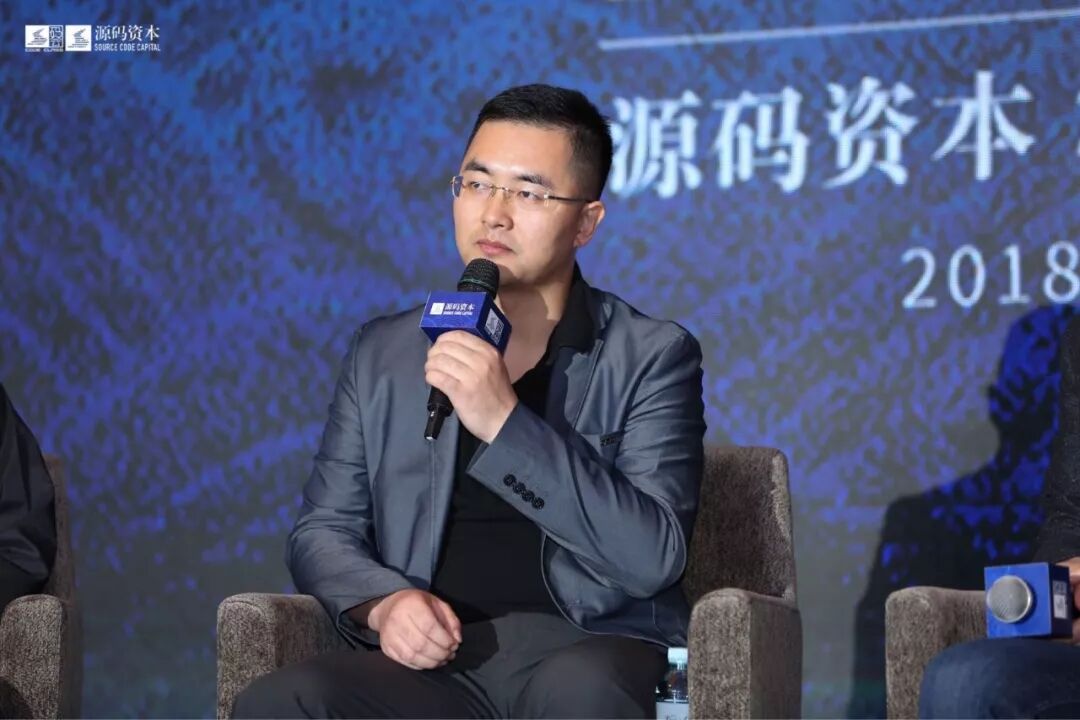
Chen Wang, Meituan Strategic Investment Department
Jie Min: In this situation, what doesn't change? Actually retail is built store by store, transaction by transaction. Everyone needs more patience. I believe capital has also given this market longer patience to some extent, or reduced some excessive investment, making the entire environment more rational — because moving too fast, often you still have to pay back the debt.
We used to say e-commerce developed at high speed; frankly speaking, e-commerce became a new source of inventory, which is quite frightening. Due to channel fragmentation in the past, China didn't have true retail chains in any meaningful sense — we just integrated channels under the same storefront. Even internal data unification is a long evolutionary process.
I think the difficulty is, as mentioned, fixing the car while flooring the accelerator. In this process, I hope platforms and capital can stand more on the side of making this ecosystem and supply side healthier, truly achieving survival of the fittest, rather than through excessive subsidies and other behaviors leading to everyone harvesting nothing but feathers — I hope in this process, platforms won't be so dominant, and capital can stay more sober.
We do SaaS ourselves, quite tough — 100,000 stores, but calculated back that's only about 100 brands served. One Chinese lingerie brand alone has 9,000 stores. How to help these brands first establish the 1, so the 0s behind it can be more solid.
Chen Wang: The pressure is enormous. Briefly, Meituan also does e-commerce business — we call it service e-commerce. We hope to build an ecosystem like Alibaba's, with many merchants opening and operating stores on our platform. But the difference is that because we focus on services, we ultimately need to direct traffic to offline merchants. We can't complete full fulfillment online — we still rely on offline physical retail and service providers to complete fulfillment actions.
From the service e-commerce perspective, our biggest challenge versus physical goods e-commerce is that our offline service providers are extremely diverse. On Tmall, opening an electronics store versus a clothing store may not differ much, but offline, there are Liu's convenience stores, Jiao's fruit stores, and various service-oriented stores. Looking internally, beauty salons differ from each other, retail differs from food and beverage, and so on.
Building this platform, our greatest challenge is understanding this industry and how to empower our resources to offline merchants. This is the biggest difficulty we feel. We ultimately hope that as a large platform, we're not here to suck away traffic, or take another cut when retail already has low gross margins. We hope to bring you more traffic, help achieve efficiency improvements, and serve a role similar to utilities infrastructure.

Jie Min, Founder and CEO, Shanghai Yiker Information Technology
What Changes and What Doesn't in Industry's Future
Kaisi Chang: This reminds me of a very famous perspective: rather than focusing on what will change in the next 10 years, sometimes we should focus more on what doesn't change. I'd like everyone to very simply summarize in one sentence: compared to the changes just discussed, what doesn't change in retail's future? As a channel, one constant is certainly channel efficiency — this always manifests in inventory. Whether you can reduce system-wide inventory is also a channel's most fundamental task. So in the future, channels with low inventory-to-sales ratios will defeat those with high ratios — this should be constant.
Zhongjian Liu: The only constant is constant change, that's certain. For retail enterprises, the pursuit of high cost-performance goods, beautiful consumer lifestyles, and warm consumption scenarios — these definitely won't change. Also, as a retail veteran of so many years, no matter how things change, there are people both online and offline, and caring for employees must never change. I'll start with this.
Yue Jiao: For consumers and enterprises alike, what consumers don't change is better products, lower prices, more convenient purchasing, and better experience — these four aspects won't change. It's just that from the merchant perspective, how to balance efficiency, cost, and competitiveness.
From the retail enterprise perspective, my own feeling for the future is that doing both channel and product enables better products, because you have more control and accountability for products, then achieving cost control to deliver good products at low prices. We care about warmth — internally we pass care and warmth to franchisees. This isn't human-machine interaction, but person-to-person experiential interaction.
Jie Min: I think a relatively big change may happen in the future: the original platform-as-traffic-gateway channel model may change. A new distribution model based on service and word-of-mouth may emerge, no longer buying traffic with money, but achieving true survival of the fittest through consumer praise and organic sharing. But consumers never change — it's always good products, good prices, good service.
Chen Wang: Hearing this question, my first answer is the same as Liu's. We often say internally that the only constant in this world is change, and all we can do is embrace change — that's the first answer that comes to mind. Second, as Jiao mentioned, what's forever constant: from the C-side, it's the pursuit of ultimate experience. Half-hour delivery will likely become standard for merchants. Buying clothes and wanting delivery in half an hour — next-day or same-day delivery won't satisfy our needs anymore. From the B-side, I think the eternal pursuit of higher sales, higher profit margins, and higher efficiency. So Meituan's platform goal is to achieve better improvements for both our C-side and B-side in these two aspects through empowerment capabilities.
Kaisi Chang: Thank you all for the wonderful sharing. I believe everyone has gained deeper understanding of online-offline integration and future trends. Finally, what doesn't change: for Source Code, our belief in technology changing the world — this won't change for a long time to come. Our pursuit of outstanding entrepreneurs also won't change. I hope everyone passes this message along, and that Source Code can join with the most outstanding entrepreneurs to change the world through technology.
Thank you all.
Previous Ma Hui Articles
3rd Edition | Yiming Zhang: Avoiding the Arrogance of Rationality as CEO
3rd Edition | Lianjia's Hui Zuo: My Understanding of the Real Estate Industry
3rd Edition | Jingbo Wang: Deep Operations Understanding Is What Makes Financial Licenses Work
3rd Edition | Meili United Group CEO Qi Chen: The Difference Between Mules and Unicorns Is Focus
3rd Edition | Zhi Qin: Things Only Entrepreneurs Can Teach Themselves
3rd Edition | Microsoft Research Asia's Yu Zheng: AI Applications in Urban Management and Business
3rd Edition | Pitfalls We Stepped on in Three Years of Entrepreneurship
2nd Edition | Xiang Li's First Discussion of CHJ Automotive: Transforming Urban Mobility
2nd Edition | Yiming Zhang: Why I Don't Agree with Controlling Labor Costs
1st Edition | Zhuang Chenchao: How Should Startups Compete? How Should They Lose Money?

Source Code Capital
Creating Lasting, Real Value

WeChat ID: sourcecodecapital
More Professional Content
Follow Our Official WeChat