Code Brain | 40 High-Value Interview Questions From the Sharpest Tech Executives on the Planet

#Code Brain Ecological Connection, Cognitive Resonance
I've always believed that the ability to ask good questions is an important and scarce skill. Behind every question lies observation and reflection about the world. Good questions help you get closer to the essence of things faster.
A month ago, I was discussing the topic of "reading people" with the founder of a Hong Kong Stock Exchange-listed company. We both agreed that judging "people" is crucial in early-stage investing, and identifying founders worth backing for the long haul is actually a massive challenge when evaluating deals. One way to improve your odds at "reading people" is through long-term, deep tracking to deepen your understanding of them. Another is conducting high-quality Q&A within limited interaction time.
From the perspective of companies and founders, the biggest application scenario for "reading people" is in the hiring and interview process—a topic that's easily overlooked or rarely shared. Bringing in exceptional talent has profoundly far-reaching impact on a company, so improving interview skills becomes especially important.
Today's content comes from an exclusive collection of interview questions by First Round Capital, the star early-stage fund from Silicon Valley. They reached out to the smartest, most thoughtful people in their network and asked a simple question: What's your favorite interview question and why. I'm confident these 40 interview questions will spark some inspiration and resonance, and help you iterate on your interview capabilities.
From finding the right hiring process to bring in a new executive, to finding a strong internal recruiter, the challenges of discerning candidates are numerous. Hence, the interview.
If you're juggling countless responsibilities, racing against the clock, and sitting through multiple hiring committee meetings, interviewing is a task you simply must complete. The decision to hire someone is costly and consequential. Since you two can spend at most a few hours together, maximizing those precious minutes to get to know each other becomes paramount.
But given the high-stakes nature of every hire, interview skills always need sharpening. That means constantly seeking out quality interview questions. Everyone has a survey questionnaire tucked away in their pocket; we want to collect them all into our own hiring toolkit.
To that end, over the past several months, we've been reaching out to some of the smartest, most thoughtful people in our circle, asking a simple question: What's your favorite interview question and why?
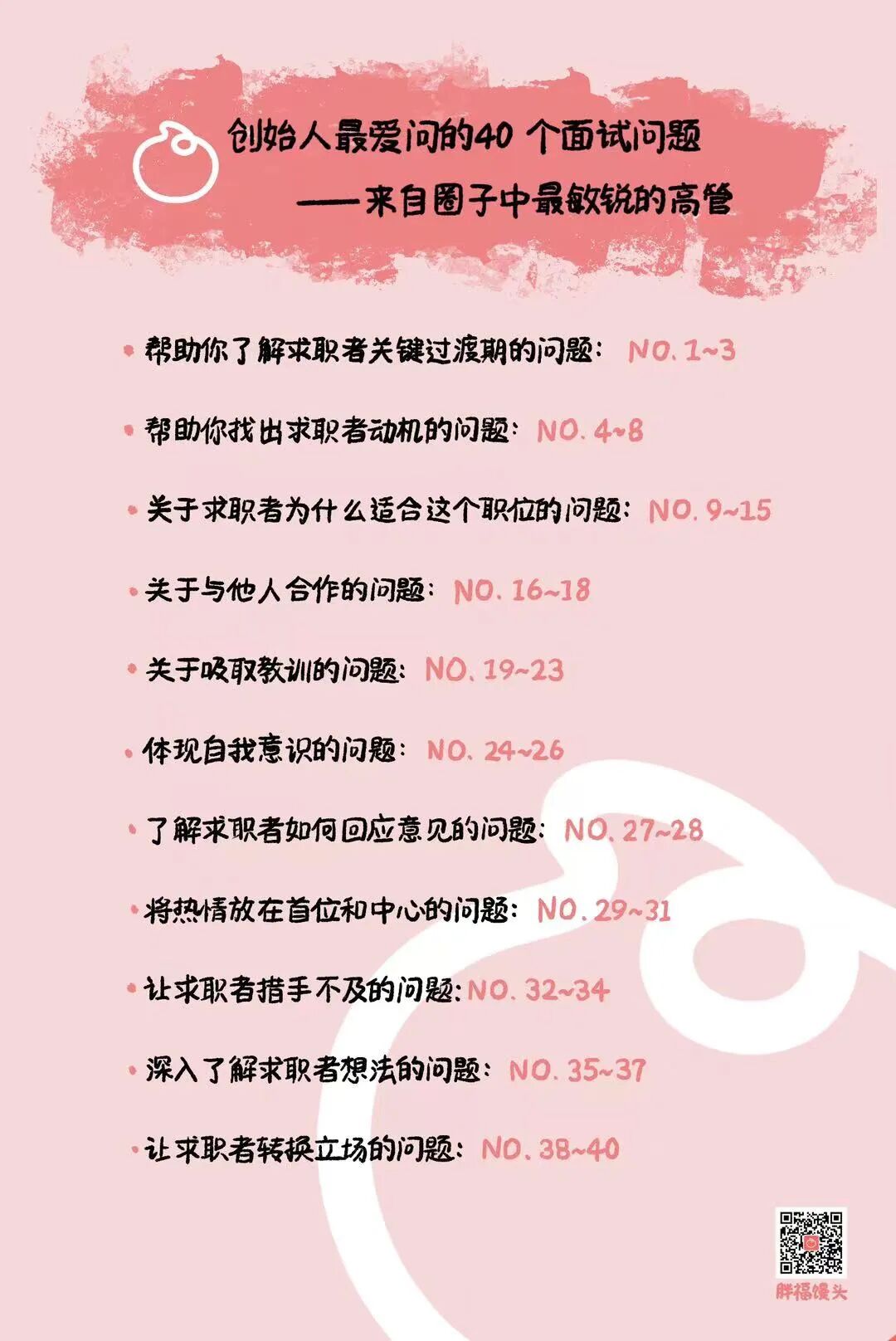
They were all remarkably perceptive, delivering first-rate responses. Below is an exclusive list of 40 interview questions. Some are (deceptively) short and gentle, some exploratory and unexpected, others designed as follow-ups. Broken down by theme, they cover nearly everything: from how candidates understand the role, to how they handle feedback, to describing their first summer internship, their worst boss, to the last time they changed their mind. Most importantly, these outstanding founders and company builders explain in detail why they rely on these questions—and what they're looking for in the answers.
We hope this collection serves as a starting point, offering rich reference material to help you build your interview process from scratch, or refresh it as you scale hiring. Let's dive in.
01 Questions to Help You Understand a Candidate's Key Transitions
1 What would you do differently in your next role?
Max Mullen (Instacart co-founder) hears two types of responses to this question, and the best candidates tend to converge on similar answers.
"I find that the best answers highlight their future goals rather than why they're leaving their current job. If they start talking about how they dislike their current boss or company, that tells you a lot—such as whether they're a positive person and how they handle adversity," Mullen says.
"I also typically ask what made them particularly interested in our company, and gauge how much research they've done. These all relate to their motivation. If they mention seeking more challenging opportunities, you can dig into how they want to make an impact, or what types of problems they enjoy solving."
2 Imagine yourself three years from now. How do you hope to be different than you are today?
Julie Zhuo (VP of Product Design at Facebook) wrote a book about how new managers build their teams. She previously contributed to Review, sharing deep insights on hiring designers, as well as fundamental and unique questions every manager should ask.
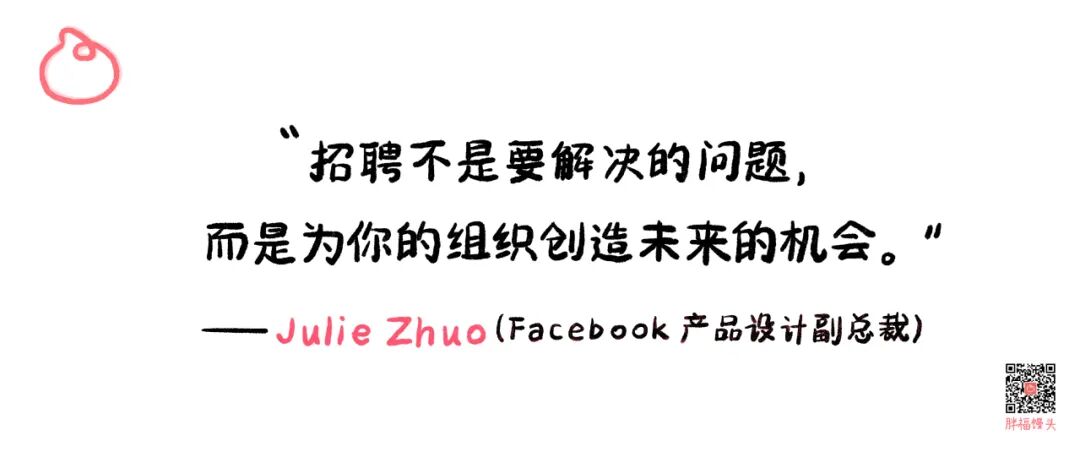
"In a growing organization, hiring is the most important thing you can do," she wrote in her book. "The most important thing to remember about hiring: it's not a problem to be solved, but an opportunity to create the future for your organization."
We recently followed up with Zhuo to learn what her favorite question has become after hiring hundreds of candidates over the years, and her answer reflected her future-oriented focus. "Having candidates describe their vision for their own development over the next three years helps me understand their ambition, goal-orientation, and degree of self-reflection,"
3 Walk me through your last few companies: (i) When you left, why did you leave? (ii) When you joined the next one, why did you choose it?
Kevin Weil (co-creator of Libra cryptocurrency, VP of Product for Facebook's Calibra) likes to take a distinctive lens to reviewing candidates' recent careers. "I love this question because it helps me understand how they think through major decisions."
Weil gleans substantial information about underlying motivations by dissecting why people leave and join companies. "What are they optimizing for to maximize their career development? Are they seeking stability or craving risk? Are they trying to develop new skills or refine existing ones? Are their goals to enrich their management experience or to be hands-on in execution?"
He advises paying special attention to how candidates structure their answers. "It's interesting to observe whether they weave their answers into a story or list a series of disconnected decisions. Do they see the big picture? Are they good storytellers?"
Transitions are also Alex Austin (CEO of Branch)'s favorite area to mine with questions. "I've found that people only make decisions completely independently in the gaps between jobs. No team member can steal their credit or do the work for them. It's the only moment in their career where you can deeply understand their thinking and motivations. Then you can evaluate their answers against the traits you believe are necessary to succeed in this role."
Have candidates tell you about the transitions between their jobs, rather than about each job itself. This gives better insight into their values and how they make decisions.
02 Questions to Help You Uncover Candidate Motivation
4 Of the people you've worked with, who do you admire and why?
On the surface, this question doesn't seem designed to reveal motivation. But that's exactly what Jules Walter uses it for in interviews.
Jules Walter (angel investor, former product lead for Slack's growth and monetization team, and co-founder of CodePath.org) has been busy pursuing causes he cares about. What interests him is—what values drive people to want to join his team.
"I want to understand a candidate's values, but I've found asking about them directly isn't that effective," he says. "This question surfaces those drivers in a more subtle but more honest way. What they appreciate in others tells you a lot about what they consider important."
By asking who candidates admire, you learn more about their values and get a glimpse of the qualities you're striving to cultivate.
5 When have you shown exceptional initiative? Follow-up: Can you tell me another one?
Brian Rothenberg (former VP of Growth at Eventbrite, now investor at defy.vc) is a growth master. He's shared the toughest growth questions and answers, and custom strategies from zero to IPO.
Unsurprisingly, his questions help him discover candidates who push their own boundaries for growth. "I've found that the best people on my teams are always proactive, even when their initiative is unexpected. But after they give one example of taking initiative, it's even more important to keep pressing for additional examples. I want to see a pattern—whether at work, school, or elsewhere—of them consistently being proactive."

6 What's good about your current or past job? Why?
Bethanye McKinney Blount (co-founder and CEO of Compaas, former engineering leader at Reddit and Facebook) is a wellspring of company-building wisdom. From addressing troublemakers in startup culture to introducing compensation transparency, she's shared insights on a wide range of topics.
"Asking this in interviews tells me two different things. First, I learn what people like and value. Second, they almost always end with a qualifier like 'but that didn't make up for...' so I also learn something about what they didn't like. I find the second part very illuminating—it helps me understand where they felt uncomfortable, unsupported, or unhappy."
7 What drives you in your work?
This question comes from Varun Srinivasan (former Senior Director of Engineering at Coinbase). He played an instrumental role in the company's meteoric rise and has invaluable experience with scaling.
Srinivasan says: "On the surface, the interviewer's question is simple, but it requires substantial thought and reflection from the candidate. I've found that it's precisely this asymmetry that sparks valuable discussion. Strong candidates can articulate their intrinsic motivations, reflect on why they previously worked at startups, or summarize why they want to enter this industry. Less impressive candidates don't engage in this self-reflection. They only give surface-level answers like 'I love hard technical challenges.'"
Porter Braswell (Co-founder and CEO of Jopwell) also opts for a similarly open-ended question: What does success mean to you? "I've found that asking something like that stops candidates in their tracks and gets them to think," Braswell said. "It makes for a much more natural conversation, and I learn far more about them than I would scanning a resume. It shows me what fundamentally drives them."
8 Looking back at the last five years of your career, what were the highlights?
Michael Vaughan (former COO of Venmo, currently EIR at Oak HC/FT) believes this question carries more weight than it appears. "It tells me what kind of person the candidate is, what matters to them, and how they think."
"For example, if they tell me about personal achievements, I know individual career development is an important area of focus for them. If they talk about the accomplishments of direct reports or their team, I know they care about developing talent. If they describe company performance, I know they connect their own success to the company's success — and that mindset is incredibly well-suited to getting through the early stages of a startup."
03 Questions About Why the Candidate Is Right for the Role
9 What are you really good at that you never want to do again?
Bryan Mason (Chief Business Officer at VSCO) loves this question because it gets candidates to do three things:
Reflect on their self-awareness;
Test whether they can talk humbly about something they're "good at";
Discuss something the interviewer found valuable on their resume that they actually no longer want to do.
"What I didn't expect was how many candidates would say they've never even thought about doing the things required for my position."
There are plenty of candidates who excel in the field you're hiring for. The problem is they don't want to do it anymore.
10 What's the difference between someone who's good at this job and someone who's exceptional?
When interviewing candidates for LendingHome, Matt Humphrey (Co-founder and CEO) constantly looked for people who deeply understood the difference between A+ and what he calls "A+++."
"I always follow up with, 'Can you give me specific examples of setbacks and wins from your career?' I pay attention not just to the answer itself, but to how they answer it. The strongest candidates can respond almost immediately, often with a knowing smile, because they completely understand what I mean and take pride in having gone above and beyond."
11 How did you prepare for this interview?
When asking this, Jonah Greenberger (CEO of Bright) watches for three things: initiative, resourcefulness, and enthusiasm.
"These qualities are critical for any role," Jonah Greenberger said. "I love this versatile, open-ended question. It gives candidates room to demonstrate concise, creative, and clear thinking."
12 What personal or professional goals could you achieve here that you couldn't achieve anywhere else?
Shiva Rajaraman (CTO at WeWork and former VP of Product at Spotify) typically saves this question for near the end of the interview.
"I love this question because the answer reveals a candidate's personal motivations, creativity, and commitment to the company's mission," Rajaraman said. "Usually, they haven't actually thought deeply about our company or capabilities. The answer shows whether we're a good fit for each other, and whether we can be the best place for the candidate to grow. Most importantly, if a candidate can clearly articulate her ambitions and how we can help her achieve them, we're one step closer to bringing her on board."
Questions about "why you want to work here in this role" may seem mundane, but they're crucial. Often, candidates are simply running away from something else without deeply considering what they want next.
Tamara Ford John (Public Affairs Manager at Looker) also emphasizes digging into what makes a candidate passionate about the opportunity in front of them. "I always ask candidates, 'Why do you want to work here? Why do you think you're a good fit for this role?'"
"I've found that many candidates don't know why they're drawn to your company, or the specific reasons they can excel in this position. I've seen so many candidates stumble on this interview question — it's truly unbelievable."
13 What are the three most important traits for this role? Rank them in order, and tell me where you're strongest and where you're weakest.
When hiring for WeWork's product team, Jack Krawczyk looked for candidates who both deeply understood their job responsibilities and recognized areas where they needed to improve.
"I ask this when hiring product managers, but it applies to other roles too," he said. "I've found it forces candidates to be introspective and demonstrate how well they know the industry through examples."
14 Describe your ideal next role. From the perspectives of responsibilities, team, and company culture, what does it have? What doesn't it have?
Alyssa Henry (Head of Seller and Developer Businesses at Square) is incredibly busy, so being able to quickly gauge fit is essential. She's found that rather than directly asking about interest in a specific position, it's better to abstract out their ideal next role — a work scenario compelling enough to attract them.
"This two-part question helps determine whether a candidate's expectations align with the role itself. Especially when you hear what they don't want, you might realize the candidate is actually better suited for a different position. But what I value most is that the answer reveals something about the candidate's character. If you know what they value, you can tailor your pitch accordingly."
15 Imagine it's May 5, 2023. You've been here a year. What impact have you had on the business?
When hiring for PatientPing, Jay Desai (Co-founder and CEO) has candidates talk about the future — what things will look like once they've gotten the job, settled in, and started making an impact. From this question, he learns:
Their sense of timing: "I've found you can understand how long a candidate thinks things should take. People from large companies think things take longer than they should, while people from smaller, less experienced startups think they'll move faster than planned."
What they focus on: "You can learn a lot from their assumptions about future impact. Are they results-oriented, using data to describe their impact? Or are they more process-focused, describing their impact through systems they've successfully built. More people-oriented candidates will talk about how the organization and team will evolve."
Their understanding of the role: If a candidate's hoped-for outcomes are far from your expectations, that tells you something in itself. "The candidate's response reflects how much they've internalized the role and what problems the company needs them to solve," Desai said.
04 Questions About Working with Others
16 Tell me about a time you disagreed with your manager. What did you do to convince them you were right? What was the outcome?
Several people mentioned this as their favorite interview question. Since each had different emphases and takeaways, we've combined perspectives here to highlight why this question matters so much.
Let's start with Cristina Cordova. She was Stripe's 28th employee and first business development hire. Beyond joining First Round's Angel Track program, she's led multiple teams spanning business development, financial partnerships, partner engineering, and other diversity and inclusion functions — meaning she's done quite a bit of hiring.
This question has become her go-to in interviews for several reasons. "It tells me how far someone will go to do what they believe is right. The candidate's response shows how they persuade others when they hit roadblocks. Do they use data? Do they get buy-in from others?" Asking about the outcome is particularly revealing. "You can see whether they can execute while disagreeing when things don't go their way," Cordova said.
Erica Galos Alioto (currently Head of People and Development at Opendoor, former SVP of Sales at Yelp) also gravitates toward this question. "I want to understand how candidates handle conflict at work. Do they address it openly and view their disagreement as a strength? Can they see things from others' perspectives? Are they trying to solve the problem, or staying silent? This gives me more insight into their effective communication skills and how they handle disagreements with others at work."
Michael Curtis (former VP of Engineering at Airbnb) is also passionate about studying how candidates handle disagreement in interviews. "I love this question for several reasons. First, it's hard to give a fuzzy answer. I've also found it gives me important signals about a candidate's personality across multiple dimensions, and provides useful data points for later reference checks."
Curtis continues exploring this topic with targeted questions to understand how their disagreement with their boss was resolved:
What was your manager's reasoning?
What arguments did you think would be sufficient to support that decision?
What were your objections and most compelling arguments?
Were you ultimately right?
17 Tell me about the best and worst bosses you've ever had, specifically in your own career. How were they different?
Jeffrey Glueck (CEO of Foursquare) finds that candidates usually don't prepare for this question. "Their answers reveal what they base their judgments on. While answers about the best boss are interesting and provide deep insight into how to maximize their abilities, I find answers about the worst boss more revealing. You might discover they're extremely independent and react strongly to micromanagement, or that they're very focused on personal compensation."
Glueck believes the key is to push for specificity in their answers. "Don't let them leave with a vague response. Of course, they don't have to name names, but insist they talk about two specific bosses at specific companies rather than generalizing."
18 What part of your previous company's culture would you want to bring to your next company? What culture would you not want at your next company?
Ben Kamens (Founder and CEO of Spring Discovery) finds this question effectively probes how candidates think about working with others, reflecting their understanding of team dynamics and culture.
He says: "Will they immaturely complain about the failures of past teammates? Have they thoughtfully considered why certain problems existed, and discussed the trade-offs their previous company had to make with maturity? Can they explain why one company's or industry's problems or culture might not apply to another?"
05 Questions About Learning from Mistakes
19 When was the last time you changed your mind about something important?
For Sarah Fetter (Managing Director at East Rock Capital), this interview question is about change.
"Through this question, you can see whether a candidate's belief system or core values have changed and how — how a profound experience or influential person changed their worldview," she says. "Then ask more questions about how they felt before, during, and after the challenge — that tells you a lot."
20 What's the most important thing you've learned from a peer? How do you apply what you learned in your daily life?
This question comes from Dan Slate (Director of Product Management at Wealthfront). He says: "I want candidates to identify the superpowers of people around them, then learn and improve themselves."
"I love this question because it gives me insight into their self-reflection and growth mindset. The answer they provide can also reflect their level of humility."
21 Tell me about a time you messed up at work. How did you handle the mistake afterward?
Chad Dickerson (former CEO of Etsy) says: "This single question reveals whether a candidate is humble, self-reflective, good at problem-solving, and possesses communication skills."
He notes that this question also offers deeper insight into the scope of responsibility in a candidate's previous role. "Keep in mind that the greater a person's responsibility, the bigger their mistakes will be, and the more complex the remedies for those mistakes become."
22 Tell me about a mistake you've made or a failure you've experienced. What did you learn from it? Can you give two more examples?
Corley Hughes, an alum of Glossier, the Chan Zuckerberg Initiative, and Product Hunt, has built a strong track record in team-building. When hiring, she focuses more on how candidates learn from failure, but she believes asking about just one failure isn't enough.
"Three examples help me better understand their behavior and typical working style. Every candidate who comes well-prepared for an interview has a ready-made answer about learning from failure in their back pocket."
"If someone can describe three separate instances of screwing up, it shows they're accustomed to looking at reality objectively and can openly discuss what they would do differently. I've found that these people self-correct proactively, never stop learning, and share bad news quickly — and these three traits are exactly what my team needs most."
While listening to responses, she pays particular attention to whether candidates can:
Talk about mistakes easily and candidly.
Reflect on and apply what they've learned.
Not take themselves too seriously.
Every candidate comes prepared with a ready-made answer about learning from failure. Those who can cite three different experiences are genuine continuous learners — and the kind of people a team needs.

23 When was the lowest point in your career? Were you aware of how you felt at the time? How did you cope?
Zach Sims (Co-founder and CEO of Codecademy) uses this question to observe whether candidates possess resilience.
"We want candidates to know that careers aren't smooth sailing — they have ups and downs. Can you ride the waves of your career, weather storms with the team, and move toward a better future together? Candidates who've been on this kind of roller-coaster ride typically navigate startups better than others."
06 Questions That Reveal Self-Awareness
24 What do your colleagues misunderstand about you?
Sam Gerstenzang (Co-founder of Umbrella) once wrote that what holds people back is usually not weakness, but failure to recognize weakness. So his interview questions center on self-awareness.
"I've found this question often opens candidates up. If you ask what colleagues misunderstand about them, rather than what they don't know about them, the interviewer gets more important, more revealing information — while also learning about the candidate's relationships with colleagues."
Based on Gerstenzang's experience, this misunderstanding is usually something the candidate wishes they had more or less of, helping interviewers understand their underlying motivations. He says: "A weaker answer reveals that the person's self-awareness isn't fully developed, or that they communicate poorly with colleagues."
Asking about misunderstandings makes the interview more efficient. It reveals both how candidates see themselves and how they think others see them — both of which matter.
25 Compared to most people, what are you better at? What's your superpower? How will you use it to make an impact at this company?
Roli Saxena (former VP of Revenue at Clever, now CCO at Brex) always has some particularly insightful interview questions. Previously she discussed what she asks to observe whether candidates have resilience and the habit of prioritizing their work — qualities that help them better handle burnout and busyness at work.
"By asking what their superpower is and how it specifically helps them do their job well, you can fully understand a candidate's self-awareness and whether they're well-prepared. If they can tailor their answer to our team's focus and how they can add value to the company, I know they've done their homework on both our company and themselves."
Lenny Rachitsky (former product lead at Airbnb) also asks candidates to share their superpower. In recent advice on handling performance reviews, he noted, "As a manager, it's important to help people amplify what they're genuinely great at, rather than just trying to improve areas where they're currently struggling."
Here's what this former Airbnb product lead particularly wants to hear in response to this interview question:
Thoughtful and specific. "The best candidates pause and take time to think seriously. For me, if their answer is generic, that's a red flag. I want them to identify the key point rather than being vague."
Humble yet genuine. "Can they honestly point out both good and bad? Do they feel authentic? I want to truly understand this person's strengths and weaknesses, which is why I often follow up with: 'If I asked your former colleagues about you, what would I hear?' I've found this question always elicits genuinely honest answers."
26 What do people who don't think highly of you typically say?
This question is clearly designed to probe the depth of a candidate's self-awareness. Gabriel Otte is also looking for another quality: empathy.
Self-awareness isn't just about knowing your flaws. Having empathy for people who don't like you enables you to face feedback constructively — otherwise you may get defensive or avoidant, unable to truly internalize and reflect on others' criticism.
Otte (Co-founder and CEO of Freenome; partner at Healthcare Co-op, backed by First Round) says: "When I ask candidates this question, I'm always looking to see how much empathy they have for people who don't like them. Do they dodge the question? Or make excuses for why people don't like them? Or refuse to accept reality and claim nobody dislikes them?"
07 Questions About How Candidates Respond to Feedback
27 What's the hardest feedback you've received? Why was it hard to accept? How do you handle this kind of feedback? What did you learn from it?
Pema Lin-Moore (Head of People at Medium) typically asks this question when the interview reaches the "work history" section. She says: "This shows me how candidates react to feedback that doesn't match how they see themselves or how they want others to see them. You can learn how strong a person's self-reflection is, how adaptable they are, and what kind of environment they've been in."
Nolan Church (Chief People Officer at Carta) also recommends understanding how candidates handle difficult feedback. He says: "I get more from this question than almost anything else I ask. It lets me continue getting to know the candidate, understand how they respond to feedback, and gauge their self-awareness, resilience, and humility."
In addition to question 11, Matt Humphrey (Co-founder and CEO of LendingHome) offers another excellent question that fits well in this section: "I always say, 'While we'll do our due diligence, I'd rather hear it from you: specifically, what's the most recent piece of critical feedback you've received?'"
For him, the setup is key. Humphrey notes, "I've found it important to tell them we'll 'check.' Candidates tend to give more honest answers as a result. I really want them to give a specific time and situation, rather than a hollow, abstract response. So let candidates know that what they say may differ from what I hear during background checks."
28 Find ways to give candidates feedback during the interview.
This isn't exactly a question — it's more of a targeted strategy, but an extremely valuable piece of interview advice for hiring managers, so we had to include it here. This advice comes from Nicky Goulimis (Co-founder and COO of Nova Credit).
She says, "In interviews, I try to give candidates constructive feedback and observe their reaction. How we navigate difficult conversations is crucial to how we'll work together in the future, so this test is indispensable."
However, every candidate is different, so they can't all be treated the same. Goulimis proposes two strategies for creating opportunities to give constructive feedback:
Feedback on the interview itself: "We have one final step in our company interview where we bring all candidates out," Goulimis says. "We thank candidates with applause near the end of the interview, and then everyone on the interview panel shares feedback with each other — both positive and constructive. It's incredibly useful to see candidates internalize this feedback and respond immediately."
Opinions on their potential fit: "During the questioning process, I also share constructive feedback. I'll directly say what excites me and where I still have questions," she says. "This demonstrates my commitment to transparency and gives them an opportunity to respond or address those concerns."
08 Questions That Put Passion Front and Center
29 What do you hate?
Shawne Ashton (VP of Growth at Mindbodygreen, former Director of Business Operations at Zola) uses this as her final interview question. "It helps me understand whether the candidate is a lifelong learner, a self-starter, whether they have curiosity, whether they can teach themselves new things they're interested in. I emphasize that the answer doesn't need to be work-related, so my understanding of the candidate isn't limited to their direct work experience, and it ends the interview on a relaxed note."
Cindy Smith (Head of Strategy and Partner Operations at Upstart) asks something similar, with a slight twist: Have you ever taught yourself anything on your own? "I want to hear them talk about something they didn't receive formal training in," Smith says. "This reflects a person's curiosity and intellectual hunger, and helps me judge how someone approaches difficult problems and new challenges."
30 Outside of work, what are you a huge nerd about?
While this might seem like a standard getting-to-know-you question, Laura Behrens Wu uses it as an opportunity to dig deeper into a candidate's motivations.
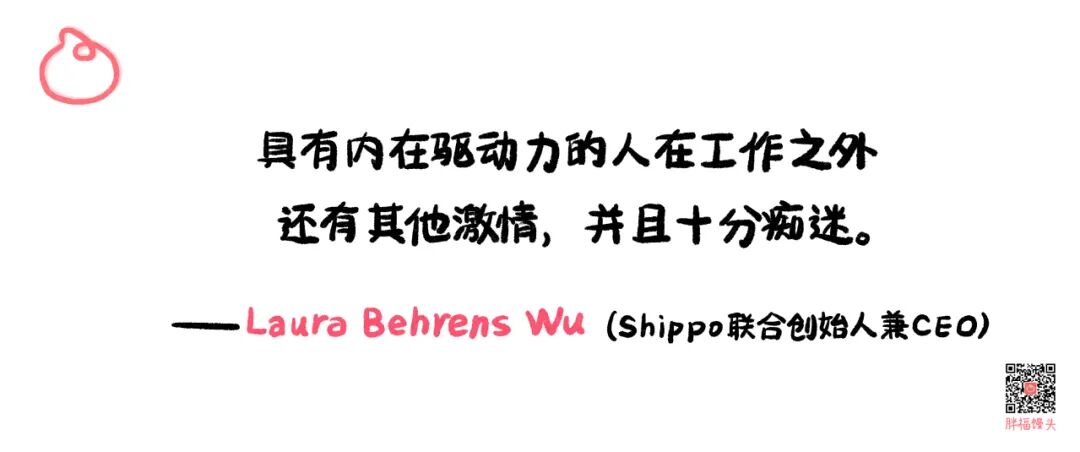
Laura Behrens Wu (Co-founder and CEO of Shippo) says: "I'm looking for people with intrinsic motivation, and hobbies are often an outlet for that drive. Over the years, I've found that people with intrinsic drive have other passions outside of work that they're obsessed with. For example, if a candidate tells me their hobby is running ten miles every day, that's a signal they have strong internal drive."
31 Beyond your resume, what was your first job? What did you learn from it?
This is one of Maryann Kongovi (VP of Operations at Algolia)'s favorite questions. She says: "This relaxes the candidate and leads to interesting conversations about summer jobs. But there's purpose behind it — I can better understand their values and perspective on work itself."
09 Questions That Catch Candidates Off Guard
32 Why shouldn't we hire you?
Romy Macasieb (Founding PM at Walker & Company and current VP of Product) finds this a useful and unexpected question for uncovering a candidate's growth areas. "It goes much deeper than standard questions like 'What are three things you'd like to improve about yourself?'"
"I love this question because it puts candidates in a dual role. They can highlight skills they lack, or why they might not be the person we're looking for. We want candidates to say something like: 'If you just want someone to do quantitative analysis, you shouldn't hire me.' But they can also pivot to why the company might not be right for them. I've heard answers like: 'If your office is open-plan, you shouldn't hire me.'"
33 What should our team be doing differently to grow 10x?
Meka Asonye, who leads Stripe's Startup & SMB Sales organization, which advises venture-backed companies on go-to-market, monetization, and expansion strategy, says: "I'm looking for people who are action-oriented and think like owners. Beyond the role they're applying for, can they think at the CEO level?"
Sometimes, this question uncovers genuine gold. "We're actually considering piloting an idea a candidate recently mentioned. In one interview, someone brought up suggestions we'd seriously considered but abandoned for various reasons," Asonye says.
But when the answers fall short, candidates tend to make these mistakes:
Not thinking big enough. "I often hear ideas for improving 10%, not 10x — maybe some uncontroversial, minor process tweaks," Asonye says.
Having nothing to suggest. Asonye says: "That's a major red flag for me, because I typically see candidates in their second or third round, and they've already met five to ten people. They should be very familiar with our company and product by now, so this usually indicates they haven't done their homework."
To avoid stalled conversations, Asonye provides useful footholds through these guiding questions:
- Why might we fail to raise our next round?
- Why would someone choose to work with our biggest competitor?
- What products or services could we launch that would be valuable to our core customers?
34 Can you teach me something?
Nathalie McGrath (VP of People at Coinbase) poses this unexpected open-ended question to every candidate. "We learn about the candidate's thought process from this conversation. How do they communicate and reason through a problem? Do they start from first principles? There's also the bonus that I get to learn what they're passionate about and have the opportunity to learn something new."
Kevin Morrill also loves this question. Over hundreds of interviews across many years, he's developed deep thinking about it. Morrill is an Engineering Manager at Quizlet, former CTO of Mattermark, and founder of Buried Reads, a blog that delivers highly valuable information to readers via email, co-written with his wife Danielle Morrill. Danielle Morrill is former CEO and Co-founder of Mattermark, and currently General Manager at GitLab.
When we asked why he favors this approach, Morrill prepared a document detailing what he calls the "Five-Minute Communication Question."
First, the candidate needs to choose a topic — anything, a hobby, a book, a project. Then they have five minutes to explain it, taking Morrill from zero to understanding. Here are several things Morrill focuses on during the explanation:
Empathy. After asking the question, the interviewer must keep a poker face and interrupt as little as possible. "A strong candidate will notice this and proactively ask whether I understand so far. These people think from the customer's perspective, and if we hire them, they'll do the same in their future work."
Analogies. Finding quick ways to explain concepts highlights a candidate's skill. "One person taught me poker using backgammon, which I'd played. He talked about how in backgammon, all pieces on the board are public information, while in poker you have hidden cards. This type of explanation is incredibly useful for quickly and concisely communicating an idea with various implications."
Taking time to pause. "Once aggressive candidates start explaining, they don't stop, mentally bullet-pointing what they want to say next or drafting an outline. This method very accurately predicts that these candidates will be disorganized and goal-less in their future work."
Surprisingly, too many candidates don't pause to think before answering interview questions. Those who take time to pause, think, and have clear perspectives are the best people I've worked with.
10 Questions That Deeply Probe a Candidate's Thinking
35 If you took over as CEO of your current company tomorrow and had to increase its current growth rate, which three areas would you invest in?
Jeanne DeWitt, who leads revenue and growth for Stripe in North America, naturally gravitates toward growth-oriented questions. But through this one, she's found an effective way to evaluate candidates based on several variables.
She notes: "I find this gives candidates an opportunity to highlight their strengths and strategic thinking, while also being an opportunity to exercise empathy. If they talk about how they as CEO would impact their team, it shows they've thought about how their way of working affects colleagues or direct reports."
36 What product would you build for someone looking for an apartment?
Bangaly Kaba (VP of Product at Instacart and former Head of Growth at Instagram) gives candidates 45 minutes to whiteboard their answer to this question. It's part of the product sense portion of PM interviews — a hypothetical that seems simple but is actually quite difficult.
Three things explain why he loves this question in interviews:
No right answer. "As the interviewer, I don't know the exact product solution," Kaba says. "I care about the rigor of the candidate's approach, the depth of their thinking, the coherence of their product outcomes, and the framework they use to achieve their goals."
Universal relevance. "Many product sense questions are niche to the company you're interviewing with, which is biased because of information asymmetry between interviewer and interviewee. But finding housing is a universal need everyone has."
Hard to game. "Even if you know the question in advance, I can introduce new difficulties or constraints — which is what PMs face every day. This tests whether candidates can think through their product philosophy thoroughly and comprehensively."
37 Name 10 ways to make Domino's Pizza delivery faster.
When hiring junior PMs at Coinbase, Max Branzburg likes to throw out this unexpected pizza chain question.
He says: "There's no right answer, but what I love about this question is that almost no candidate has relevant background or experience. Good answers show you can ask clarifying questions, structure your thinking, be creative and analytical, and consider technical and operational solutions. Plus, it's undeniably fun."
11 Questions That Deeply Probe a Candidate's Thinking
38 What can I tell you about working here?
A few years ago at the CTO Summit, Kellan Elliott-McCrea gave a brilliant talk on how Etsy increased its number of female engineers by 500% in one year — his perspective on interviewing was profound and insightful.
Kellan Elliott-McCrea (former SVP of Engineering at Blink Health and former CTO of Etsy) found that the fundamental model the tech industry uses for interviews is flawed. "Because it assumes we're just looking for brilliant individual contributors. That might have been true once, but it's not anymore. Software isn't just a technical project — it's a complex sociotechnical and operational one," Elliott-McCrea said.
What he believes interviewers should focus on:
Treat the interview as a collaboration. First, make sure the role is the right fit. Second, make sure the candidate has a positive experience. Everything else is gravy.
39 Imagine you're me. What qualities would you look for when hiring for this role?
Tim Chen (co-founder and CEO of NerdWallet) recently shared on Review how he evolved from a first-time founder to a seasoned executive, offering insights on hiring — including how he refined his approach to interviewing executives and why he personally interviewed every candidate before NerdWallet's team reached 200 people.
When we asked him about his favorite interview question, he gave a fascinating answer: asking candidates what qualities they would look for in a candidate if they were the interviewer.
"They come up with all sorts of unexpected qualities. It helps you think about the role differently. I also find that candidates tend to highlight their own strengths, so it tells you something about who they are. You can also see whether they're good at breaking down ambiguous problems into key drivers, like hiring."
40 Is there anything I haven't asked you yet?
"This question catches almost every candidate off guard," says Liza Hausman (VP of Industry Marketing at Houzz). (It's perfect as a final question.)
"I love it because it tells me what they value about their own skills or experience. It also shows me whether they have their own interview strategy, which is useful if they ever need to build a team themselves."


Issue 22: Navigating Supply Chains Amid "Turbulence"
Issue 21: Clear Despair Beats Vague Hope — On ToB Sales During the Pandemic
Issue 20: Is Your Cash Flow Still Healthy During the Pandemic?
Issue 19: Founders Must Learn to Let Go
Issue 18: Time Management for Founders: "Two Habits, Three Principles, Four Quadrants"
Issue 17: Your Core Startup Team Needs a "Deep Dialogue"
Issue 16: Three Keywords for Crisis Management from the 3·15 Perspective
Issue 15: The New Evolution of InsurTech
Issue 14: "Small" Trademarks, "Big" Trouble — How to Avoid Pitfalls on the Startup Journey
Issue 13: Financial Opportunities in Industrial Internet
Issue 12: Strategic Thinking on Douyin Marketing for Consumer Brands
Issue 11: Inclusive Finance Under the New Economic Landscape
Issue 10: Brand: Meaning, Symbol, Value
More MaHui members can click "Read More" to view