Code Brain | Eight Questions on Going Global: Where Are the New Business Opportunities?

#Code Brain Ecosystem Connection, Cognitive Resonance
Chinese companies going global have evolved through multiple iterations: from the earliest resource-driven exports of garments, toys, and other traditional foreign trade goods, to the internet-based wave of tool apps, games, e-commerce, and social platforms, and now to today's wave of smart home appliances, robots, and other consumer products and services...
But opportunities and challenges coexist: the "dual circulation" strategy demands that Chinese companies participate in the global industrial value chain at a higher level, while the complex and shifting realities of international relations are slowing their overseas expansion.
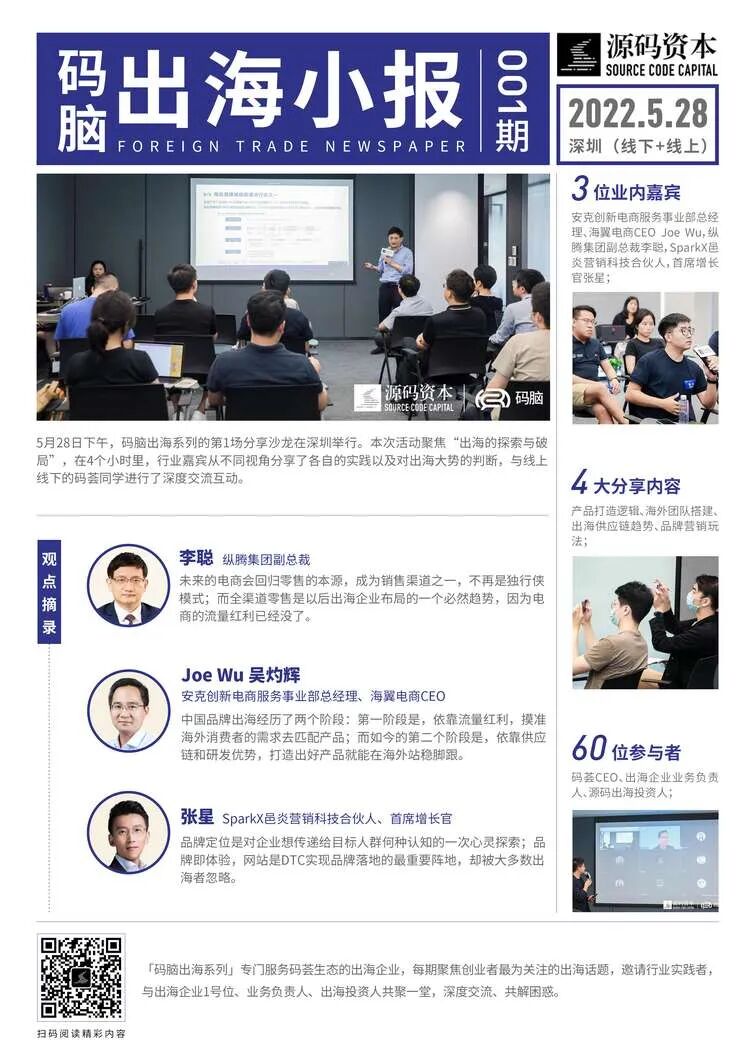
On the afternoon of May 28, Source Code Capital organized a salon in Shenzhen on the theme of "Exploration and Breakthrough in Going Global," inviting three industry guests: Joe Wu Wu Zhuohui, General Manager of Anker's E-commerce Service Division and CEO of Oceanwing E-commerce; Li Cong, Vice President of Zongteng Group; and Zhang Xing, Chief Growth Officer of SparkX, to share their practices from the perspectives of product, team, supply chain, and brand. Together with nearly 60 entrepreneurs and investors attending online and offline, they discussed the real-world environment facing Chinese companies going global and viable strategies.
We've extracted the 8 most frequently asked and discussed questions from the 4-hour session to present the current confusions of Chinese entrepreneurs about going global, hoping that the guests' answers will provide some food for thought.
Q1: Most Chinese companies going global choose mainstream overseas e-commerce platforms like Amazon. What notable changes and trends have emerged on these platforms in recent years?
Li Cong: If you look at Amazon's seller structure — 0.5‰ of sellers contribute 10% of sales. It's not the 80-20 rule, it's the 90-10 rule. This is a distorted structure with extremely concentrated head effects. In 2021, Amazon's membership growth fell below 5% for the first time, and will continue to decline — it's hit a bottleneck. The UK and Germany are the same, both dropping below 10%. And when Amazon's membership growth slows to single digits, it causes overall marginal consumption growth to decelerate.
Therefore, both Amazon's customer structure and LBA's operational strategy have undergone massive changes: Amazon provides membership services, while LBA provides delivery services for other platforms — the platform's own logistics network becomes a third-party logistics platform. This is a very significant change worth noting, meaning the B2C proportion will decrease while B2B will increase.
The United States is rapidly entering a "new retail era," but its new retail differs from China's. The US doesn't have as many supply chain-advantaged enterprises as China does, and supermarkets and big-box stores possess absolutely dominant supply chain capabilities. At this point, Amazon will recruit large numbers of small and medium sellers to join, monetizing traffic to increase GMV. Amazon's short-term strategy is selling ads, but the future platform structure will resemble Tmall, primarily consisting of brand enterprises + factories + small and medium sellers, in that order.
The traffic dividend period propelled Amazon to become one of the top two largest delivery companies. LBA was extremely powerful in that era, reducing internal transaction costs with very high efficiency. But now, entering the new retail era, when everyone ships through multiple platforms, LBA only doing drop-shipping for itself can't satisfy customer needs. So the change LBA is currently making is: integrating logistics and warehousing, relying on its own volume to consolidate integrated logistics, and gaining the ability to independently build national-level distribution networks.
Q2: At this stage, do Chinese companies going global still have traffic dividends?
Joe Wu: Honestly, the era of wild growth and easy dividends has passed. Going global now requires more comprehensive strategic planning. Looking at policy changes on Amazon and other platforms in 2021, as well as the overall trend in online traffic, everyone should have their own understanding of this question. Currently, Chinese companies going global are no longer in the so-called "traffic dividend" or "wild growth" era, and traffic costs across the board continue to rise.
In 2021, Amazon's advertising revenue maintained double-digit quarter-over-quarter growth, yet at the same time, Amazon's cost per click also rose 32%. From Q1 2021, North American offline retail rebounded, e-commerce customer acquisition costs rose, and channel proportions adjusted. Over the past two years, Google's off-site promotion costs have grown more than 2x, and Facebook's costs have risen 3x.
So today, the era of riding the wind and waves has passed. Chinese companies going global need to plan comprehensively across the entire chain from product to brand.
Li Cong: We believe that the past traffic dividend period has, in a sense, reached a tipping point — this is a very clear signal for Chinese sellers. The transformation in traffic will cause e-commerce to polarize: one path moves upward toward high-quality brand e-commerce, but brands won't arrive immediately — the most important thing is to first achieve supply chain scale, and let this cycle gradually drive brand effects;
The other path moves downward toward high cost-performance下沉 e-commerce. "Downward" here carries no negative connotation. In the future, Chinese factories connected with livestreaming and influencer marketing — such factories doing cross-border e-commerce actually lack Amazon operations talent, but if connected with influencers, they don't need it. It's a long-term cultivation process; influencer livestreaming simply requires selling production directly. At that point, the barrier to entry for cross-border e-commerce will be even lower, and this customer segment can achieve very low cost advantages.
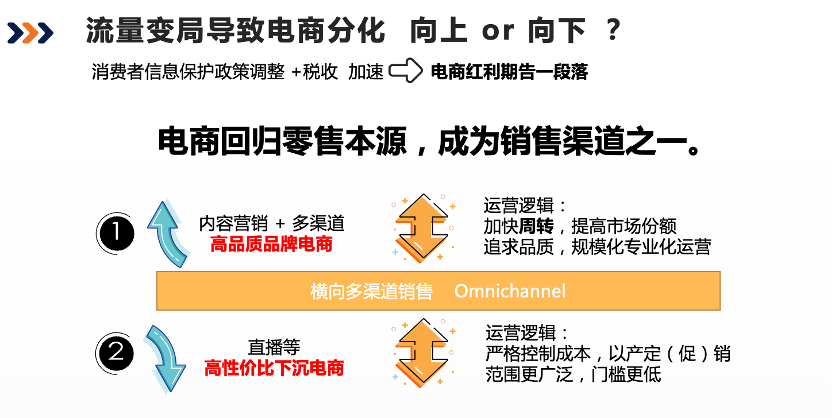
And between them lies another path: multi-channel, doing B2B business while supporting B2C business, with the two forming a cycle.
Q3: In the current global environment, which product categories still have opportunities for going global?
Zhang Xing: In this year's environment, many niche scenarios have seen new brand opportunities: Education Go Global — primarily providing online Chinese education for global Chinese communities, this is currently a very high-growth track;
Outdoor products — mainly products extending from the broader outdoor scenario, as pandemic impacts have further elevated acceptance of the entire outdoor category this year; Robots — primarily commercial machines and educational home robots.

These three categories are the best-performing growth categories this year. Beyond these, there's also 3C electronics and home appliances, apparel — especially outdoor clothing, plus-size women's wear, and streetwear, as well as toys — all established strongholds for Chinese brands going global.
Joe Wu: I still hope that when everyone considers going global, they first return to the fundamental question: whether you genuinely want to build overseas markets for the long term. This question is very realistic and very important. If it's just a "try it out" attitude, I don't think that counts as going global. If you truly want to commit to going global long-term, first establish your brand positioning, target consumer groups, and product positioning.
Regarding opportunity categories for going global — for example, if you've done Category A domestically for many years but decide to do Category B specifically for going global — this doesn't strike me as very logical. I suggest that all companies wanting to go global must focus on businesses they're already good at, rather than rashly expanding into unfamiliar areas and launching new businesses just for the sake of going global.
Q4: The key to going global is understanding overseas users. How should we understand the main consumer groups of the future, both in China and globally?
Li Cong: Demographic change is the most fundamental logic of commercial change. The main consumer group that global enterprises will face in the future is Gen Z. Bank of America data shows that by 2030, global Gen Z income will increase 5x, with total income reaching $33 trillion, accounting for 27% of global wealth income, and surpassing millennials in 2031. The same holds true for the United States.
So paying attention to Gen Z lifestyles is crucial for companies going global. They are social media-centric, spending more than half their online time there, and as they age, their social media time continues to increase, exceeding all other generations.
Gen Z increasingly cares about social issues — their attention to the environmental philosophy and philanthropy behind brands far exceeds their concern for product value itself. They are also a generation with more pronounced individuality: in consumption, brand awareness isn't the most important factor; they prefer to buy brands that match their requirements and values.
Moreover, they are willing to pay a premium for brands that align with their values. Gen Z's consumption habits differ so dramatically from other generations — they lack the strong brand attachment of previous generations. Brands truly built for Gen Z remain relatively scarce. I see this as an opportunity for new sellers and new brands going global to overtake on the curve.
Q5: How can companies going global effectively conduct overseas user insights?
Joe Wu: Start with the end in mind, focus on consumers, and create value for consumers. I can briefly share how Anker approaches this. Anker has an intelligent empowerment system based on consumer insights, empowering the entire system from product design to product marketing and beyond, to improve our overall efficiency and precision.
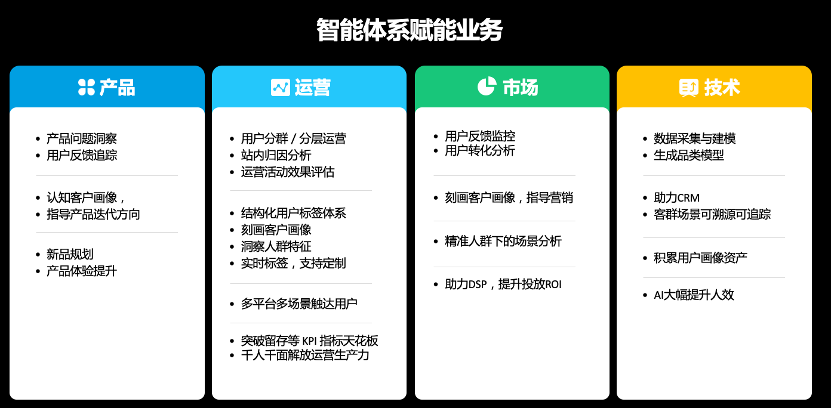
Intelligent Empowerment System: Leveraging AI semantic analysis (natural language processing technology) powered by comprehensive customer voice data across the entire network, using proprietary standardized governance methods to semantically tag and classify hundreds of millions of VOC data points. Through tag profiling of users, it reconstructs product usage scenarios and uncovers user needs. The intelligent empowerment system helps create the perfect user journey, becoming a uniquely traceable and customizable new tool in consumer insight services — tracking consumer behavior with big data, analyzing consumer psychology, and maximizing assistance to enterprises in improving marketing communication ROI.
For example, we break down a product from scenario to materials and so on, serving as reference for product planning. During the product design phase, we study how different customer segments — expert customers, loyal customers, etc. — have different concerns about the product, so that different product series in the final product line can be positioned to different consumer segments, with product design matched accordingly.
Looking at a product's entire lifecycle, every category continuously iterates and upgrades with data participation. During the marketing phase, we can also do targeted creative marketing based on different customer segments' product concerns, more efficiently achieving consumer resonance. In this process, our intelligent empowerment system can improve full-process advertising placement efficiency by 15% compared to traditional purely manual models, and analysis of pre-purchase, during-purchase, and post-purchase behavior can help the sales side better understand market conditions.
Q6: What should Chinese companies pay attention to when building overseas teams?
Joe Wu: I'd first like to ask everyone: when you want to go global, what is the company's purpose? Is it to supplement domestic business? Or is going global itself a strategic objective? This question does have some impact on how you build your overseas team.
If going global is a company strategy, then a high-profile, high-investment approach is more suitable. If a company believes that its biggest business growth over the next 3-5 years will come from overseas markets, then it needs to invest more resources — for example, establishing local subsidiaries, considering financial and tax compliance and legal compliance from day one, simultaneously advancing both online and offline channels, and localizing marketing. These need to be considered when building local teams. But if going global is just tentative exploration, then it's relatively safer to take a more grounded approach — start by opening an Amazon store, registering a brand, and hiring a distributor or agent to help run channels.
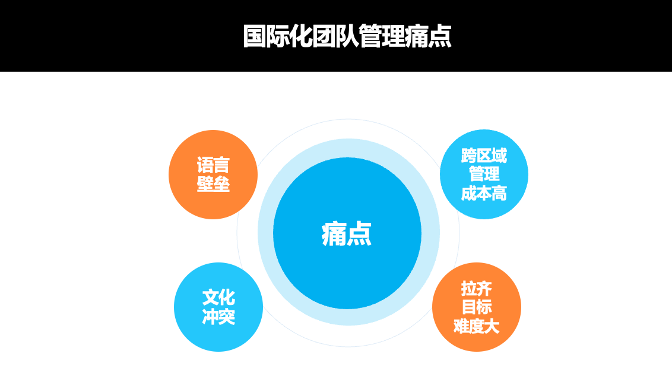
Returning to the pain points of international team management: the first is the language barrier. Employees who perform excellently domestically, if they lack overseas work or study experience, will find it difficult to avoid this barrier when communicating with overseas teams, resulting in low team efficiency. My experience is that you must respect foreign cultures, because foreigners tend to be more professional — they prefer simplicity. In the early stages of business, you can directly tell them the KPIs for revenue and profit growth this year, aligning business objectives in the simplest possible scenarios. Such consensus is relatively easy to reach.
Additionally, from a hiring perspective, I think Chinese people with overseas study or work experience are a relatively good choice. If the head of the overseas team is a foreigner, I suggest choosing someone who likes Chinese culture more, and maintaining high-frequency communication. Generally speaking, overseas professional managers often face some difficulties in disseminating and implementing company culture.
Q7: Beyond e-commerce platforms, what is the logic and what are the challenges for companies to succeed in overseas offline markets?
Joe Wu: The capabilities required for offline channels differ quite a bit from online. Online is relatively easy to start, but if you want to make offline business big and successful, you need to learn to cooperate with major channels like Walmart. Cooperating with major channels requires building many capabilities — to give a simple example: when major channels place purchase orders, they specify delivery dates, and you must deliver on time. Moreover, the delivery process is often quite cumbersome — you need to schedule warehouse appointments in advance, and being a day early or late will affect your seller rating in their system. Therefore, many brands initially spend considerable effort just improving basic delivery capabilities.
Additionally, offline may look like it moves large volumes, but if products don't match consumer demand in the early stages, returns are also substantial — you often suddenly discover at settlement that a large sum was deducted due to excessively high return rates. In fact, offline has higher requirements for product quality. At the same time, offline channel feedback is slow, which in turn requires you to better understand the characteristics of channel consumers. Other issues like payment collection and payment terms will also require磨合 with major channels in the early stages. I suggest that offline channels still require professional offline teams to handle.
Q8: For Chinese brands going global today, are there still opportunities for television advertising placement?
Zhang Xing: We have a concept called "media mix." While TV scenarios are difficult to track for conversions, they can strengthen brand awareness and increase American consumers' trust in brands. This is an accumulation at the upper funnel of traffic — a reservoir. Although most actual conversions ultimately happen on upper-funnel online media like Google and Facebook.
But if you ask whether TV advertising still has opportunities, my answer is definitely yes, but it requires refined operations. How to more tightly connect TV exposure with online conversion is what everyone needs to think about. The United States has many third-party companies that can help you assess the improvement in brand awareness that TV placement brings.


Issue 21: Clear Despair Is Better Than Vague Hope — On ToB Sales During the Pandemic
Issue 20: Is Your Cash Flow Still Healthy During the Pandemic?
Issue 19: Entrepreneurs Must Learn Appropriate Losing of Control
Issue 18: Entrepreneurs' Time Management: "Two Learnings, Three Principles, Four Quadrants"
Issue 17: Your Core Startup Team Needs a "Deep Dialogue"
Issue 16: Three Keywords of Corporate Crisis Management from 3·15
Issue 15: The New Evolution of Insurtech
Issue 13: Financial Opportunities in Industrial Internet
Issue 12: Strategic Thinking on Douyin Marketing for Consumer Brands
Issue 11: Inclusive Finance Under the New Economic Landscape
Issue 10: Brand: Meaning, Symbol, Value
For more MaHui members, click "Read Original" to view