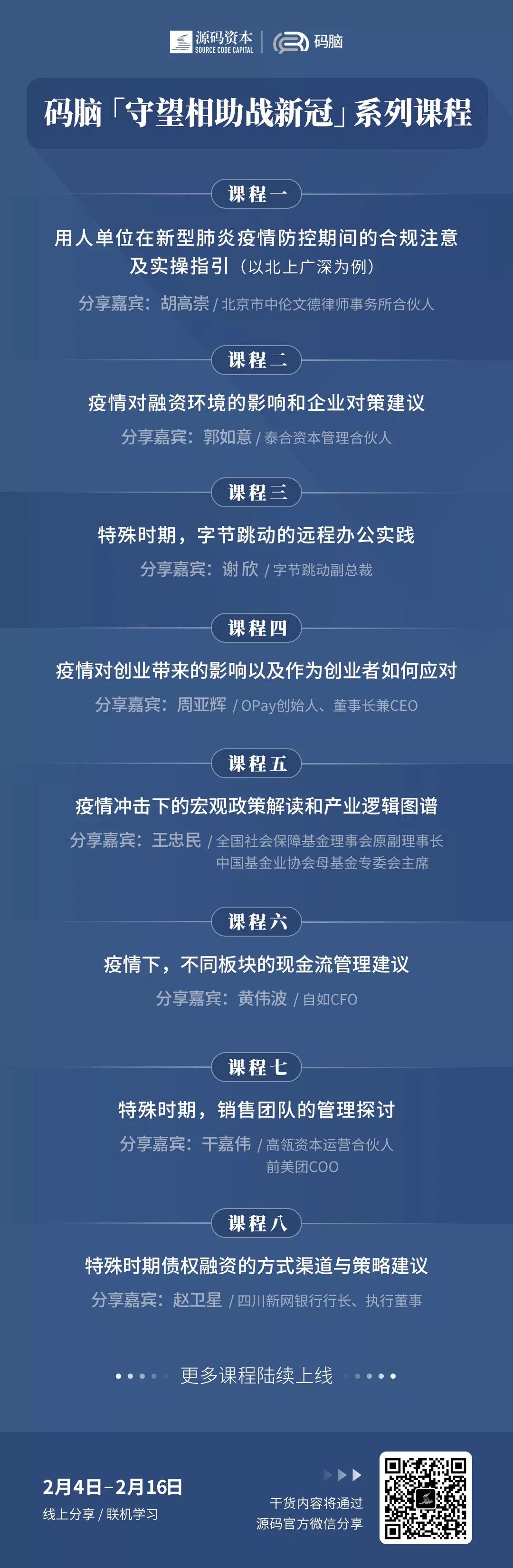
Code Brain "Standing Together Against COVID-19" Series Session 7: Sales Team Management During Extraordinary Times

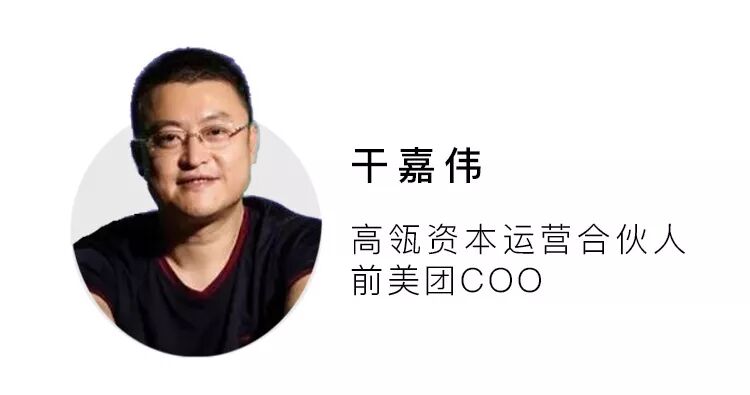
**Speaker:** Jiawei Gan, Operating Partner at Hillhouse, former COO of Meituan
As the pandemic deepened, every sector of the national economy faced immense pressure. On one hand, medical systems and logistics supply chains urgently needed to expand capacity; on the other, online education and remote work became essential needs. Market demands and business models were quietly shifting — crisis was giving birth to new opportunities. To address the emerging landscape under COVID-19, Source Code Capital's post-investment services team organized the Code Brain "Standing Together Against COVID-19" series. From February 3 to 16, we invited experts and industry leaders to share insights online on topics including employee leave and return-to-work policies, startup financing, remote collaboration, cash flow management, policy analysis, and sales team management — offering intellectual support to our portfolio community from multiple angles, easing anxieties and facing challenges together.
Under the special circumstances of the pandemic, offline sales channels were restricted, creating new challenges in management tools and team communication. For this session, Source Code Capital specially invited Jiawei Gan, operating partner at Hillhouse and former COO of Meituan, who brought rich hands-on experience. He was joined by growth-stage portfolio company CEOs for a collaborative learning session: Zhenhong Zhao of Baibu, Peng Wang of Juli Xinfang, Yongxing Jiang of CassTime, Yang Gao of Ruigu Mall, Mengmeng Shang of Insnail, Meng Li of Xiaoyaoyao, Pengcheng Ji of Edianzu, Shihao Zhou of YQN Logistics, and Tianli Yang of ZNLH.
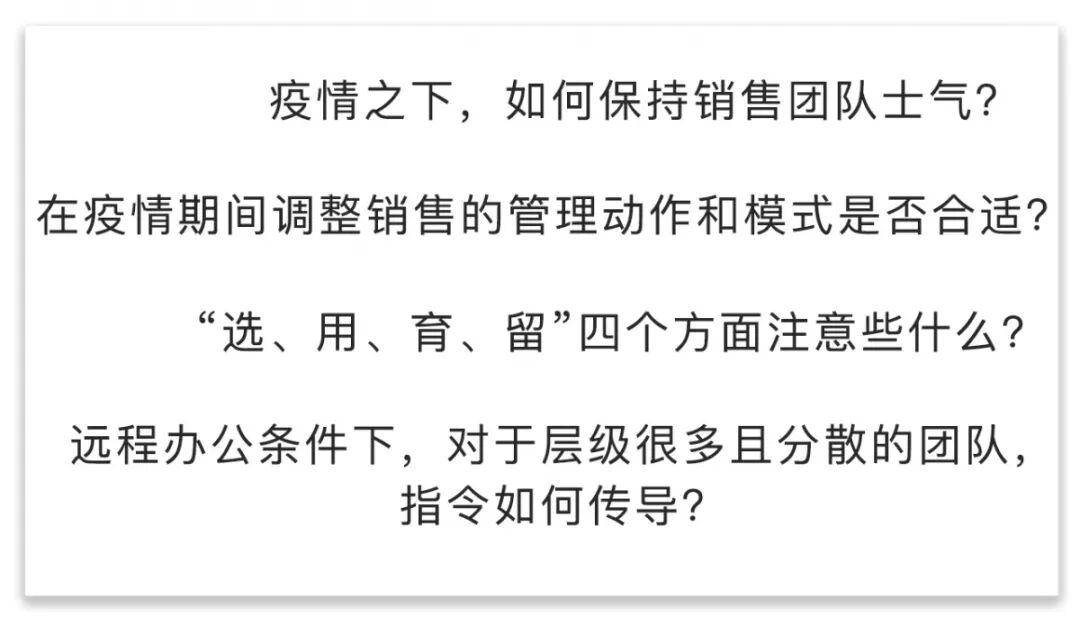
The speakers first analyzed the balance between "selecting, using, cultivating, and retaining" talent, emphasizing that even amid the pandemic, a company's overall strategy must remain clear and well-defined — this is the prerequisite for giving team management greater horizontal and vertical flexibility. In addressing specific problems, the principle of "early kickoff, evening debrief" must be consistently applied at both the effectiveness and methodology levels to properly execute the "cultivation" aspect of sales team management. When handling employee issues, the "mid-level strength" of company management must be primarily mobilized.
"Prepare thoroughly at home, then sprint when work resumes." At this critical stage in the fight against COVID-19, entrepreneurs and team members should approach this period dialectically — re-examining their company's overall strategy and management architecture. Under pandemic conditions, focus on building internal capabilities, continuously recharging, and gradually adjusting organizational and individual states to achieve the state of "everything ready, only waiting for the east wind."


I. How to Maintain Sales Team Morale During the Pandemic?
1. Stabilize morale with contingency plans
Generally speaking, sales team morale issues stem from two sources: uncertainty about the pandemic itself, and uncertainty about the company's situation and their own position within it. The solution needs to come from the top down, because it's not just employees who are worried — their managers may be even more anxious. Employees can always find another job, but if they leave, who do managers manage? And it's actually harder for managers to find new opportunities than for regular employees. This uncertainty is like waiting for an elevator — because you can't see what floor it's on, the anxiety is particularly acute.
How to build contingency plans? At the company level, communicate several hypothetical scenarios and develop response plans for both optimistic and pessimistic cases. For example, what's the most optimistic scenario? That the pandemic ends after one or two more quarantine periods. But what's the most pessimistic case, where the outbreak remains uncontrollable? We need to develop plans for these scenarios, then discuss them with management to reach consensus, with each level managing the one below. Employee concerns are addressed by their direct supervisors; supervisor concerns by their superiors — but the prerequisite is having these contingency plans in place. Once developed, communicate them downward through management levels. When leaders have confidence, those below them will too.
2. Eliminate confusion through action
The more confused people are, the more important it is to unify action. Movement dispels confusion — lying around consuming pandemic rumors only makes your state worse. Unified action is helpful precisely when confusion is highest. And by action, I mean things that are genuinely achievable and create real value going forward — such as building customer pipelines, maintaining client relationships, and pushing product information.
Give the team collective process metrics so they feel they're making progress. Once restrictions lift, the customers accumulated during this period can be immediately converted. At the same time, clearly define work objectives and key metrics for this special period, and standardize operating procedures based on these new goals. Once action begins, team confusion will decrease.
II. How to Balance "Selecting" and "Cultivating" in Sales Teams During the Pandemic?
1. Company strategy comes first
For sales teams, the most important thing is overall company strategy: which market to enter? Is it large enough, growing fast enough? This is the first-order strategic consideration. If you enter the right, good market, even rough management works — it's like drilling in an oil-rich field, you strike oil quickly. The biggest advantage is rapid business progress and expansion, keeping the team itself in a state of growth. Only rapid expansion enables rewarding excellence and punishing mediocrity, creating greater space both financially and in terms of rank and capability — like riding a bicycle, going too slow makes you more likely to fall.
2. Prioritize "cultivation" during rapid growth
Assuming you've entered a rapidly growing market, I believe "cultivation" becomes critically important. "Cultivation" means developing others' abilities and forming good professional habits. The most effective mechanism for this is "early kickoff, evening debrief." Regardless of whether there's a pandemic, frontline managers should every morning give their people clear objectives and direction; in the evening, have everyone share the problems they encountered and good experiences they gained, with team members helping each other solve problems — this is also called learning through teaching. Back at Meituan, we emphasized "early kickoff, evening debrief, with field accompaniment in between" — accompaniment meaning checking daily work, though isolation now makes this impossible. It's worth emphasizing that many people treat "early kickoff, evening debrief" as a management tactic rather than a people development tool, which is why they don't execute it well.
"Selection" certainly matters too — for a small number of specialized positions, choosing the right person can make a huge difference. But for large numbers of repetitive operational roles, "selection" is unquestionably not the most important factor. How much value can someone create based on an interview? Whether they become part of a high-performing organization depends mainly on management. As mentioned earlier, you need business momentum to go from victory to victory. Only with the ability to reward and punish can you effectively manage the team.
3. Pandemic constraints force sales management improvement
Under special pandemic conditions, previous management tools are no longer available. But on the other hand, many managers weren't implementing particularly effective management even when working normally. For managers, if a livestream or radio could replace you, your work has no value. Many managers previously relied on company time clocks, fine systems, walls and cameras to manage — their own added value wasn't actually that great. The physical constraints of the pandemic, purely from a management perspective, don't actually make that big a difference in effectiveness. In some ways, it's a forcing function. So "early kickoff, evening debrief" remains equally necessary even while isolated at home.
III. Remote Work: How to Efficiently Communicate Action Directives?
1. Business core requires "early kickoff, evening debrief"
Often we face the problem of "tighten control and things die, loosen control and chaos ensues." Centralized control that dictates everything down to the smallest SOP suffocates the front lines — it's like someone wetting themselves because you didn't explicitly say they could use the bathroom. I believe management needs to identify the core of the business. For me, the core metric for sales is effective customer contact, and this requires "early kickoff, evening debrief" — so that everyone has clear objectives before starting work each day, and problems encountered can be promptly resolved afterward. Often employees' issues aren't about distant goals, but a pebble in their shoe — and that pebble might be a small problem, even something as simple as not knowing how to use a tool, or getting thrown out by a common customer issue they can't solve. This is addressed through evening sessions where everyone brainstorms and learns from each other — your problem might have a solution I know well, my problem might be exactly what you're good at.
2. M1 determines success or failure of "early kickoff, evening debrief"
How to execute "early kickoff, evening debrief" well? This unquestionably depends on M1 (first-line managers). Like in combat, soldier casualty rates depend most on their squad leaders and sergeants — a good squad leader teaches recruits to identify enemy artillery by sound. During my five years at Meituan, I spent five years driving "early kickoff, evening debrief," making my own slides, presenting extensively, later organizing regional group chats. I believe frontline managers are the directors of "early kickoff, evening debrief." Whether people can share and gain from these sessions, and whether they remain enthusiastic about participating, is like whether a movie is well-made. If it's poorly made, people will doze off; force them into the theater and they'll still fall asleep. Without enough good directors at the M1 level, it becomes an M2 problem. M2 needs to systematically develop M1 — teaching layer by layer, transmitting through repetition, and problems can actually be solved.
3. Directive communication must emphasize "mid-level strength"
In day-to-day management, most problems we attribute to employees are fundamentally management problems. It should be each level managing the one below, but now we only do "head and tail," neglecting the middle. What's "head and tail"? The core team devises a plan and directly tells various functional departments: "Company decision, go communicate it." But they weren't involved in formulating the plan, so they don't fully understand it, and may even fear for their own positions; then they communicate downward, and when employees push back or raise questions, they naturally can't resolve them.
Besides, if they themselves lack confidence, how can they take bullets for you? So drawing a straight line between two points may look efficient, but effectiveness may not be high. In the end, everyone below becomes a victim of core management decisions, even to some degree turning against you, with no one helping core management solve problems layer by layer. It should work like a defensive line: M1 first communicates, explains and clarifies, resolving various issues; M1's problems are solved by M2, M2's by M3 — this is the correct direction.
For management execution plans, after the core team determines the general direction and framework, they need to solicit input from the next layer of backbone personnel, transforming their role from passive acceptance — possibly even as an adversely affected party — to active participation. Work together to solve the problem, rather than passively waiting for the axe to fall. This is a crucial working principle. You must understand that the brain can command the limbs only because there's a torso in between, so you must strengthen the "mid-level strength."
Comments & Interaction
Additionally, this session welcomes entrepreneurs to interact with us in the comments section. Leave your questions about sales team management, and we'll select representative ones for Mr. Jiawei Gan to answer.

Code Brain "Standing Together Against COVID-19" Series
"Emergency Cash Flow 'Blood Line' Management Strategies"
"Macro Policy Interpretation and Industrial Logic Mapping Under Pandemic Impact"

"Reverse Thinking: Entrepreneurs Should View the Pandemic from a Different Angle"

"Pandemic's Impact on the Funding Environment and Corporate Response Recommendations"