MaHui | Keya Medical Accelerates Global Expansion with World's First AI Product Certified by China, Europe, and the United States

will be a milestone event in the development of AI healthcare in China
#CodeMoment Source Code Capital and MaHui Members: Key Updates
Recently, Keya Medical, a medical AI company and MaHui member, announced that its self-developed product DeepVessel FFR has received FDA 510(k) clearance and is now officially available in the United States.
DeepVessel FFR has become the world's first CT-FFR product to hold triple certifications: China's NMPA (January 2020), the EU's CE mark (August 2018), and the US FDA, accelerating Keya Medical's global commercial expansion.
Far-Reaching Significance
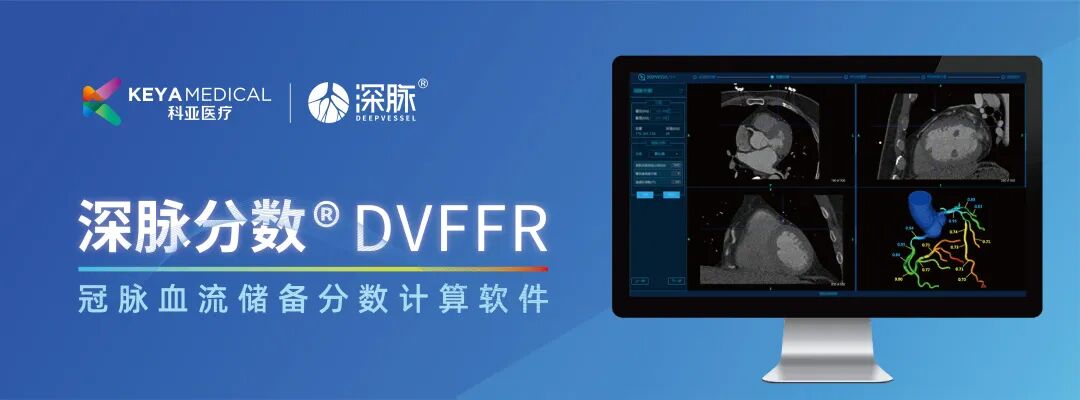
Developed independently by Keya Medical's US R&D center, DeepVessel FFR uses deep learning technology and AI analysis to measure fractional flow reserve, with analysis completed in under ten minutes. The product has filed nearly 100 patents domestically and internationally, with performance metrics and operational efficiency reaching internationally leading standards.
The FDA approval of DeepVessel FFR represents more than a routine medical device certification — it breaks HeartFlow's seven-year monopoly on FFRCT products in the US market and has the potential to reshape CT-FFR pricing globally, delivering substantial benefits to patients worldwide.
Its clinical value and accuracy have received full recognition from drug regulatory agencies in both China and the US, marking a pivotal moment in Keya Medical's global expansion.
At the same time, this stands as a milestone for China's AI-powered medical development, signaling that Chinese medical AI technology has reached internationally leading standards.
In the era of healthcare new infrastructure, Chinese AI medical enterprises represented by Keya Medical will continue providing intelligent medical services globally and elevating the development of intelligent healthcare worldwide.
Clinical Value of CT-FFR
The core value of DeepVessel FFR lies in its digital reinvention of FFR (Fractional Flow Reserve).
FFR is a hemodynamic functional assessment indicator for coronary blood flow. It enables functional evaluation of coronary stenosis, assisting physicians in diagnosing coronary artery disease, accurately determining cardiovascular blood flow function, reducing unnecessary coronary angiography, and helping doctors better plan coronary treatment strategies.
CT-FFR, the core technology employed by DeepVessel FFR, is one of several FFR measurement methods. Based on CTA examination combined with self-developed AI, it provides non-invasive FFR analysis for patients as an alternative to invasive catheter-based FFR.
Additionally, this technology can guide PCI treatment, reducing unnecessary diagnostic coronary angiography procedures and stent placements, effectively avoiding complications such as coronary artery spasm and perforation caused by invasive FFR.
To ensure algorithmic validity, the DeepVessel FFR model not only fully accounts for vascular tree structure with global optimization but also trains on complex lesions, capable of calculating FFR values at all points in the vascular tree to achieve precise FFR assessment with good consistency compared to pressure wire-measured FFR.
Technically, CT-FFR is not new, but two factors have constrained its adoption: high pricing under HeartFlow's patent protection, and the hours-long model reconstruction that creates supply-side bottlenecks in medical resources.
For the latter issue, medical AI can hand over time-consuming, highly repetitive image post-processing to intelligent algorithms, shortening processing time to minutes and enabling more precise, efficient FFR calculation. Thus, when Keya Medical received China's first Class III medical device certificate for AI-powered FFR from the NMPA in 2020, the regulator characterized the product as having "significant economic benefits."
Economic Value of DeepVessel FFR
These "significant economic benefits" extend beyond reducing patient expenditures on cardiovascular treatment. Against the macro backdrop of DRG cost controls and precision medicine advancement, if DeepVessel FFR achieves widespread hospital deployment, optimizing existing diagnostic workflows and shortening diagnostic steps while reducing physician decision points, multiple stakeholders — patients, hospitals, doctors, and public health insurance — stand to benefit.
1. Patient Side: Non-Invasive, Efficient, Accessible Precision Cardiovascular Care
Traditional coronary imaging and functional assessments are both invasive methods with numerous restrictions and significant patient resistance. CT-FFR's non-invasive approach reduces examination time, minimizes health impact, and is readily accepted by patients. It also eliminates surgery and catheter consumable costs, with a relatively low single-use CT-FFR price that the vast majority of patients can afford.
2. Hospitals and Third-Party Testing Institutions: Shorter Clinical Time Improves Economic Returns
Assuming positive returns per disease case, patients previously required 1–3 days to receive CTA results. With AI-enabled CT-FFR, results are available in half a day. This shortens each patient's hospital stay by two days, allowing hospitals to treat more patients within the same time period.
3. Public Health Insurance: CT-FFR Expected to Reduce Healthcare Expenditures
Myocardial ischemia has multiple causes — it may stem from stenosis in large coronary arteries or microcirculation dysfunction. Additionally, functional abnormalities in arteries can cause ischemia through spasm in both large and small vessels. If stenosis-induced ischemia causes angina symptoms, stenting can relieve symptoms, improve quality of life, and reduce long-term cardiac events. However, if stenosis does not induce ischemia, proceeding with revascularization may not treat the ischemia or improve symptoms and prognosis, and could expose patients to new risks.
Under the traditional model, lacking effective data collection tools, physicians often rely on single imaging-based assessments of vascular conditions, making accurate determination of myocardial ischemia severity difficult. In such cases, even when unnecessary or risky, physicians may still recommend coronary angiography. Over time, this approach creates substantial burdens for physicians, patients, and healthcare spending.
To address these issues, DeepVessel FFR integrates imaging and functional assessment, achieving over 90% accuracy, sensitivity, and specificity at the vessel level — even delivering highly accurate diagnostic results in "gray zone" cases.
This means the new technology can avoid ineffective PCI procedures, reduce use of high-value consumables like catheters and stents, help physicians improve treatment precision, and reduce patient readmissions — thereby lowering public health insurance expenditures.
Keya Medical has not yet publicly disclosed detailed clinical data substantiating DeepVessel FFR's clinical value. However, according to data from China's Health Economics Evaluation Report on Functional Diagnosis of Coronary Artery Disease, under ideal conditions DeepVessel FFR could save China's total CAD-related health and economic burden at least 6 billion yuan annually.


- CodeMoment | Biren Technology Powers On China's Largest General-Purpose GPU Chip
- CodeMoment | GalaxySpace Launches Seven Satellites in One Rocket
- 2021: Original Aspiration Is the Future
- Source Code Capital Closes Fifth RMB Fund to Drive Technological Innovation and Empower SMEs
- Congratulations to Source Code Capital Portfolio Company GalaxySpace on Successful First Satellite Launch!
- Congratulations to Source Code Capital Portfolio Company Space Transportation on Successful First Horizontal Recovery Technology Verification Rocket Test Flight!
- Source Code Capital Portfolio Company GalaxySpace Successfully Launches Experimental Payload!
Click "Read Original" to view more MaHui members