MaHui Entrepreneurs | From 0 to 1 to 23.4 Reading Week: "General Knowledge and Big-Picture Thinking"

Day 4. Broaden your horizons, widen your perspective, and create more lasting, genuine value.
#MaHui Entrepreneurs — Resilient and Bold, Exploring Without End
During the 2022 Two Sessions, "national reading" made its ninth consecutive appearance in the government work report. The 18th National Survey on Chinese Reading Habits showed that national reading rates continue to rise, with the average person reading 4.7 print books per year.
Entrepreneurs must push their reading even further — not only focusing on practical applications, but also building a solid foundation in the humanities. As Source Code Capital often says, to see through to the essence of things is perhaps to maintain curiosity about everything, and to understand diverse societies and the universe from first principles.
Today's reading list is triple the national average: 4.7 × 3 = 14 books on general knowledge, from The Global History of Technology to Life and the New Physics, from The Rise and Fall of American Growth to What Is China? As Chairman Mao said: "Study hard, read more, and your horizons will broaden." May every entrepreneur expand their perspective, widen their vision, and create more lasting, genuine value!
This Issue's Reading List
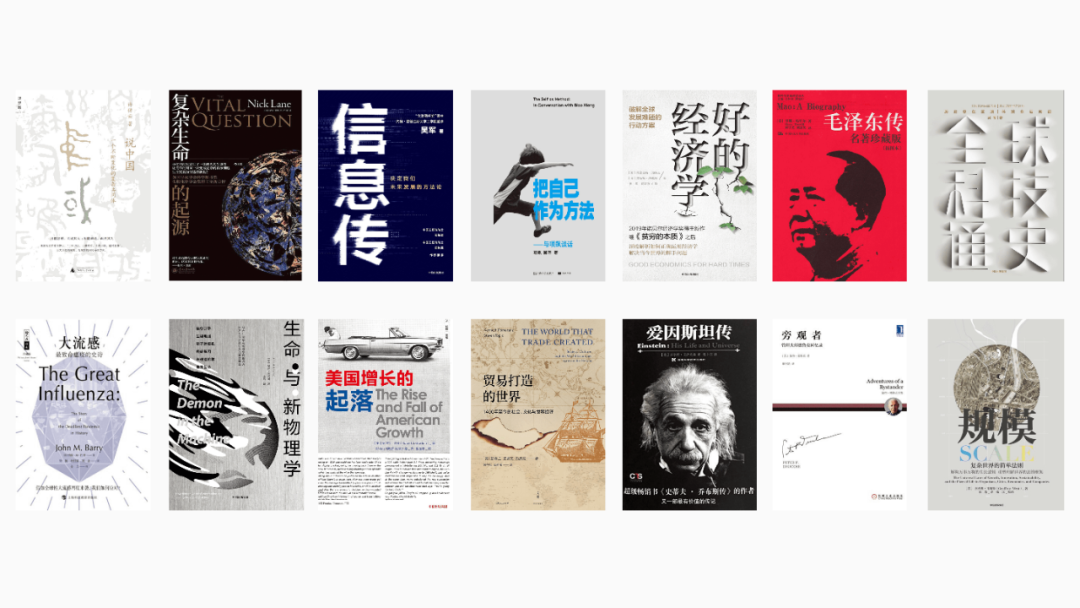
Click the images below in order to view details
01
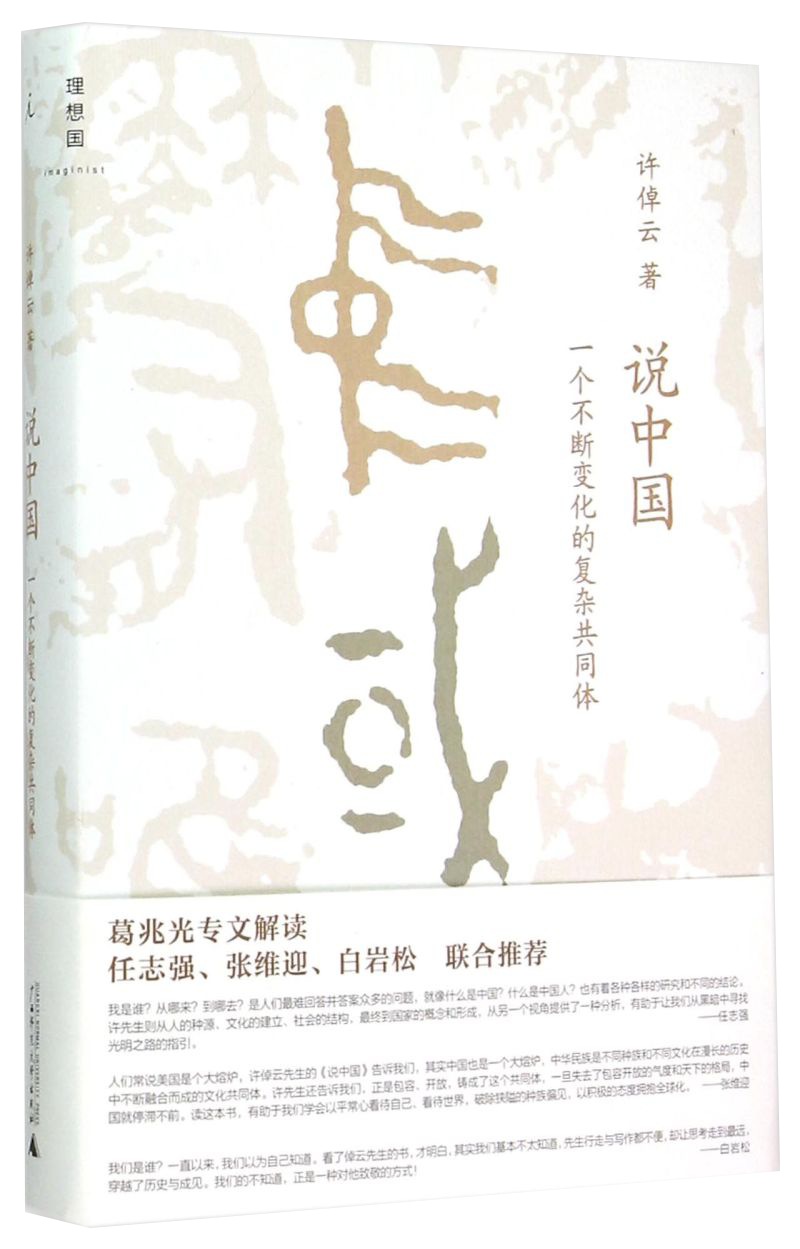
What Is China?
"
Why We Recommend It
This book is the most important cultural work of historian Cho-yun Hsu's recent decade, widely acclaimed both in China and the West. Divided into fifteen chapters, it centers on the question "What exactly is China, and who exactly are we?" Following the thread of historical evolution, it begins with the division and integration of Neolithic ethnic groups and ends with the Qing dynasty, the last of the Chinese imperial houses. Written in a concise, refined style, it narrates thousands of years of Chinese civilization like an unfolding scroll.
The book's subtitle is: A Continuously Changing Complex Community. This describes not only ancient China but also the face modern China presents to the world. The evolution of "China" has been highly varied, and the self-identity of "Chinese people" is equally intricate. Professor Hsu examines four key dimensions — political authority, economy, society, and cultural concepts — to trace how China's vast land and numerous peoples formed a solid community. He analyzes why we call ourselves "Chinese" and "the Chinese nation," and why foreigners have called us "Han," "Tang," or "Hua." He seeks to situate China within the great currents of world civilization, hoping that China can correctly understand its own character as it integrates into globalization.
The COVID-19 pandemic plunged the world into massive uncertainty, making "transformation" the defining feature of our era — a reality entrepreneurs must confront. For Chinese entrepreneurs, understanding this complex China amid transformation is both practically necessary and future-oriented. Though What Is China? focuses on ancient Chinese history, it offers a grander perspective, enabling entrepreneurs to think about their present circumstances from a higher dimension.
Recommended Chapters
Chapter 3 — Xia, Shang, and Zhou: The Formation of the Core
Chapter 5 — The Expansion of the Qin and Han Era
Chapter 6 — The Decline of the "All-Under-Heaven State" Model
Chapter 15 — The Formation of a Complex Community (Part II)
"
02
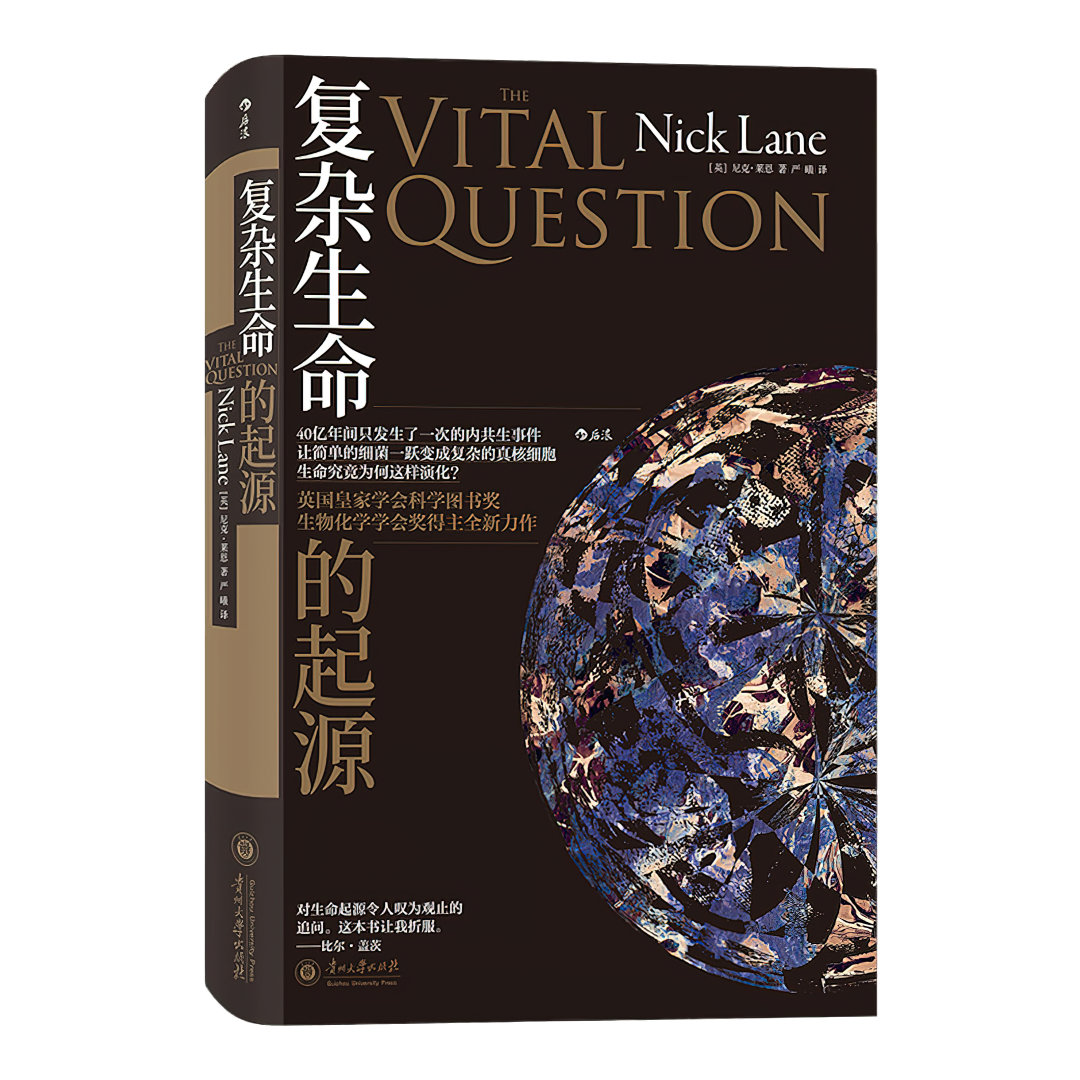
The Vital Question: Energy, Evolution, and the Origins of Complex Life
"
Why We Recommend It
This book addresses two questions: how eukaryotic cells — "complex life" powered by mitochondria — originated, and how life itself began. The author's goal is to understand why cells work the way they do, arguing that "energy constrains the evolution of life on Earth" to make biology more predictive. In essence, he seeks a "first principle" for the life sciences.
Author Nick Lane is an evolutionary biologist and professor at University College London. His research focuses on evolutionary biology and bioenergetics, specifically the origin of life and the evolution of complex cells. Though he notes in his introduction that he has "introduced many metaphors and entertaining details" to attract general readers, the book's true character lies in being "a sustained argument" that "takes us right to the edge of the unknown and lets us feel the pleasure of science."
This book is not easy reading; it is a challenge to the reader, packed with sharp insights, rigorous logic, and novel arguments. Reading it feels more like a "suffering" game — all the accumulated confusion, the tedious reference to the glossary, and the brain-burning fatigue transform into exhilaration and accomplishment at the moment of "clearing the level." The process may not be leisurely, but the result is likely a genuine strengthening of mental fortitude.
The life sciences are playing an increasingly important role, both in social life and in business environments. A foundational understanding of life sciences undoubtedly brings greater perspective and more inspiration — one of the reasons we recommend this book.
Recommended Chapters
None. The book's argument builds step by step, and the overall length is not great; we recommend reading it in full.
"
03
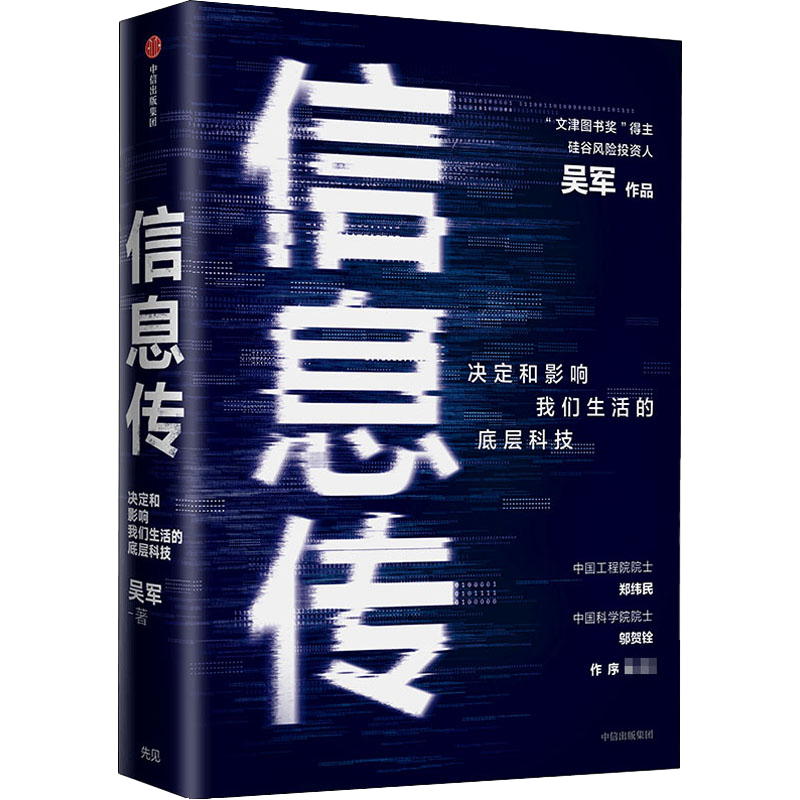
The Information Revolution
"
Why We Recommend It
Information is the resolution of uncertainty — Claude Shannon.
"From the mid-20th century onward, the primary determinant of our planet's level of civilization began to shift from energy to information. Information is simply a measure of uncertainty. Its significance lies in using it to eliminate the uncertainty of an unknown world hidden in a black box, thereby achieving understanding. This way of comprehending the world is the most fundamental worldview and methodology of the information age." This is the first principle of the information age that Dr. Wu Jun points out to readers in this book.
Uncertainty is an inherent characteristic of the world and the core challenge we face in entrepreneurship. Whether dealing with external markets or internal management, we are constantly collecting, transmitting, and analyzing vast amounts of information. Every entrepreneur hopes to achieve timely, smooth information flow. Shannon's Second Law states that in any communication channel, no matter how "optimized" the encoding, the information transmission rate can never exceed the channel's capacity. He points to two ways to increase channel capacity: increasing bandwidth and increasing the signal-to-noise ratio. Taking internal management as an example, bandwidth represents communication channels — whether the CEO's office door is open, whether collaboration mechanisms are sound, and so on. Increasing the signal-to-noise ratio tests whether a company can recognize the objective, inherent existence of noise and take measures to raise the proportion and transmission strength of effective information.
Dr. Wu Jun's historical narratives have never been mere descriptions of events; he always weaves perceptive insights into vivid stories. In this book, he divides the history of information technology into the "Spontaneous Era" and the "Self-Conscious Era," showing us how the presence or absence of theoretical guidance profoundly affects technological development. Yet he also "hopes that the successful people and successful methods of the past can provide our readers with useful reference and inspiration, enabling everyone to achieve more with less effort, to attain repeatable success and stackable progress."
Recommended Chapters
Chapter 10 — The Genius Who Launched the Information Age: The era and disciplinary background of Shannon's theorem
Chapter 11 — Eliminating Uncertainty in a Complex World: The content and value of information theory, and why it is called the first principle of the information age
Chapter 15 — The Laws of Information Technology and Industry Development: Will Moore's Law fail?
"
04
Self as Method: In Conversation with Biao Xiang

"
Why We Recommend It
This is a three-year conversation spanning five locations: Beijing, Oxford University, Wenzhou, Hangzhou, and Shanghai.
Anthropologist Professor Biao Xiang draws from his experiences in Wenzhou, Peking University, and Oxford University to explore a series of questions transcending the self with Wu Qi, editor-in-chief of Single Read. Their discussions encompass the gentry mindset as a mode of thinking, globalization and populism, critical thinking, anthropological methodology, and more.
This dialogue offers not only methods for examining problems and exercising thought, but also emphasizes a spirit of pragmatic action and self-transformation. As Professor Xiang often stresses: more than intellectual, scholar, or teacher, he sees himself as a Wenzhou person making lighters — before expressing opinions or offering critiques, what matters most is actually making the lighter first.
In our era, change is the eternal theme. Transformation need not be revolutionary upheaval; every moment we inhabit can be a historical turning point, containing multiple possibilities for change. How to understand and grasp these inflection points becomes an important question everyone must consider. The key is developing an awareness that balances one's historical origins with one's present actions — this is true heroism. The true hero does not change the world, but changes how they live each day.
Recommended Chapters
The 1980s, The Study of Understanding, The Gentry as Method
"
05
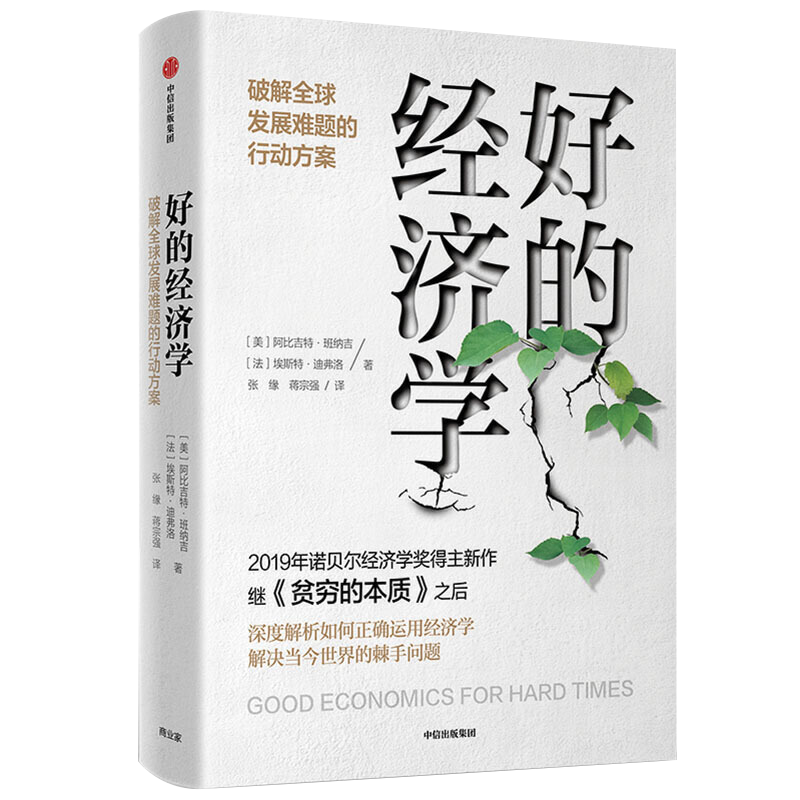
Good Economics for Hard Times
"
Why We Recommend It
If economics is the study and discovery of laws governing economic activity, then "good" economics focuses on the "fundamental problems that society is currently striving to solve" and seeks solutions guided by particular values — the "best achievements of modern economics." These particular values hold that "social respect, the comfort of family and friends, dignity, ease, and pleasure" are good, while "obsession with money or material things" is bad.
The authors, Abhijit Banerjee and Esther Duflo, won the 2019 Nobel Prize in Economics "for their experimental approach to alleviating global poverty," and their concern with poverty carries through into this book. Across the eight major issues covered — immigration, global trade, discrimination and division, growth, the environment, artificial intelligence, taxation and government, and social welfare — the authors consistently reveal their attention to wealth inequality, including its complex causes and consequences. This is also one of the starting points for their emphasis on pursuing "a better, more sensible, more humane world."
This brings to mind the report from the 19th National Congress of the Communist Party, which stated that the principal contradiction in Chinese society has been transformed into that between unbalanced and inadequate development and the people's ever-growing needs for a better life. It also recalls Douyin's slogan: "Record a beautiful life." What this book describes is not merely distant macroeconomic theory, but rather trends, challenges, and opportunities that truly exist in our careers and daily lives. To understand "good economics" is to understand our era.
The authors are also deeply aware of the cognitive gap between economists and the public. Rather than conveying the latest research findings with the arrogance of experts, they humbly acknowledge that economics is a discipline unable to provide definitive answers, and that this book inevitably contains errors yet unknown. What they wish to convey are more the facts and the mode of thinking in economics. Consequently, the book has a low barrier to entry, is highly readable, and offers a thoroughly enjoyable reading experience.
Recommended Chapters
Chapter 3 The Pains of Trade
Chapter 5 The End of Growth?
Chapter 7 The Player Piano
"
06
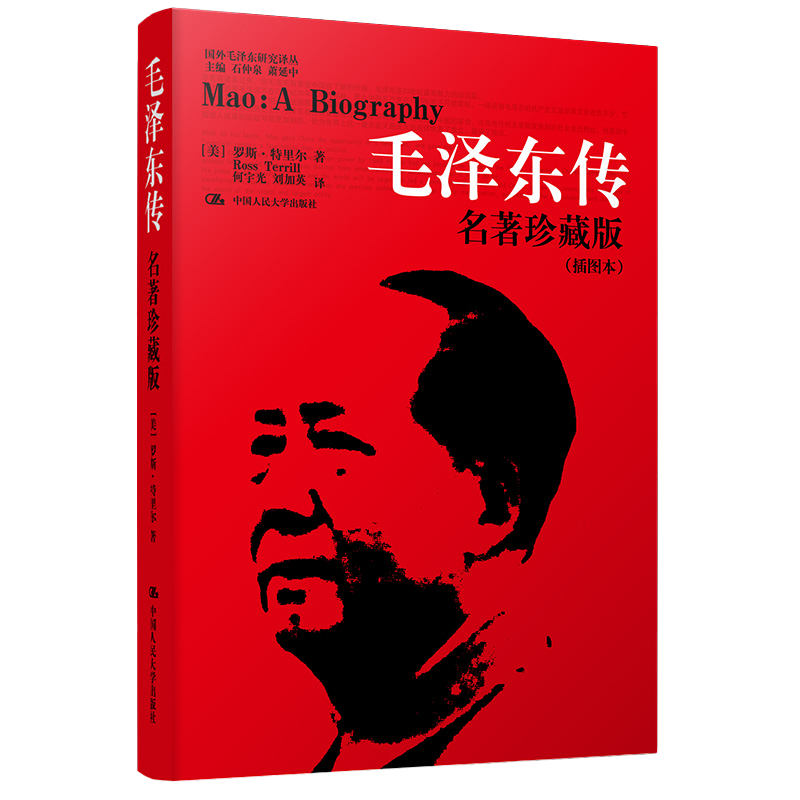
Mao: A Biography
"
Why We Recommend It
We once gifted Deng Xiaoping and the Transformation of China to our MaHui community. The author of that book, Ezra Vogel, passed away in recent years, and the turbulent era he chronicled seems to have receded a little further from us. But we have never truly left history behind, nor the great figures within it. This biography of Mao tells the story of an even earlier period, from which we will see how this universally acknowledged titan of 20th-century politics, revolution, and thought — a poet of genius — made significant contributions to the construction of the international political order.
The author, Ross Terrill, was born in Australia in 1938 and was a student of both Henry Kissinger and John King Fairbank. Of the dozens of books he has published, most concern China. This book was first published in 1980, and in the preface to the 2010 edition, the author notes that he revised his earlier view: the success of the Chinese Communist Party before 1949 was achieved almost single-handedly by Mao. In the narrative of this book, we can also see how carefully the author depicts Mao's emergence from confusion amid the chaotic currents of his era, his almost fateful embarkation on the firm path of revolution, and his eventual breakthrough. That genius-level insight and greatness of action exert a timeless, captivating charm — enough to make any founder aspire to emulate it.
Unlike typical historical readings, a major highlight of this book is its ability to "portray character beyond the documents." This is also the thread the author uses to string together countless historical events — the formation of a great person's character, and the mutual shaping between that character and the era. He describes Mao as "half tiger, half monkey." "The tiger in Mao knew how to get from point A to point B. The monkey in Mao doubted the value of getting to point B."
In business narratives, wisdom drawn from political giants has always been a winning formula in competition. But the significance of a Mao biography extends far beyond "self-reflection" or the borrowing of tactical experience. In this figure who shaped our nation and our history, we can almost trace the origins of national character and contemporary culture; his thoughts and insights remain discernible to this day. Thus this book may serve as a useful index, or perhaps as the beginning of deep reflection: "The strong pass of the enemy is like a wall of iron, yet with firm strides, we are conquering its summit."
Recommended Chapters
Chapter 4 Organizational Work: The Preliminary Formation of a Rural Work Line
Chapter 6 Seizing the Future: Decisions on the Long March
Chapter 19 Nixon and the Establishment of Sino-American Diplomatic Relations
07
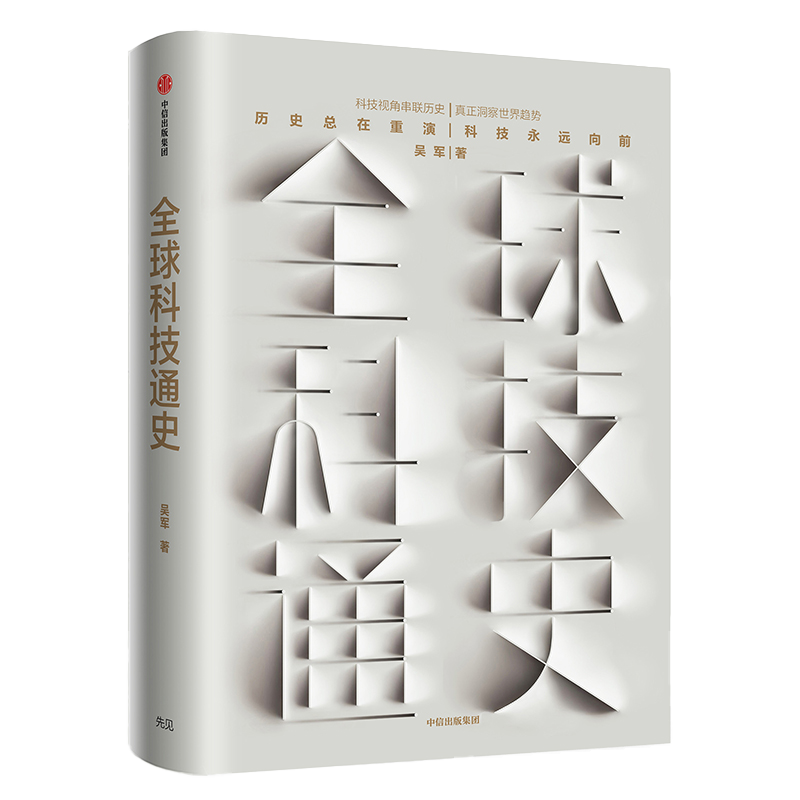
A Global History of Technology
Why We Recommend It
Professor Qian Yingyi believes this book offers readers three angles of insight: 1) a historical sense of technology, including the reasons, processes, and impacts of technological evolution; 2) the distinction between "science" and "technology" and their alternating progression; 3) the importance of scientific methodology — namely, the process of starting from "doubting everything," to asking good questions, and then verifying through experimentation — a method of particular practical significance for China today.
In his own preface, "The Nature of Technology," Dr. Wu Jun summarizes the book's key arguments as: 1) technology develops cumulatively; 2) technological development has an internal logic; 3) energy and information are the two main threads running through the history of technological development.
Thanks to this clear opening statement, reading this book feels much like a pleasant drift beginning from the source of the historical river. Dr. Wu Jun employs his considerable writing skill to explain even the most complex technologies in accessible terms, and leads readers to see the full context behind these technological developments.
The act of looking back at the history of technology easily brings those of us fighting on the front lines of innovation a sense of elevation. Beyond this emotional inspiration and insight into underlying logic, the book also offers — grounded in solid technical understanding — a forecast of the technological landscape 10–20 years into the future, in hopes of helping readers dispel the anxiety brought by the uncertainty of technological progress. For us, the value of understanding technological history lies more in clarifying our position and direction within the current, so that we may better "strike the water midstream and hold back the flying boat."
Recommended Chapters
Overview at the beginning of each section Summaries of the patterns of technological development in each historical period
Part IV Modern Technology
08
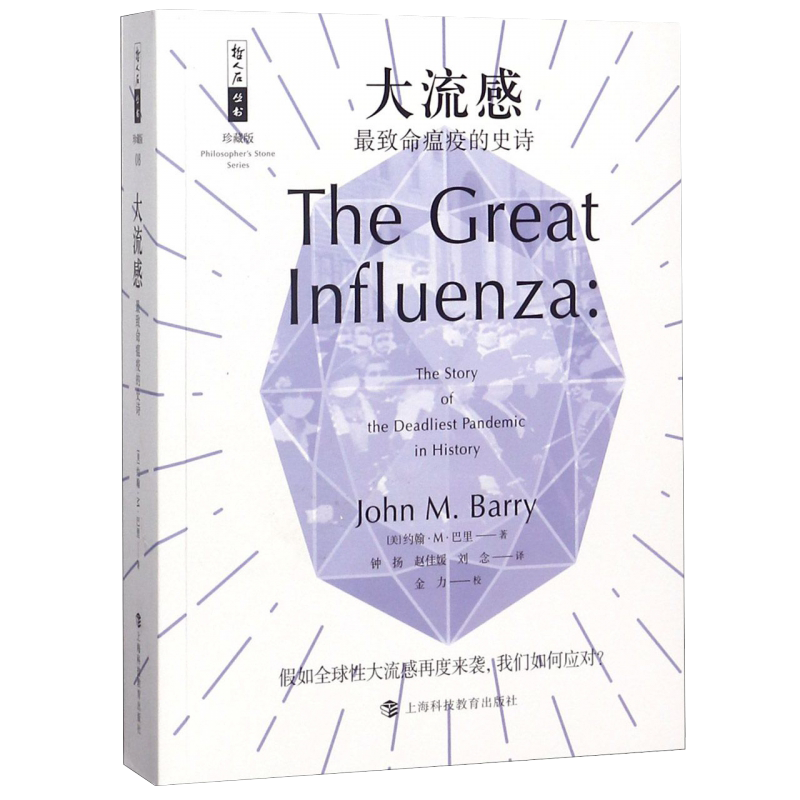
The Great Influenza
Why We Recommend It
In this book about the 1918 influenza pandemic, readers will encounter some familiar stories: how the pandemic spread from an unremarkable corner to the entire world; the public's panic and helplessness and the bureaucratic whitewashing and delay; and how scientists persevered under extreme conditions. Bill Gates believes that "we are living through an unprecedented time. But if you want a historical comparison, the 1918 flu pandemic is the closest." He also notes that "although 1918 was very different from today, The Great Influenza remains a powerful reminder: we are still dealing with many of the same challenges."
Beyond the epic story of that year — and what happened then indeed had "epic" impact — this book is more about how the scientific spirit carved a path through the soil of ignorance. With precise and fluid prose, the author describes the maladies of medical development before that plague, the social background and events, and how brilliant scientists of varying personalities changed their modes of thinking to calmly reason and then make bold decisions and take action "in an environment of near-total chaos."
This is also a situation contemporary founders frequently face. Even the most astute strategists confronted unforeseen black swan events this year, and entrepreneurship itself is fundamentally an enterprise of constantly overturning one's own and others' understanding. Reading such a story at such a moment — especially the story of medical progress driven by the intersecting forces of personality and leadership among pioneers — will, we believe, bring readers some comfort and inspiration.
Recommended Chapters
Part I The Warriors: The history and obstacles of medical development, Welch's leadership qualities and flaws, the reform of American medical education
Part III The Tinderbox: The Wilson administration preoccupied with war mobilization, allowing the plague to spread
Part X The End: The geniuses transformed by the great influenza
09
What Is Life? How Chemistry Becomes Biology
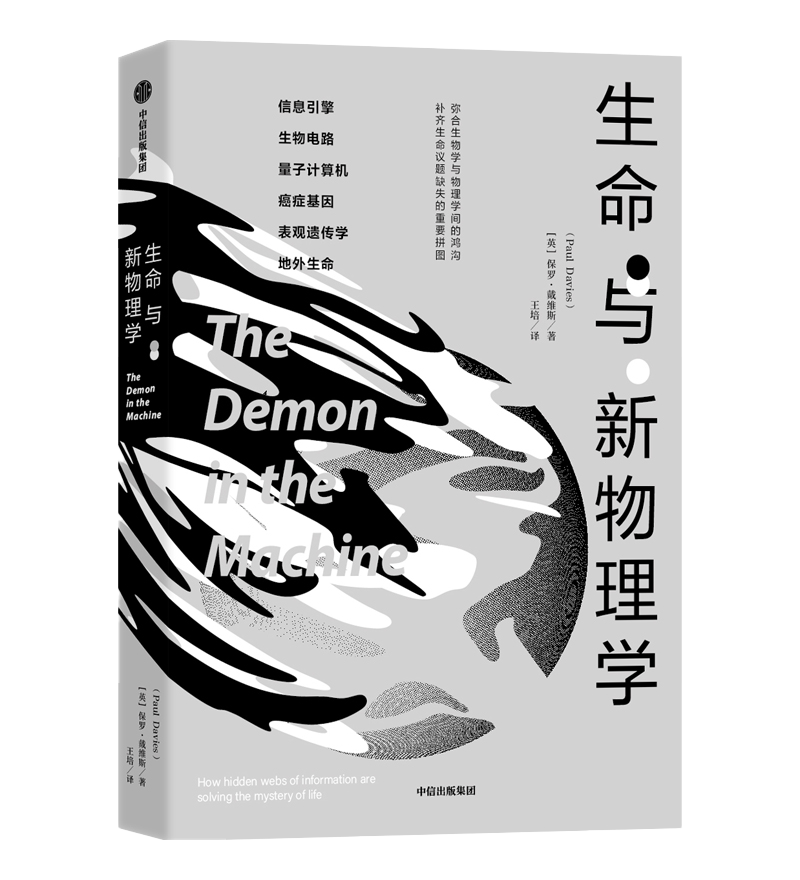
Why We Recommend It
Many books have explored what life can do, but this one seeks to explore what life is. Where does the distinction between the biological and the non-biological come from? The search for a "missing link" between non-life and life, and research attempting to connect the two within a single theoretical framework, has given rise to an entirely new cross-disciplinary scientific field. This field aims not only at an ultimate explanation of life, but also hopes to open new application scenarios, bring transformation to nanotechnology, and guide medical research to enormous advances. The unifying concept behind this transformation is information. It is through integrating information into ordered patterns that biological systems form the unique order of life amid the chaos of the molecular realm.
From the level of DNA to molecular mechanisms, to neuroscience and social organization, even extending to the planetary scale, the natural laws of information, energy, heat, and work are all at play. "Information can do work" is one of the foundational concepts this book conveys through the physics thought experiment of "Maxwell's demon." Thus, while elaborating the basic characteristics and modes of action of information patterns, the author also leads readers to re-examine the mysteries of biological operation through theoretical lenses of physics, computer science, and even mathematics, and demonstrates world-class interdisciplinary thinking.
Entrepreneurship and scientific research have always shared a common spirit: both are driven by ceaseless curiosity and increasingly rely on cross-domain innovation to push boundaries. When we try to understand a market, we always first look for value flows along the industry chain. This book reveals that information flows have their own laws, and likely exert profound and essential influences. As Qi Lu once mentioned in an interview: "The core of my worldview is that everything in the world is composed of energy and information. Any enterprise, any person is a function — that is, transforming information from one state to another. Once you identify what kind of function it is, you know how to change it."
Recommended Chapters
This book is not long, but the knowledge it covers is both broad and specialized. Interested readers may begin by going deep into the following chapters, then proceed after fully digesting them:
Chapter 2 Approaching Maxwell's Demon: How Information Does Work
Chapter 3 The Logic of Life: Several basic logics of information, including self-reference, self-reproduction, simple rules generating complex patterns, network patterns, etc.
10
The Rise and Fall of American Growth
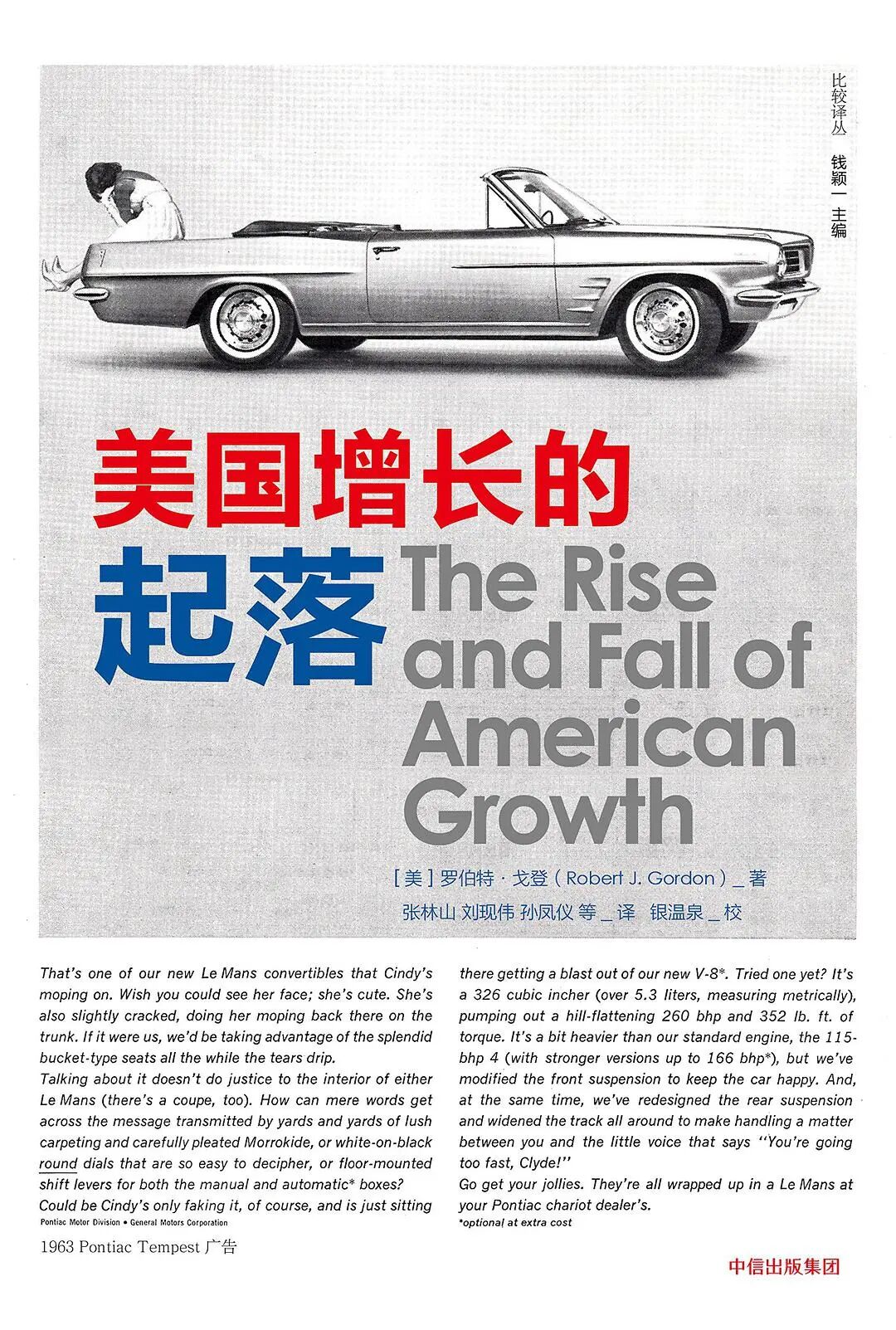
Why We Recommend It
Macroeconomic growth is not uniform. Some inventions matter more than others, with deeper and more far-reaching effects. Looking back at the history of global economic growth, progress has come in fits and starts, with inevitable ups and downs. For the millennium before 1770, the economy barely grew at all. During the transitional century before 1870, growth was slow. But for the United States, the revolutionary hundred years from 1870 to 1970 saw remarkable, eye-catching rapid expansion — after which the pace slowed again.
The deceleration after 1970 occurred because so many fundamental elements of modern living standards were already in place by then. By comparison, the Third Industrial Revolution had a narrower impact. This simple fact is enough to explain why growth in output per capita and output per hour began to slow after 1970.
The author takes a relatively pessimistic view of America's subsequent economic progress. He argues that the economic revolution of 1870–1970 was unique in human history and unrepeatable, because many of its achievements could only happen once.
For example, due to these irreversible changes, in the half-century after the Civil War the United States transformed from an agricultural society of loosely connected small towns into an urban and industrial society of stronger private and public institutions, with ever-increasing demographic diversity. Since cities cannot exceed 100% of the population, this shift from rural to urban society could only happen once.
This easily brings to mind emerging technologies like quantum computing and artificial intelligence, which people are pinning their hopes on to lead an era-defining leap forward. But closer to home is the transformation brought by industrial internet — new technologies are changing production, supply chains, and other links that consumers find harder to perceive. What we should be asking is: to what extent can these incremental changes drive the overall economy? And when will China's own rise and fall in growth arrive?
Recommended Chapters
The book's first and second sections compare how the two Industrial Revolutions changed daily life, while the third section offers certain predictions and recommendations about future trends. Particularly interesting:
Chapter 13 The transformations brought by computers and the internet were not as powerful as we thought
Chapter 16 World War II itself may have been the most important factor in enabling America's great economic leap
11
The World That Trade Created
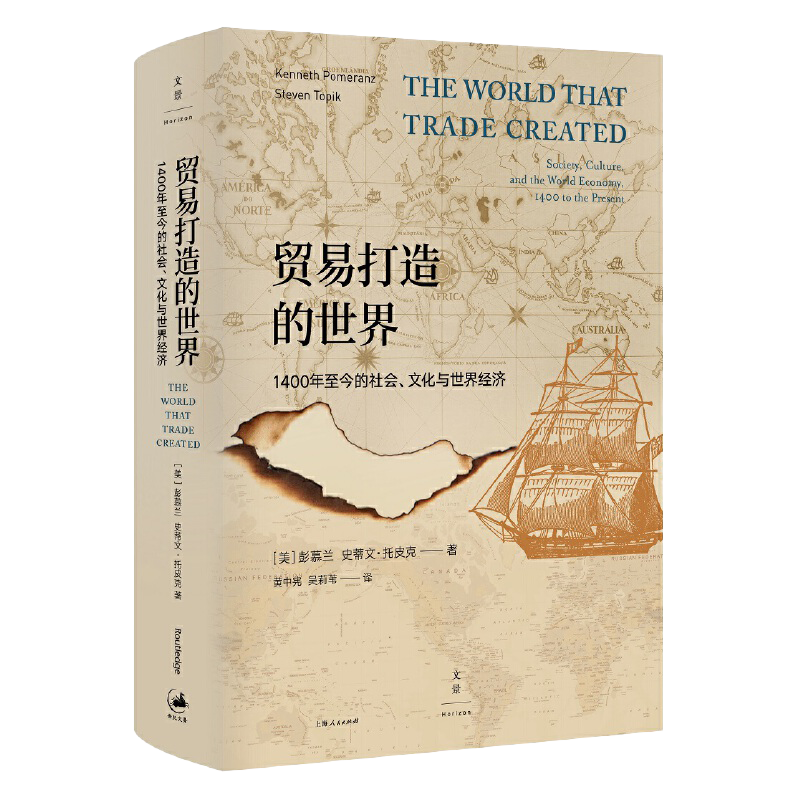
Why We Recommend It
Trade shaped the world, and was shaped by it in turn. Across the long span of history, trade rules were never static — they were gradually molded and catalyzed by social customs, culture, and geographical conditions. Understanding the underlying rules of commercial society helps entrepreneurs better adapt to and leverage environmental factors.
The book advances three core arguments: First, markets depend on the formation or disappearance of social customs, which may be imposed by external forces or triggered by contingent events. Second, people's needs and the value of goods are culturally determined, but culture can be changed. Third, the concept of "region" is foundational to understanding trade history — it encompasses not only geography but also institutional and cultural elements like beliefs.
Take coffee's trade trajectory as an example: Muslims first used it in religious rituals. As coffee spread through the Islamic world, cafés emerged and became public social spaces. Europe's adoption of coffee was inseparable from the erosion of semi-feudal aristocracy and the formation of the upper bourgeoisie. We can see that today's demand for coffee, its pricing and trading mechanisms, and consumption patterns were all shaped by the expansion of coffee-growing regions, improvements in transport capacity, political and cultural developments, and social psychology.
There are two ways to read this book. One is to follow the book's organization, taking a leisurely stroll through the formation of trade rules, transport methods, addictive substances, the transplantation of native products, violence, and other elements — using individual cases to understand how different factors operate within trade rules. The other is to follow specific commodities or markets, actively excavating their trajectories from the text and tracing the marks trade left upon them.
Recommended Chapters
(Using the second reading approach)
Sections 1.9, 3.3, 3.4, 3.5, 5.5, 5.10 Coffee-related
Sections 3.6, 7.1, 7.5 Sugar-related
Sections 1.1, 1.2, 1.3, 1.6, 2.1, 2.5, 2.7, 4.10 How China's trade rules were shaped and how they influenced the world
12
Einstein: His Life and Universe
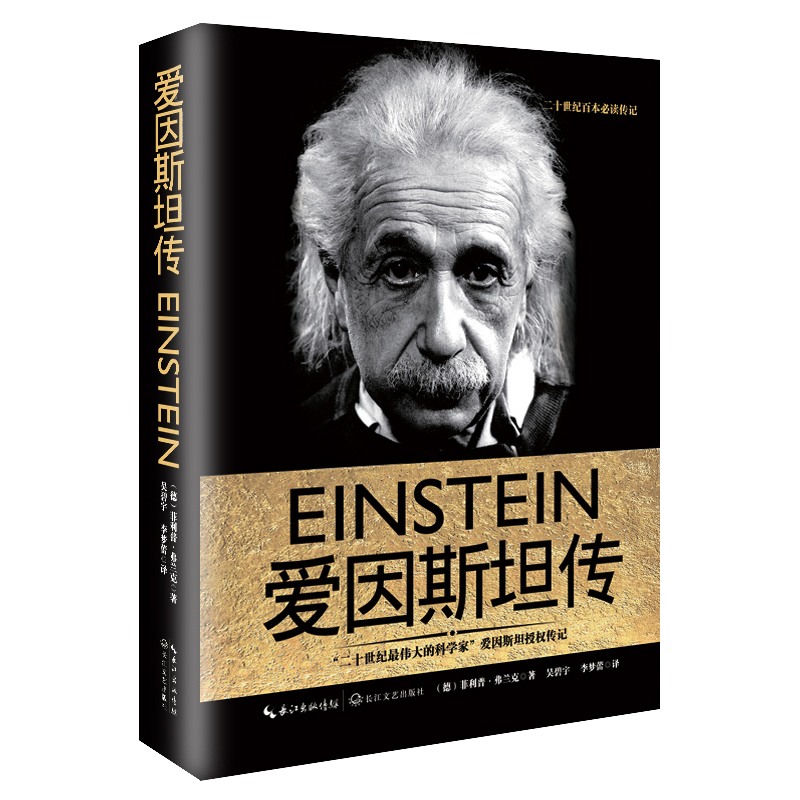
Why We Recommend It
The first-ever image of a black hole went viral, confirming that Albert Einstein's general theory of relativity still holds under extreme conditions. When you think of Einstein, what keywords come to mind? Light. Relativity. E=mc²...
April 18, 1955. A bright, sunny morning. Pathologist Thomas Harvey, while performing Einstein's autopsy, committed an act with extraordinarily grave consequences — he sawed open the dead man's skull and removed what was inside. He held Einstein's brain in his hands, convinced that within these two and a half pounds of neural tissue lay hidden the key to unlocking the mystery of that greatest creative spirit. Yet Einstein, as the ultimate expression of human genius — whether in slices of his brain or any other part of his body, including his genes — could not reveal his secret through biology alone. The key to this mystery should not be sought only in biology, but also in his biography.
From the frustrations of job-hunting to his apprenticeship at the Swiss Patent Office, to befriending the two closest companions of his life. From the contradictions of classical physics to special relativity, to energy equaling mass times the speed of light squared. Through E=mc², special relativity became the world's most complex simplification, and 1905 became Einstein's "miracle year."
The sensation that special relativity caused in the physics world did not catapult Einstein to prosperity — he was still seeking work. At age 32, after ascending Mount Olympus of physics and joining the pantheon of science, Max Planck finally came to recruit him for the Prussian Academy with an offer of 12,000 marks a year: the title of director of the Institute for Theoretical Physics, no evaluations, virtually no teaching obligations, freedom to do research. Einstein entered the Prussian Academy and began his long investigation of general relativity. Starting from questioning the law of gravitation, he suspected every untested assumption. After countless twists and turns, on November 6, 1919 — two centuries after that great scientific synthesis — it was to receive its first revision. Einstein's name swept the world. Yet afterward, in that famous debate over quantum theory, Einstein uttered this lament: "To punish me for my contempt for authority, Fate made me an authority myself."
Einstein carries many labels: "great scientist," "ultimate genius," "contradictory Jew," "combative" pacifist... This book lets us feel the many facets of Einstein — questioning conventional ideas, endlessly curious, richly imaginative, stubbornly individualistic, driving breakthroughs in modern science through his thought, fighting for human rights and peace, yet inwardly conflicted in his dealings with women and children... Open this book to understand this great yet ordinary Einstein, and the creativity our era still needs.
Recommended Chapters
Chapter 2 Why Einstein became Einstein
Chapters 8, 9, 11, 12, 13, 17, 18 Einstein's scientific journey
Chapters 3, 4, 5, 6, 7, 10, 15, 16, 19 Einstein's growth as an ordinary person
13
Adventures of a Bystander

Why We Recommend It
"Don't learn from other people's mistakes. Look at how they got things right."
In this book, management guru Peter Drucker demonstrates how to learn from the successful. He records dozens of remarkable people he encountered throughout his life, lavishing attention on their behaviors, ideas, and influence, while barely glancing at their personalities and motivations — things that cannot be taught.
Drucker organizes these figures according to three stages of his own life — childhood, youth, and adulthood. Childhood's theme is "A Report from Atlantis," symbolizing misfits in society. Though each chapter tells a different story, all ultimately converge on how this person was different. Youth's theme is "Young Men in the Old World," focusing on how young people grew and changed amid dramatic global transformation. In adulthood, Drucker fully experienced the selfless innocence of Americans during the Great Depression — yet this atmosphere was ultimately shattered by Pearl Harbor, giving this section its title: "The Twilight of Selfless Innocence."
The book also contains a hidden thread: Drucker's own growth. Each figure is written about at generous length, yet all ultimately tie back to the themes of these three parts. The form is loose but the spirit coherent — the actual backbone is the turns of his life experience and intellectual development: Drucker, who discovered at age 14 that he was a "bystander," was drawn to these misfits from childhood; in youth he had yet to find the direction he would pursue for life, himself surrounded by the old world, committed to finding a new path amid shifting political factions; forced by the Nazis to cross the ocean to America, he began to grow and achieve rapidly — including through his study of General Motors, completing the profoundly consequential act of founding management as a discipline, while also documenting in detail how the "American Dream" of an entire society was shattered by war.
Drucker writes in his preface: "This book is highly subjective, as all first-rate photography seeks to be. For a long time I have wanted to record certain people or events, to think and rethink about them, and to fit them into my own experience, into my own pattern, into the fragments of the external world and the internal world." This clearly indicates the method he employs — "When I observe all things through my own eyes, all things take on my colors." While summarizing and learning from the successful, Drucker consciously applies a subjective perspective, thereby achieving deeper self-cognitive improvement and refinement. This is precisely what makes the book most intriguing.
Some chapters require relatively familiarity with European history and political factions around World War I and before World War II. The sections listed below involve less specialized historical and political knowledge; readers without strong interest in these areas may choose selectively among them.
Recommended Chapters
Chapter 3 On educational methods and self-study methods suitable for all learners
Chapter 7 The process of forming one's own views through dialogue with those of differing political opinions, each testing and confirming the other
Chapter 8 The fates of two people who tested themselves amid great evil
Chapters 10 and 11 The bankers of the old world and the young people among them
Chapter 14 The varied management styles of General Motors executives, particularly the professional-manager ethos of president Alfred P. Sloan
14
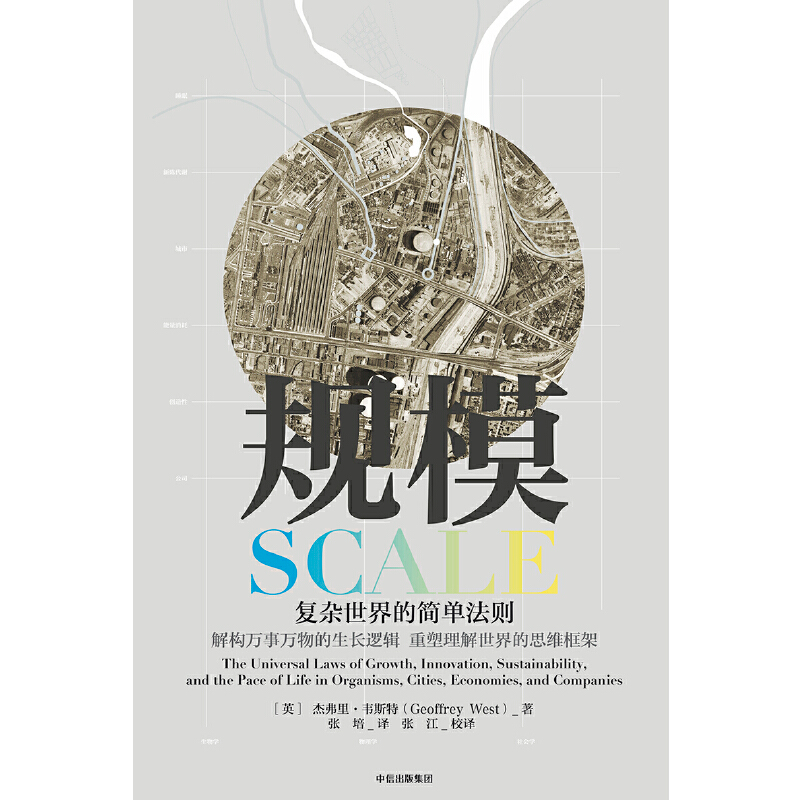
Scale
Why Read It
Many bacteria survive only an hour, yet whales can live for a century. What accounts for this vast difference in lifespan? Why are there no giant insects in nature, yet megacities housing tens of millions of people exist? Half of all publicly listed companies in the United States last fewer than ten years, yet Japan has produced more than 3,000 businesses over two centuries old. What is the secret to corporate longevity?
In attempting to answer these questions, the book adopts a novel perspective, focusing on how the intrinsic properties and external forms of things change as their "scale" changes, and what fundamental laws govern these shifts. Specifically:
If a city's population doubles, do its roads, crime rate, and number of patents produced also double?
If an animal's body weight is halved, does its required food intake decrease by half as well?
If a company's sales volume doubles, do its profits double?
Of course, you have likely heard of "nonlinear change" and might intuitively answer that none of the above propositions necessarily hold. But under what circumstances does "superlinear growth" occur, and when does "sublinear growth" appear? Why do the numbers 15% and 1/4 appear with such frequency when calculating growth rates? These are the underlying patterns the book seeks to uncover from vast quantities of phenomena and data.
Worth noting: the author comes from a physics background, so you will frequently encounter concepts like information entropy, complexity, emergence, and self-organization — which may present some reading difficulty. But we believe that in a future where the technological singularity draws ever nearer, these scientific terms will increasingly enter business environments and mass media. Getting a head start on them is worthwhile :)
The first four chapters focus on scaling laws in nature and are accessible to general readers. The final six chapters, analyzing urban science and companies, grow somewhat tedious and drawn-out; those interested in the future of urban industries like transportation and dining convenience may choose to read them selectively.
Recommended Chapters
Chapter 1 The Big Picture
Chapter 3 Simplicity, Universality, and Complexity in Life
Chapter 7 Toward a Science of Cities
Chapter 8 The final two sections
Chapter 9 Toward a Science of Companies
Afterword

- MaHui Entrepreneurs | 0-to-1-to-23.4 Reading Week: "Organization and Talent"
- MaHui Entrepreneurs | 0-to-1-to-23.4 Reading Week: "Strategy and Operations"
- MaHui Entrepreneurs | 0-to-1-to-23.4 Reading Week: "Entrepreneurial Mindset"
- MaHui Entrepreneurs | Exploration Unceasing: Saluting the Spirit of Spaceflight
- MaHui Entrepreneurs | In That Moment of Your "Joy, Anger, Sorrow, Delight," Two Million Children with Autism May Awaken
- MaHui Entrepreneurs | Sleep Well, Then Go Explore a More Lucid Entrepreneurial Life
- MaHui Entrepreneurs | When Entrepreneurship Becomes Their Way of Life
- James Webb Space Telescope Launches, Exploring the Infinite
- Source Code Capital's Hongjiang Zhang Elected Foreign Member of U.S. National Academy of Engineering
- GalaxySpace's Seven Satellites, One Rocket
- The Cross-Disciplinary Intersection of "Technology + Biomedical": A New Consensus on Convergent Innovation Investment
- Source Code Capital Completes Fundraising for Fifth RMB Fund: Advancing Technological Innovation, Empowering SMEs
- 2021: Original Aspiration Is the Future