真格基金

真格基金

@zhenfund

206 articles52 episodes

Articles

Maybe We Should Stop Investing in GUI-Centric Software Companies

Agents are a user base ten times larger than humans.

真格基金·

It's Spring Right Now | Z News

We're looking back at the "highlight moments" from the past two months, and we invite you to witness the growth of our portfolio companies and what's new at ZhenFund.

真格基金·

ZhenFund early-stage project Flexiv completes new funding round, continues building general-purpose intelligent robotics platform

The funding will be primarily used for the continued development of the general-purpose intelligent foundation platform and core technology R&D, further strengthening the company's technological and commercial footing in the general-purpose intelligent robotics space.

真格基金·

Eight Emotions Between Humans and OpenClaw

This is my second growth journal — stay tuned for more!

真格基金·

Taking a Leave from Columbia to Build a Startup: Don't Ask ChatGPT, Ask Hyperknow 3.0

We want to serve everyone who stays curious about knowledge.

真格基金·

OpenClaw Confession: Nine Stories, the Growth of a Digital Life

This is my first growth diary — stay tuned for more!

真格基金·

KernelCAT Released: Agent Automation Enables Domestic Chip Adaptation and Compute Acceleration

From relying on existing ecosystems to building self-evolving computational foundations.

真格基金·

How MIT Engineers Built the Tool That 80% of YC Founders Use

Even if the market is tiny, as long as you're No. 1, you can establish mindshare and set the standard.

真格基金·

A New Beginning | Z News

We’re looking back on the highlights from the past month of January, and we invite you to join us in witnessing the growth of our portfolio companies and what’s new at ZhenFund.

真格基金·

ZhenFund angel project **Helium Starlink** (*氦星光联*) closes nearly RMB 200 million Series A1 round to accelerate buildout of space-ground integrated optical communications network

Weave a high-speed communications network that blankets heaven and earth, and opens a gateway to the future.

真格基金·

Podcasts

A Three-Way Dialogue on AIGC Creativity, Product, and Investment: Will the Future Pixar Be Born Inside an AI Company?

A Three-Way Dialogue on AIGC Creativity, Product, and Investment: Will the Future Pixar Be Born Inside an AI Company?

真格基金·
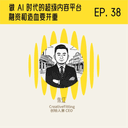
CreativeFitting Founder Zhu Jiang: Building a Super Content Platform for the AI Era — Fundraising and Self-Sustaining Revenue Must Go Hand in Hand

CreativeFitting Founder Zhu Jiang: Building a Super Content Platform for the AI Era — Fundraising and Self-Sustaining Revenue Must Go Hand in Hand

真格基金·
A Conversation with Zhaogang Group's Wang Dong: One Team, One Email, Thirteen Years of Building Zhaogang

---

When Wang Dong, founder of Zhaogang Group, sent that email thirteen years ago, he didn't know he was assembling what would become one of China's most resilient B2B platform teams.

The email went out to a small group of former colleagues and industry contacts. The subject line was simple, almost too simple for what it would set in motion. They were going to digitize steel trading — an industry notorious for opacity, fragmentation, and old-school relationship-based dealmaking.

"We were basically a group of people who understood steel but didn't understand the internet," Wang Dong recalls. "And somehow that turned out to be an advantage."

The early years were brutal. Steel is a commodity business with thin margins and entrenched middlemen. The platform model required convincing buyers and sellers — many of whom had operated through personal networks for decades — to transact online. Trust had to be built transaction by transaction.

What separated Zhaogang from the wave of B2B platforms that emerged in the mid-2010s was operational discipline. While competitors burned capital on rapid geographic expansion, Wang Dong's

A Conversation with Zhaogang Group's Wang Dong: One Team, One Email, Thirteen Years of Building Zhaogang --- When Wang Dong, founder of Zhaogang Group, sent that email thirteen years ago, he didn't know he was assembling what would become one of China's most resilient B2B platform teams. The email went out to a small group of former colleagues and industry contacts. The subject line was simple, almost too simple for what it would set in motion. They were going to digitize steel trading — an industry notorious for opacity, fragmentation, and old-school relationship-based dealmaking. "We were basically a group of people who understood steel but didn't understand the internet," Wang Dong recalls. "And somehow that turned out to be an advantage." The early years were brutal. Steel is a commodity business with thin margins and entrenched middlemen. The platform model required convincing buyers and sellers — many of whom had operated through personal networks for decades — to transact online. Trust had to be built transaction by transaction. What separated Zhaogang from the wave of B2B platforms that emerged in the mid-2010s was operational discipline. While competitors burned capital on rapid geographic expansion, Wang Dong's

真格基金·
A Long Conversation with Yusen Dai on Agents: Every Industry Will Face Its "Sedol Moment" — Is Attention Not All You Need?

A Long Conversation with Yusen Dai on Agents: Every Industry Will Face Its "Sedol Moment" — Is Attention Not All You Need?

真格基金·
A New Year Conversation with Koji: 2025 — The Critical Year for AI, the Dawn of the Agent Era

A New Year Conversation with Koji: 2025 — The Critical Year for AI, the Dawn of the Agent Era

真格基金·
The Evolution of Coding Agents: In-Depth Conversations with Chinese and American Agent Founders, Alibaba Researchers, and Investors

The Evolution of Coding Agents: In-Depth Conversations with Chinese and American Agent Founders, Alibaba Researchers, and Investors

真格基金·
A Conversation with Google DeepMind and LLM Researchers: Deconstructing OpenAI o1 and the LLM+RL New Paradigm

A Conversation with Google DeepMind and LLM Researchers: Deconstructing OpenAI o1 and the LLM+RL New Paradigm

真格基金·
Acquired by a multinational after just five years in your first startup? Ren Dongni, founder of Fanqu, breaks down the game of entrepreneurship and exits

---

When Ren Dongni co-founded Fanqu in 2016, the cross-border e-commerce space was already crowded with well-funded players. Five years later, the company had been acquired by a multinational corporation — a relatively swift exit by startup standards. In this conversation, Ren reflects on what it took to build and sell a company, the calculus behind taking strategic investment from a potential acquirer, and why he believes first-time founders often overcomplicate the "game" of entrepreneurship.

**On the acquisition decision**

"The offer came at a point where we saw the competitive landscape shifting dramatically. Cross-border e-commerce was consolidating, and the platforms with the deepest pockets were starting to squeeze out mid-tier players. We had built something valuable — a supply chain infrastructure and brand relationships that took years to cultivate — but scaling to the next level would have required capital and operational bandwidth we didn't have."

The acquiring company, Ren explains, had been a strategic investor in Fanqu's Series B round. "That relationship gave them visibility into how we operated. When they approached us about a full acquisition, it wasn't

Acquired by a multinational after just five years in your first startup? Ren Dongni, founder of Fanqu, breaks down the game of entrepreneurship and exits --- When Ren Dongni co-founded Fanqu in 2016, the cross-border e-commerce space was already crowded with well-funded players. Five years later, the company had been acquired by a multinational corporation — a relatively swift exit by startup standards. In this conversation, Ren reflects on what it took to build and sell a company, the calculus behind taking strategic investment from a potential acquirer, and why he believes first-time founders often overcomplicate the "game" of entrepreneurship. **On the acquisition decision** "The offer came at a point where we saw the competitive landscape shifting dramatically. Cross-border e-commerce was consolidating, and the platforms with the deepest pockets were starting to squeeze out mid-tier players. We had built something valuable — a supply chain infrastructure and brand relationships that took years to cultivate — but scaling to the next level would have required capital and operational bandwidth we didn't have." The acquiring company, Ren explains, had been a strategic investor in Fanqu's Series B round. "That relationship gave them visibility into how we operated. When they approached us about a full acquisition, it wasn't

真格基金·
Talking AI Tech Applications, Founder Mindset, and the Scale of Entrepreneurship | A Conversation with Xiaoyu Wang of Castbox

Talking AI Tech Applications, Founder Mindset, and the Scale of Entrepreneurship | A Conversation with Xiaoyu Wang of Castbox

真格基金·
A Chat with Xiaoyezi Founder Ye Bin: How to Learn an Instrument Painlessly? Try Going Smart!

A Chat with Xiaoyezi Founder Ye Bin: How to Learn an Instrument Painlessly? Try Going Smart!

真格基金·