Where Is the Tech Dividend for New Retail in the OMO Era? | Source Code Capital Insights

A typical model for applying technology dividends to new retail.
Source Code Capital Insider
Issue 10
About the Author
Kaisi Chang
Managing Director

Kaisi Chang joined Source Code Capital in 2016, focusing on consumer and internet investments. His portfolio includes ByteDance, Ziroom, Pagoda, Edianzu, Xinchao Media, Linji Convenience Store, among others. Previously, he worked at Actis and Capital Group, where his notable investments included Bellagio, 7 Days Inn, and DiDi. He holds a PhD from the University of Cambridge and graduated from the Department of Automation at Tsinghua University.
Contact: ks@sourcecodecap.com
[ Editor's Note ]
OMO, or Online-Merge-Offline, refers to the full integration of online and offline channels where boundaries dissolve. Many say that after the O2O era, the OMO era is now arriving. As online capabilities empower offline businesses, new scenario-based opportunities are emerging. What opportunities and value pockets will OMO bring to retail enterprises, and where will the future breakthroughs lie? Source Code Capital presents exclusive analysis in Issue 10 of Source Code Capital Insider.
Perspectives
Where Is the Technology Dividend for New Retail in the OMO Era?
Research by Source Code Capital
- Reassessing the value of offline stores
- Deep mining of offline traffic
- Deep integration of retail channels with supply chains
Calling 2017 the inaugural year of new retail is no exaggeration. After an ice age in which e-commerce dominated everything, retail entered a new spring in 2017, with new retail species multiplying and flourishing rapidly. The dazzling array of innovations may seem bewildering, but at their core, they all use technology to improve efficiency and enhance experience. We've identified several typical forms of technology dividends in retail to share with you.
1
Reassessing the Value of Offline Stores
In 2017, competition for offline traffic reached fever pitch. Previously, offline traffic transformation focused mainly on mobile payments to digitize transaction data. Starting in 2017, the battle for offline traffic quickly moved deeper into transforming physical spaces.
Freshippo represents the most concentrated and bold attempt at this transformation. By merging stores with front warehouses and emphasizing in-store experience through food service and other formats, Freshippo pioneered a new model. This new model dramatically improves sales per square meter while enabling two-way traffic flow between online and offline channels, demonstrating the power of online-offline integration and offering a fresh approach to reassessing store asset values.
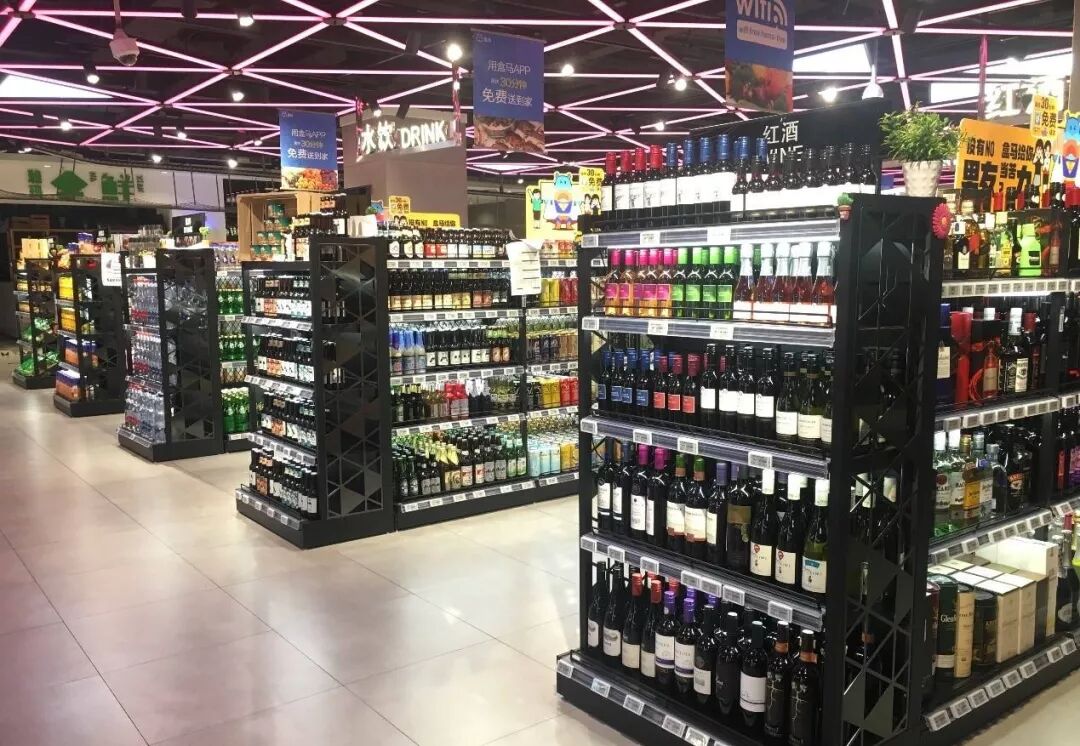
Image source: Internet
Major companies responded swiftly. Giants like Meituan and JD.com launched formats such as Zhangyu and 7Fresh to compete directly with Freshippo. By the end of 2017, integrated online-offline sales had essentially become standard for new retail enterprises.
The speed and intensity of transformation among traditional offline retailers far exceeded expectations. Pagoda, for example, saw its online sales share rapidly exceed 20%.
We believe that as online and offline sales integrate further, high-quality stores will become increasingly important core scarce assets, with their value further amplified. More importantly, when store density increases to form a network, the scale effects of traffic become pronounced. We've found that in certain cities, convenience store networks already achieve daily active user coverage of 10% of the resident population, making them de facto major traffic gateways.
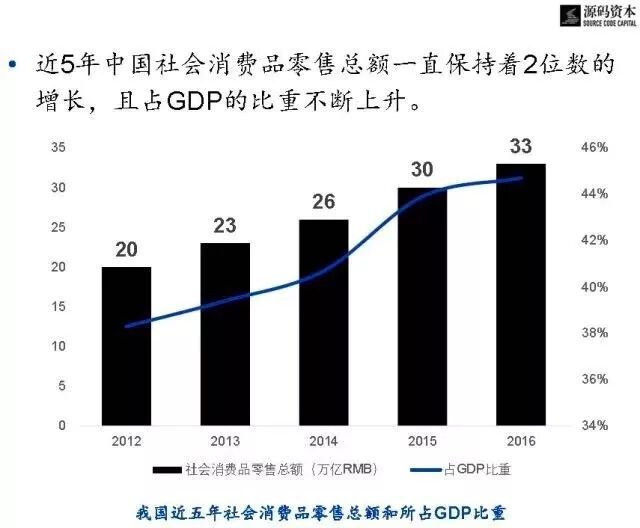
Image source: Source Code Capital
2
Deep Mining of Offline Traffic
Traffic value manifests not only in direct conversion to purchases but also in deep mining of the data behind that traffic. Offline traffic still has a long way to go in this regard. Analogous to online transactions, most offline scenarios today have only achieved digitization of transaction data, with no way to obtain data on users, retention, conversion rates at various funnel stages, and so on.
Yet compared to online, offline scenario data is far richer in both dimensionality and depth. Current technology remains at the stage of counting foot traffic and generating heat maps — insufficient to support deeper analysis and operational optimization.
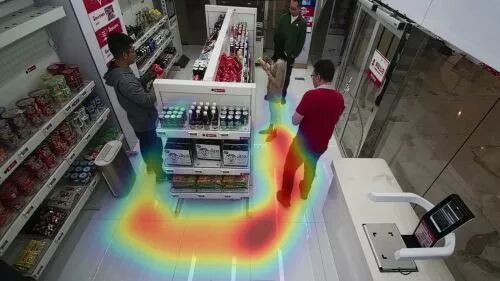
Image source: Internet
We believe that as technology advances, this area has substantial room for evolution and will give rise to a wave of outstanding startups.
3
Deep Integration of Retail Channels with Supply Chains
In China's traditional commercial system, retail brands and retail channels have been two siloed entities locked in perpetual negotiation. In the past seller's market, retail brands controlled upstream supply chains, using their professional capabilities to develop products suited to consumers. The retail channel's role was to efficiently sell brand products, with a strong sales agent character. However, as the consumer industry increasingly shifts to a buyer's market, retail channels are transforming from sales agents to buying agents.
Retail channels sit closer to consumers, possess user data, and better understand user needs. And as concentration continues to increase, their voice and strength grow, enabling them to take control of upstream supply chains.
This deeply supply-chain-integrated approach can respond more nimbly to consumer changes while effectively reducing markup rates and improving overall efficiency across the product value chain.
Japan's fastest-growing retailers over the past decade, including 7-Eleven, UNIQLO, and MUJI, all follow this model of deep integration between retail channels and supply chains.
China has the world's most complete manufacturing system and the strongest comprehensive manufacturing capabilities. Chinese retail enterprises also command larger and richer data sets than their foreign counterparts. We believe the retail channel-supply chain integration model will prove even more vital in China.

More from Source Code Capital Insider

Issue 9: Four Dimensions for Positioning InsurTech Innovation Opportunities
Issue 8: Viewing New Finance Opportunities Through an Asset Management Lens
Issue 7: The Pitfalls of Tech Prophecy
Issue 6: Industrial Internet Investment Landscape
Issue 5: Convenience Stores: Paths Forward for Domestic 7-Eleven Under the New Retail Wind
Issue 4: Mobile Going Global: Entrepreneurs Eyeing Big Opportunities in Content Products
Issue 3: Targeting Unicorns in the Consumer Upgrade Wave
Issue 2: Profiling Characteristics of "Reliable" AI Startups
Issue 1: Under "New Retail," Where Are Offline Stores Headed?

Source Code Capital
Creating Lasting, Real Value

WeChat ID:
sourcecodecapital
For more professional content,
follow our official WeChat account