Understanding Li Dan Is the Key to Doing Business with Post-95 Consumers | Source Code Capital Insights

Insightful observations on interesting consumer phenomena, emerging consumer brands, and business models.
Source Code Capital Insider
Issue 15
About the Author
Dandan Chen, E-commerce Investment

Dandan Chen joined Source Code Capital in 2018, focusing on e-commerce investments. Prior to joining Source Code Capital, she was the founder and CEO of Taoshijie, a cross-border e-commerce platform for overseas shopping. She is well-versed in e-commerce operations, organizational structure, and corporate culture management, and is a DDI-certified leadership and management trainer. Dandan Chen studied in Germany for seven years, graduating from Ludwig Maximilian University of Munich with a master's degree in Western Theater Studies.
Contact: cdd@sourcecodecap.com
"Editor's Note"
Recently, news of Li Dan's low-key marriage suddenly put this "most sophisticatedly sexy post-90s man" back in the spotlight. This article aims to examine Li Dan from an investor's perspective — to mine the values and consumer psychology of Gen Z, today's dominant consumer force, from his attention-grabbing yet oddly sensible pronouncements, thereby helping us understand fascinating consumption phenomena, emerging consumer brands, and business model insights. Source Code Capital presents Issue [15] of Source Code Capital Insider, based on its exclusive analysis and research.
Key Takeaways
- Rational consumption and the looks economy coexist, alongside de-monopolization and the arrival of the post-KOL era.
- The rise of Xiaohongshu, secondhand trading platforms, sharing economy rentals, installment payments, and viral restaurants — behind these phenomena lie the emerging consumption values of Gen Z.
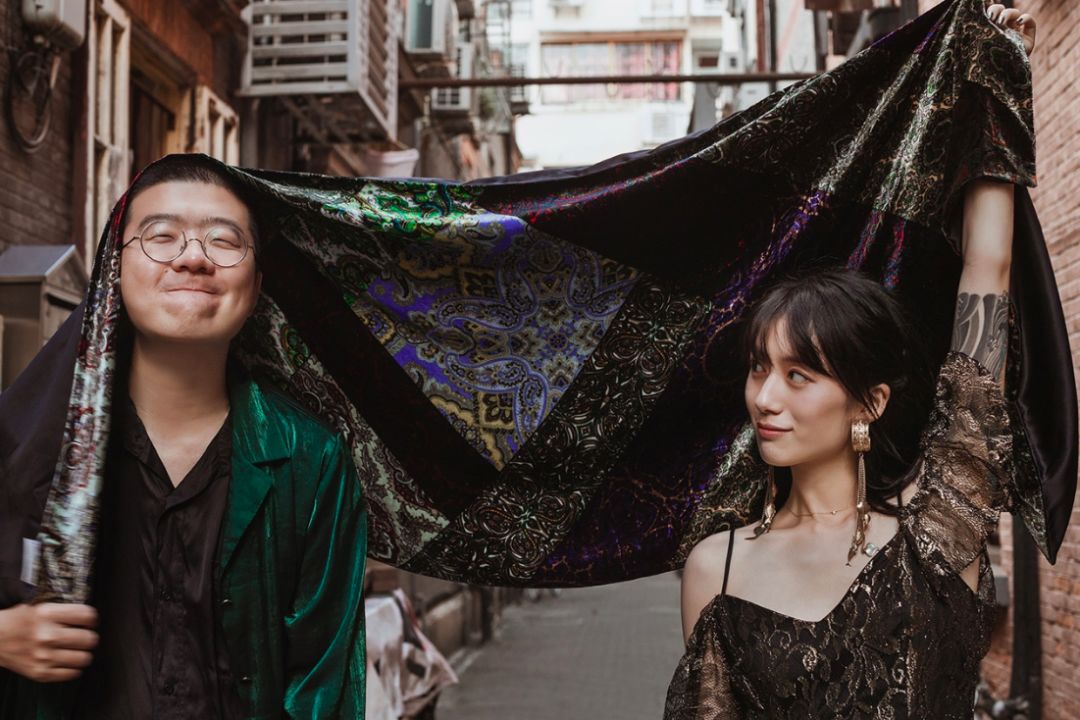
Image source: Internet
I. Who Is Li Dan?
Even if you don't yet know who Li Dan is, you've certainly heard his famous line "life isn't worth it." This man who "makes money lying down," this "most sophisticatedly sexy" post-90s, has 6.7 million followers on Weibo. He's not good-looking, yet has a stunning girlfriend who's easy on the eyes.
He appears unambitious, yet possesses the cleverness and perceptiveness to "see through without calling out." He's remarkably talented — the talk show Roast! that he masterminded has racked up over 1.8 billion views.
He's roasted more than half of the entertainment industry, yet everyone still loves him. At the same time, he's one of the founders of Xiaoguo Culture, valued at over a billion RMB.
Why is he so popular? I believe Li Dan's humor expresses the values of young people today.
I remember just a few years ago when the investment world was still hotly discussing the post-90s generation. Before long, Gen Z had already taken the stage and was increasingly becoming the dominant consumer force.
Today's new consumer brands and channels cannot capture their needs without understanding Gen Z. As China's per capita GDP continues to climb, Chinese consumers have shifted from "mass consumption" toward "quality consumption." The essence of quality consumption is the consumption of emotional appeals and value identification.
This issue of "Source Code Capital Insider" attempts to mine Gen Z's values and consumption outlook through the "Li Dan phenomenon."
II. What Characteristics Define Gen Z as the Dominant Consumer Force?
As the first wave of Gen Z graduates from university, they are gradually becoming the dominant consumer force. In them, I see a consumption outlook fundamentally different from that of the post-80s generation.
If I had to describe Gen Z's consumption values in one word, it would be "realistic."
This is an exceptionally realistic group — no longer inspirational, no longer talking about ideals. They are more self-oriented and more pleasure-seeking for themselves. They never hide their desires.
Li Dan says "I just want to live in superficiality," "my original intention was to make money." You'll find they are very authentic, no pretense. From "Buddhist-style wellness" to "reposting koi for good luck," they seem "lazy and defeated." Sometimes we can't help but ask: are they China's "beat generation"?
Yes, in the face of many mainstream values, they have indeed "collapsed." Listen to a few episodes of I Can I BB or Roast! and it's not hard to see that many mainstream post-80s values are crumbling before the post-90s and Gen Z.
But at the same time, as new humans born in the internet era, they are propping up an entirely new consumer market. Their consumption decisions spread across every node of internet communication. Their consumption concepts and habits support many new business models.
Legacy consumer brands are finding that their previous systems increasingly fail to capture young consumers' attention. For new brands, if they understand consumers well enough, they have already arrived at their best era.
1. Rejecting Perfection and Facades, Embracing Authenticity and Relatability

Image source: Internet
Twenty years ago, the "sales queen" was a goddess on high — perfect, impeccable, unattainable. On massive billboards, she told you with unquestionably haughty eyes: "You're worth it."
Twenty years later, the "sales queen" is the girl next door who seems ready to jump right out of your phone screen. She shoots "high-blur" videos on her phone, removing makeup while telling you how good this cleansing oil is, that you absolutely must buy it, maybe even squeezing a pimple along the way. Authentic, relatable, no pretense — this is the idol image more accepted by Gen Z.
Have female celebrities changed? I don't think so. They're simply acting from a different script.
Actually, it's the new generation of consumers that has changed. iResearch data shows that Gen Z follows an average of more than ten fashion and beauty bloggers each.
Thus, social media and e-commerce platforms like Xiaohongshu have replaced traditional TV advertising as the mainstream channel for new brands to reach consumers. Meanwhile, influencer marketing and livestream commerce are gradually eating away at distributors' market share.
2. Strong Consumption Desires, Diverse Consumption Needs
Not long ago, a line from Zhang Yuqi on Xiaohongshu — "Anything under one carat is just crushed diamond, not worth anything" — was instantly shared like wildfire.
You might call Gen Z "Buddhist," but when it comes to consumption, they face their desires more squarely than the post-80s generation. These "mouth says no, body says yes" young people, while advocating Buddhist-style wellness, find all sorts of ways to satisfy their consumption urges: afternoon tea with girlfriends when there's nothing to do, a cup of HEYTEA to reward themselves for overtime work, checking in at a viral restaurant for a weekend date, at least two trips per year, no kids but pets first, and everyone has one or two expensive little hobbies.
So what to do?
Ever-growing consumption needs and limited income have led to polarization in young consumers' behavior: on one hand, for high-frequency daily consumer goods, they choose "consumption downgrade" — careful budgeting, focus on cost performance, unwilling to easily pay brand premiums.
On the other hand, for low-frequency but personality-expressing consumer goods, they show clear "consumption upgrade." Coffee must be at a specialty café. The hyper-realistic French bulldog cakes that went viral on Douyin not long ago weren't actually that tasty.
I call this polarization the "Moments Phenomenon": all consumption behaviors unsuitable for social media display are downgraded, like daily face masks or routine skincare products.
Meanwhile, those that are a bit cool, high in looks, and suitable for posting on social media all enjoy social media premium.
This also explains why viral restaurants are increasingly spending more time on interior design, food plating, and photo wall design rather than food taste.

Image source: Internet
In short, the so-called "looks economy" and various viral hit phenomena reflect not the most basic material needs at the bottom of Maslow's pyramid, but the spiritual needs at its peak.
Behind them lies a strong "seeking attention" social attribute, reflecting the "loneliness" of Gen Z youth.
3. Self-Expressive Values and an Irreverent, Self-Deprecating Spirit
"Self-awakening" and "pleasing oneself" have become labels for the post-90s and Gen Z youth.
This is reflected in their choice of consumer goods as de-monopolization.
Mass-market brand virtues are no longer valued. Gen Z's brand demands are personality, fun, constant new releases. They don't blindly like or blindly loyal to any brand, but rather to specific hit products.
Whether in information acquisition or purchase decision pathways, these new humans born in the internet era display characteristics of information fragmentation and choice diversification.
They are no longer loyal to any brand, but pay more attention to individual products. "KOL seeding" has become an important node in consumption decisions, with social media platforms becoming their main information channel.
The emergence of new channels and weakening brand loyalty have given new brands room to grow.
On one hand, we observe many new domestic brands that better understand young consumers and how to communicate with them, springing up like bamboo shoots after rain — this is the dividend of this era. At the same time, consumers who "love novelty, lack loyalty" also give us some concern about the ceiling for single-brand growth.
Today's consumer goods must not only understand consumer psychology but also be well-versed in the mechanics of major social media channels. Whether it's seeding on Xiaohongshu, marketing on Douyin, or livestream selling — whoever controls the key nodes of information dissemination has the opportunity to rocket to fame in a very short time.
Notably, "fun" seems to be an essential personality for consumer goods targeting young people today. Major brands are stepping down from their pedestals, interacting with consumers in a more equal conversational manner. And new brands are getting "playful" too.
Fashion womenswear brand "Simple Pieces" printed the slogan "Why so serious" on their T-shirts and sweatshirts, quickly making them hits. And their beanies, printed with eye-rolling emojis, are deeply loved by the "daily defeated" Gen Z.

Image source: Simple Pieces
III. Business Insights Behind Gen Z's Consumption Outlook
As an investment institution, what business opportunities does Source Code see in the evolution of Gen Z's young consumer group?
1. De-Channelization: The D2C Model Facing Consumers Directly
The channels through which brands reach consumers have changed. Gen Z's channels for obtaining consumption information are no longer offline stores and brand advertising, but social media platforms.
According to research, Gen Z uses WeChat official accounts, Weibo, and Moments as mainstream platforms for obtaining internet influencer fashion information. Meanwhile, we find that Gen Z has discovered their own fashion territories, such as Qzone, Bilibili, and Instagram, where Gen Z usage rates exceed those of pre-Gen Z, reflecting behaviors like avoiding acquaintance-based social networks.
The previous model where brands handled market positioning and tone while sales went through distributor channels is now past. New-era brands understand that to reach consumers, they must understand young people's psychological appeals while also being well-versed in the mechanics and context of these social media platforms.
Therefore, removing channel distribution and facing consumers directly through the D2C (Direct to Customer) model is the brand sales format we favor more.
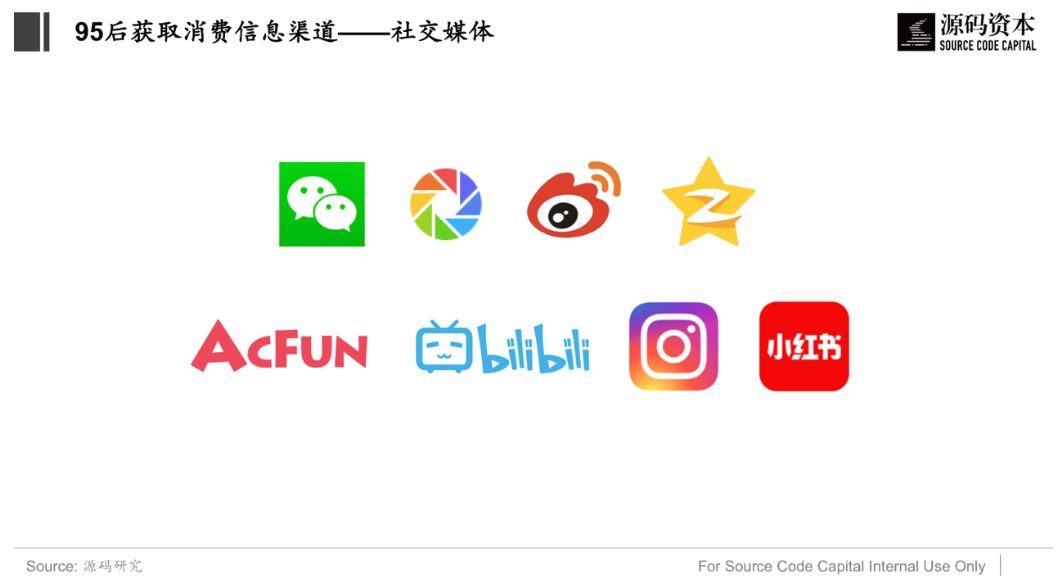
Image source: Source Code Capital
2. Grabbing Attention: The Looks Economy in the Post-KOL Era
Consumer goods communication channels have become major social media platforms. And when Gen Z consumers spend, they also need to satisfy their "social attributes" and "show-off psychology" — what I mentioned earlier as the "social media premium."
So when brands position and market themselves, they must consider this new group of "KOL" influencers who move products, and even from the design and production stage, must pre-consider a product's communication attributes: is it good-looking enough, does it have viral potential?
This phenomenon is visible not only in domestic brands but also in many luxury and athletic brands, where we see strategic shifts in marketing. In recent years, luxury brands (typical examples being Balenciaga, and the LV x Supreme collaboration) have made designs that are very eye-catching and youth-friendly.
Athletic brand Adidas also won favor with young consumers through its crossover collaboration with rapper Kanye West to release Yeezy shoes. The most limited Yeezys were resold for tens of thousands of RMB per pair, creating another miracle for Adidas.
3. Rational Consumption: Cost Performance Is King, Building China's Brandless
The flip side of "conspicuous consumption" is the rise of "rational consumption."
There's an American e-commerce platform called Brandless, known as the American version of Pinduoduo, where everything is $3. But its quality approaches that of MUJI. Its model lies in completely eliminating advertising and marketing expenses, passing the saved costs on to consumers.
On the Brandless platform, there's only one type of toothbrush and one type of toothpaste — excellent cost performance.
Traditional FMCG products put over 50% of expenses into marketing. For categories like cosmetics, R&D costs account for less than 5% of total costs — the rest is channel and marketing costs.
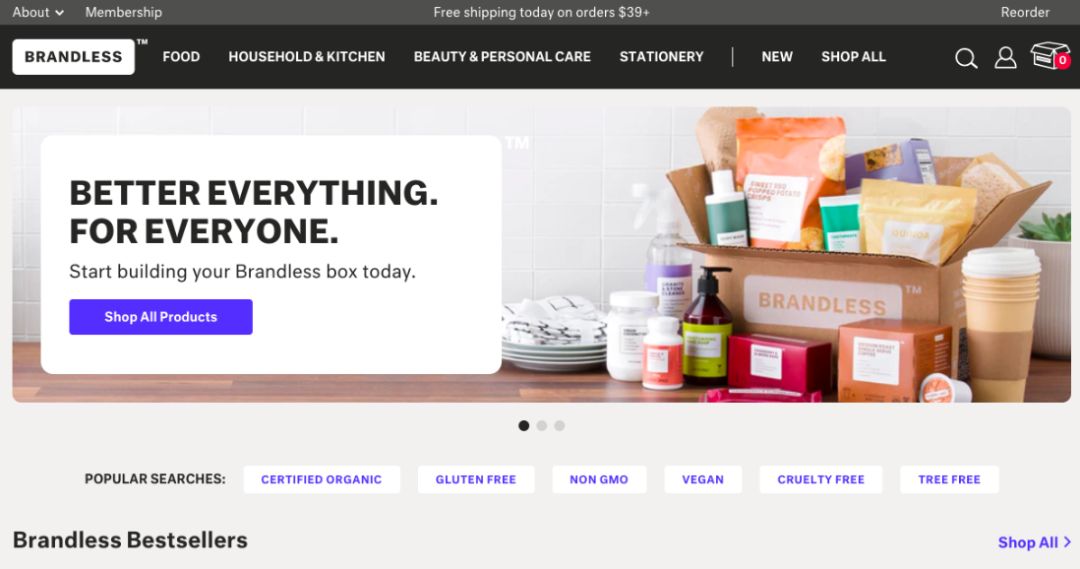
Image source: Brandless
We observed that HFP (Home Facial Pro), the "domestic pride" that first jumped into the top ten in skincare during this year's Singles' Day, focuses on cost performance and ingredient-focused marketing.
Today's young consumers won't easily pay brand premiums. They consume more rationally, especially for daily high-frequency needs, paying more attention to cost performance and functionality.
Brands need to capture this user psychology, strictly controlling quality and price to achieve "good without being expensive," and they will have the opportunity to win Gen Z consumers' hearts.

Image source: HFP
4. Instant Gratification: Secondhand Trading, Rental Markets, and Installment Payments
Gen Z consumers have diverse consumption desires. They don't want to save money to buy houses, instead advocating living in the moment.
Under the psychological demand of "I want to have it now," some new business models have emerged.
First is the prevalence of secondhand buying and rental markets. Today's young people have very strong desires to try new things. Compared to long-term ownership, they value the consumption experience more.
So if luxury goods are unaffordable, buy secondhand, or even rent. Not just bags — clothes too, digital products too. Young people have very high acceptance of secondhand buying and renting. Not seeking eternity, having once possessed is enough.
Another interesting phenomenon is that installment payments have very high acceptance among Gen Z, and they use them not just for expensive goods but also for low-price products.
Data shows that 24.4% of Gen Z have used installment payments to purchase goods under 500 RMB. And the distribution of installment payment usage for goods under 5,000 RMB is also relatively even.
Thus, consumer goods platforms or brands that can integrate with installment payment products should be able to further unlock young users' spending power.
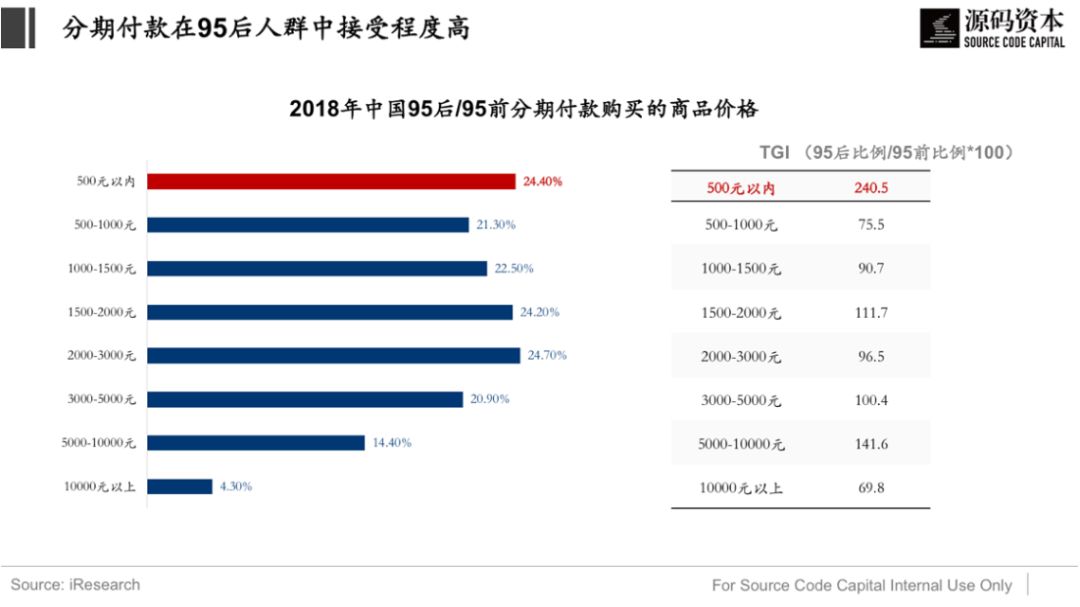
Image source: Source Code Capital
In summary, Li Dan may simply be a window for us to understand young consumers. Through insights into the values and consumer psychology of Gen Z, we find that new demographics bring new demands, new demands stimulate changes in channels and tactics, and these changes create dividends and growth opportunities for nurturing new brands.
Source Code maintains tremendous enthusiasm and attention toward the trillion-RMB consumer market, and remains curious and eager to learn about Gen Z as an increasingly mainstream consumer group and the opportunities for new brands and new channels brought by their rise.
Experts, researchers, and entrepreneurs in this field are welcome to contact and exchange with us.

More Source Code Capital Insider

Issue 14: The Opportunity and Rise of "Manufacturing-Driven Retail"
Issue 12: Export E-commerce: How to Seize New Opportunities in the Trillion-RMB Blue Ocean Market
Issue 11: Basic Evaluation and Value-Add Criteria for SaaS Business Models
Issue 10: In the OMO Era, Where Lies the Technology Dividend for New Retail Enterprises?
Issue 9: Four Dimensions for Positioning Innovation Opportunities in Insurtech
Issue 8: Viewing New Finance Opportunities Through an Asset Management Lens
Issue 7: The Pitfalls of Tech Prophecy
Issue 6: Industrial Internet Investment Landscape
Issue 5: Convenience Stores: Under the New Retail Wind, Where Is China's 7-Eleven?
Issue 4: Mobile Going Global: Entrepreneurs Eyeing Big Opportunities in Content Products
Issue 3: Targeting Unicorns in the Consumer Upgrade Tide
Issue 2: Profile of "Reliable" AI Startup Characteristics
Issue 1: Under "New Retail," Where Are Offline Stores Headed?

Source Code Capital
Creating Lasting, Genuine Value

WeChat ID:
sourcecodecapital
More professional content
Follow our official WeChat