
峰瑞资本
@author-1781068851320

"Pain Comes From Identifying Problems, Joy Comes From Solving Them" | FreeS Fund's 5th Open Day Recap
Frontier Tech Entrepreneurship: Not a Sprint, Not a Marathon, but a Maze

Li Xiang x Li Feng: Stripping Away the Emotion, Let's Talk About Economic Variables for the Second Half of 2023 | Li Feng Column
A Conversation About the First and Second Halves of 2023

FreeS Fund "Explorer" Program Recruitment Call | Let's Unlock the New Global Startup Map Together!
In volatile times, hold firm to the value of innovation and creation.

From Angel to G+ Round: 5 Early-Stage FreeS Fund Portfolio Companies Raise Over 3 Billion RMB | FreeS Family Funding News · Vol 14
Looking forward to working alongside more outstanding founders.
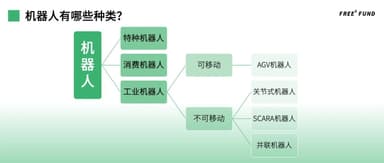
From One-Tenth to One-Third Market Share: How Did Domestic Industrial Robots Break Through? | FreeS Fund Dialogue
The Past, Present, and Future of Domestic Industrial Robots
Amid the GPT Frenzy: Anxiety and Breakthroughs in China's Chip Market | FreeS Research --- The launch of ChatGPT has ignited a global AI race, and chips — the silicon foundation of this revolution — have become the most scrutinized bottleneck in China's tech ecosystem. For domestic semiconductor players, this moment is charged with both urgency and opportunity. ## The Anxiety: Caught in the Supply Chain Squeeze China's AI chip landscape is dominated by a handful of players, with NVIDIA holding roughly 90% of the market for training chips. The U.S. export controls, tightened in October 2022 and again in 2023, have systematically choked off access to NVIDIA's most advanced GPUs — the A100 and H100, then the cut-down A800 and H800 workarounds. Each restriction has sent ripples through China's AI infrastructure buildout. The anxiety runs deeper than procurement headaches. Training large language models demands massive clusters of high-bandwidth, high-memory chips working in lockstep. China's domestic alternatives remain one to two generations behind on process nodes, interconnect bandwidth, and software ecosystems. The gap isn't merely hardware; it's the accumulated decades of compiler optimization, framework integration, and developer familiarity that NVIDIA
It's been nearly a year since the CHIPS Act took effect. How is China's chip industry doing?

Li Xiang x Li Feng: From Purified Water to Unsweetened Tea — A Case Study in China's Consumption Upgrade | Li Feng Column
In consumer markets, the boundary between services and retail is growing increasingly blurred.

3D Printing at 40: How Far From Niche Tech to Mass Adoption? | FreeS Report 31
Which industries are actually being transformed by 3D printing?

Li Xiang x Li Feng: Why Did ChatGPT Emerge Today? What Happens Next? | Li Feng Column
Is there still a chance to build a Chinese OpenAI?

The 6 Questions Young People Care About Most: We Asked 17 Founders | FreeS Fund Youth Festival & Graduation Season Special
Passion and conviction are what carry you through the darkness.

Everything Has Two Sides: How Can "Nuclear Radiation" Be Used to Make Anti-Cancer Drugs? | FreeS Report 28
Now is the spring of radiopharmaceuticals.

A Debate: Two Investors With Different Perspectives on GPT | FreeS Research Institute
AlphaFold 2 vs. ChatGPT: Which Will Drive Greater Change?